Finished reading on: June 03, 2019
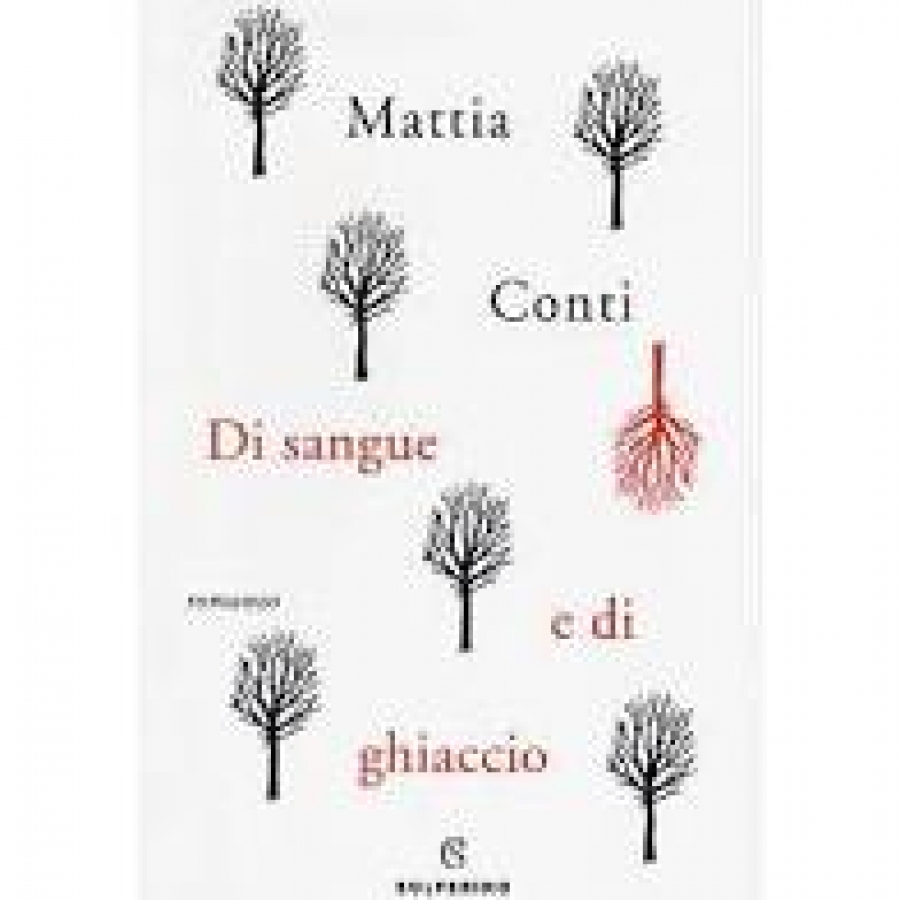
Of Blood and Ice
Title of the original version reviewed: «Di sangue e di ghiaccio»
AI Translation Notice: This review was translated from the original Italian using artificial intelligence. Book quotes and excerpts are translated interpretations and will not match the author's original English phrasing or official published translations.
Imagine a Promessi Sposi where Renzo and Lucia are two lunatics—or presumed to be such—the setting is a late-nineteenth-century Lecco teetering between superstition, charlatanry, and positivism, the center of the narrative is an insane asylum, and the author is not Manzoni, but a debut writer. Antonio Ghislanzoni, the only historical figure among them, tells his friend Baldo Bandini, a penniless theater man:
we are not Manzoni or Stoppani; we are weary old scapigliati, good only for playing pranks and taking the petty bourgeoisie for a ride. (...) We may well die before the twentieth century begins, and we shall endure even less in memory and history. Ranocchio, on the other hand—I believe Ranocchio will endure. Not him personally, of course, you understand. But his breed cannot be extinguished. It is the dynasty of the mad and the misfits, of those whose only home is the street and the leper hospital, the plague-ridden wretches who make you hear the bell of the monatti at the mere sight of them
. Ranocchio, or rather Ranocchia, is the nickname of a boy—a stuttering, odd fellow abandoned by his parents, to whom Bandini acts as a father, because “fools go to the next world in pairs.” Found half-drowned and stark naked, brought home by a desperate Bandini, the boy went on for days producing
greenish drool, (...) singing (...) songs in a dialect he didn't even remember, clicks of suspended consonants, vague and indistinct howls hanging in mid-air
. It is decided to commit him to the asylum. But what had happened?
Good Friend (Ghislanzoni wrote to Bandini), the solution is simple. As is often the case, our Ranocchio’s madness is of the worst kind. Its name is love, and the contagion comes from a woman
. And it is one of the worst contagions, because the beloved woman is Bianca, the schoolmistress: frigid, as though she were always clad in armor, she had allowed him, poor and ignorant Ranocchio, “to breach her fortress.”
When he watched her walk from afar, during those long evening strolls with her handsome blond Kraut (Bianca’s lover is an Austrian officer), Ranocchia could have sworn he saw her in armor. The shield and helmet gleamed, the spear was leveled: not even in the company of that beardless macaque face could she rid herself of the burden she carried within. And yet she took his arm, her gaze veiled beneath half-closed lids
. What blossomed could only be an infatuation so intense that it drove the boy to feign madness in order to be committed to the asylum, where the schoolmistress had been sent following a nervous breakdown after her lover’s departure, or perhaps to conceal a scandalous pregnancy. Up to this point the novel runs smoothly, intriguing in its eccentric characters and its depiction of a Lecco and a lake belonging, to be sure, to another century, yet both so vivid with color and light as to seem living portraits: the author's love of the setting guides his pen, working a minor miracle of writing. Then, the story gets tangled and descends into banality. The many pages devoted to the asylum are cold, predictable, false; the place resembles a Nazi camp more than “a great resonance chamber” where “delirium becomes an echo / anonymity a measure,” where one spends a
time lost in whirling thoughts / crowded behind the bars / like naked swallows
(Alda Merini). The plot frays further when the author turns to Ranocchia’s escape, the desperate search for Bianca just to know whether she is still alive after fleeing the asylum, and ultimately the unraveling of Bianca’s mystery, aided along the way by a witch and a parish priest who bears a damned close resemblance to Don Abbondio. Without spoiling the ending, one can say that the schoolmistress is strange, introverted, and self-absorbed, but certainly not mad; on the contrary, she is sensible enough to stage her own disappearance to escape a bigoted, obtuse Lecco. And since nothing is spared us, the final section even serves up a touch of esoteric mystery—a matter of incomprehensible numbers whose code only a child, himself a bit simple, manages to crack. One must accept that
in reality the world is uncertain and vague, like the sky clouding over in August when you cannot tell whether it will rain or the wind will turn
: a conclusion worthy of Manzoni, for whom the common folk must not raise their heads, but place their trust in Divine Providence.
Why ruin a fine idea—the portrayal of the world of the Scemerelli—with so many useless words? Perhaps that is the real mystery of the book. Yet we need not despair: in this debut novel, the author displays clean, elegant prose. The sentences unfold linearly, punctuation is handled masterfully—certainly better than Manzoni’s—the use of adjectives is sparing yet effective, and unusual words and idioms embellish the narrative. Not to mention the descriptions of Lecco and the lake, evocative and naturalistically vivid. In short, the author needs to place greater faith in his writing and streamline his plots, rather than overcrowding them with situations and characters.
Why read it? It is intriguing in its first part; on the whole, it is well written.