Alice Munro
Books by this author (2)
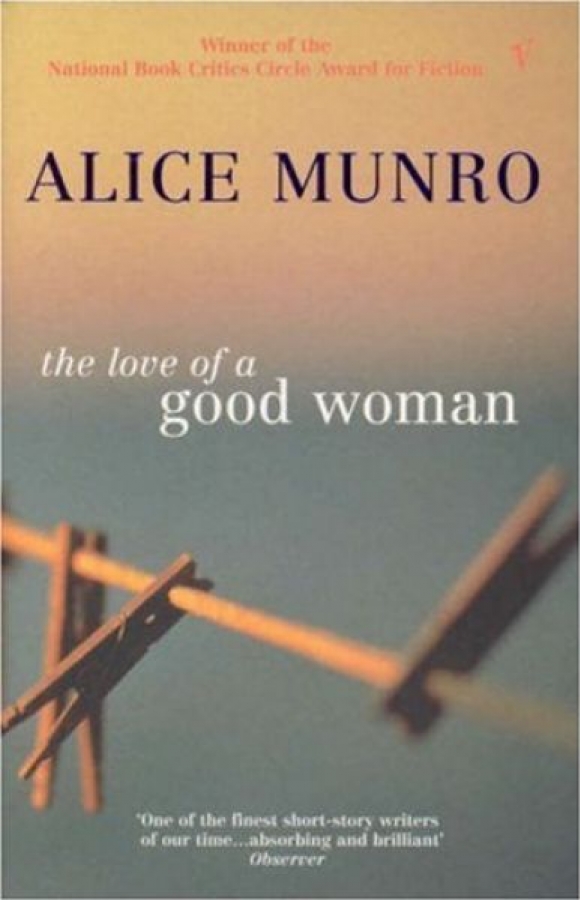
The love of a good woman
This is a series of short stories exploring the lives of women. The narratives unfold delicately, pivoting entirely on emotion, the depiction of context, and interpersonal relationships. The stories have no definitive conclusion, imparting a sense of how life, seen through the eyes of women, is somehow more attuned to the “process” than to the results. The prose contributes admirably to creating this sense of suspension: it is delicate, elegant, rich both in its vocabulary and syntactic construction, yet without excess—hitting precisely the right note. It would be interesting to read a novel by the author.
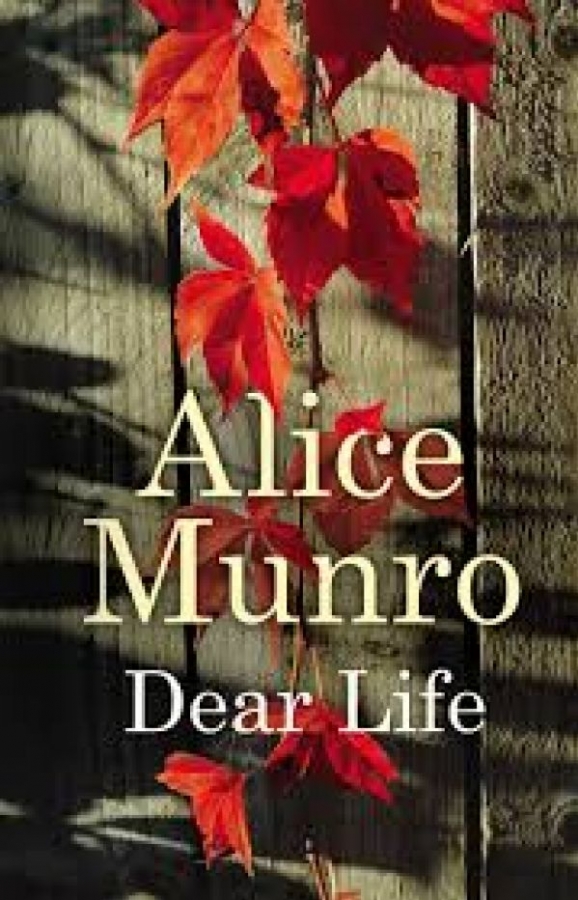
Dear Life (Getting Out Alive)
The book brings together fifteen stories, the last four of which > form a separate unit, autobiographical in feeling, sometimes even in fact . To make overall sense of stories that might otherwise be viewed as episodes of a female condition devoid of evolution and without outlets ( > too late to do anything else. When it could be worse, much worse ), one should perhaps start from the final story, *Dear Life*, which also lends its title to the entire collection. > I lived when I was young at the end of a long road, or a road that seemed long to me. Behind me, as I walked home from primary school, (...) lay the real town with its businesses and sidewalks and streetlights for when it got dark. (...) Marking the end of town were two bridges..... the road divided, one part of it heading south toward a hill (...) to become a proper highway, and the other running around old abandoned fields to turn west. This western road was my road . Reading this effective depiction of a childhood suspended between town and countryside, in that urban and social void that now characterizes our spaces, one's mind inevitably turns to a poem by Pasolini: > poor as a Colosseum cat, I lived in a borgata all lime and dust, far from city and countryside... that borough bare to the wind, not Roman, not Southern, not working-class, was life in its most current light.... bone of daily existence, pure, for being all too proximate, absolute for being all too miserably human (Pier Paolo Pasolini, *Il pianto della scavatrice*). Munro draws a clear and vivid portrait of how strange, perilous, and important our life can be, so dear to us; all this, however, not in the abstract, nor within a prevailing gender dimension (female sensibility contrasted with male indifference), but within the specific social and almost anthropological context in which we all live. Let us take, for example, a few stories. In *Amundsen*, the protagonist arrives in a small town to teach in a sanatorium for children and adolescents suffering from tuberculosis. “The world beyond the lake and the forest had vanished”; life is lived in isolation from external reality; small things prevail: the chill of the houses, the narrow road running through the woods and near the sawmill, the bar frequented by lumberjacks waiting to be called up for service. The relationship between the protagonist and the sanatorium’s director is predictable and prosaic, unfolding without clamor or enthusiasm in flat, modest, squalidly petty-bourgeois settings, ending in an obvious way, without any real reason. Yet it is precisely the banality of the affair and the cramped context of the small town that lead the protagonist to say: “nothing really changes when it comes to love.” In *Corrie*, into the routine of an apparently solid marriage bursts an old flame of the husband. The protagonist reacts by fleeing, takes the car and seeks refuge in the anonymity of the big city, in a squalid motel, eating and drinking in a restaurant where she wonders whether “any man, any old man, would think of hitting on her.” She returns home only to be told by her husband: > it’s not so much the person. It’s like a kind of atmosphere. It’s a scent , a desire for transgression. > What a mix of rage and admiration I could feel, facing his will to do it. All our life together came to an end . Here too, one would fail to grasp the entire affair if the story did not proceed from > a non-life, but survival (...) in whose arcane orgasm there is no other passion than for daily labor (Pasolini, *Ceneri di Gramsci*). In the story *In Sight of the Lake*, a woman suffering from Alzheimer’s goes in search of a specialist. She has been given an address in a small town; hesitant, frail, the woman wanders through the town, getting lost and asking passers-by—themselves uncertain—where the doctor's office might be. She arrives at a clinic, deserted and isolated: she tries to leave, to escape, but the door has become immensely heavy. > She opens her mouth to call for help but it seems no cry will come . Suddenly she is safe. It is the story of a woman who feels she is losing her memory, but why does this vanishing of consciousness take place in a squalid urban landscape, and not among glittering skyscrapers bursting with life, or in a gentle, wondrous meadow filled with flowers? A refined and elegant writer, Munro unfortunately loses herself in slight, inconclusive stories. The characters are ostensibly delineated, yet it is sheer literary technique; there is no real psychological depth: everything remains suspended. An overarching impression of fatigue prevails, of stories already written, rewritten in a masterful style, yet devoid of passion. Only in the final stories does narrative power resurface, but it is too late. Why not read it? It is slight, inconclusive, and dull.