Céspedes Alba de
Books by this author (2)
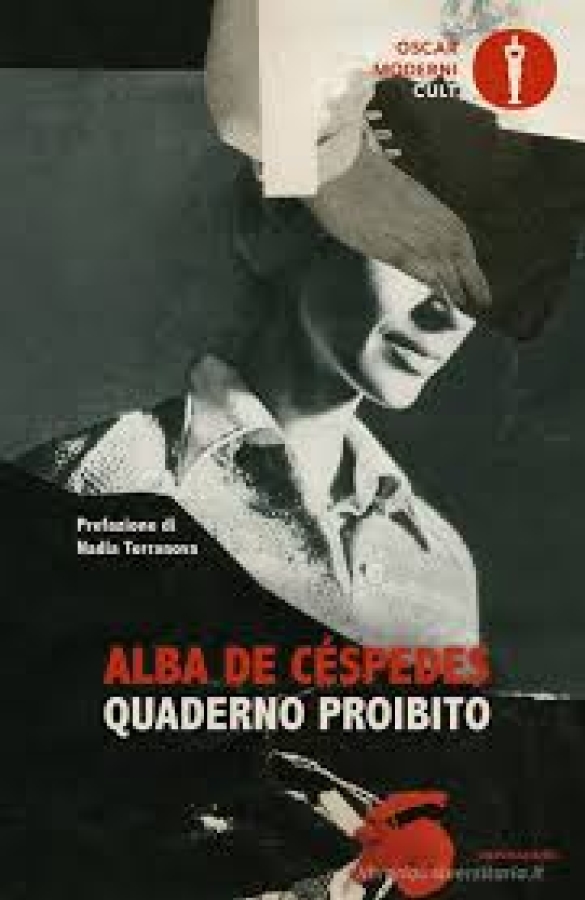
Forbidden Notebook
If in Dan Sijie's *Balzac and the Little Chinese Seamstress* (see the review on this site) a country girl > learned from Balzac that a woman's beauty is a treasure beyond any price , for Valeria it is the purchase of a notebook through which a mother and homemaker, by now known to everyone simply as “mammà,” can guiltlessly live out > her secret of still being Valeria. It is not merely a diary, but a “forbidden” hiding place; on the other hand, > all women conceal a black notebook, a forbidden diary. And they must all destroy it. It is from the vantage point of a notebook—a singular and magical perspective—that a story unfolds set in the 1950s, in an impoverished and traditional Italy, yet already transforming through nascent economic development. The first-person narrator is Valeria herself, of course; an efficient and busy mother, she discovers that > learning to understand the smallest things that happen every day is perhaps learning to truly understand the most hidden meaning of life. But I do not know if it is a good thing; I fear not. (...) This notebook, with its blank pages, attracts me and at the same time dismays me. Through the forbidden diary, Valeria realizes that her husband, on the surface so attentive, has encased her in the stereotype of the good wife and mother, while concealing from her, he too, that he has written a novel and hopes to publish it. Her two children as well, the rebellious Mirella and the fragile Riccardo, see her in that same role, never imagining that another life could be possible for “mammà.” She realizes how within the family, > despite loving each other so much, we defend ourselves from one another like enemies. To her daughter, who sees she is tired and would like to help her, Valeria says: > do not trouble yourself with these things, Mirella. (...) Then more softly, I added: “Leave,” (...) I fear there are many ugly things here, many lies. Perhaps I will never tell you again, but remember that I told you tonight: save yourself, you who can do so. Leave, hurry. (...) No, I am petty-bourgeois, and I am more familiar with sin than with courage and freedom. As Maria Luisa Spaziani says in the poem *The Present*, > now I know what living is: a cruel game that nails every fiber deep to the wheel of time. In *There's No Turning Back*, upon leaving the boarding school and taking different paths, all the friends will in some way betray the fullness and multiplicity of female nature, resigning themselves to the role—traditional or transgressive—that we assign to women. In *Her Side of the Story*, only an extreme act, the murder of her husband, saves Alessandra from a life that fails to satisfy the depth of the female soul (see the reviews of these two novels on this site). In *Forbidden Notebook*, there is no way out: the family is a cage too powerful and cruel to allow a woman to fulfill herself as an individual, outside the role of wife and mother. As Nadia Terranova says, > writing is always a subversive act, the reappearance of conflicts even when one seeks to erase them. Beyond the plot and characters, which are fundamentally ordinary, this is the truest meaning of the novel; > writing is never innocent, it refuses to stay in its place, and it is anything but abstract: it overflows onto bodies, it reverberates across faces. Only by throwing “the book” into the fire is it possible to prevent women and men from winning their freedom. De Céspedes' writing is elegant and airy. The plot frequently turns back on itself, waiting for a resolution that arrives, perhaps, too late; a love of detail often drives the author to repeat herself, in elaborations and episodes that are redundant and unnecessary to the narrative. It is the point of view, “the forbidden notebook,” that prevents the novel from being a typical family story, giving it a cohesion and originality that it would otherwise lack. Why read it? It is the desire of us all to keep a diary, but we are afraid to. , Mire
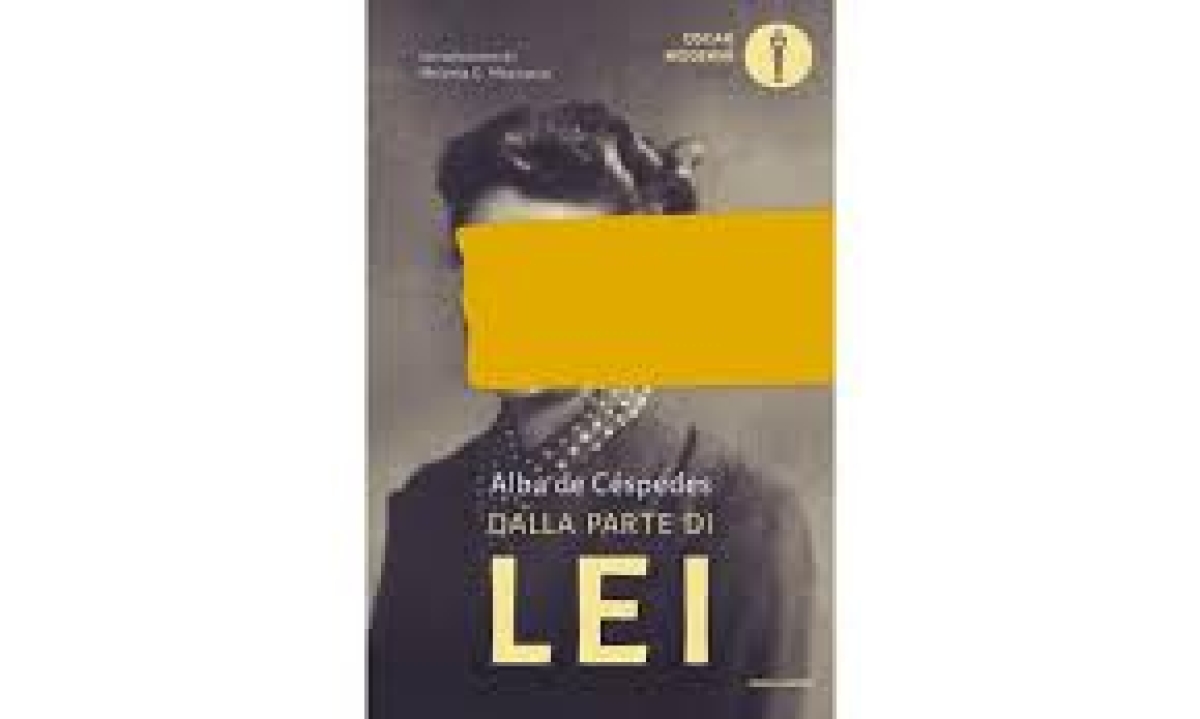
Her Side of the Story
> Behind the wall supporting one another, huddling together, forming a clot of suffering and waiting. (...) I heard them moaning, pleading, unheard: because a woman's voice is merely poor breath; and the wall is stone, cement, bricks . This novel speaks of the separateness between man and woman, of two distinct worlds whose boundary is impossible to cross. This theme is "decked out in a rag of a plot," as Melania Mazzucco writes, and unfolds between two inevitable endings: suicide or the murder of the beloved man. The first chapter is set in Rome in the 1930s; in an impoverished and cramped family setting, young Alessandra watches her mother wear away, torn between the longing for love and a > petty-bourgeois husband, (...) even his physical appearance was devoid of any spirituality . Even then, Alessandra grasps the distance between the world of women and that of men. She perceives the "affectionate indulgence" that binds women, > all, resigned, accepted, with the dawn of a new day, the burden of new toils . On the other side, men > told nothing, disliked conversation, jokes, smiled little, (...) lumping her together with the children, the mother-in-law, the maid: lazy, wasteful, ungrateful people. (...) Gradually, beneath a semblance of resignation, there had arisen in the women a livid resentment for the deception into which they had been drawn . Alessandra experiences female friendship, welcoming and complicit; towards men she is shielded by her lean, angular body, even though she is the object of the possessive yet respectful attentions of Claudio, a decent young man whom she nevertheless does not love. After her mother's suicide, Alessandra is sent to her paternal relatives in Abruzzo, where the second chapter is set—undoubtedly the best of the entire novel. Here she comes into contact with the resigned steadfastness of the Grandmother (with a capital G): > why shouldn't a woman wish to die? Up there, there is a sweet scent of lilies, (...) down here, working, bringing children into the world. (...) And always being afraid of men because they are in a bad mood, because they have a mistress and spend money on the mistress. For the Grandmother there are only two alternatives: either yield to man, accepting his whims, his selfishness, and his betrayals, or else retreat imperiously into one's own world, "always saying yes, yes, and then doing the exact opposite." This could be Alessandra's future if she were to accept a decent local youth, but as the Grandmother observes, Alessandra too is enchanted by men—not driven by sex, but convinced that it is possible to speak the language of women to men, and be happy. When she returns to Rome to care for her now-blind father, she meets Francesco, a university professor. The third chapter is set in Rome during the war and the German occupation. Prior to marriage, her relationship with Francesco consists of long walks, close and intense conversations, love letters: Francesco is serious, devoted, cultured, and handsome; with him, perhaps, it is possible to live on feelings, small kindnesses, affectionate gestures. But the idea men have of marriage (the woman as the "angel in the house"), alongside political and intellectual commitments deemed too significant to be within a woman's grasp, estranges Francesco; not because he betrays her or lacks respect and affection, but because the bond has become a routine that shuts Alessandra out. > "Why don't you write me love letters anymore?" I would say to him. He remained pained, perplexed. "It is true," , he would reply, "perhaps because now I can speak to you whenever I want." "But you no longer speak of love to me." (...) "Many significant things are happening, and it is difficult for me to think of anything else. Perhaps you cannot understand because you are a woman" > . With a long narrative, which wears the reader out to the point of exhaustion, the author leads us to the only possible ending for a woman who asked to be loved as women would wish to be loved, affectionately listened to in every gesture. "Francesco," I burst out in despair, "help me, Francesco." He barely stirred; "sleep," he murmured, (...) In me the rabid dog leapt up, lunged forward. I hurled myself at Francesco and emptied the pistol into his back. The interpretive key proposed by the author herself in the 1994 preface, and which Melania Mazzucco seems to embrace in her introduction, is that of a novel straddling gender narrative and a metaphor for the disillusionment of an Italy starkly different from the one envisioned through the Resistance, in which Alba de Céspedes took part. There is said to be a break with her previous novel, which recounts the lives of boarders living in suspension, protected by the convent school walls, and able to say "it is lovely to sit and talk among ourselves, all women: if there were a man, we would not have dared speak" (see the review of *Nessuno torna indietro* > on this site). If we do not allow ourselves to be swayed by the noble gloss the author sought to bestow on it many years later, we realize there is a common thread running between the two novels: women's search for their own distinctive female happiness, regardless of men, and of sex. Yet while the schoolgirls pursue their own individual paths, not always fortunate, but nonetheless full of hope, here instead there is no horizon for the desire for love. One cannot deny the echoes of *Madame Bovary* and even *Anna Karenina*, especially in the words that conclude the preface: *Dalla parte di lei*, despite its tragic conclusion, sought to resist the notion that love was an illusion > (see the reviews of these two books on this site). I like to compare Alessandra to the figure of Murasaki, who understands that life is not like literature (the Grandmother too urges her granddaughter not to read books), Genji is not a figure, male and female combined, in whom one can place one's trust, and the great Japanese poet has the protagonist die. (see the review on this site of *The Tale of Murasaki* > ). Alba de Céspedes is an elegant author whose writing evokes Alberto Moravia. The novel’s seemingly nineteenth-century profile, suspended between fairy tale and chronicle, recalls *Menzogna e Sortilegio* by Elsa Morante (see the review on this site). The circular structure, constantly turning back upon itself without any real development, compromises the narrative's effectiveness, making it verbose, almost as if the author reached the end through sheer exhaustion, without an overarching design. Why read it? The theme remains relevant, but the narrative is too long.