Finished reading on: September 23, 2019
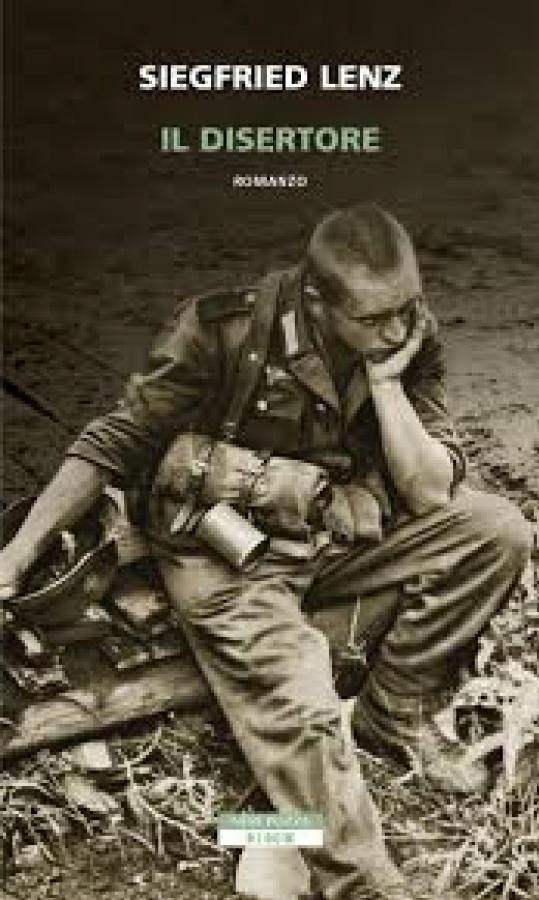
The Deserter
Title of the original version reviewed: «Il Disertore»
AI Translation Notice: This review was translated from the original Italian using artificial intelligence. Book quotes and excerpts are translated interpretations and will not match the author's original English phrasing or official published translations.
It is a great anti-war novel; it recalls two other books on the subject, both reviewed on this site: Karl Marlantes's Matterhorn, set in the Vietnam War, and Erich Remarque's All Quiet on the Western Front. While the former is an epic tale, a sort of modern Iliad demonstrating the futility of war as an occasion for social change (dispelling a great myth!), and the latter is a descent into the underworld where "living dead" survive in the trenches, The Turncoat tells the story of a German soldier who becomes conscious of the absurdity of nationalism, of the tragedy engulfing him, and believes he can find a solution by crossing over to the other side to fight among the partisans. The setting is World War II in Poland; a small German outpost must guard a railway line in territory now held by the enemy. Isolated, abandoned, and demoralized,
the wilderness gazed with innocent voluptuousness upon those soldiers who, viewed from a fair distance, hardly seemed seized by gasping, moaning, or nearing despair; from afar, they appeared more like figures one sometimes finds depicted at the market of old engravings, moving merrily, aimlessly, free from all gravity
. Proska finds himself in this detachment by chance; he was traveling on a train toward the Eastern Front when a bomb wrecked the convoy; having miraculously survived, he falls into rank, naturally like a good soldier, in a small squad under the orders of a clumsy, authoritarian, and violent non-commissioned officer; the military command is far away. It is a motley assortment of humanity, ranging from a somewhat dim-witted beanpole to a former fire-eater whose companion is a hen, through to a young student, the butt of the commander's sadistic jokes. As in Matterhorn and All Quiet on the Western Front, it is brotherhood that cements the group, while patriotism is by now seen as a swindle.
They call it a sense of duty, Milkbun said contemptuously (a nickname for Wolfgang, the young student), they injected it into our blood. And with that, they unhinged us, stripped away our independence. (...) Nationalist resentment is contagious. A resentment that is the root of presumed German superiority and the wellspring of this goddamned sense of predestination
. A few words, and above all the deadly consequences of a delusion of omnipotence, dismantle that universal mission of which Thomas Mann spoke, and which infected German society. It is for this reason, and because of the story it tells, that the novel had to wait a long time before being published. In war, a soldier's primary task is to save himself, and that cannot be done without dealing death.
Quick, the trigger is impatient; it has a great thirst for death. (...) Another burst. All twenty-eight. What else are you waiting for? And the rounds left the muzzle and shaved the reeds. (...) The river, brazen-faced, silently pushed its waters to the sea, sweeping past meadows and soaring woods, sweeping past the granite vaults of the bridges, past towns great and small, sweeping, sweeping past. A man dreamed of his wife. Water under the bridge. He dreamed of a son. (...) All water under the bridge: the fire leaping from lips, the longings welling in eyes; the tenderness, the steadfast loyalty, and the anguish in the chest. Only the conscience does not run dry, this proud, harsh landscape of justice, this fortress against remorse
. Proska watches a young partisan walking as though taking "a sentimental stroll." He does not want to shoot him, yet "we are forced to obey war even if we hate it like the plague." There is no alternative to war, and it is this feeling, together with disillusionment and the opportunistic instinct for survival, that drives Proska to defect and fight with the partisans. On the other side of the barricade, life is "just as gray, not a bit better." Proska does his duty nonetheless, just as he had as a German soldier. And he shoots, dealing death without even knowing who faces him. With the great westward advance of the Red Army, Proska reaches his sister's house and, unintentionally, on instinct, kills his brother-in-law, who—failing to recognize him, and likewise driven by instinct—was leveling the barrel of a rifle at him. When Proska realizes what he has done, he hides the corpse: for years, his sister believes her husband to be missing in action.
Maria wants certainty. Only you can give it to her, Proska. You must give it to her. (...) Once you know where to sleep, once you have found where you can be alone with yourself and your long days, once you know that all roads wish to be traveled to the very end: then, Proska, you must write to her. You will do so. You must
.
A wretched man, a decent man yet too small to make the right choice, finds himself caught up in the war against his will. He reacts as best he can and becomes a deserter not out of choice, but out of necessity, because in war one must deal death regardless. This is the book's profound message: violence can only be answered with nonviolence if one wishes to save one's conscience. It is an illusion, a poignant yearning, to hope that one might sink "into the remote swamps of oblivion," or that evil can be remedied with more evil. Only a choice for peace can truly bring serenity.
It is a virtually flawless novel: masterfully constructed with an exact balance of plot, characters, and landscape; traversed by an intense pacifist spirit, never declamatory, but voiced through the lives of ordinary people, soldiers despite themselves:
the clock that every war/clasps within its bloody claws/drips down along its hands/the minutes of its soldiers/and the pride of life/falls silent, without an echo,/and the wind sweeps away names/upon the swing of oblivion
.
Why read it? A masterpiece.