
The past is a foreign country
Perhaps it is not the author’s best book. A brilliant young student is dragged by a friend into a descent into hell: first gambling, then drugs, until he even risks becoming implicated in a rape. Faced with extreme violence, he reacts by saving the girl, and in some measure saves himself as well. The narrative premise could well be interesting, but it drags sluggishly along, offering neither pl
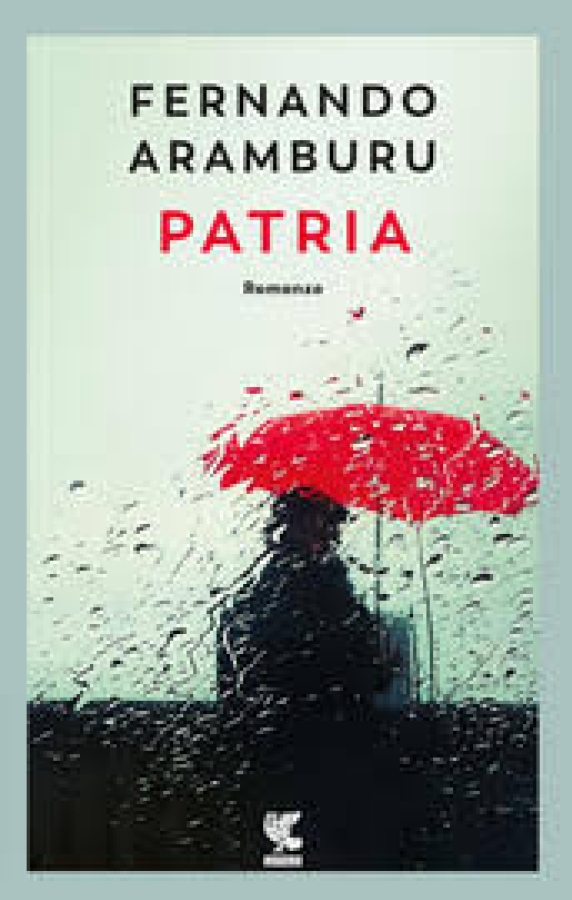
Homeland
On a rainy evening, a small Basque entrepreneur is killed by an ETA commando, a terrorist organization that bloodied Spain from 1968 to 2011, causing over 800 deaths, including 240 civilians (source: Wikipedia). Txato, as the victim was named, had refused to pay protection money, and his assassination was preceded by a barrage of insults and increasing ostracism by the village where the businessma

The Homeland of Celestial Visions
The book brings together 12 stories set in the Libyan desert: > in that desolate, impenetrable expanse, where spirits and mysterious enigmas hovered . The past tense is mandatory, for the primordial world of the desert has by now vanished, destroyed by the cruel colonialism of the Italians, by pervasive drought, and by war. The stories differ in content and style, yet a shared historical and h

The Skin
The book is set during World War II, amid the American advance: in Naples and then, in the final chapters, in Rome and Florence. Malaparte serves as a liaison officer between the Americans and the Italians. And from this arises the contrast between a young and simple society (the American one) and one that is by now decadent and in ruins (the European one). Beyond the themes tied to the immedia
Down the Ancient Staircase
The book is set in an asylum, and the narrator (and protagonist) is a psychiatrist. In the first part of the book, the character of a former hospital physician is delineated—a commanding figure and a man of science. The close examination of his persona reveals a whole series of idiosyncrasies (he never leaves the asylum, fears thunderstorms, never touches the doors leading to the various wards,

Father Goriot
Balzac lived in the first half of the nineteenth century and thus depicts the society of Louis-Philippe. The novel recounts the story of a man who, out of love for his daughters, leads a wretched and despised life. His paternal devotion stands in stark contrast to a society dominated by money, appearances, and climbing the social ladder at all costs. The approach is moralistic, the style tediou

Temporary Perfections
Guido Guerrieri is a criminal defense lawyer asked by a colleague to look into whether an investigation regarding a young woman’s disappearance can be reopened. Albeit reluctantly, Guerrieri turns investigator and uncovers a narrative of drug consumption and dealing to which the girl fell victim. The mystery is well-crafted. The reader is skillfully guided toward the conclusion, which, while n

The Electric Fish
The book recounts the journey of three journalists to Turkey to meet a friend of theirs, imprisoned in an asylum by the authorities for being a friend of the Kurds, who is about to be released. It is unclear whether it is an introspective tale (a search for oneself), a portrait of Turkey, or a detective story. In truth, it is a dull book, poor in its descriptions and mediocre in its dialogue. I

The Pianist
The book belongs to a period prior to the "detective-style" novels and deals with the years immediately following Franco’s death, marked by the initial disillusionment with the democratic system and the left’s inability to bring about genuine change. It is a tedious novel in both content and style, far removed from the detective fiction of the subsequent period, even in its setting and depiction

The Diamond Square
> I lived as a cat must live: up and down, tail lowered, tail held high, now it is time to eat, now it is time to sleep; with the difference that a cat does not have to work to live. At home we lived without words, and the things I carried inside frightened me because I did not know whether they were mine . The protagonist, Natalia, known as Colombetta, is the first-person narrator. She is a y

The Little Masters
Questo autobiographical account of the Resistance shares the same beginning as other novels that chronicle the years of partisan warfare between 1943 and 1945: as in Fenoglio’s *Primavera di bellezza* or Lajolo’s *A conquistare la rossa primavera*, the protagonist is a young officer, waiting for heaven knows what. > Perhaps we will flicker out like this; then, once we are extinguished, the war t

The Little World of the Past
The setting is Lake Lugano, and Valsolda in particular. We are between the two Wars of Independence. Franco is the grandson of a powerful marchioness and is in love with Luisa, a young woman from a respectable and honorable, yet modest, family. The conflict between the marchioness and Franco is not limited to the young man’s love for Luisa, but extends to their divergent political views: the wo

The Little Prince
*The Little Prince* is, perhaps, one of the most famous and widely read books in the world. The narrative opens with an episode from the narrator’s childhood, an aviator like Saint-Exupéry himself. At the age of six, he had drawn a "boa constrictor digesting an elephant," which to those who lack imagination—such as grown-ups—merely looked like a hat. Indeed, they > advised me to lay aside my
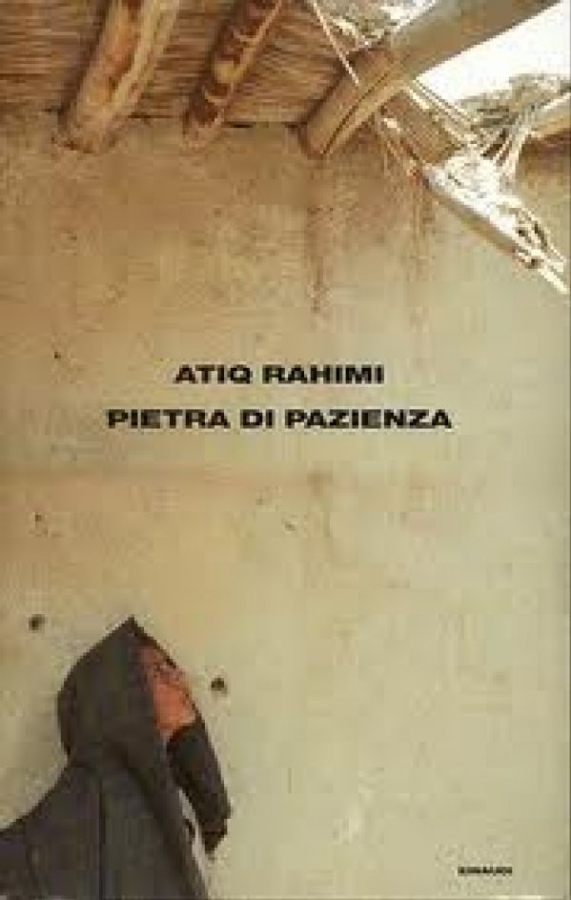
The Patience Stone
In Afghanistan, a woman finds herself beside the body of her husband, gravely wounded and seemingly in a coma. > Outside, a little shooting, a little praying, a little silence... the room is small. Rectangular. It is suffocating, despite the pale walls... the room is empty. Empty of all ornament . In a claustrophobic situation, isolated from the world and at the same time immersed in the

A Penguin in Trieste
The May 1953 issue of the *Giornale di Trieste* reported the news of the arrival in Trieste of the penguin "Marco". > Having arrived from the distant lands of the Cape of Good Hope, where a singular destiny had led him, (...) Marco was seduced by the affectionate attentions of an old sea dog, the boatswain of the motor vessel Europa Drawing inspiration from a real-life event, Carminati has writt

The Pirates of Malaysia
The pirates of Malaysia attack a ship aboard which Kammamuri is traveling with a young girl, mad. Kammamuri’s courage convinces Sandokan to spare his life and help free the girl’s fiancé, who is held prisoner by Rajah James Brooke. A series of intense adventures unfolds, leading to Sandokan’s victory over the Rajah, the liberation of the girl’s fiancé, Tremal-Naik, and the recovery of sanity by

The Pirates of the Mountains
According to Daniel Pennac, the reader's second right is the right not to finish a book. “Does the book drop from your hands? Let it fall.” And he goes on to say that there are thousands of reasons to abandon a book, the principal one being: we never have time, and it is better to spend what little time we have reading what we like. In the past, I used to try to finish a novel or an essay even whe

La Più Grande
> She who would one day become The Greatest tripped over a stool left in the way. (...) Three bowls crashed to the floor, shattering instantly. The fourth, however, hovered a palm’s width from the ground: a young boy stretched out his leg and managed to catch it, in perfect balance, in the hollow between his foot and ankle. It was thus that Shi Yu saw Li Wei for the first time. In these few clear

A place called freedom
Ken Follett imagines finding a box buried in the garden of the house where he has just moved. Inside, engraved on a collar, he discovers this inscription: > this man is the property of Sir George Jamisson, year 1767.(...) if the steel collar could speak,(...) what story would it tell? From this opening, reminiscent of the discovery of buried treasure, begins a tale that aspires to be historical
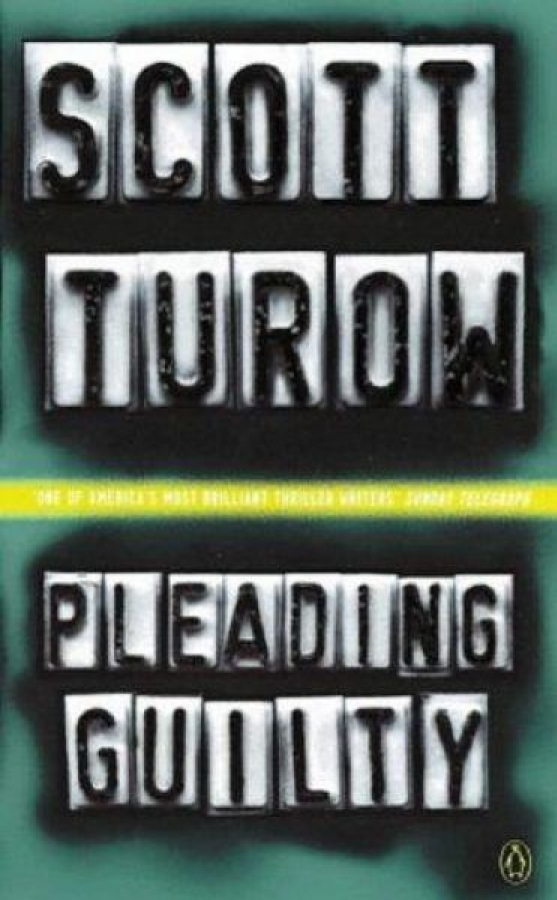
Pleading Guilty
The book’s plot is typical of Scott Turow: set in a law firm, the protagonist, a former police officer, is tasked with tracking down an attorney from the firm who has vanished, leaving behind a substantial shortfall in a major client's funds. The narrative is characterized by frequent incursions into the protagonist's life, resulting in a tedious read. Furthermore, the style is exceedingly dense
Gate of Heavenly Peace
The novel opens with the events of Tiananmen Square and the flight of one of the revolt’s instigators (the protagonist, Ayamei): the young woman takes refuge with a fishing family in an isolated area, where she is hunted by the Chinese army under the command of a young officer, Zhao. To evade capture, Ayamei flees into the woods and immerses herself in a new life, in close contact with nature, an
Portnoy's Complaint
How is it that a young man from a respectable Jewish family, enjoying an esteemed social standing, seeks out the most sordid and depraved sex instead of marrying young women from good bourgeois society, “with whom to raise intelligent, loving, and sturdy children”? > Dignity, Well-being, Love, Industry, Knowledge, Trust, Decency, High Principles, Compassion! Why the hell do I chase sensational s
The Port of Crossed Dreams
According to Buddhism, suffering arises from opposing the flow of life and clinging to forms that are deceptively permanent, whether they be things, events, people, or ideas. And yet man is like the flight of a bird or the passage of a fish through water, leaving no trace behind; he is like sailing a boat, guided by the winds. And who better than a sailor personifies this condition of transience

The Port of Love
I do not know whether anything exists in our literature quite like Thomas Mann’s novella *Death in Venice* (see the review on this site). Comisso's short piece recaptures much of the atmosphere of the great German writer's masterpiece. One senses the same oneiric anticipation of decay, voluptuous and melancholy. We are in Fiume, between 1919 and 1920: the city, sweet with the fragrance of jasmine,