Finished reading on: April 20, 2016
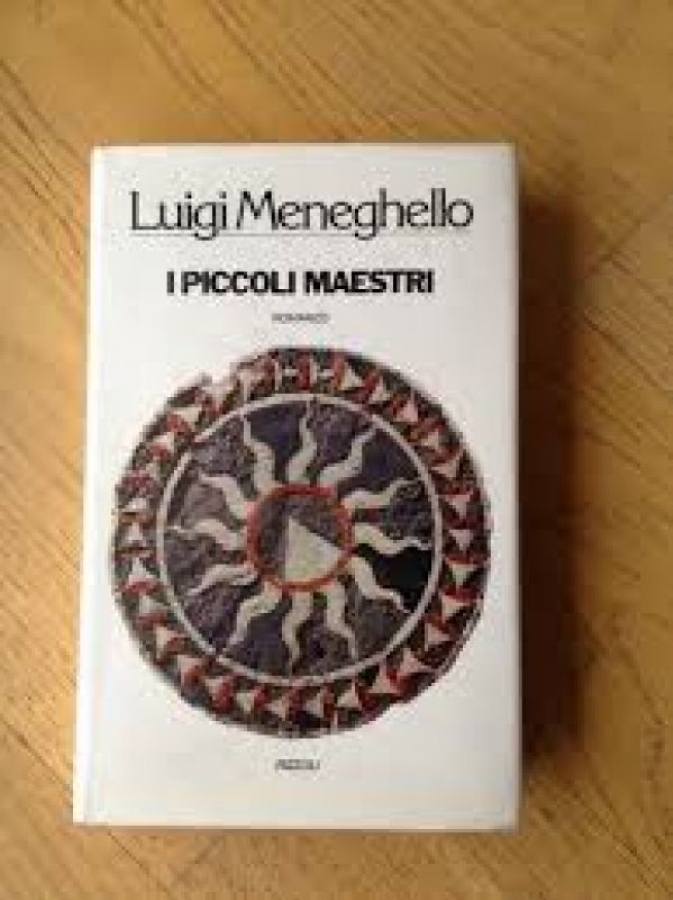
The Little Masters
Title of the original version reviewed: «I piccoli maestri»
AI Translation Notice: This review was translated from the original Italian using artificial intelligence. Book quotes and excerpts are translated interpretations and will not match the author's original English phrasing or official published translations.
Questo autobiographical account of the Resistance shares the same beginning as other novels that chronicle the years of partisan warfare between 1943 and 1945: as in Fenoglio’s Primavera di bellezza or Lajolo’s A conquistare la rossa primavera, the protagonist is a young officer, waiting for heaven knows what.
Perhaps we will flicker out like this; then, once we are extinguished, the war too will die down little by little
.
Instead, the armistice arrives, “like a scream,” and one returns home on foot, amidst columns of German troops.
University friends in Vicenza are sought out once again, old discussions are resumed, and one partakes in an
intoxicating collective feeling (...); one sensed the overwhelming power of things rising from below, of spontaneous things; one felt the warmth, the security of being immersed in this surge of the general will
.
One joins the Resistance, moving through the city and the villages of the Venetian plain, but by October 1943 one is already forced to head up into the mountains, into the Belluno area and onto the Asiago Plateau, the settings where the book largely unfolds.
Unlike what happens in Fenoglio and Lajolo, the protagonist does not become a lone wolf, like Partigiano Johnny, nor does he acquire a political consciousness that leads him to take a partisan stand, even after the Liberation.
The author writes an intentionally anti-heroic narrative, yet does so with trepidation, because
every so often I had the sense of touching a more perilous point, almost a breach in a levee; and it seemed to me that if I stirred it, a flood of chaotic personal, civic, and literary affections would come pouring down and carry me away
.
And
in the end, the meanings of words vanished as well—adjectives, nouns, those cowards of verbs; (...) Finally, only the I and the non-I remained alone
.
The progression of the narrative follows the typical phases of partisan history: the emergence of the bands, disorganized and isolated; the roundups of autumn 1943; the long winter that followed; the movement’s growth in the spring of 1944; and then the new Nazi-Fascist offensive, which forces the partisans down into the plains.
The protagonist moves through these events without dwelling on acts of war, which consistently remain in the background, focusing his attention instead on the men and the landscape.
He meets old friends, makes new ones, loses them (to firing squads or deaths in battle), grazes past fleeting romances, and desperately tries to discuss literature and philosophy, to keep his humanist culture close.
He too, like Partisan Johnny, finds himself alone in the long winter of 1944: on the run, starving, shoeless, barely surviving—yet it all feels like a dream.
I walked, with the landscape emerging in bits and pieces, giving the impression of moving.
(...) Then the moon makes a long fish-like leap across the sky, its tangerine-colored light settles; I am on my feet and I stay on my feet, I walk down the road between the houses of Frizzòn, I knock on the first door.
(...) There is no one in this house.
They are all dead.
Open up, at least you! I’m dead too.
(...) I’m waiting for the coffin to come take me away
.
Though abandoned (he will be saved by Rosina, a young peasant woman), the protagonist lives as if on a long journey, both real and ideal, across the Venetian mountains, on the brink of the hills and the plains.
And often he is overcome by a sense of wonder, as when he looks down from above upon
the torrents, the roads, the villages recognizable one by one in a kind of great lake; everything was enamel and gold, (...) and for a moment a kind of emotion came over me that I had not expected, as if a traveler in China were to look out over a remote valley, and there below Thiene should appear, the smoke of Schio, and the small hills beneath which lies his village, his home
.
The subdued, delicate atmosphere is the novel’s fundamental virtue: it is the fruit of a deliberately pursued narrative style and approach.
As for the former aspect, the writing bears a humanistic, traditional, cultured, and elite imprint; yet the typically Italian rhetoric is stripped of its frills, rendered frugal and essential, thereby enhancing the fluidity of the sentence structure and the richness of vocabulary and idiom.
The novel is a sort of remembrance, and thus the author rightly does not intend to provide a chronicle of events, but seeks instead to narrate them through the lens of memory, which shapes individual fragments, viewing them from the perspective of one who sees them now far off, as if in a mist.
with a feeling of tenderness, but also of mild detachment.
And it is this peculiar trait that makes the novel fascinating.
This choice, which prioritizes sensations over events, at times makes the narrative tedious, as it comes at the expense of pacing and character depth.
Why read it? It is wonderful to lose oneself in its atmosphere.