Finished reading on: October 08, 2020
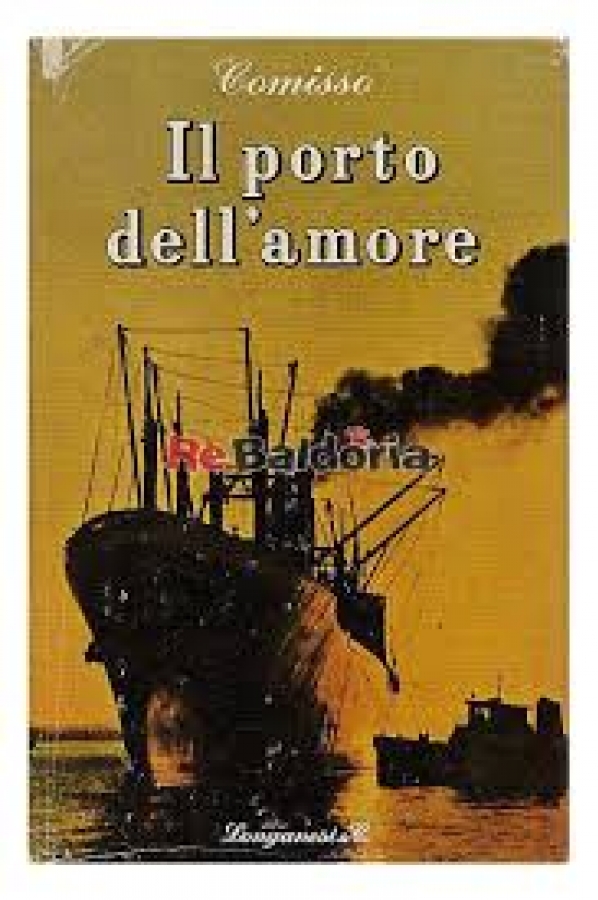
The Port of Love
Title of the original version reviewed: «Il porto dell'amore»
AI Translation Notice: This review was translated from the original Italian using artificial intelligence. Book quotes and excerpts are translated interpretations and will not match the author's original English phrasing or official published translations.
I do not know whether anything exists in our literature quite like Thomas Mann’s novella Death in Venice (see the review on this site). Comisso's short piece recaptures much of the atmosphere of the great German writer's masterpiece. One senses the same oneiric anticipation of decay, voluptuous and melancholy. We are in Fiume, between 1919 and 1920: the city, sweet with the fragrance of jasmine, was illuminated
by the glint of the sea, and on the slopes orchards gleamed with blossoms, (...) on the sea, a few sails caught the sun. (...) The warmth of the sun matched the languor of the body restored by good food. I indulged in indefinite pleasures...
How can one not recall the “balmy nights” of Piazza San Marco and the “soft, luxurious sweetness” that held sway over the aging writer who went to die in Venice? Comisso recounts his brief Fiume adventure with languid nostalgia through a series of portraits, steeped in an “immense boredom” and in the D'Annunzian notion that “everything in the world yearns for love.” It is a metaphorical journey along the paths of youth: betrayed hospitality, male friendship, passion for the Croatian woman (“come with me, Italy is in love,” Comisso tells her), the murky attraction to the decaying woman (
withered skin, wrinkles, sullen eyes, hooked hands, a misshapen figure, a parched mouth, and blackened teeth
) right down to the hunchback, a grotesque pimp
who smiled at our frenzy and took pleasure in driving it to an exasperating pitch. (...) I trembled with impatience. The thought of the woods, the moon, and this peasant girl easily yielded to love in the night confirmed for me that the finest dreams of adolescence were achievable in life
. And just as Thomas Mann surrenders to fantastical visions, where Venice is
half fairy-tale, half snare for strangers, in whose miasmas a voluptuous luxuriance flourished, (...) notes soothing and caressingly languid
, so too does a Karst cave draw Comisso
into an agonizing dreamscape; I imagined an unleashed surge of water crashing over me, crushing and suffocating me against the walls. (...) How could such perfection last, and how could we ever find its equal? (...) The ground was strewn with countless dead bees, and that slaughter felt like an omen of my own end, the consequence of a summer lived too greedily
. The Italian army put an end to the Fiume adventure, leaving Comisso with nothing but nausea.
Life weighed heavily on us, and we had grown old along with our clothes, threadbare and steeped in perfume, dust, and sweat
.
In Comisso’s youthful novella, much recalls the Crepuscular poets; reading it brings to mind the verses of Guido Gozzano:
heart that never bloomed, in vain do you hasten / toward pure mirages in less mournful gardens; / you feel it serves man nothing to linger, / scattering dispersed dreams for a new life
(From I colloqui, “Le due strade”). Far from being a harbinger of Fascism, the Fiume enterprise was an experiment in free love through which a bourgeois youth, scarred by the violence of the First World War, sought desperately to live, refusing to return to an opaque petty-bourgeois existence while pursuing a kind of revolution of mores and consciences. Comisso recounts this shattered dream: nothing remained but Fascism as a final illusion of breaking free from the prosaic Italy of Giolitti.
Il porto dell'amore is a youthful work, “teeming with impatience for grammar,” as Rolando Damiani observes in the preface to the collected works of the author; and it is precisely in these grammatical improprieties that the secret of Comisso's charm lies. The author employs a language that blends elevated, classicizing, and elegant forms with incursions of spoken idiom and dialect. The result is a singular, alluring, and mysterious reading experience; as Montale put it, “an exact, light sound of words,” which yields an indecipherable sense of grace.
Why read it? Wonderfully languid.