Antonio Fogazzaro
Books by this author (2)
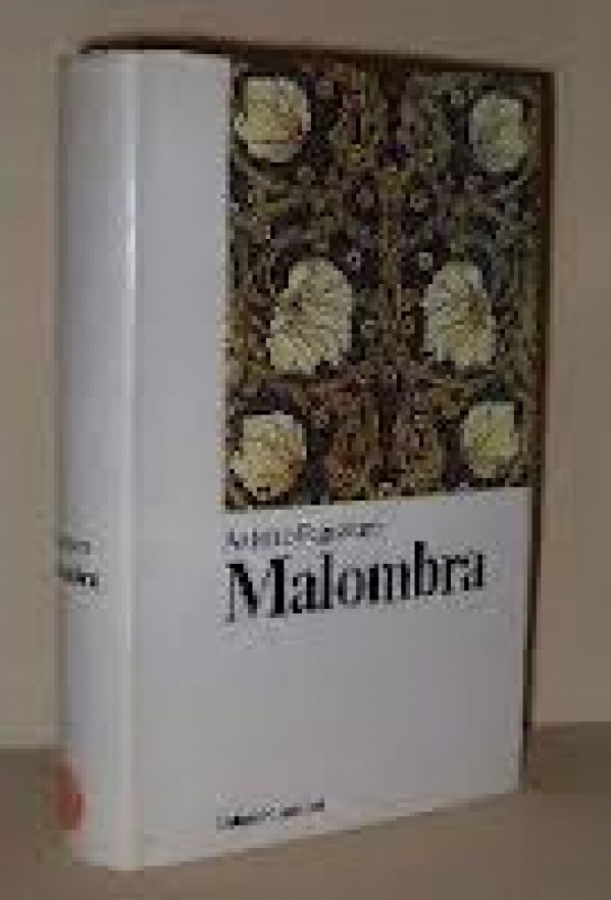
Malombra
Benedetto Croce panned this novel, Fogazzaro’s first, observing that it lacked “the central intuition that dominates all others,” offering instead an irritating confusion. One is tempted to agree with him if one allows oneself to be led merely by the plot, with its innumerable secondary episodes. If, however, the book is read from the perspective of one of its protagonists, Corrado Silla, it becomes evident that one is faced with the narrative of a troubled spiritual journey, unfolding amid existential unrest and the quest for faith—the only thing capable of providing balance and serenity. Silla, behind whom the author conceals himself, is an > intellect lacking lucidity, mystical in its tendencies, powerful through certain fleeting intuitions rather than by any steady, inherent vigor.. he had vague, unpractical ideas, an ardent spiritualist.... he loved, even in slight matters, to lean upon some grand general principle . He has written a short story, ignored by both the public and the critics, which has nevertheless aroused considerable interest in Marina di Malombra, a young aristocrat, orphaned and penniless, taken in on that account by a wealthy uncle. The writer portrays her before the mirror: > from the ample dressing gown emerged, as from a white cloud, the slender, elegant neck, and between two torrents of dark-blonde hair, wherein shone two large, piercing eyes, fashioned for dominion and for voluptuousness... with a toss of her head she cast behind her shoulders the two torrents of hair and who knows how many turbid thoughts . Silla and Marina share many affinities, above all a restlessness that manifests in impulsive actions and in disordered, hallucinatory meditations; yet poor Corrado, weak and insecure, is overwhelmed by the woman, who banishes him, seeks him out, desperately summons him, professes her love, and ultimately kills him. Marina, on the other hand, is ruled by the phantoms of the past—specifically, by the mad determination to avenge the murder of an ancestress, the first wife of her uncle’s father. She sees in Corrado the reincarnation of the murderer and, despite loving him, must nevertheless punish him with death. The relationship between Silla and Marina has no rational, psychological foundation; it belongs entirely to the realm of the magical, the fantastic, and the dream. Silla’s fault lies in succumbing to the dark allure of a spiritualism unanchored to faith, to rationality, and to the order of the Catholic religion. Conversely, the other narrative thread, the pairing of Silla and Edith, develops around the search for faith. Edith is a German girl who has come to Italy to be reunited with her father, an aging exile who had found refuge with Marina’s uncle. > She was graceful in her black dress, exceedingly simple, short but not excessively so, with a small bunch of violets at her waist.... in her delicate, faintly rosy face, the mouth and eyes bore a more pronounced expression of firmness. It is strange how those eyes expressed an understanding of real life, tempered with goodness..... as though another spirit infused into hers, a melancholic spirit, were somewhat revived by her gaiety . Faith governs Edith’s personality and directs her feelings and conduct. “Edith’s elegant, dark figure, which he clothed in poetry,” captivates Silla, who yearns to find in her the balance he so desperately needs. > And he felt within himself a serene light, a warmth so distant, it seemed to him, from indifference as from passion, a rising of some indefinable faith . Yet the summons of Marina’s dark allure proves too potent for Silla, just as Edith is too confined within a religion of sacrifice and duty to fight with the necessary passion for the love she nonetheless harbors for Corrado. And “the demon of somber voluptuousness” leads Silla to his death. Edith is left with nothing but the memory of what her life might have been, a destiny she accepts with Christian resignation. Meager consolation and a thoroughly hypocritical justification for a bloodless love, incapable of fighting for the beloved! And what kind of religion is it that leads to timid passivity, to being mere spectators of one’s own life and that of others? Beyond the lack of cohesion underscored by Croce, the fundamental flaw of the book lies in the purely literary treatment of the characters, who rarely take on real life. Moreover, the entire novel is steeped in, and weighed down by, lengthy philosophical and religious digressions, as abstract as the depiction of its protagonists. The most compelling feature of the book is its landscapes. Nature is painted in bold strokes—at times somber and tempestuous, at others luminous and serene. Above all, nature possesses “a soul,” one that is indeed living and real: a soul that reflects and amplifies the characters’ emotions, thereby bestowing upon them at least a semblance of vitality. Like mankind, nature is fraught with contradictions, admirably synthesized in descriptions of the landscape such as this: > a lake modest in size and fame, passionate, changeable; now violet, now green, now leaden; at times, toward the plain, even azure . The contemplation of the landscape captures the eternal yearning of the human soul: > oh amorous fury of blossoms reaching toward the omnipotent sun, exultant grasses, drunken with wind, what solace to be you, to live your single-day life, to feel memory fall silent, and the heart, and that wearying tumult of thoughts relentlessly battling together, making and unmaking the future . Why avoid reading it? It is a tedious, prolix, inconclusive book.
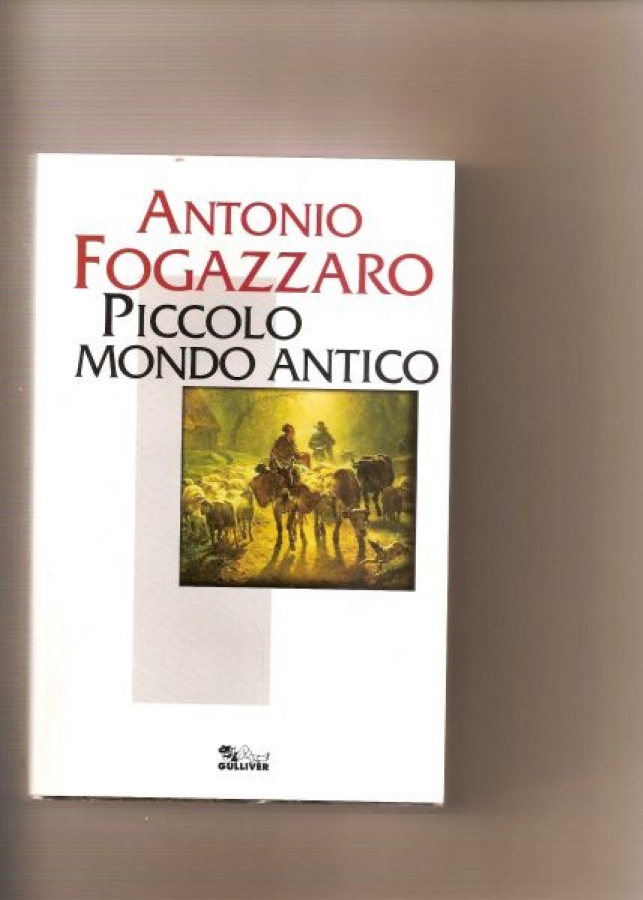
The Little World of the Past
The setting is Lake Lugano, and Valsolda in particular. We are between the two Wars of Independence. Franco is the grandson of a powerful marchioness and is in love with Luisa, a young woman from a respectable and honorable, yet modest, family. The conflict between the marchioness and Franco is not limited to the young man’s love for Luisa, but extends to their divergent political views: the woman is loyal to the Austrian dynasty, the man a staunch patriot. Franco marries Luisa without the marchioness’s knowledge, forcing the young couple to endure financial hardship, which is aggravated at a certain point by the dismissal of Luisa’s uncle—an honest, upright official of the Lombard-Venetian administration—engineered at the behest of the powerful marchioness. Life flows peacefully, revolving around the couple’s young daughter, little Maria. The only discord between husband and wife stems from their differing religious convictions: Franco is a devout and practicing Catholic; Luisa is practically indifferent, an atheist in her conscience. There are also their political ideals, shared by the couple and their small entourage, which, together with their economic struggles, prompt Franco to move to Turin. Finally, domestic harmony is disrupted and further tension is sparked between the spouses by the discovery of a document in which Franco’s grandfather, the marchioness’s late husband, reportedly bequeathed the estate to his grandson. Out of pride, Franco has no intention of enforcing the document concealed by the marchioness; this decision outrages Luisa, not so much for financial reasons as for the injustice endured. Upon the couple’s life—upon the «little world of the past»—tragedy intrudes with the death of Maria, who drowns in the lake. Luisa retreats into a tragic grief, consumed by guilt over the child’s death. Luisa feels barren and cold; a wall rises between husband and wife, threatening to destroy their relationship. The Second War of Independence breaks out; Franco, who has meanwhile returned to work in Turin, invites his wife to meet at Isola Bella prior to his departure for the front. Luisa hesitates deeply, but is persuaded by her uncle; en route to the island, aboard the boat, she observes a group of soldiers heading off to war and realizes that there are sufferings and heartaches far greater than her own. The reunion with Franco is initially cold, then gradually thaws, and the two find one another again, bringing forth a new child. As in all fine stories, love ultimately triumphs. It is, therefore, a romantic tale, one that caused a stir in its day on account of the religious ideas expressed within it. Through the character of Luisa, a sharp critique of religion was advanced—particularly against its official and sanctimonious forms—to the point where she declared that «God is cruel» or even that God does not exist. Viewed through modern eyes, what remains of genuine value in the novel is, instead, the tension between the intimacy of the domestic realm and participation in momentous historical events. At its core lies the depiction of the «little world of the past», which, as the author observes, > was even more secluded from the great world than at present, was more than at present a world of silence and peace, where the officials of Church and State, and, following their venerable example, several loyal subjects as well, dedicated many an hour to edifying contemplation . This world is Valsolda, whose landscape and community the author portrays alike. And it is precisely here that the novel proves weakest: nature is approached with a romantic sensibility, tending toward the «marvelous», evocative of a mere «tourist's» gaze, and ultimately rings hollow and detached; the characters, innumerable as they are, are depicted primarily through their mutual interactions, yet reduce to caricatures of small-town archetypes (the unfaithful maid, the curate, the schoolmaster, the informer, and so forth), without ever managing to achieve a truly ironic portrayal. Even the recourse to dialect fails to lend vibrancy or authenticity to the dialogues, ending up tedious and superfluous. The figure of Franco is flat, even implausible, considering that he endures a horrific tragedy which he seems to surmount with ease. The only character who emerges as contradictory and complex is Luisa: she is conscious of her husband’s frailty, of the vacuity of religion, yet she resigns herself to the social role of wife and mother. Only her daughter’s death shatters this precarious balance, driving her to the brink of madness. Yet, in the end, she redeems herself by reassuming the role assigned to her by society. *Piccolo Mondo Antico* is the novel of an affluent, cultured nineteenth-century Italian bourgeois, convinced that only by shouldering one’s social responsibilities can one attain salvation and mature as an individual. The pre-industrial tradition is thus something to be overcome, as is the inward retreat into personal grievances, petty interpersonal ties, and the pursuit of metaphysical and irrational solutions (religion, spiritualism). The theme of responsibility and the transcendence of the familial and parochial dimension remains remarkably timely in Italian society: perhaps the very superficiality with which it was treated in the novel is the reason why, as history has shown, familism and localism remain the enduring vulnerabilities of Italian society today.