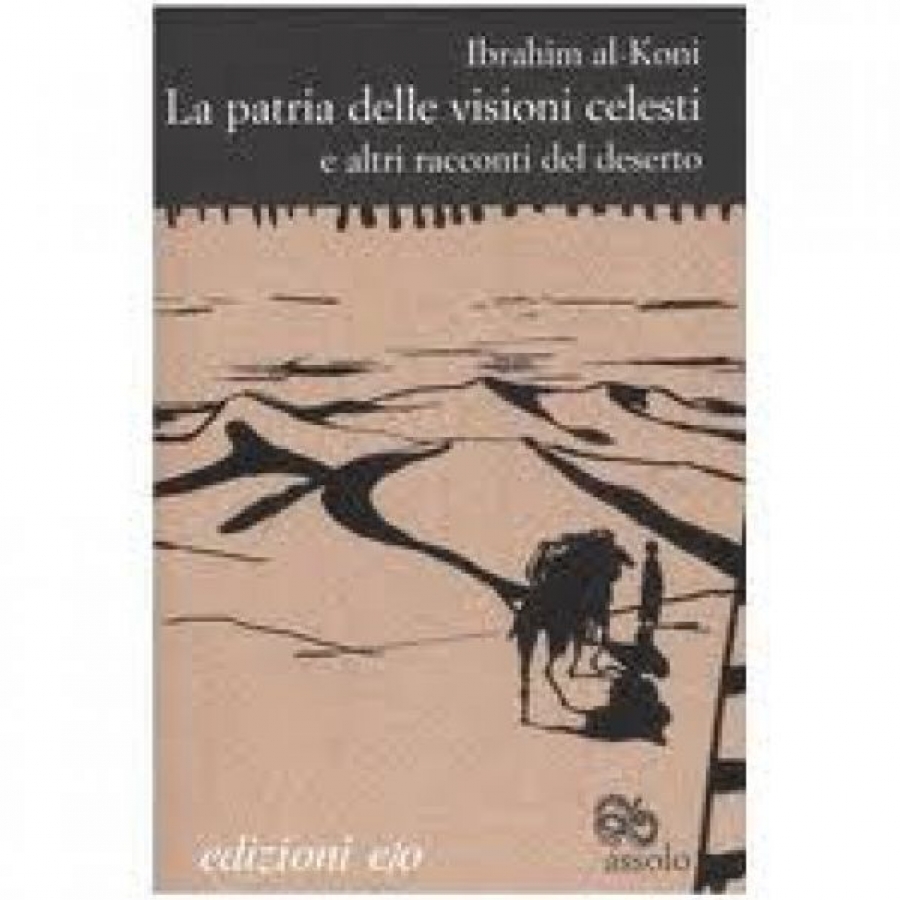
Finished reading on: January 14, 2013
The Homeland of Celestial Visions
Title of the original version reviewed: «La patria delle visioni celesti»
AI Translation Notice: This review was translated from the original Italian using artificial intelligence. Book quotes and excerpts are translated interpretations and will not match the author's original English phrasing or official published translations.
The book brings together 12 stories set in the Libyan desert:
in that desolate, impenetrable expanse, where spirits and mysterious enigmas hovered
.
The past tense is mandatory, for the primordial world of the desert has by now vanished, destroyed by the cruel colonialism of the Italians, by pervasive drought, and by war. The stories differ in content and style, yet a shared historical and human trajectory emerges—the demise of Bedouin civilization, and with it, an irreplaceable loss for humanity.
The title story of the collection is undoubtedly the most captivating, as well as the most mysterious.
Father and son advance through the desert:
since they had set out on their journey, the desert had continued to dilate and expand....
ultimately generating a ruthless horizon which, once yet another stretch had been traversed, gave rise to another...
and in that limbo stretching between the expanse of sand and the horizon, a mirage shimmered
.
What was the purpose of a journey that seemed “eternal”? The father took his son, still a child, from the oasis.
He did so because he wants the boy to be a “man of the desert,” because “whoever wields a hoe and wounds the earth is a slave,” whereas
the nomad has the star-strewn sky for a blanket, his pillow is the open space, he roams like gazelles and kneels before no place
.
The journey would seem to be the narrative of an initiation, yet the father is searching for something: his homeland, a return to the dwelling place of the desert nomads.
Yet at the end of the story we discover, with surprise, that this homeland is the ultimate land of oblivion: death.
Do not regret the transitory journey you had to make, for remaining in the memory of the arcane is better than slipping into the desert of remembrance
.
It will be the subsequent stories that reveal the reasons behind such a drastic choice.
Gradually, the author leads us toward the war, recounting the harrowing events—which we Italians have erased from memory—of the conquest of Libya by the Fascist army and the heroic, desperate resistance of the Libyans.
There is no acrimony; it is a chronicle, yet one capable of conveying the profound sense of a people’s destruction.
Where can the Bedouin go now? “A man who has grown accustomed to war can no longer do without it.”
It would be inaccurate to say that the subject of the stories is the desert, even if the depiction of the environment, animals, fruits, and plants remains precise, almost naturalistic.
In reality, the true theme is nostalgia.
All of us love the horizon and weep with nostalgia, yearning for what lies hidden beyond the desert
.
Thus the theme becomes universal, for “do you too, like me, feel nostalgia for the unknown?”
The prose is remarkably rich and versatile, shifting from an elegiac, poetic register to one that is stark and detached.
From this perspective, the most accomplished story is The Virgin's Vow.
The life of young women in the desert is delineated with sociological precision.
The two girls herding the flocks to pasture speak of loves and dreams, of betrothed grooms, like young women of any era and civilization.
The sun, the arid dryness, and the heat are so unrelenting as to drive even the young goats mad, turning them unruly and aggressive.
One of the two girls does not spend her days waiting for a desert horseman to take her as his bride: she dreams of water; water is her true lover.
And when it suddenly arrives, she plunges into the surging torrent’s current and surrenders to its pull:
she began to undress...
she knelt down and he held her in his arms.
He threw himself upon her naked virgin body and gently submerged it.
She drifted freely with the current....
fleeing toward the unknown together with his beautiful beloved
.
Why read it? One should not look for plot, narrative pace, or detailed social and psychological portraits.
It is the chronicle of the end of a civilization, and, implicitly, an indictment.