Fernando Aramburu
Books by this author (2)
Slow Years
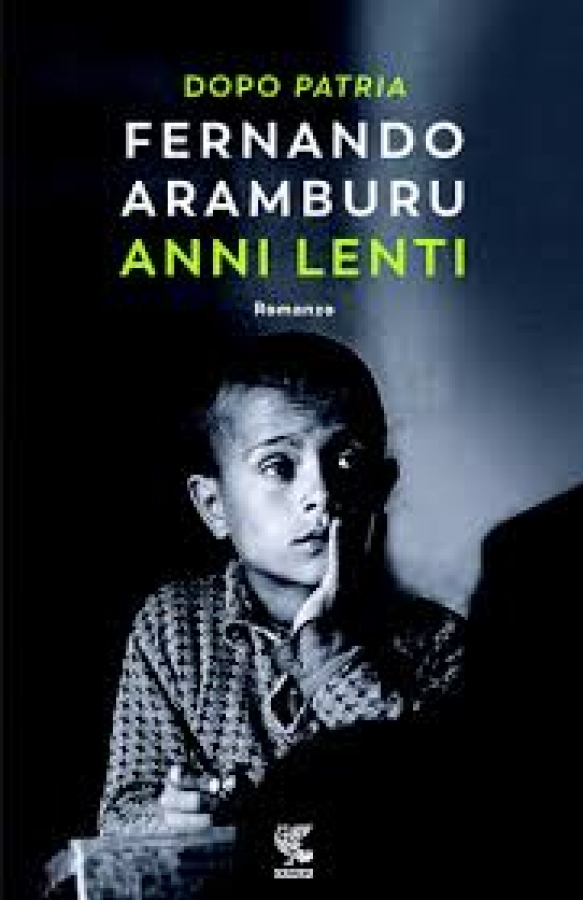
In *Patria*, the author confronts with forceful tones the psychological and existential consequences of the civil war that bloodied the Basque Country from 1968 to 2011 (see the review on this site). With *Slow Years*, Aramburu tackles the same themes, yet with placid, almost dreamlike accents. Then again, > when I pause to review my memories of those years (those of Franco's Spain), an old feeling of slowness returns to me. (...) I am tempted, at least in certain stretches of the novel, to make an effort to convey through a deliberately slow style that sensation of historical stagnation. To give this impression of a history > that dragged on sluggishly , the author imagines that an “informant” provides him with the raw materials to construct a novel, even > if it becomes necessary to stray from the informant's testimony, so be it. Literature first, then, if any room remains, the truth. And so a person, now grown up, recounts to Aramburu his childhood living with relatives in San Sebastián. He, > a little Navarrese shit , as his cousin Julen greets him, finds himself living in a Basque family: an authoritarian, abrupt aunt; a melancholic, absent uncle; an ugly, fat female cousin who sleeps around with all the boys; and Julen, who upon seeing him cry consoles him by mocking him: > if you were Basque you wouldn't cry. Have you ever seen iron weep? But, since you are a soft-boiled Navarrese, what happens happens. Strong, swaggering, self-confident, spoiled by his mother, Julen recalls Joxe Mari from *Patria* and, indeed, his story shares many similar traits: he joins ETA, is forced to flee to France, but, unlike Joxe, Julen cannot endure the loneliness and hardships of underground life; he betrays the organization and returns to San Sebastián, bringing shame upon his family. All of this is depicted through the eyes of a child, who does not fully grasp the dangers surrounding these events and their impact on his aunt and uncle's family. It is true, a shiver of fear ran through him whenever he saw the Guardia Civil pass by, but > those mustaches, do you remember them? Those hard stares, the batons and helmets, the weapons that my adolescent imagination struggled to conceive of outside cowboy-and-Indian movies. In the child’s imagination everything blurs together, creating something like a commedia dell'arte where comical or frightening figures bustle about within the same surreal, comedic atmosphere. Consider the fat cousin who, having fallen pregnant, is forced to marry the village idiot, himself obese and misshapen. Or the grotesquely solemn figure of the parish priest, assertive in inciting young men to join ETA, yet trembling when at risk of arrest. And yet, the subtle, amusing account of the child informant fails to bring peace, to permit reconciliation, even forty years later. The novel concludes with a bitter recollection by the author. On a bus, he runs into Julen’s father, but turns away. > They infected me with hatred. (...) I would like to ask his forgiveness, but he is dead. There are many ways to speak of a country's tragedies, the lacerations of a community, and the grief of people who were scarred by those events. In this novel, Aramburu does so with a reckless approach, perpetually teetering on the thin line between the comic and the dramatic; what emerges is a sense of narrative inadequacy that deepens as one delves further into the tale, where one would expect it to evolve toward a greater depth of exposition and judgment. Perhaps Aramburu chose the wrong informant—what could a child do? He could do nothing but defend his childhood behind a fantastical vision, as if everything were that game of plastic cyclists, the child informant's only toy, which > move forward in turns, by as many spaces as indicated by the die. Aramburu consistently displays remarkable narrative inventiveness. If in *Patria* it was the shifting of the narrator mid-stride (from “I” to “she” within the same sentence), here it is instead the pairing of the child's account with a sort of working outline by the writer on how to develop the novel: the plot, the setting, the deeper explorations, the words. These are “notes” that gradually overshadow the narrative, losing their character as a reflection on himself and the writer's craft to become increasingly another tale altogether, silencing the child's own. At first, this literary device is intriguing because of its novelty, but it eventually proves repetitive, disrupting the linear development of the story. Why read it? Enjoyable, yet in the end the story fades away.
Homeland
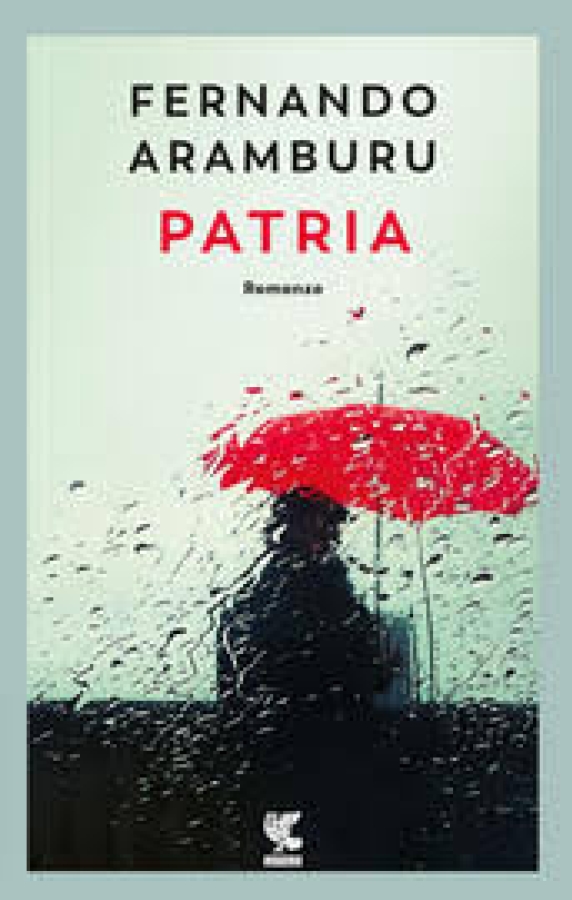
On a rainy evening, a small Basque entrepreneur is killed by an ETA commando, a terrorist organization that bloodied Spain from 1968 to 2011, causing over 800 deaths, including 240 civilians (source: Wikipedia). Txato, as the victim was named, had refused to pay protection money, and his assassination was preceded by a barrage of insults and increasing ostracism by the village where the businessman and his family had lived for years. Joxe Mari, the son of Txato’s best friend, is affiliated with ETA and operates underground; on one of the evenings prior to the attack, he was sent on reconnaissance near the victim's house, > no sooner had he started walking than he saw me. The Browning gripped in my pocket, and Txato, what does he do, what on earth does he do, he crosses the street and comes straight toward me. The scene wasn't in the script. “Hey, Joxe Mari. You back? I’m glad.” Those eyes, those huge ears, that friendly demeanor. His father’s friend, who used to buy him ice cream when he was a boy. (...) Don't do it. Don't kill him. They had stood mute facing each other. (...) I am a member of ETA and I've come to execute you. But he hadn't told him. It hadn't come out. High above, the bell had chimed a no. This scene, described on page 445, could have been a possible opening for the novel, lending unity, in my view, to the exploration of the consequences—not social and political, but psychological and existential—of a civil war that tore an entire community apart. Instead, Aramburu narrates the individual stories in a disordered fashion, shifting back and forth, trailing the trajectories of single characters as though they were mundane, predictable, run-of-the-mill tales, invigorated only by their connection to that single terrible event. Txato’s murder destroys long-standing bonds of friendship, dictates everyone's life—their emotional ties as well as the material conditions of their existence—and freezes them into roles defined by hatred and grief. Joxe Mari will end up serving a life sentence, condemned to being a hero of the Basque Country’s liberation. His mother, Miren, takes on the role of the fierce, unyielding protector of her persecuted son, > fanaticized by maternal instinct. Miren’s husband and Txato’s best friend retreats into himself; a coward, he conceals his grief over Txato’s death and his disapproval of Joxe Mari’s choices. The other children have fled that cursed land, just as Txato’s children have. They are all > satellites of a murdered man. Whether they wanted it or not, their respective lives had revolved for long years around that crime, around that ceaseless fire of—of what?—fuck, of sorrow, of grief, and this story must end and I no longer know how. Shattering the paralysis of suffering is Bittori, Txato’s widow, with her decision to return to the village and reopen the old house: > a strange atmosphere enveloped the ornaments, the walls, the furniture, a characteristic odor that, without being sickening, was anything but welcoming. And it was the same smell my mother's clothes give off when I hug her. We are past 2011; the civil war is over and everyone would like to forget. The parish priest stops Bittori on the street to urge her not to return to the village, > not to reopen old wounds. The woman’s reply is cutting: she is here > to draw out all the pus that is still inside. Otherwise, it will never heal. Resolute, Bittori will succeed in having Joxe Mari ask her for forgiveness, because only then can there be genuine reconciliation, rather than a craven, omertà-bound oblivion. Bittori’s determination will stir all the other protagonists of the story, who will emerge from their suffering to find themselves once again, finally processing their grief and coming to terms with their destiny. The core themes of the book are rupture and reconciliation: violence born of hatred and the will to rebuild fraternity. The author eschews rhetoric and moralism, delving instead deep into the characters' consciences. The figures constantly teeter between painful paralysis and the possibility of liberation from their fate; to achieve this, they need an external force, embodied by Bittori, who casts off the guise of the inconsolable widow to take on that of a tragic heroine—bearer, in spite of herself, of a universal and eternal task: to bring the perpetrator to acknowledge his guilt, to confess it, and in doing so free himself from remorse. Mention has already been made of the narrative's disordered nature. Generally pacing the novel three chapters at a time, the author explores its various characters without establishing a hierarchy of importance, as though there were no true protagonist. This approach grants the reader the freedom to choose the key figure of the tale (for me, Bittori), yet it blurs the focus and hinders the reconstruction of the storylines, which remain inconclusive. The alternation between first and third person as the narrative voice is intriguing at first, creating a disorienting effect. It is a stylistic dexterity that, over time, confounds the narrative: every sentence is interesting, but the whole becomes disjointed. Finally, the novel is very long, prolix, and repetitive. Why read it? The themes addressed are compelling.