Finished reading on: September 09, 2024
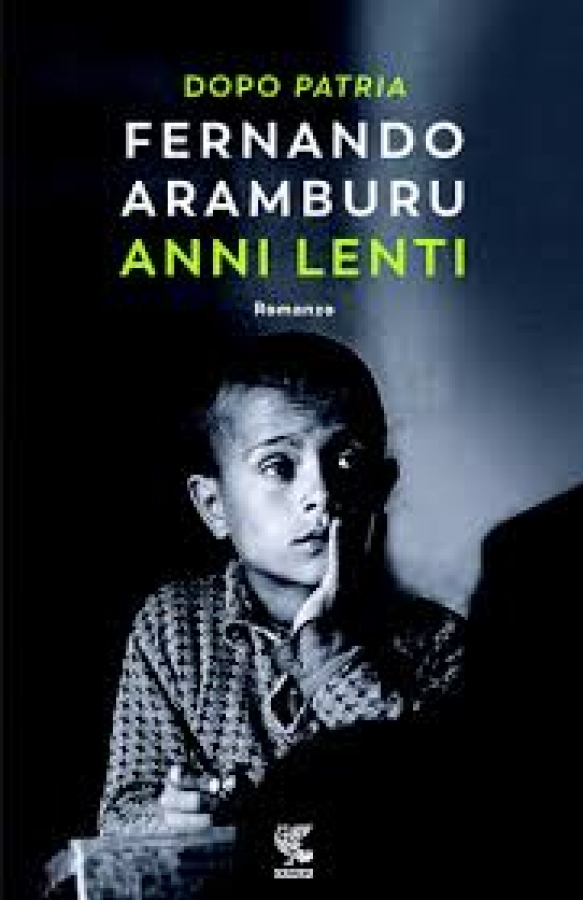
Slow Years
Title of the original version reviewed: «Anni Lenti»
AI Translation Notice: This review was translated from the original Italian using artificial intelligence. Book quotes and excerpts are translated interpretations and will not match the author's original English phrasing or official published translations.
In Patria, the author confronts with forceful tones the psychological and existential consequences of the civil war that bloodied the Basque Country from 1968 to 2011 (see the review on this site). With Slow Years, Aramburu tackles the same themes, yet with placid, almost dreamlike accents. Then again,
when I pause to review my memories of those years (those of Franco's Spain), an old feeling of slowness returns to me. (...) I am tempted, at least in certain stretches of the novel, to make an effort to convey through a deliberately slow style that sensation of historical stagnation. To give this impression of a history
that dragged on sluggishly
, the author imagines that an “informant” provides him with the raw materials to construct a novel, even
if it becomes necessary to stray from the informant's testimony, so be it. Literature first, then, if any room remains, the truth. And so a person, now grown up, recounts to Aramburu his childhood living with relatives in San Sebastián. He,
a little Navarrese shit
, as his cousin Julen greets him, finds himself living in a Basque family: an authoritarian, abrupt aunt; a melancholic, absent uncle; an ugly, fat female cousin who sleeps around with all the boys; and Julen, who upon seeing him cry consoles him by mocking him:
if you were Basque you wouldn't cry. Have you ever seen iron weep? But, since you are a soft-boiled Navarrese, what happens happens. Strong, swaggering, self-confident, spoiled by his mother, Julen recalls Joxe Mari from Patria and, indeed, his story shares many similar traits: he joins ETA, is forced to flee to France, but, unlike Joxe, Julen cannot endure the loneliness and hardships of underground life; he betrays the organization and returns to San Sebastián, bringing shame upon his family. All of this is depicted through the eyes of a child, who does not fully grasp the dangers surrounding these events and their impact on his aunt and uncle's family. It is true, a shiver of fear ran through him whenever he saw the Guardia Civil pass by, but
those mustaches, do you remember them? Those hard stares, the batons and helmets, the weapons that my adolescent imagination struggled to conceive of outside cowboy-and-Indian movies. In the child’s imagination everything blurs together, creating something like a commedia dell'arte where comical or frightening figures bustle about within the same surreal, comedic atmosphere. Consider the fat cousin who, having fallen pregnant, is forced to marry the village idiot, himself obese and misshapen. Or the grotesquely solemn figure of the parish priest, assertive in inciting young men to join ETA, yet trembling when at risk of arrest. And yet, the subtle, amusing account of the child informant fails to bring peace, to permit reconciliation, even forty years later. The novel concludes with a bitter recollection by the author. On a bus, he runs into Julen’s father, but turns away.
They infected me with hatred. (...) I would like to ask his forgiveness, but he is dead.
There are many ways to speak of a country's tragedies, the lacerations of a community, and the grief of people who were scarred by those events. In this novel, Aramburu does so with a reckless approach, perpetually teetering on the thin line between the comic and the dramatic; what emerges is a sense of narrative inadequacy that deepens as one delves further into the tale, where one would expect it to evolve toward a greater depth of exposition and judgment. Perhaps Aramburu chose the wrong informant—what could a child do? He could do nothing but defend his childhood behind a fantastical vision, as if everything were that game of plastic cyclists, the child informant's only toy, which
move forward in turns, by as many spaces as indicated by the die.
Aramburu consistently displays remarkable narrative inventiveness. If in Patria it was the shifting of the narrator mid-stride (from “I” to “she” within the same sentence), here it is instead the pairing of the child's account with a sort of working outline by the writer on how to develop the novel: the plot, the setting, the deeper explorations, the words. These are “notes” that gradually overshadow the narrative, losing their character as a reflection on himself and the writer's craft to become increasingly another tale altogether, silencing the child's own. At first, this literary device is intriguing because of its novelty, but it eventually proves repetitive, disrupting the linear development of the story.
Why read it? Enjoyable, yet in the end the story fades away.