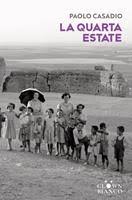
The Fourth Summer
Following an eventful journey and having lost her luggage, the young doctor Andrea Dalvina Zanardelli arrives in Ravenna to take up work at the Marina di Ravenna sanatorium, where "scrofulous" children from the orphanage are treated. The year is 1943. Dalvina comes from an affluent family on Lake Garda. Her very first encounter surprises her, when at the station she is asked whether she needs to g

Lineage and Blood
In fifteenth-century Transylvania, > there is a story fording rivers, flying through leafy woods, and snagging on the lips of passersby. A tale that horrifies, (...) an immortal creature of violent hunger, thirsty for blood, seemingly roams the countryside. (...) For two months, a comet has been furrowing the sky like a knife wound from which drips the blood of creation. It is Dracula—not the

The Eternal Virgin
The author imagines a former schoolmate, now a film producer, proposing that he write the screenplay for a film based on *Michael Kohlhaas*, an 1810 novella by Heinrich von Kleist. The plot lends itself to a theme particularly dear to Kenzaburo Oe: that of freedom and rebellion against the abuses of Power. Set in the sixteenth century, Von Kleist's novella recounts the story of a horse dealer who
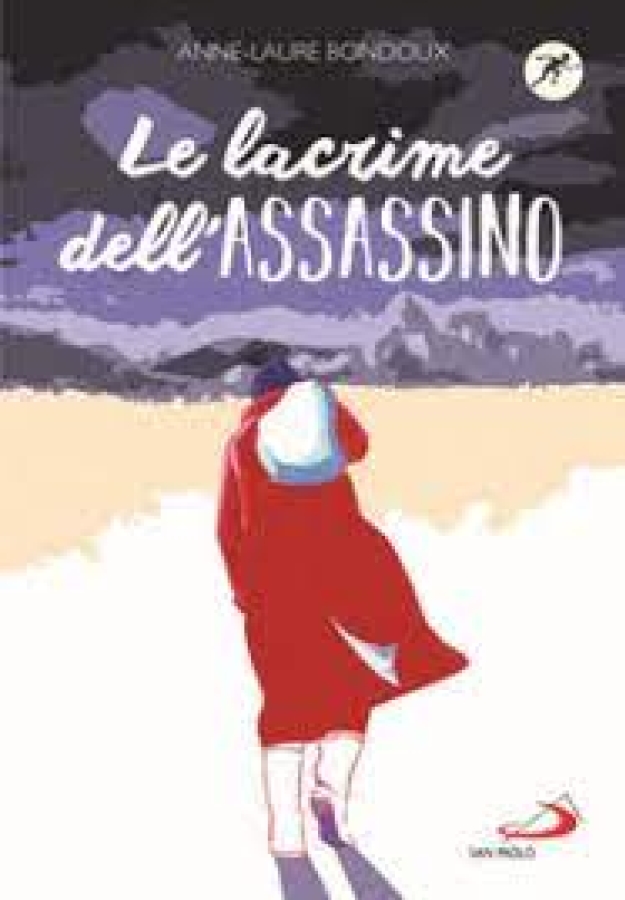
The Killer's Tears
Children are increasingly the innocent victims of war, violence, and death. One need only consider what we are witnessing today, in Ukraine and Palestine. For a child who has seen their parents murdered, is it still possible to rebuild a life? And can one forge a relationship with the killer capable of saving his soul? This novel is aimed at adolescents, yet it tackles weighty themes—unfortunately

The Thief and the Dogs
The novel depicts the gradual exhaustion of a man who, upon his release from prison, finds himself abandoned by the most significant figures in his life (his wife, his daughter, and his friend) and pursues an impossible revenge. It is a psychological and introspective journey (a sort of inward retreat) during which the protagonist fails even to perceive the love of those around him (the woman who

The Lantern of Diogenes
This is a narrative that can be divided into two parts. In the first, the author recounts his bicycle journey from Milan to the Romagna coast, although, in reality, he stops in the mountains of Modena. The second part depicts his stay in Bellaria. The first part is very fine and lively. One senses a feeling of escapism, of flight from the city and industrial society; the landscape, the inns, a
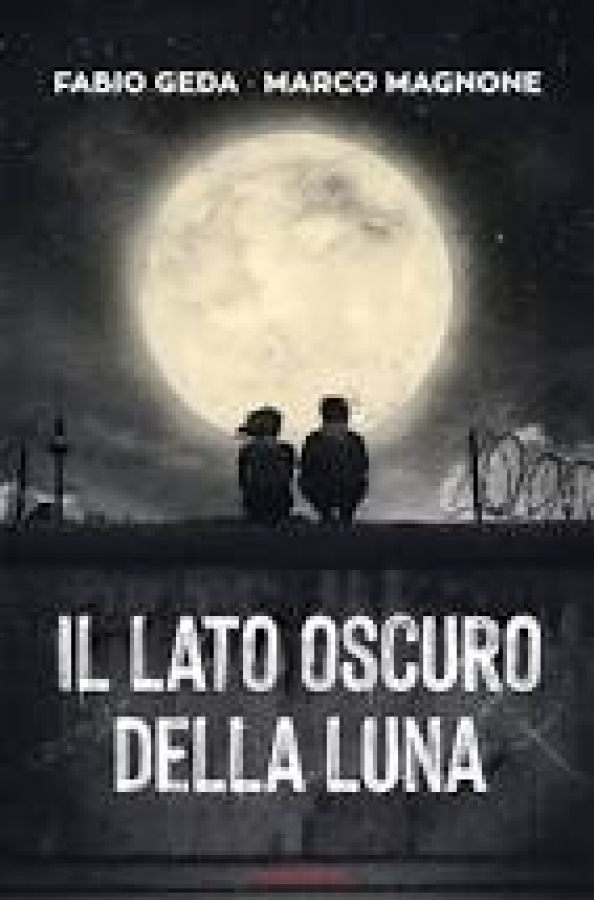
The Dark Side of the Moon
> Come to this wall if you hate your place/and face a taste of cosmic space/where no form of life can exist/and objects do nothing but fall (Joseph Brodsky, *The Berlin Wall Song*, 1983, from the special insert of *Internazionale*, 2019). This poem apt encapsulates the narrative under review, set in Berlin in 1975. It is no coincidence that the opening image is that of a bird falling, as if out o

White Nights
> I am a Dreamer... I have so little real life! In reality, I have lived moments such as these so rarely that I hope to make them live again in my dreams. I will dream of you all night, every week, every month, all year round.... This is how the first-person narrator expresses himself when, one night, he meets a weeping girl who also describes herself as a "dreamer." We will never learn his name;

Reading
The book aims to be a middle ground between a praise of books—that is, of reading—and the very meaning of reading. The author surveys numerous writers and texts to ultimately demonstrate how writing manages to portray, in differing ways, seemingly similar situations and contexts. Furthermore, reading is an introspective process through which people actively interpret the resonances emerging from
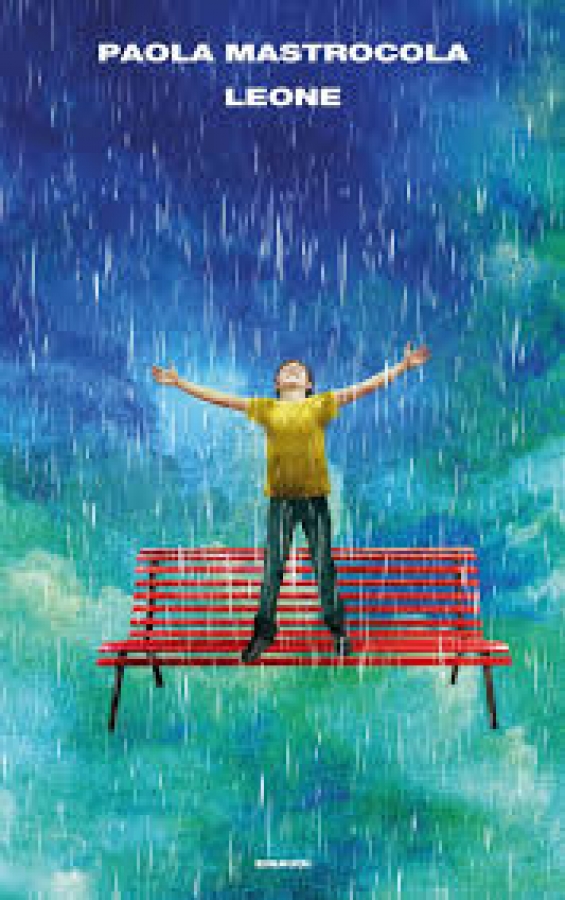
Lion
Social convention would have parents serve as the solid foundation of the family, and children as its fragile walls, in need of guidance and support. In this strange novel, that is not the case. Katia, a divorced mother, lives in uncertainty, > she felt somewhat on the border, between city and countryside, between the world as it had been and the new one just beginning. She was comfortable there
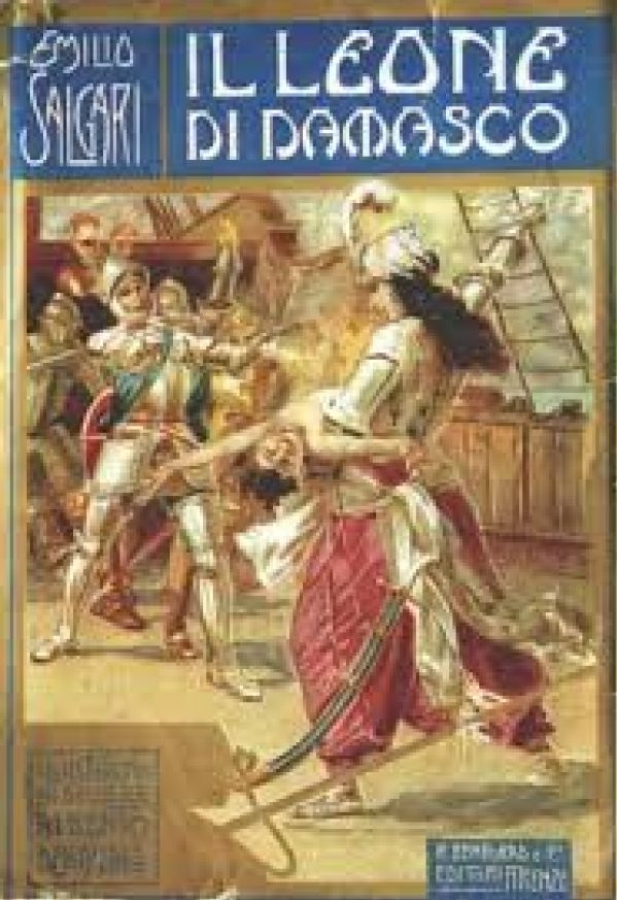
The Lion of Damascus
The novel is meant to be the sequel to *Capitan Tempesta*, a tale set in Famagusta in 1517 during the war between the Venetians and the Turks. The protagonist was a young noblewoman: a skilled swordswoman who, disguised as a man, had set out in search of her betrothed, abducted by the terrible Haradja. Salgari had succeeded in crafting a story full of allure, working upon gender ambiguity, vigor

The Lions of Sicily
The novel traces the entrepreneurial and human history of the Florio family across a century, from 1799 to 1869, when economic and social success was fully achieved; and it does so by structuring the narrative around the commodities that laid the foundation for that success: Spices, Silk, Bark (from which quinine is derived), Sulfur, Lace, Tuna, and Sand. Historically speaking, perhaps it would ha
The Leopard
The author is billed as a master of the thriller, superior even to Stieg Larsson. In truth, he is merely a pale heir. Harry Hole is a Norwegian crime-squad detective specializing in serial killers. Following an investigation in which the perpetrator attempted to murder his wife and son, Harry quit the force and sank into despair in Hong Kong, amidst alcohol, drugs, and gambling. There, a detec


Letters of a Novice
The book is structured in epistolary form, a collection of letters exchanged among the various protagonists. The central figure is a young girl, Rita, who, on the verge of taking the veil, writes a letter to a priest confessing her lack of vocation. At first, her arguments appear rational and straightforward; gradually, the account given by the girl—and by the other protagonists—turns ambiguous,

The Vanished Reader
Vince, an eternally precarious literature teacher, has invented a new profession for himself: bibliotherapy—dispensing reading advice to help people resolve their existential and psychological issues. But do books truly possess this therapeutic power, which «wards off the pull of emptiness and black bile» as the ancient Greeks believed? Or does reading fiction merely and humbly lead us to daydream

The Free Women of Magliano
Just like *Per le Antiche Scale*, the book is set in an asylum, and the protagonist, who is also the first-person narrator, is a psychiatrist. There is no plot; rather, it is a fragmented narrative composed of descriptions of individual figures—mostly women—within the institution: patients, nurses, nuns, and peasant women from the countryside surrounding the asylum. Some of them, such as Lella,
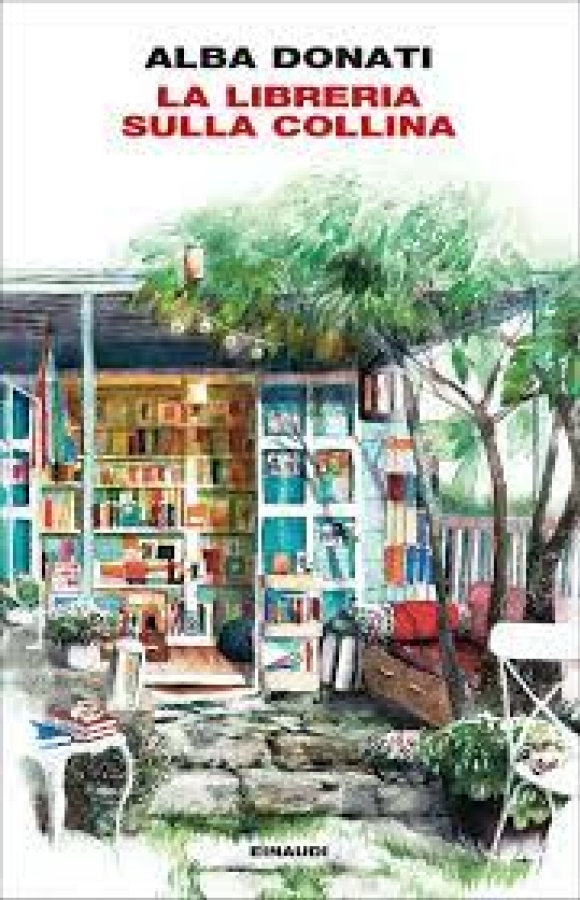
The Bookshop on the Hill
Alba Donati lives in Milan and works in the press office of a major publisher. How did she come up with the idea of moving to a remote village in Lunigiana to open a bookshop? The novel revolves around this question, and it does so in diary form, day by day. The author's immediate answer is that > things don't just come to mind; things smolder, ferment, clutter our imagination while we sleep, (.
The Black Book
The novel revolves around two figures: Galip is a young lawyer who has been abandoned by his wife and sets out in search of her, following the clues left behind by the novel’s other character, Celal. The latter is a journalist who has written a column for many years, and is both Galip’s cousin and his wife’s half-brother. The book unfolds across two voices. A third-person voice recounts Galip’s

Limonov
In *Diary of a Failure* (2004), Eduard Limonov imagines that > they will all come. The delinquents and the shy (...). The drug dealers and the procurers for brothels. The onanists will come, the lovers of porn magazines and films. (...) The pensioners will come, those who queue at the supermarket in the express lane for customers buying fewer than five items. (...) They will all come, take up ar

The Color Line
The novel is part of a trilogy that includes two other books: *Oltre Babilonia* from 2008 and *Adua* > from 2015 (reviews are available on this site). And indeed we find the same theme: the Black woman lives in a world of violence and abuse, because she is a woman and because she is Black. Taking up the narrative framework of *Adua* > the author pursues two parallel stories: that of Lafanu Brow

The Silent Duchess
We are in eighteenth-century Sicily. Marianna belongs to a wealthy aristocratic family from Palermo. She is deaf and mute, but her impairment has not prevented her from becoming a resolute, cultured, courted, and ultimately independent woman, capable of disregarding the rules and customs of her contemporary society. Indeed, > her impairment has made her more attentive to herself and to others

The Master and the Infanta
In Canto XVII of the *Paradiso*, in verses 43–45, Dante recounts that his ancestor Cacciaguida turns to music to explain his vision of the poet's impending exile: > thence (from the divine mind), even as to the ear comes / sweet harmony from an organ, so comes / to my sight the time being prepared for you . The sound of an instrument's strings, together with the sweetness of the voice, is a div

The House by the Medlar Tree
The setting is a fishing village in late nineteenth-century Sicily. The Malavoglia are a family of fishermen, owners of a boat (the *Provvidenza*) and a home with a small plot of land (the house by the medlar tree). Life unfolds serenely and with dignity within a community that respects the Malavoglia because they are economically self-sufficient. In short order, a succession of misfortunes plu