Guido Piovene
Books by this author (3)
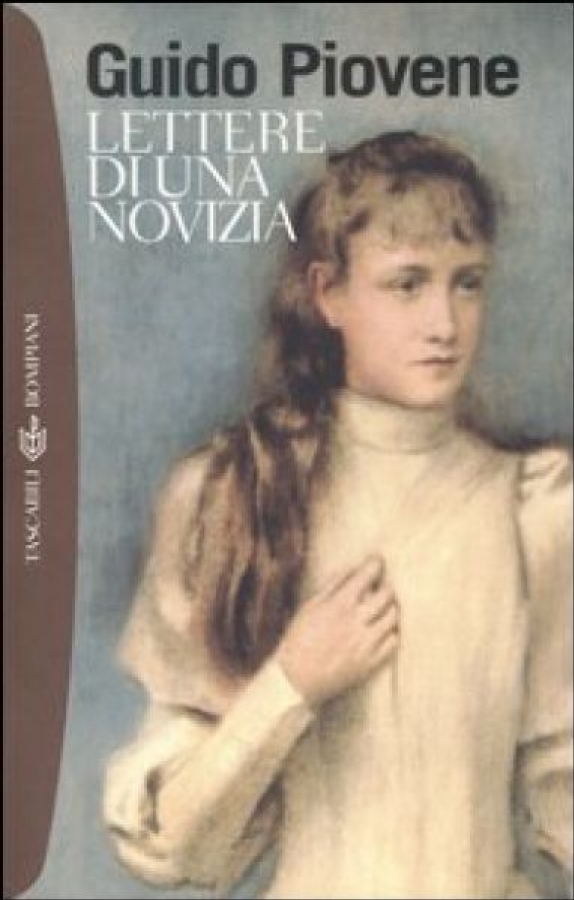
Letters of a Novice
The book is structured in epistolary form, a collection of letters exchanged among the various protagonists. The central figure is a young girl, Rita, who, on the verge of taking the veil, writes a letter to a priest confessing her lack of vocation. At first, her arguments appear rational and straightforward; gradually, the account given by the girl—and by the other protagonists—turns ambiguous, increasingly laying bare the complexity of the human soul. Rita is a young woman who genuinely wishes to aspire to goodness and clarity, yet is actually ruled by a languid passion, by far more material fantasies and longings. There is in her a sense of grievance against a fate that forced her to live in a convent from early childhood, contrary to her own sensuality and her yearning for life. The contradiction between appearance (the good, devout maiden) and her true being (the desire to seize the pleasures of life, beginning with love) drives her to cunning and deceit: her true personality emerges, however, over the course of the letters, when, confronted with the facts, she is forced into a gradual unveiling. The other protagonist is the mother. Hers is a clearer personality compared to her daughter's. She is evidently a frustrated, fragile woman who wishes to lean on her daughter, drawing her into her own romantic tribulations. When she realizes that her daughter rejects this role—and indeed deceives her—a deep hatred erupts, rooted in the nuisance of having had to look after a child and then an adolescent: hence also the decision to urge her to become a nun. Alongside the story of these two women are the priests and nuns: the ecclesiastical world acts with hypocrisy, seeking to conceal the scandal that gradually comes to light (Rita has killed a man, and the mother superior is aware of it) and, in some instances, allowing itself to be drawn by the girl into an intimacy that seems to suggest a romantic liaison (as in the case of Don Paolo). As the author states in his preface, > the characters in my book possess this inner diplomacy, but turned to an evil end and to the sole benefit of their indolence and selfishness , but, > the fanatical morality of inner clarity is of no use to art, since it combats and destroys the world of feelings, rendering them fictitious, framed as they are within rules foreign to the complexity of the human soul . The plot is very simple. From childhood, Rita is sent to boarding school. Leaving the country house is traumatic, as it separates her from her grandparents and from nature—the Venetian landscape she deeply loves. The girl experiences all this as an act of cruelty to which she must resign herself. On holiday at her mother's home, Rita believes she has rekindled an affectionate relationship with her, only to realize that the latter merely seeks support for her own fragility and romantic sorrows. In the meantime, she meets a young man with whom she falls in love and wishes to run away. When the young man tells her that he has no intention of fleeing with her, Rita, seized by rage, kills him. At this point, the mother, in agreement with the mother superior, decides to make her a nun in order to conceal the crime and the scandal. Yet Rita's refusal to accept this fate, relying on a series of letters—some anonymous—riddled with lies and half-truths, ultimately brings the crime to light. Now abandoned by all, deemed deranged, the poor girl ends up in prison, where she dies of pneumonia. The world's uncharitable judgment is encapsulated by the priest who delivers the news of her passing: > today I have reflected at length and ascertained that Rita was not good, though liked by all. And for this reason we say with special sorrow: May God have mercy on her! . The book may well be called perfect. The epistolary device, the gentle, lucid prose, the gradual thinning of the descriptions of Venetian landscapes—ever moments of serenity and sweetness—and the ability to bring forth little by little the complexity of the characters are all elements that make the reading enjoyable and richly suggestive.
Truth and Lie
Questo libro uscì postumo, ad un anno dalla morte dell'autore. Nel sito sono presenti le recensioni di *Lettere di una novizia* del 1941 (senza dubbio il migliore dei romanzi di Piovene) e di *Le stelle fredde* del 1971. Se in quest'ultimo racconto il confine tra la vita e la morte è dato da un vecchio ciliegio, la natura (il Carso, i colori, le antiche case) nella loro infinitezza e immobilità non offrono alcuna barriera. Come scrive Mario Luzi in *Diana, risveglio*, > nascono lieti immagini,/ filtra nel sangue, cieco nel ritorno, /lo spirito del sole, aure ci traggono/con sé: a esistere, a estinguerci in un giorno . Sergio lavora alla soprintendenza di Milano e scrive di politica, anche se ormai da tempo non ci crede più. Una telefonata del padre da Gorizia lo invita con urgenza ad una riunione familiare per decidere della sorte di Nico, un fratello con gravi problemi psichici. In realtà l'obiettivo è un altro: comunicare al figlio che intende suicidarsi. Tanti sono stati i presagi di questa cupa e drammatica decisione. Quando rivede il padre dopo molti anni Sergio si trova dinanzi ad una faccia, nella quale > c'era qualcosa di spaurito, la recessione verso il bambino magro che riappare per mescolarsi con il vecchio pesante, senile, uno sconcerto di crisalide in attesa di metamorfosi che non possono più avvenire . Così il padre ha cambiato casa, è andato a vivere in una grande dimora in campagna, con un salotto ammobiliato da un arredatore, una biblioteca dove i libri sono predisposti a caso (lui vecchio professore universitario), stanze disabitate, un ampio giardino trascurato, un automobile di lusso (lui così frugale). > Ecco quello che capita ai vecchi quando vogliono cambiar vita anziché sbrigarsi a lasciarla. (...) Non possediamo nulla fuorché il nostro passato. Cosa siamo, se non c'è più, o si rivolta contro rendendosi repellente, orribile? A questo punto il suicidio è avvenuto . Solo con la morte > il passato non fa più male. Non c'è più. Non esiste più niente di passato alle nostre spalle, nulla ci manda nulla, siamo appesi in un vuoto . Se il ragionamento del padre è razionale, il ritorno alla città della sua infanzia, ad un genitore distante ma ammirato, ad una natura, quella del Carso, ricca di «esistenze innumerevoli» (luce, colori, alberi protesi verso il cielo con le loro sagome contorte, voci diverse «non ancora confuse, d'amore, invocazione, lamento, sfida, desiderio di fuga», tutte queste immagini spingono Sergio al delirio. E' come «una di quelle zattere della memoria che affondano in un eccesso d'anima»; o come dice Luzi in *Anno* > tempo passato e prossimo si libra.../ Io, come sia, son qui venuto, avanzo/da tempi inconoscibili, ardo, attendo;/ senza fine divengo quel che sono,/trovo riposo in questa luce vuota . Sergio non ha la determinazione e la forza intellettuale del padre, si lascia trascinare nella depressione, con allucinazioni, deliranti affollamenti di incubi, che lo sovrastano e lo conducono, sempre e inesorabilmente, al cane della moglie, amico-nemico, vivo-morto micidiale, apparentemente senza un corpo: come un fantasma, > tornava, solo dal fondo buio, grande come una tigre, col pelo molto lungo agitato da un vento, gli occhi più strabici che mai e la corona d'oro in testa. Vicino alla morte, estenuato dalla «delusione, rinuncia, tristezza della verità, gusto di vivere esaurito»,Piovene cerca di imbastire una storia, qualcosa che, forse, avrebbe voluto essere un ritorno ai luoghi dell'infanzia e un tentativo di recuperare il rapporto con il padre e con la famiglia d'origine; decisamente non ci riesce perché i sogni, le divagazioni, i vaneggiamenti hanno la meglio sulla narrazione. Non c'è né una verità né una menzogna: la vita non brancola tra questi due capisaldi alternativi, si scivola invece nel vuoto verso la morte. Resta la scrittura a sorreggere il racconto, ma non è sufficiente. Perché non leggerlo? E' un delirio.
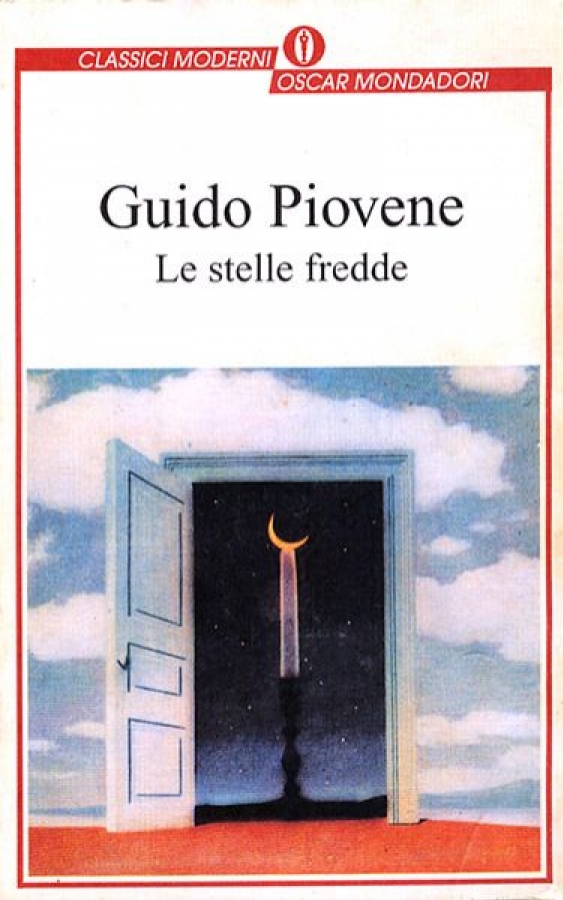
The Cold Stars
This is a highly complex book, in certain respects difficult to interpret, with pronounced philosophical undertones. The protagonist, an advertising executive, decides to abandon his job and the city to change his life, returning to the countryside where he owns a house. At the moment of making this decision, his attending physician introduces him to a young girl—entirely normal and very bright—who is nevertheless convinced that “she moves, but everyone else stands still.” When the protagonist asks whether he is alive or dead, given that in the girl’s eyes he does not move, the answer is unequivocal: “dead.” This encounter sets the plot of the novel in motion, charting a path toward the pulverization of the boundary between life and death: only the world is motionless, while living beings drift in a kind of limbo, in a state of perpetual transience. Upon arriving at the country house, the protagonist sees once more a cherry tree, which > radiated a great, almost boundless energy, transmitting an invisible vibration like ethereal waves reaching the stars; it was the energy of gods, of animals, and of the dead . As long as the cherry tree was alive, a certainty emanated from it, an “immense vocabulary”; but when the cherry tree is uprooted, the boundary between life and death collapses, making possible > the intrusion of another world into our habitual one, and our slipping into it from one moment to the next . A trajectory begins: first, the protagonist attempts to detach himself from the world; then, Dostoevsky’s return from the realm of the dead, channeled through the uprooted roots of the cherry tree, makes him realize that the only certainty is the world itself, cataloging and photographing everything, while living beings are nothing but illusion and transition: > I looked at the photographs of the cherry tree, and I understood that I too was a photograph, preserved in some archive. I was like a planet tracing an orbit with all its inhabitants, its cities, and its landscapes. The memory of the world had recorded everything and remembered everything . In this immutable world > nothing and no one exists that does not fall into it: person, thing, sound, smell, thought . The Self is lost in the immensity of the universe, in an enormous tree whose entire vocabulary is impossible to decipher, yet “the tangle of its branches permeates everything with its whiteness.” The descriptions of the landscape are magnificent, as are the dialogues, whereas the narrative frequently loses itself in philosophical digressions, at times redundant and prolix.