Finished reading on: August 11, 2008
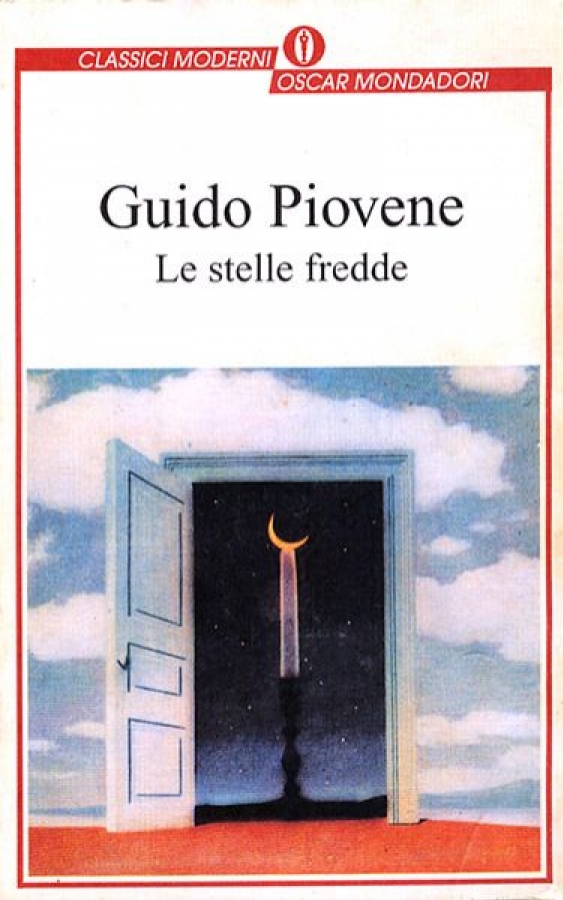
The Cold Stars
Title of the original version reviewed: «Le Stelle Fredde»
AI Translation Notice: This review was translated from the original Italian using artificial intelligence. Book quotes and excerpts are translated interpretations and will not match the author's original English phrasing or official published translations.
This is a highly complex book, in certain respects difficult to interpret, with pronounced philosophical undertones.
The protagonist, an advertising executive, decides to abandon his job and the city to change his life, returning to the countryside where he owns a house.
At the moment of making this decision, his attending physician introduces him to a young girl—entirely normal and very bright—who is nevertheless convinced that “she moves, but everyone else stands still.”
When the protagonist asks whether he is alive or dead, given that in the girl’s eyes he does not move, the answer is unequivocal: “dead.”
This encounter sets the plot of the novel in motion, charting a path toward the pulverization of the boundary between life and death: only the world is motionless, while living beings drift in a kind of limbo, in a state of perpetual transience.
Upon arriving at the country house, the protagonist sees once more a cherry tree, which
radiated a great, almost boundless energy, transmitting an invisible vibration like ethereal waves reaching the stars; it was the energy of gods, of animals, and of the dead
.
As long as the cherry tree was alive, a certainty emanated from it, an “immense vocabulary”; but when the cherry tree is uprooted, the boundary between life and death collapses, making possible
the intrusion of another world into our habitual one, and our slipping into it from one moment to the next
.
A trajectory begins: first, the protagonist attempts to detach himself from the world; then, Dostoevsky’s return from the realm of the dead, channeled through the uprooted roots of the cherry tree, makes him realize that the only certainty is the world itself, cataloging and photographing everything, while living beings are nothing but illusion and transition:
I looked at the photographs of the cherry tree, and I understood that I too was a photograph, preserved in some archive.
I was like a planet tracing an orbit with all its inhabitants, its cities, and its landscapes.
The memory of the world had recorded everything and remembered everything
.
In this immutable world
nothing and no one exists that does not fall into it: person, thing, sound, smell, thought
.
The Self is lost in the immensity of the universe, in an enormous tree whose entire vocabulary is impossible to decipher, yet “the tangle of its branches permeates everything with its whiteness.”
The descriptions of the landscape are magnificent, as are the dialogues, whereas the narrative frequently loses itself in philosophical digressions, at times redundant and prolix.