Finished reading on: October 31, 2008
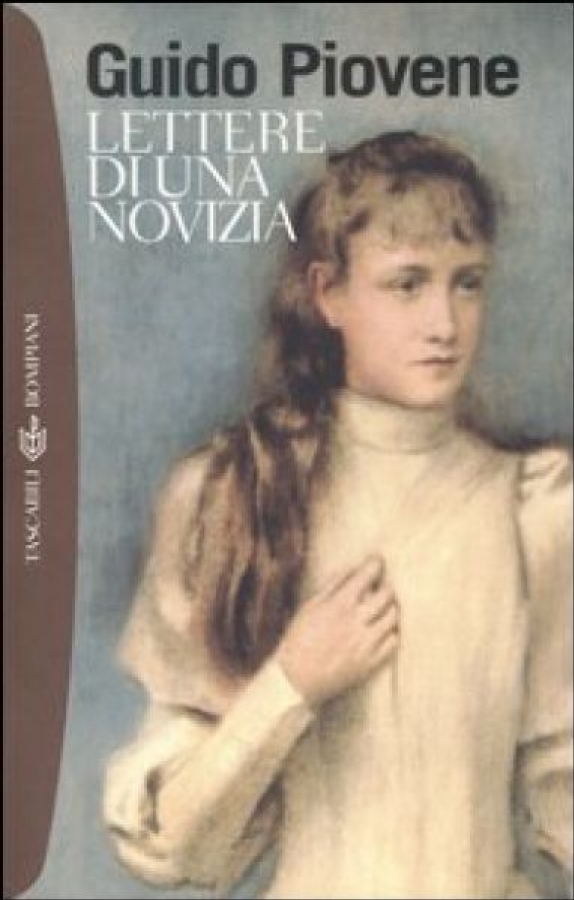
Letters of a Novice
Title of the original version reviewed: «Lettere di una novizia»
AI Translation Notice: This review was translated from the original Italian using artificial intelligence. Book quotes and excerpts are translated interpretations and will not match the author's original English phrasing or official published translations.
The book is structured in epistolary form, a collection of letters exchanged among the various protagonists.
The central figure is a young girl, Rita, who, on the verge of taking the veil, writes a letter to a priest confessing her lack of vocation.
At first, her arguments appear rational and straightforward; gradually, the account given by the girl—and by the other protagonists—turns ambiguous, increasingly laying bare the complexity of the human soul.
Rita is a young woman who genuinely wishes to aspire to goodness and clarity, yet is actually ruled by a languid passion, by far more material fantasies and longings.
There is in her a sense of grievance against a fate that forced her to live in a convent from early childhood, contrary to her own sensuality and her yearning for life.
The contradiction between appearance (the good, devout maiden) and her true being (the desire to seize the pleasures of life, beginning with love) drives her to cunning and deceit: her true personality emerges, however, over the course of the letters, when, confronted with the facts, she is forced into a gradual unveiling.
The other protagonist is the mother.
Hers is a clearer personality compared to her daughter's.
She is evidently a frustrated, fragile woman who wishes to lean on her daughter, drawing her into her own romantic tribulations.
When she realizes that her daughter rejects this role—and indeed deceives her—a deep hatred erupts, rooted in the nuisance of having had to look after a child and then an adolescent: hence also the decision to urge her to become a nun.
Alongside the story of these two women are the priests and nuns: the ecclesiastical world acts with hypocrisy, seeking to conceal the scandal that gradually comes to light (Rita has killed a man, and the mother superior is aware of it) and, in some instances, allowing itself to be drawn by the girl into an intimacy that seems to suggest a romantic liaison (as in the case of Don Paolo).
As the author states in his preface,
the characters in my book possess this inner diplomacy, but turned to an evil end and to the sole benefit of their indolence and selfishness
, but,
the fanatical morality of inner clarity is of no use to art, since it combats and destroys the world of feelings, rendering them fictitious, framed as they are within rules foreign to the complexity of the human soul
.
The plot is very simple.
From childhood, Rita is sent to boarding school.
Leaving the country house is traumatic, as it separates her from her grandparents and from nature—the Venetian landscape she deeply loves.
The girl experiences all this as an act of cruelty to which she must resign herself.
On holiday at her mother's home, Rita believes she has rekindled an affectionate relationship with her, only to realize that the latter merely seeks support for her own fragility and romantic sorrows.
In the meantime, she meets a young man with whom she falls in love and wishes to run away.
When the young man tells her that he has no intention of fleeing with her, Rita, seized by rage, kills him.
At this point, the mother, in agreement with the mother superior, decides to make her a nun in order to conceal the crime and the scandal.
Yet Rita's refusal to accept this fate, relying on a series of letters—some anonymous—riddled with lies and half-truths, ultimately brings the crime to light.
Now abandoned by all, deemed deranged, the poor girl ends up in prison, where she dies of pneumonia.
The world's uncharitable judgment is encapsulated by the priest who delivers the news of her passing:
today I have reflected at length and ascertained that Rita was not good, though liked by all.
And for this reason we say with special sorrow: May God have mercy on her!
.
The book may well be called perfect.
The epistolary device, the gentle, lucid prose, the gradual thinning of the descriptions of Venetian landscapes—ever moments of serenity and sweetness—and the ability to bring forth little by little the complexity of the characters are all elements that make the reading enjoyable and richly suggestive.