Finished reading on: September 25, 2021
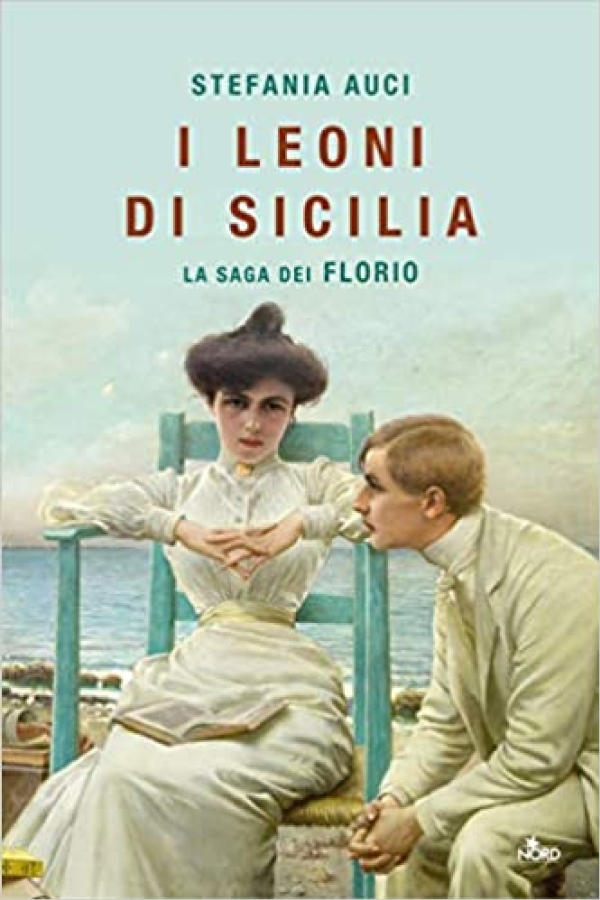
The Lions of Sicily
Title of the original version reviewed: «I leoni di Sicilia»
AI Translation Notice: This review was translated from the original Italian using artificial intelligence. Book quotes and excerpts are translated interpretations and will not match the author's original English phrasing or official published translations.
The novel traces the entrepreneurial and human history of the Florio family across a century, from 1799 to 1869, when economic and social success was fully achieved; and it does so by structuring the narrative around the commodities that laid the foundation for that success: Spices, Silk, Bark (from which quinine is derived), Sulfur, Lace, Tuna, and Sand. Historically speaking, perhaps it would have been appropriate to place greater emphasis on the other cornerstones of their rise: the fleet of steamships and thus technology, the concessions secured from the Bourbons and later from the new Kingdom, the usurious loans extended to the indebted Palermitan aristocracy, and their unscrupulous ties to political power. It is a grand family saga, boasting strong male figures while the female ones are relegated to supporting roles. If one were to seek a single interpretive key, it could be found in the John Milton quotation the author places at the opening:
The study of revenge, immortal hate, / And courage never to submit or yield
. The Florios hail from a small Calabrian village, and Paolo's decision to open a spice shop in Palermo creates a rift within the family: a dispute that lies at the root of a ruthless resentment never to be overcome, which shapes the very relationship between mother and son. Another element that hangs heavy over the entire story is Palermo:
strange city, wretched, filthy, and regal all at once, (...) they cannot fathom how the stench of the sewer can coexist with the scent of orange blossoms and jasmine adorning the courtyards of aristocratic palazzi. (...) As much as he might love her and consider himself her son, Palermo treated him as an outsider. He had tried to win her acceptance, had wooed her with wealth, had provided work, had brought prosperity. Perhaps this was what could not be forgiven: the work. The power. The eyes opened wide to the world, while Palermo kept hers firmly shut
. The Calabrian roots, as «bagnaroti», weigh on the Florios and lend them a hardness of character in business as well as in human relations. When Vincenzo, Paolo’s son, falls in love with Giulia, he makes her his mistress because the young woman does not belong to the Palermitan aristocracy; after two illegitimate daughters, he will marry her only when Giulia gives him a male heir and no noble daughter will have him as a husband, because he remains a «bagnaroto», wealthy though he may be. Thus Ignazio, Vincenzo’s son, chooses not to pursue the woman he loves, marrying a young aristocrat instead—at long last. In a suspended moment, stepping outside the role to which he is condemned, Ignazio looks at his mother.
And it is in that moment that he notices the dark circles under her eyes, the wrinkles around her lips, the lined forehead. How could she have aged so much? When did it happen?
To answer these questions, it would be necessary to unveil the inner world, the domain of feelings between mother and son, between husband and wife. Instead, there is an
ancient rift, which business and the intimacy forged over long years of proximity had been unable to heal. Intimacy, indeed. Not that of feelings...
The book could be defined as a fictionalized biography: a reconstruction of the historical context, an examination of the available documentation (how extensive remains unclear, not least because sources are not cited), and a narration of characters and events likely filtered through the author’s imagination. There was ample room to lend depth to the protagonists, especially the female ones. Take Giulia, for instance. She is introduced as a character rich in personality; raised within an entrepreneurial Milanese family, she is educated and well-versed in the dynamics of the business world. How is it possible that she succumbed so easily to the role of mistress and then to that of obedient wife, asserting her strength only in the bedroom? Why not "invent" a more complex, conflictual relationship between Vincenzo and Giulia? In the same vein, a slumberous, alluring Palermo lingers in the background; only rarely do the colors and sounds of a city undeniably known and loved by the author break through. Constrained by the family tree, the writer left no room for imagination, all too often reducing the narrative to a chronicle.
For someone like me, who appreciates rich, adjective-laden, almost baroque prose, an initial sense of resistance prevails against a dry, fragmented narrative style, lexically impoverished and simplistic. Then, perhaps because the writer grows more confident in her voice, one begins to appreciate the prose: it becomes evident that the simplicity is deliberate. The aim is to reach the widest possible readership and focus on the story itself, without getting lost in Pindaric and rhetorical flights of syntax and vocabulary. There remains a lingering nostalgia for a more lush and captivating style.
Why read it? It reads smoothly and is interesting, even if not gripping.