Finished reading on: April 10, 2023
The Vanished Reader
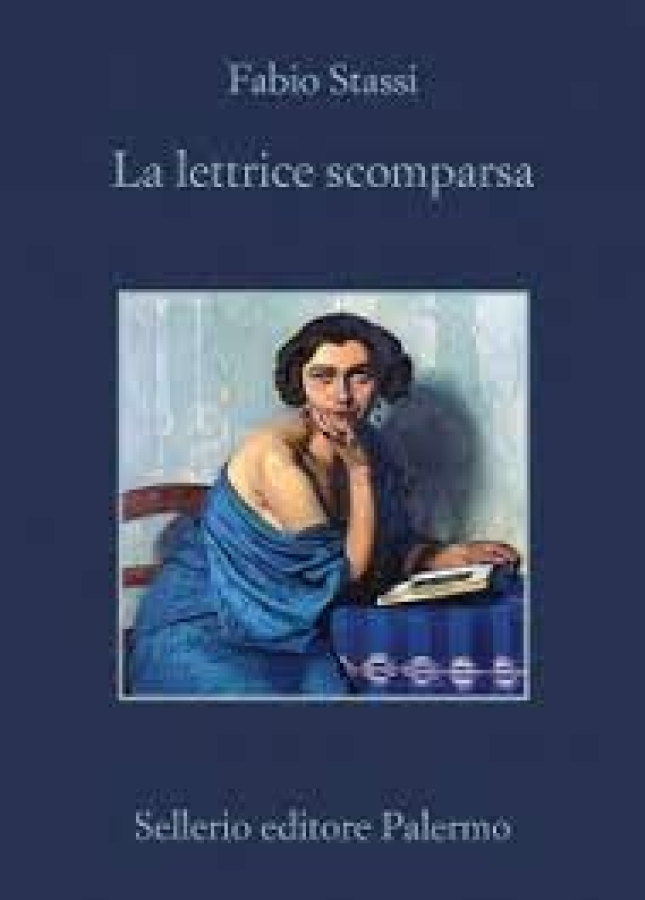
Title of the original version reviewed: «La lettrice scomparsa»
AI Translation Notice: This review was translated from the original Italian using artificial intelligence. Book quotes and excerpts are translated interpretations and will not match the author's original English phrasing or official published translations.
Vince, an eternally precarious literature teacher, has invented a new profession for himself: bibliotherapy—dispensing reading advice to help people resolve their existential and psychological issues. But do books truly possess this therapeutic power, which «wards off the pull of emptiness and black bile» as the ancient Greeks believed? Or does reading fiction merely and humbly lead us to daydream about another life, with a different ending? Hampered by a tenuous plot and flimsy characters, the novel attempts—perhaps—to answer these questions through two parallel narrative strands. In the first, we witness Vince’s sessions with his patients: women who come to recount their stories to a penniless, inexperienced therapist, sitting on the sofa bed of a squalid studio apartment. Some leave in indignation without paying; others accept his reading recommendations, though we will never know if they actually read the suggested titles. One might anticipate amusing or paradoxical scenes, but in truth, these consultations serve merely as a pretext for the author to flaunt his bookish erudition. Coupled with the French epigraphs opening each chapter, beyond the narrative void, one's mind turns not to Italo Calvino’s Six Memos for the Next Millennium, but rather to Matei Vișniec’s Panic Syndrome in the City of Lights, in which a chaotic succession of characters and authors overwhelms the reader in the absence of narrative unity (see the review on this site). Whence this compelling urge to foist a disguised bibliography upon us, much like in another tedious and futile book, that of Alba Donati (The Bookshop on the Hill, reviewed on this site)? The second strand concerns the disappearance of an elderly female neighbor, who left behind as her only trace a list of books borrowed from a local bookshop. What do all these authors have in common: from Paul Auster to Raymond Chandler and John Updike (several reviews of this author can be found on this site: Rabbit Redux, Terrorist, Villages) all the way to John Fante (on this site you can read reviews of 1933 Was a Bad Year, The Brotherhood of the Grape, Wait Until Spring, Bandini), among still others?
Inevitably, I wondered about them too: what relational dilemmas might they illuminate, and to what paths of self-awareness and reconstruction of the personality did they lead? I was terrified by this. Would I ever again read solely for pure, childlike pleasure?
It is difficult to find an interpretive key to the novel, beyond the flimsy investigative inquiry, tacked on merely to inject some semblance of pace into the storytelling. Certainly, the grand theme of the interplay between literature and life remains present, along with the yearning or hope of turning our dreams into reality. Perhaps meaning can be wrested from this deluge of cited books by returning to the author's locus: Rome.
Down below, Stassi notes, the city had once again become an anagram to be solved, a charade of streets heading in confusing directions. (...) Walking in Rome means moving toward something without any specific destination. At certain hours, this involuntary commuting becomes the space of a perfect solitude, one that brings neither pain nor sorrow.
Lacking any distinct personality, the prose flows smoothly within a skillful syntactic construction, the sentences gliding along effortlessly, unhindered and without friction. What emerges is the impression of an artificial narrative, lifelessly engineered at the desk: «literary emotions», as the author himself admits.
Why skip it? Pointless and prolix.