Orhan Pamuk
Books by this author (5)
The New Life
The novel’s protagonist is the book: a book, but also all books. > The culprit is not only that book, the book that deceived my son, but all books pouring from the printing presses; they are all enemies of our time, of our lives . Thus spoke Mehmet’s father menacingly—Mehmet being one of the novel’s central figures, the first to read the book and flee. The other two protagonists are Osman, a young student who falls in love with Canan, Mehmet’s girlfriend. It is she who leads Osman to read the book, and the two youths embark on a dizzying journey across Turkey, ostensibly in search of Mehmet, though they are in fact driven by a restlessness, an existential malaise ignited by the reading of the book: > passengers of night buses, wretched brothers, I know that you too seek that weightless moment. You want to be neither there nor here, to become other and wander in the pleasant garden that lies between the two worlds . Yet what are these two worlds? Current life and the new life, or the quest for the angel: death. The novel unfolds as a succession of bus journeys, fatal crashes, blaring television sets, travelers, and surreal landscapes. The search for Mehmet ends with Osman killing him, hoping to rid himself of his romantic rival; yet at this juncture the quest remains unfinished, for Osman has failed to attain any inner equilibrium. He resumes his travels, fully aware that the true threshold into a new life is death. > The angel appears at that magical moment of departure, and only then do we perceive the true meaning of the confusion we call life. Only then can we return home . And Osman indeed dies in a traffic accident, just like those he had witnessed during his bus journeys. What is the true meaning of this novel? First and foremost, reading a book represents a rupture in human equilibrium: > a good book is a piece of writing in which things that do not exist are explained, a kind of absence, a kind of death. Yet it is futile to search outside the book for the country that lies beyond words . Thus the book constitutes an alternative reality to actual existence: other worlds nourished by text and imagination. Their impact, however, is disruptive to human existence, exposing and laying bare the one-dimensionality of life. Another central theme is travel, perpetual motion, which serves as the sole point of stability for both the novel and its protagonist. When Osman realizes that Mehmet, too, had set out from the book and > after searches, journeys, and adventures in which he had encountered death, love, and misfortune, had attained what I had failed to attain: inner peace , he decides to kill him, seized by envy and resentment. The third theme is undoubtedly death, the much-sought angel: the journey, like life itself, inevitably culminates in death, with > my eyes dazzled and filled with dread, just as I had once gazed upon the incredible light spurting from the book, I would pass immediately into a new life . The new life, so desperately sought, is death. It is a cryptic novel, whose true meaning remains elusive. Each reader can draw their own interpretation: one tied to the social context suspended between modernity and tradition, an unhappy love story, or the notion of conspiracy as the engine of history. I prefer to believe that the book speaks of life’s multiple dimensions, of that relentless quest for a new life that perpetually animates humanity. The author also evokes Dante’s *Vita Nuova*, rebirth, the revelation of a more authentic spirituality.
My Father's Suitcase
> The culprit is not just that book, the book that deceived my son, but all books pouring from the printing presses; they are all enemies of our time, of our life . So speaks the protagonist’s father in the novel *The New Life*, referring to the book whose pursuit forms the core of the son’s whirlwind journey across Turkey. And in another passage of the same novel, Pamuk clarifies how > a good book is a piece of writing that explains things that do not exist, a sort of absence, a kind of death. But it is futile to search outside the book for the country that lies beyond words . These are bleak and despairing reflections that seem to lead, by way of literature, to loneliness, to the incommunicability between people and between them and objects, to a world where one shuts oneself away, "hiding the keys" (from *The Black Book*). Can narrative be joined with life, or is this possible only in the immobility of the mannequins so brilliantly fabulated in the final chapter of *The Black Book*? It is with the hope of clarifying what Pamuk truly thinks that one approaches the reading of this short volume, which collects several lectures by the author. And once again, Pamuk surprises us. In his Nobel lecture, the author addresses the theme of literature by recounting an emblematic episode from his life—a kind of metaphor, yet real. He relates how his father had kept in a small suitcase some pages written during a youthful stay in Paris. For a long time, Pamuk was afraid to open the suitcase > and read his notebooks because I knew he would not have tolerated the hardships I had endured, that it was not solitude he loved, but mingling with friends, the crowd, salons, jokes, company... In truth, I was angry with my father because he had not lived as I had, had not suffered anxieties, and had spent his life happily, laughing and joking with the people he cared for... (and only sometimes) my father would stretch out on the sofa before his books, let the volume or magazine in his hand drop, and lose himself for long stretches in his thoughts, in dreams . In the differences between the father, reconciled with the world, and the son, at odds with himself and his surrounding context, lies unhappiness—or rather, the pursuit of an unattainable happiness: > to be a writer is to acknowledge the secret wounds we carry inside us, wounds so secret that we ourselves are barely aware of them, patiently exploring them, studying them, illuminating them, and making these wounds and pains a part of our writing and our identity . Writing is like a medicine that "tastes of ink and paper"; if unable to take it, > I feel unhappiness turning me into a kind of concrete man . Shutting oneself in a room to write is > managing to find the hope to get through the day, or rather being happy and rejoicing if the book or page that takes you into a new world is good . Novels > are shaped to carry with happiness the dreams novelists wish to dream. Just as they bestow happiness upon the good reader, they offer the good writer a solid and secure new world where he can escape and be happy at every hour of the day . Writing and reading are an escape from reality into a world created by ourselves, > patiently, as if digging a well with a needle, it then appears to me more real than anything else . > Now I understand that thousands of miniaturists, in delicate secrecy drawing the very same patterns for centuries, had drawn the secret and delicate transformation of the world into another world (from *My Name Is Red*). Literature is a continual return to the same tender and nostalgic dream: yearning to be happy without truly transforming the world. Why read it? It clearly illuminates Pamuk’s thought.
My Name Is Red
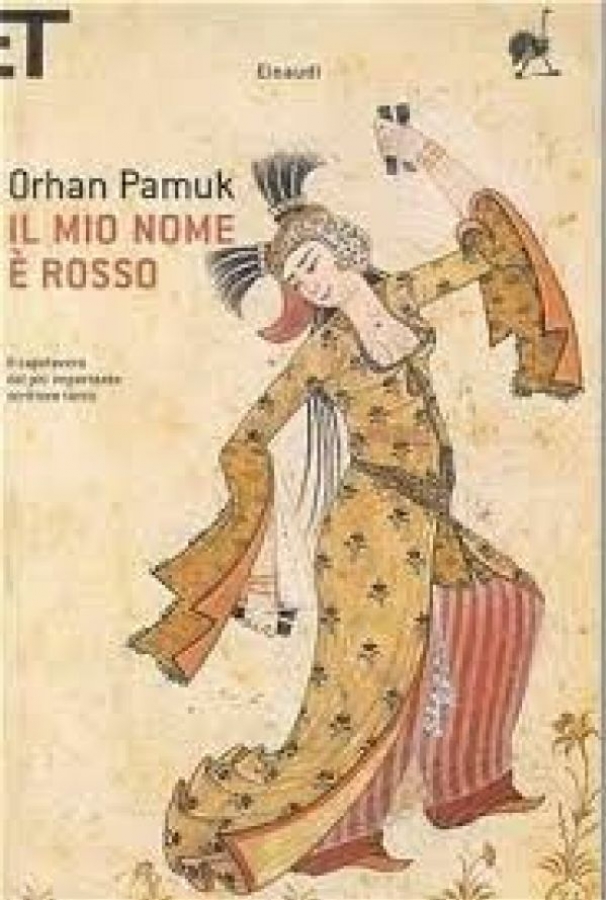
The book unfolds across multiple plotlines, difficult to trace back to a single narrative thread. A first path concerns the decline of the miniature painting technique, which had flourished in the sixteenth century under the influence of Persian and Chinese art. Ottoman miniature art justified the depiction of images to accompany books on the grounds that real individuals were never portrayed and no personal style existed; rather, figures and landscapes represented the world through the eye of God, constantly reiterating images and styles codified by the old masters and thus legitimized by the authority of the past. In truth, this approach served both as a justification and an ideal, since the miniaturist and the workshop to which he belonged would inevitably introduce subtle variations or innovatively assemble the iconography established by the great masters of the past. The Sultan decides to commission a book illustrated in the European style, introduced to the Ottomans via Venice. Given the sensitivity of the request—which risked provoking a fierce backlash from the orthodox—the execution of the book is not entrusted to the court workshop, but to an elderly artist, Uncle Effendi, who assigns individual illustrations to the workshop’s miniaturists themselves. The account of how the illustrations are executed is rendered by the author in a unique manner: from the perspectives of the various subjects depicted—the dog, the tree, the coin, the horse, Death, the color red. Through this narrative device, the author charts the history of miniature art, which has reached its twilight: following the Sultan’s death, it will be abandoned, deemed non-compliant with Islamic precepts. The history of this art form also opens up glimpses into the history of Islamic civilization (notably the Mongol invasions and the Ottoman-Persian wars) and into its predominant narrative themes, most notably the love story of *Khosrow and Shirin*. A second narrative arc takes the form of a murder mystery. One of the miniaturists murders a colleague and Uncle Effendi. Multiple motives intertwine: jealousy and envy, career ambition, and the conviction that a blasphemous book was being forged and had to be stopped. Here too, the author employs the device of narrating events from the viewpoints of different characters. The manner in which the investigation unfolds is striking: the Sultan entrusts the master of the miniature workshop with identifying the murderer among his own disciples, under penalty of torture and death for all of them. The master detects a peculiarity in the rendering of a horse—a distinctive trait that identifies the illustrator—and subsequently requests the Sultan’s permission to enter the treasury to study the antique manuscripts, thereby tracing the historical lineage of that stylistic mark and identifying the miniaturist through knowledge of his life and artistic development. In truth, the master has little concern for the investigation itself. Resolute in his desire to punish his disciples for betraying him by agreeing to collaborate on the book, his true interest lies in beholding the Sultan’s magnificent treasury one final time. An artistic heritage on the brink of vanishing, along with a history of struggles and creative breakthroughs, unfolds before the master, who resolves to blind himself in accordance with an ancient ritual of the great masters. A third narrative thread follows the romance between Black, returned to Istanbul after many years, and Shekure: a somber tale, for the woman does not truly love Black, consenting to marry him merely to secure her position and provide a father for her sons. These three narrative strands intertwine, drawn together into unity less by their plotlines than by a pervasive atmosphere of nostalgia and sorrow: a world is fading away. It is the great Ottoman Empire, and the confluence of civilizations and cultures rooted in the Islamic faith. Miniature painting cannot withstand the twofold assault of Western culture—which captures “the real” and asserts the artist's individuality—and religious orthodoxy. The master deliberately chooses to dismantle the workshop, realizing he can no longer rein in the aspirations of his disciples. The city’s streets and houses are desolate, love is reduced to mere expediency, and the children themselves appear as pale imitations of childhood. Black, who risked his life to unmask the killer out of love for Shekure, is destined to lead a somber, solitary existence beside a woman who does not love him. Why is it that we either do not change, or we change too fast, relinquishing what was handed down from the past? As the master says: > now I understand that thousands of miniaturists, drawing the very same designs in delicate secrecy for centuries, had drawn the secret and delicate transformation of the world into another world . It is not the plot events that engender this atmosphere of melancholy and decline, but the author’s style, which succeeds—through the juxtaposition of themes and the deliberate choice of adjectives—in creating a lingering sense of suspension and tender melancholy.
The Black Book
The novel revolves around two figures: Galip is a young lawyer who has been abandoned by his wife and sets out in search of her, following the clues left behind by the novel’s other character, Celal. The latter is a journalist who has written a column for many years, and is both Galip’s cousin and his wife’s half-brother. The book unfolds across two voices. A third-person voice recounts Galip’s wanderings through Istanbul on the trail of his wife and cousin. Celal, in the first person, draws upon reflections—paradoxical at times, yet always evocative—from his column to develop meditations on existence and Turkish society. It is a deeply dense, complex, and verbose book, with a very slow narrative pace that is, in many stretches, tedious. A primary theme is undoubtedly the context: Turkish society, poised between Europe and Asia, between modernity and Islamic tradition, perpetually on the verge of shedding nostalgia for past greatness, yet somehow pulled back by history. In an interview, the author stated that “Turkish is synonymous with confusion,” and this assertion emerges as the book’s dominant theme, particularly in its first part. From sociological and cultural contours, the focus shifts swiftly to an existential theme: nothing appears as it truly is. The wife’s ex-husband, a far-left militant, deliberately lives a bourgeois life with a wife and children. An old friend obsessively compiles documentation on leftist political movements, from the reading of which emerges a total confusion of names and facts, often fabricated. A former schoolmate married a man simply because he resembled Galip, believing that in this way she could live with him rather than with her husband. Objects themselves carry a double meaning: > what frightened him was the precise feeling that those objects had a different meaning... What is it used for?, he asked... it’s a table leg, replied the other, but some people slip them into the hem of curtains. It could also be made into a handle. What must one do to penetrate the arcane world of second meanings and uncover the mystery? . At this point, a philosophical theme opens up: there was once a felicitous era in which words (“letters”) fully represented the meaning of the object, and thus narrative and life corresponded. > In that Golden Age, the objects we placed in our homes coincided with the ones we dreamed of... everyone knew full well that words and what they described were so contiguous that, on foggy mornings, words and meanings blurred together. Upon waking, people could not distinguish dreams from reality, poetry from life, names from those who bore them. Stories and lives were so real that no one would have ever even conceived of asking where the former ended and the latter began. Dreams were lived, and lives were interpreted to their depths . The split between words and objects, between poetry and reality, between dream and life, leads to loneliness and to the incommunicability between people, as well as between people and objects: > the world he wanted to enter was not this one, but another realm that Celal had spent a lifetime creating. According to him, Celal, by calling things by their name and telling stories, had gradually walled off the world where he had sequestered himself, hiding the keys . Can one be oneself? Can narrative be reunited with life? Yes, but only in the stillness of mannequins, of cold objects that, even more than living beings, succeed in offering the exact representation of life. The key chapter of the book is that magnificent one depicting the visit to the underground workshop of a mannequin maker; in this place beneath represented life (“advertising mannequins”), this man had carried on the family tradition of crafting mannequins that genuinely represented the characters and figures of reality. Yet, if only mannequins allow narrative and life to reunite, is death not the sole moment in which the Golden Age is realized? The book appears in many respects intellectualistic and tedious, locked within philosophical and existential themes that cause the narrative and the characters themselves to lose their luster. Moreover, it feels fragmentary and redundant.
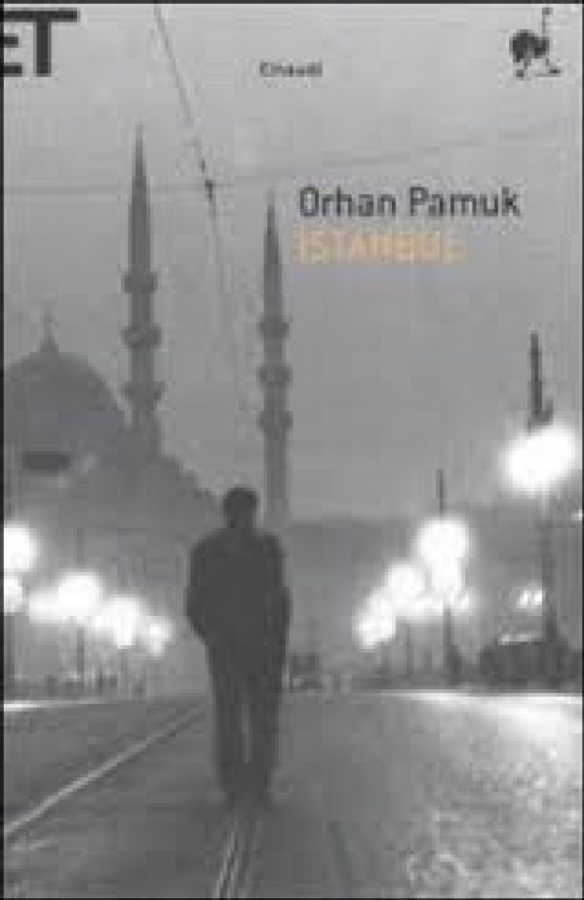
Istanbul
> I know that my inspiration draws strength from my attachment to the same house, the same street, the same view, and the same city... this bond of mine with Istanbul means that the fate of a city can become a person’s character . In this book, Pamuk recounts how he became a writer, yet in doing so he cannot help but speak of his Istanbul—the city of the 1950s and 60s, in full decline, not by chance narrated and photographed in black and white. So tight is the interweaving of the city’s history, enshrined in the “details of the past,” and the history of his own identity as a writer and an individual, that it becomes evident how the convulsive transformation of Istanbul has inexorably aged Pamuk himself, leaving him no longer an interpreter of the contemporary era. The novel has no plot in the strict sense, but is rather an assemblage of microcosms, episodes, reflections, and impressions. To give a general coherence to the narrative, three narrative threads can be identified. First and foremost, the biographical thread speaks of childhood and adolescence, of the extended Pamuk family, of the houses, and of the parents’ marital crisis. Pamuk’s formative journey does not involve the written page. There are neither reckless, childish attempts at writing nor great books that “changed a life.” The books read and reread by the young Pamuk are “the collection of facts and curiosities,” preferably enriched with drawings and photographs, that form > a seductive, terrible, and at times disgusting compendium of curiosities, events, and bizarre characters . From here, the transition to painting is natural: it allows one to contemplate and depict the panorama of Istanbul, initially “unanimously deemed beautiful,” later marked by the signs of decline. > I would draw the small mosques, the ruined walls, the Byzantine arches of which only a part remained visible, the overhanging wooden houses, and the modest dwellings . In painting, Pamuk discovers the pleasure of artistic creation. > Only now did I realize, through a more complex and astute spiritual leap, the desire to escape from myself.... sometimes I lost control of the drawing... and something would sweep me along impetuously, lifting me pleasantly: only when it ended, like a wave that dissolves as it breaks against the rocks, after freeing myself from wonder and sadness, could I rest a little . To understand why Pamuk decides to become a writer, abandoning the faculty of architecture and his passion for painting, one must turn to the second narrative thread: the survey of the great Turkish and Western writers who wrote about Istanbul. It is necessary to know this literature to appreciate the pages dedicated to it. One grasps, nonetheless, how Pamuk looks at his city through the words of Western observers, to the extent that the latter’s descriptions of Istanbul seem like > a personal memory. Naturally, this is also aided by the fact that Istanbul’s population has tenfold increased in the meantime, and certain avenues and squares, despite remaining entirely unchanged, now seem like completely different places due to the crowds. I always feel nostalgia for the years when the city was solitary and empty . One always returns to Istanbul, to > this mingling of history with ruins, of ruins with life, and of life with history . The third narrative thread consists of the description of the city, the contemplation of the Bosphorus, and wanderings among > the remnants of the old urban fabric made of wood and stone . Whoever has had the opportunity to lose themselves in the Armenian and Greek quarters or to walk down from Taksim toward the shores of the Bosphorus can appreciate what Pamuk writes and understand that > perhaps we love the place where we live only because we have no other choice, just as with family. Yet we must discover where and why to love it . It is futile to hope to find in the book a guide for a stay in Istanbul. Too distant and confined is Pamuk’s city compared to today’s—multiform, youthful, dynamic, and gigantic. The book speaks of the profound bond we all share with the places of our lives, which we often take for granted, as an obvious given. It is a reciprocal relationship, one that must be defended and built day by day, sustained by the daily effort to > attune one’s state of mind to the panoramas the city offers. And such an endeavor, if undertaken with naturalness and sincerity, leads one to unite, within memory, the city’s images with one’s deepest and most sincere feelings—with sorrow, with sadness, and from time to time with happiness, the joy of living, and optimism. If we learn to look at a city this way, and if we live in it long enough to find the opportunity to forge a lasting bond between its views and our truest, deepest feelings, after a while... the streets, the images, the landscapes of our city are transformed, one after the other, into realities that evoke certain feelings and states of mind within us . Why read it? Let us set Istanbul aside; let us speak of the bond with our own city, and of memories, and of feelings.