Finished reading on: November 02, 2006
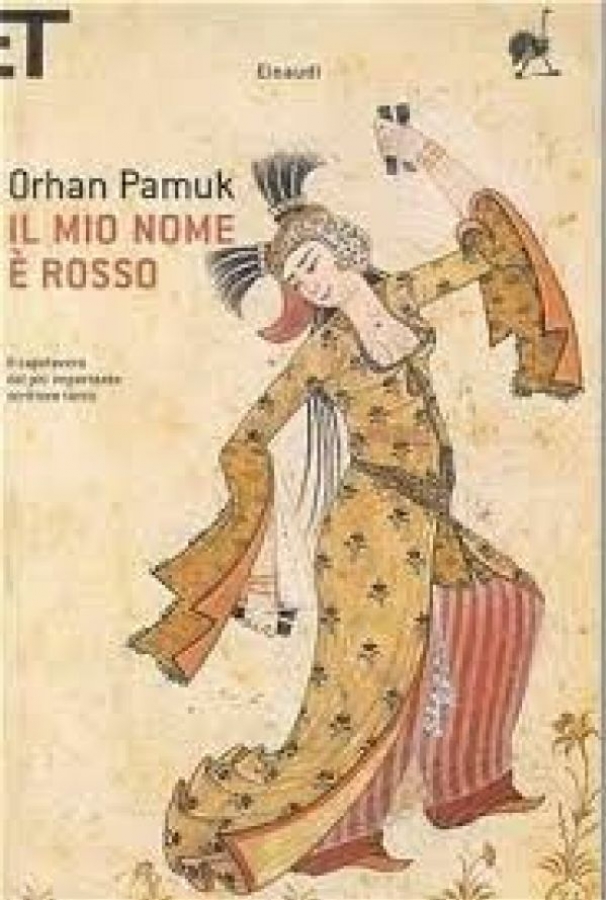
My Name Is Red
Title of the original version reviewed: «Il mio nome è rosso»
AI Translation Notice: This review was translated from the original Italian using artificial intelligence. Book quotes and excerpts are translated interpretations and will not match the author's original English phrasing or official published translations.
The book unfolds across multiple plotlines, difficult to trace back to a single narrative thread.
A first path concerns the decline of the miniature painting technique, which had flourished in the sixteenth century under the influence of Persian and Chinese art.
Ottoman miniature art justified the depiction of images to accompany books on the grounds that real individuals were never portrayed and no personal style existed; rather, figures and landscapes represented the world through the eye of God, constantly reiterating images and styles codified by the old masters and thus legitimized by the authority of the past.
In truth, this approach served both as a justification and an ideal, since the miniaturist and the workshop to which he belonged would inevitably introduce subtle variations or innovatively assemble the iconography established by the great masters of the past.
The Sultan decides to commission a book illustrated in the European style, introduced to the Ottomans via Venice.
Given the sensitivity of the request—which risked provoking a fierce backlash from the orthodox—the execution of the book is not entrusted to the court workshop, but to an elderly artist, Uncle Effendi, who assigns individual illustrations to the workshop’s miniaturists themselves.
The account of how the illustrations are executed is rendered by the author in a unique manner: from the perspectives of the various subjects depicted—the dog, the tree, the coin, the horse, Death, the color red.
Through this narrative device, the author charts the history of miniature art, which has reached its twilight: following the Sultan’s death, it will be abandoned, deemed non-compliant with Islamic precepts.
The history of this art form also opens up glimpses into the history of Islamic civilization (notably the Mongol invasions and the Ottoman-Persian wars) and into its predominant narrative themes, most notably the love story of Khosrow and Shirin.
A second narrative arc takes the form of a murder mystery.
One of the miniaturists murders a colleague and Uncle Effendi.
Multiple motives intertwine: jealousy and envy, career ambition, and the conviction that a blasphemous book was being forged and had to be stopped.
Here too, the author employs the device of narrating events from the viewpoints of different characters.
The manner in which the investigation unfolds is striking: the Sultan entrusts the master of the miniature workshop with identifying the murderer among his own disciples, under penalty of torture and death for all of them.
The master detects a peculiarity in the rendering of a horse—a distinctive trait that identifies the illustrator—and subsequently requests the Sultan’s permission to enter the treasury to study the antique manuscripts, thereby tracing the historical lineage of that stylistic mark and identifying the miniaturist through knowledge of his life and artistic development.
In truth, the master has little concern for the investigation itself.
Resolute in his desire to punish his disciples for betraying him by agreeing to collaborate on the book, his true interest lies in beholding the Sultan’s magnificent treasury one final time.
An artistic heritage on the brink of vanishing, along with a history of struggles and creative breakthroughs, unfolds before the master, who resolves to blind himself in accordance with an ancient ritual of the great masters.
A third narrative thread follows the romance between Black, returned to Istanbul after many years, and Shekure: a somber tale, for the woman does not truly love Black, consenting to marry him merely to secure her position and provide a father for her sons.
These three narrative strands intertwine, drawn together into unity less by their plotlines than by a pervasive atmosphere of nostalgia and sorrow: a world is fading away.
It is the great Ottoman Empire, and the confluence of civilizations and cultures rooted in the Islamic faith.
Miniature painting cannot withstand the twofold assault of Western culture—which captures “the real” and asserts the artist's individuality—and religious orthodoxy.
The master deliberately chooses to dismantle the workshop, realizing he can no longer rein in the aspirations of his disciples.
The city’s streets and houses are desolate, love is reduced to mere expediency, and the children themselves appear as pale imitations of childhood.
Black, who risked his life to unmask the killer out of love for Shekure, is destined to lead a somber, solitary existence beside a woman who does not love him.
Why is it that we either do not change, or we change too fast, relinquishing what was handed down from the past? As the master says:
now I understand that thousands of miniaturists, drawing the very same designs in delicate secrecy for centuries, had drawn the secret and delicate transformation of the world into another world
.
It is not the plot events that engender this atmosphere of melancholy and decline, but the author’s style, which succeeds—through the juxtaposition of themes and the deliberate choice of adjectives—in creating a lingering sense of suspension and tender melancholy.