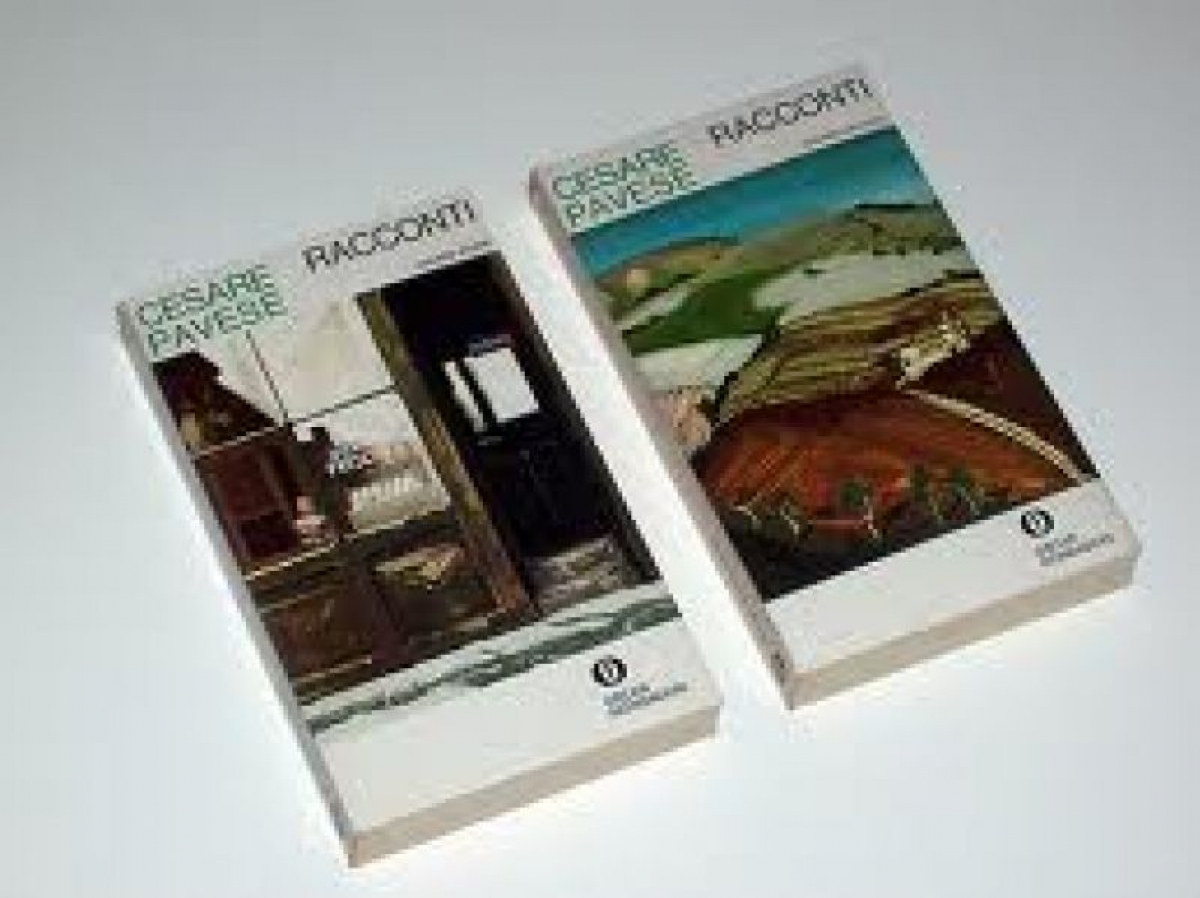
Short Stories
This volume brings together Cesare Pavese’s short stories written between 1936 and 1946. Many of them had already been published, principally in the collection *Fiera dʼAgosto*, while others are unpublished, at times left unfinished. These are the years of the author’s imprisonment and internal exile, of the partisan war, and of the early postwar period. The earliest stories possess the structure of miniature novels, displaying an attention to character and context that is no longer found in the postwar narratives, which become briefer, more meditative, and increasingly introspective. Already in "Terra dʼesilio", which opens the collection, the protagonist—"cast by strange turns of work to the very end of Italy"—reveals one of the stories' guiding threads: a sense of estrangement and yearning anticipation born of the contemplation of nature, of the sea, and of the hills. > Down there lay the sea. A remote, faded sea, which even today hovers deliriously behind all my melancholy. There all land came to an end upon barren, low-lying shores, a hazy immensity.... I would have wished for sheer void beyond that inhuman cliff . The style is spare, yet already symbolic. As one moves through the stories, it is possible to trace the evolution of the author's prose and expressive universe, culminating in the collection’s masterpiece: "Villa in collina". The protagonist has been invited to a reception at the villa he used to frequent as a boy. The narrative revolves around his unrequited love for Ginia—fatuous, enchanting, and treacherous all at once, yet never truly guilty. The story’s incipit is masterful. > I was walking back up the hill road, and the old backdrops of greenery and low stone walls, as they emerged around each bend, seemed false to me. I had lived away from them for so long, barely thinking of them in fleeting, distracted moments, that their actual presence now affected me merely as a symbol of the past. Yet the evening breeze and the scent of that earth were no symbols. Here I bodily recovered the atmosphere of my youth, for these things I had never forgotten; rather, in distant countrysides or along city avenues, I had often caught that scent in the air, savoring other times anew . The return to the world of youth, once so rich with expectations, proves to be a disillusionment, for Ginia now moves within a web of relationships wholly alien to him. Nothing remains for him but to walk away > without memories, barely answering in conversation, yearning for the moment I would be alone . Memory, nostalgia, and the pursuit of solitude become, in the subsequent stories, a "sweet captivity" (as Montale phrases it in *Riviere*), within which the author remains ensnared in increasingly existential terms. A stunning short story, "Il campo di granturco", provides the author with an occasion for self-reflection, since often "certain remote dialogues congeal and materialize over time into natural figures." One day he must have encountered this cornfield, though he could not recall it, but > every time I had dared to take a step inside that yellow forest, the field must have welcomed me with its crackling, sun-drenched voice.... in that crackling there was a deadly silence, characteristic of an enclosed, deserted place, which unfolded in the distant sky a promise of unknown, arduous life, seductive as the hills . Yet if in this story there still remains a sense of a future, in one of the last despair alone takes over. In "Risveglio", the protagonist does not answer his friend’s question about what he will do the following day. He merely turns around and walks away, abandoned to himself. > Nothing could now abolish the wretched reality of my existence... I resolved then to await the day out in the streets.... since the entire city was deserted, and the creaking of a distant cart belonged not to the city, but to the countryside . As many critics have observed, the characters in these stories are "the defeated," whose defeat nevertheless does not prevent them from preserving a mythical, boundless conception of life itself. This resides in the landscape of the hills and in the longed-for anticipation of the sea, while the social context and the various characters recede ever further into the background, mere supporting players in the only dialogue that truly matters: that between the author and nature. Pavese’s stylistic mastery lies in moving toward a lyrical and figurative dimension, all while maintaining a lean, seemingly realist prose. Why read it? Not all the stories are, of course, of the same caliber, but those highlighted here are reason enough to devote time to the reading.

The Short Stories of Franz Kafka
Kafka’s stories are generally brief writings, characterized by a paradoxical plot and cryptic, scarcely accessible content. Undoubtedly his most important story is *The Metamorphosis*, which can be regarded as a masterpiece both from a strictly literary perspective and in terms of its thematic substance. Gregor, a model employee, awakens transformed into a large insect, likely a cockroach. At first, the family is stunned; then they feel a stir of pity and compassion toward him (particularly the sister), and finally indifference and contempt set in. Ultimately, Gregor lets himself die, and his parents and sister do not even care where his body has been discarded. The story lends itself to multiple interpretations. First of all, what is the cause of this transformation? Is it, perhaps, the revolt of a young man compelled, at an early age, to support his family (the debt-ridden, idle father; the sister who aspires to be a violinist) under the rigid, oppressive control of an office manager? Following the night of the transformation, in the morning Gregor ought to depart early as usual, and the fact that he remains in his room is regarded by all as a display of indolence—itself already a defiance of social rules. > "Chief Clerk," Gregor cried out, "be patient for just a moment! Yet I am already feeling much better. How can such a thing happen!" . It is the theme of a bureaucratic, oppressive society that in no way tolerates the breach of rules. Yet there is, for me, another theme that is even more universal. What happens when a person falls prey to a serious illness? At first, everyone stands by him, full of compassion and kindness; then, little by little, people begin to alienate the patient, altering his habits and his furniture because he is no longer needed, until abandoning him to indifference. This is what happens to Gregor. At first, his sister cares for him, unlike his father, who from the very beginning rejects him to the point of grievously wounding him. Then the mother and sister decide to clear the room of furniture so as to make it easier for Gregor to crawl along the walls (a clear demonstration of a kindness that disregards the patient’s wishes). Gregor does not want this, because it signifies relinquishing his nature as a man, as a healthy person, and he reacts to the point of clinging to a picture to prevent them from taking it away. Then one day, as his sister plays the violin, Gregor, the large insect, is entranced by the sound and longs to draw near to his sister, to embrace her and have her play for him alone. Instead, he is cruelly repelled because he is a monster. Nothing remains but solitude and death. Alongside Gregor’s transformation, a change takes place within his relatives. The father goes back to work and struts around in his uniform, the sister works as a shop assistant and wears open collars, and the mother works as well. When Gregor is gone, a new life begins, wholly forgetful of the kinsman who had nonetheless helped them so much.
The Tales of Rainwater Pond
We are in Wexford, a county located in the north-eastern part of Ireland and depicted by Billy Roche across numerous theatrical works. The setting common to all the stories is the Rainwater pond: > a dark and treacherous place. You could drop a coin in and watch it enter the murky water, go home, have your tea, go to the cinema, return home a second time, (...) and that coin was still sinking as you walked back in for dinner . The dark allure of the pond led the protagonist of one of the most evocative stories, *One Is Not a Number*, a poor cripple marginalized and tormented by the other boys, to believe that “the place had magical properties that could somehow cure him,” if only he dipped his poor foot in the water. And lingering further on this splendid tale, magical indeed this pond must be if at a certain point a doppelgänger appears—the boy the wretched cripple wished he could have been: > he was the other me, the real me, the one who lived inside me, (...) handsome, strong, and healthy, with wheat-coloured hair and not a single freckle, (...) an elegant bearing, I thought, and he possessed a deep voice he never overused . And Evelyn, the girl loved in vain by the cripple, “walked home, floating an inch or two off the ground,” looking like a fairy. Has the ugly toad transformed into a graceful white swan? As in all the stories, the individual lives fade away, at times without a definitive conclusion, into the banality of existence—as though we were all trapped in our fate, in a prosaic, narrow, and stagnant everyday life; and Rainwater Pond is simultaneously a physical place and a metaphor for our suffering consciousness, powerless to break free. As the protagonist reflects in the final story, tellingly titled *A Quiet Place*, all that fretful striving to have a life of one’s own had merely been > a mysterious twist of fate that had ultimately worked for his own good; and at that moment it was all over, the actors had packed their costumes back into their suitcases and returned to everyday life . Across the sequence of stories, a rupture emerges, dividing the collection into two parts. Up to the tale of the cripple and his desperate loneliness—a long, intricate story—an ancestral magic realism holds sway, recalling Elsa Morante’s *Menzogna e Sortilegio* and Anna Maria Ortese’s *Il mare non bagna Napoli* and *Il Cardillo addolorato* (see the reviews on this site); at times, a yearning for love emerges that is meant to compensate for physical flaws (as with fat Maggie) or to help escape an unhappy condition: consider the splendid ending of *The Northern Lights*, where the protagonist returns home to find her husband disappointed to see her, without a trace of suspicion or jealousy: > she sighed to herself. Everything was clearer to her now. That night, after tea, she would go upstairs to paint a portrait of him: a solitary man seated at the window, before a silvery night sky . Incidentally, this is a very different reaction from that of Alba de Céspedes’ protagonist in *Da parte di lei*, who kills her husband because he is indifferent and bored (see the review on this site). In the second part, the narrative pace becomes brisk; the characters seem to be on a stage performing a play; the reading flows swiftly, intriguing and effortless, but the fantastical atmosphere of the earlier stories slowly disperses, and even the pond dissolves into the background, losing the uncanny and mysterious presence that lent the narrative its charm. We are far removed here from other Irish writers, with their captivating, evocative, at times impenetrable vocabulary, characterized by an intricate, often challenging syntax: neologisms, cadences that seem to stem from languages other than standard English, long sentences, digressions, and parenthetical clauses. Here, the sentences are short, with extensive punctuation, as is often the case in contemporary American fiction. The translation succeeds in conveying the deeper meaning of the stories, though one wonders whether it might have simplified the diction, as so frequently happens. Perhaps the prose and narrative structure reflect the author’s predominantly theatrical background. Why read it? A meditation on the human condition, viewed through a microcosm.

Italian Short Stories
Jhumpa Lahiri is an Anglo-Bengali writer (see the review of *The Namesake* on this website); captivated by the Italian language, she has performed "a kind of reverse game" (as she writes in the foreword): translating an anthology of short stories from our literature into English, and subsequently presenting that same anthology to the Italian public. The authors, some renowned and others less so, are examined through the magnifying glass of a foreigner, of a writer with her own distinct interpretive and literary imprint. The selection is vast: 40 authors presented in alphabetical order, from Elio Vittorini to Corrado Alvaro, in an innovative departure from the chronological criterion typically adopted by anthologies. Despite the extensive time span, from Giovanni Verga's *Fantasticheria*, published in 1880, to *Controtempo* > by Antonio Tabucchi from 2009, Lahiri sends us an important message: literature is timeless, the social and literary context does not matter; it is what is said and how it is said that must hold value for us. And so a curiosity arises: what holds value for Lahiri? To attempt to understand this, we can start with an Italian writer who is now forgotten. In an exquisite story, *La noce d'oro* > , Cristina Campo brings to light moments of her childhood and draws us into the origins of her passion for fairy tales and mysteries. Delving into her grandmother’s books, there appears before the young Cristina's fertile imagination a setting of tender funereal gloom where wasp-waisted princesses appeared to wear corsets and perhaps even hairpieces, in vast, gloomy-grey palaces. (...) I discovered then, with a shudder, that those fateful places and characters were not, all things considered, different from the yellowed and unsettling cabinet photographs of my grandmother as a young woman and of other beautiful dead kinswomen which my mother, in green leather cases, always carried with her on her travels > . What difference, then, is there between the realm of fairy tales and the real world? None; it is like visiting one's dead at the cemetery and discovering, stunned and frightened, the marvel: the ciphered names, the hieroglyphic inscriptions were suddenly replaced, on the soft marble, by their names, my very own, the ones I myself wore around my neck on the gold medallion. (...) The fairy tale was there, terrible and radiant, resolved for a moment and irresolvable: the eternal one, ever-returning in dreams, a viaticum for pilgrimage, a golden walnut to keep in the mouth, to crush between the teeth in the moment of extreme danger > . Literature is that golden walnut which, blending fantasy and reality, shields us from the thought of Death. Giuseppe Tomasi di Lampedusa had only a few months left to live when he wrote a disquieting story of rare elegance: *La sirena*. The narrator, the sole "surviving specimen" > of an ancient Sicilian family, meets in Turin a fellow countryman, the most illustrious Hellenist of his time. He manages to win the eminent professor's confidence, to the point of being invited to his home. Here he discovers that the elderly scholar lives alone and has never associated with the opposite sex, despite having been a young man of extraordinary beauty, a kind of Greek god. What are the reasons for a misogyny pursued throughout an entire lifetime? As in *The Thousand and One Nights* > (see the review on this website), we enter a literary matryoshka that leads us into a legendary mythological tale set within a prosaic bourgeois narrative. On a beach of rare beauty, before a pure expanse of sea, the professor, still young, declaimed aloud the verses of the poets, and the names of those forgotten Gods, ignored by most, once again brushed the surface of that sea which once, at their mere sound, would rise in turmoil or calm into stillness > . And as if the ancient tongue, recited by the young Hellenist, had revived the wonders of myth and sorcery, a Siren emerged: lying on her back, her head rested on her crossed hands; with calm shamelessness she showed the delicate down under her armpits, her parted breasts, her perfect belly; from her rose what I have clumsily called a perfume, a magical scent of the sea, of youthful voluptuousness." And the Siren said to him, "You are young and handsome, you should follow me now into the sea and escape pain, escape old age. (...) I have loved you and, remember, when you are weary, when you can bear no more, you need only lean out over the sea and call me: I will always be there, for I am everywhere, and your dream of slumber will come true > . There is, then, somewhere within our own imagination, a lifeline against suffering and Death. It may be a fleeting encounter with a gentleman that makes us dream, as occurs in *La signora* > by Lalla Romano, or it could be a hybrid creature, like the Centaur, whose unrequited love unleashes his fury (see Primo Levi's *Questio de Centauris* > ), or, finally, escape from grief might reside in an ancestral and ill-fated affection for a young doe, as in the story *La cerbiatta* by Grazia Deledda. As we read in the magnificent tale "The Porter and the Ladies" from *The Thousand and One Nights*, > all that you see us do, all that you observe around us... do not seek to understand the reason for it . The selection of stories and authors is intensely personal; fortunately, Lahiri did not study Italian literature from the critical handbooks of our homegrown professors. Instead, she allowed herself to be guided by curiosity, by even serendipitous recommendations, and by a very distinct taste regarding who and what ought to be read. With this approach, a literature emerges that is markedly different from the one we studied: off to the scrapheap with supposed verismo and neorealism; a welcoming embrace for ambiguous, fantastical, and far-fetched tales; and a rediscovery of authors—both male and female—who had been neglected or even ill-treated. Some writers emerge as not so timely or vital (consider the celebrated *Un marziano a Roma* by Ennio Flaiano), while others return to the fore, such as Fabrizia Ramondino with her story *La Torre*. Why read it? An engaging and innovative survey of Italian literature.
Roman Tales
In the short story *Casa Luminosa*, a young migrant family has arrived in Rome, believing they have found a home where they can live in peace; but the neighbors, incited by the "crow-women," insult and threaten the harmless married couple. The wife returns to her native country while the husband stays in Italy. He goes into a bar and watches a gentleman quietly sipping a chinotto. > I must say I was somewhat amazed, and perhaps also a bit envious of someone who felt so at home in that place, who couldn't care less about boundaries, who wasn't afraid of being a nuisance. Watching him, I had realized how much I had felt, my entire life, either an intruder or merely passing through. The theme of the wanderer who no longer has a place of his own is the common thread running through this collection of short stories, which, rather than Moravia's prose—echoed in the title—evokes that of Mario Soldati (see the reviews of this author's novels on this site, particularly *L'attore*) and the claustrophobic atmosphere of Dino Buzzati's *Sessanta racconti* (likewise reviewed on this site). The intruder is not merely the migrant; it is all of us, isolated and scattered across a Rome poised "between inferno and paradise." The protagonists of the splendid story *La scalinata* (a pivotal juncture of the collection) are all the adrift souls of our society. "The mother" climbs the steps in the early morning > and takes her cell phone out of her bag to snap yet another photo of the view. She immediately sends it to her son, (...) he lives with his grandparents on another continent, in a humid city full of crows and palm trees and dust. "The widow" > who walks down the steps in the late morning, is afraid of the shattered glass and struggles to place her feet. (...) She also feels assaulted by everything they write with spray cans on the walls lining the steps. "The expatriate" > who, at lunchtime, walks briskly across the steps, will undergo surgery the next day. (...) She would have preferred to return to her hometown, (...) but it would be too difficult to organize. "The girl," > who walks down the steps at two in the afternoon, is surrounded by many other girls. (...) Only, unlike the others, this girl doesn't wear miniskirts that look like soft lampshades. (...) Every day, for two or three minutes, (...) without their knowing, she merges into the collective organism, into the arms, the smooth, bare legs, the loose hair, and temporarily imagines being one of them. The "two brothers," who sit on the steps toward sunset having a beer, discover that their father is moving in with a friend and nothing remains of their childhood but a nostalgic memory. "The screenwriter," who lives in a building right beside the steps and wanders through Pasolini's wondrous Rome only in summer (while his wife is at the seaside), ends up mugged on the steps. How does the author, who divides her life between America and Italy, position herself in relation to these exiles and to a Rome that is dazzling yet repulsive, where everyone feels like a foreigner? Like Manto, the "crude virgin" sung by Dante in Canto XX of the *Inferno*, the writer is condemned to "fecer malie con erbe e con imago" (line 123 of the Canto), not to prophesy the future, but to remain imprisoned in remembrance, like Dante's soothsayers walking with their heads turned backward. In the final story, *Dante Alighieri* (a title evocative of her love for our language), the narrator's "I" steps into the open. As the plane descends toward Fiumicino, the author surveys her life as if from above, returning in her mind to the naive, desperate little letter from her first love, who wrote "Dante Alighieri" on the envelope, perhaps to suggest she was his Beatrice. Why, the author wonders, do memories resurface precisely when > the skin has grown thin? And why in Rome of all places, > by now full of broken, mistaken, scarred, discarded, departed things, and yet I cannot bring myself to sever the threads? Jhumpa Lahiri is a great Anglo-Bengali writer (on this site one can read *The Nickname*); she has edited an interesting and wide-ranging anthology of Italian short stories, spanning from Verga to Tabucchi (see the review of *Racconti italiani* on this site). It is precisely from the choice of stories and authors, often unmentioned in school anthologies, that the author's attention to "outsiders" and to "reverie" emerges. It is a trait also found in *Racconti romani*, which collects and rearranges many pieces previously published in magazines. At first, Lahiri's writing is timid and at times hesitant, but it grows increasingly confident, with complex syntax and rich adjectival phrasing: a style undeniably born of a close reading of our classics, particularly Dante. Moreover, even in English, Lahiri is not a sparse, minimalist author; rather, she loves elegance and the meticulous pursuit of words—perhaps this, too, is why she fell in love with our language. Why read it? Intense and enjoyable.
The Girl Who Played with Fire
The novel is, in some ways, a continuation of the previous book. This time the protagonist is the girl, Lisbeth Salander. The opening is slow and leisurely. Lisbeth, now immensely wealthy, lives in the Caribbean and later returns to Sweden, where she resumes a relationship with an old friend and reconnects with her former guardian, hospitalized after a stroke. The journalist, on the other hand, is involved in an investigation into sexual exploitation, conducted by a couple—a university researcher and a journalist. Meanwhile, Lisbeth’s new guardian, a depraved lawyer, seeks revenge against the girl, who holds him in her grip with video footage showing him raping her, and thus enlists a gang of criminals. At this point, the novel takes on a more intense rhythm: the lawyer is murdered with the same gun used that same night to assassinate the university researcher and her cohabiting journalist partner. Lisbeth is accused, dredging up the old narrative of the girl’s psychological instability. The entire country is drawn into the hunt for her, whom both the mass media and the police depict as a psychopath. It is evident that the truth is entirely different: the girl had been branded a psychopath (and consequently first committed to an asylum and later placed under guardianship) because she was the daughter of a notorious Russian spy who had defected to Sweden. The girl’s father was in fact—he, truly—a violent psychopath, and he is behind the murders out of fear that the truth will be exposed. A series of adventures ensues, but in the end the girl is saved, this time, by her journalist friend: > she opened her eyes a little and stared at him for a long moment. Her gaze was unfocused. He heard her murmur something so softly that he could barely make out the words, goddamn Kalle Blomkvist . The themes of sex and sexual violence against women remain the central subjects of the book. Added to these are two others, which gain prominence as the novel unfolds: on the one hand, a corrupt and superficial police apparatus; on the other, child social services, which often operate according to conventional formulas and under pressure from psychologists and experts who are themselves corrupt and dominated by obsessions and stereotypes. Lisbeth was a victim not only of the secret services, who wanted to institutionalize her to avoid complications in managing an inconvenient figure, as her father was, but she also suffers from the entrenched attitudes of the social welfare system, which views «outsiders» as a threat to social cohesion, irrespective of their intelligence and fundamental honesty. It is the antisocial individual who causes disturbance and must somehow be removed. The book is weighed down by too many «digressions» and characters relative to the central plot; at times, the dialogue proves prolix and repetitive, just as certain narrative resolutions appear somewhat predictable and implausible: for instance, the police failing to examine the murdered journalist’s computer, the presence of a giant—incidentally the girl’s half-brother—who seems invincible because he cannot feel pain, yet is easily chained up by Blomkvist, and the girl’s survival, managing to save herself despite having been buried alive.
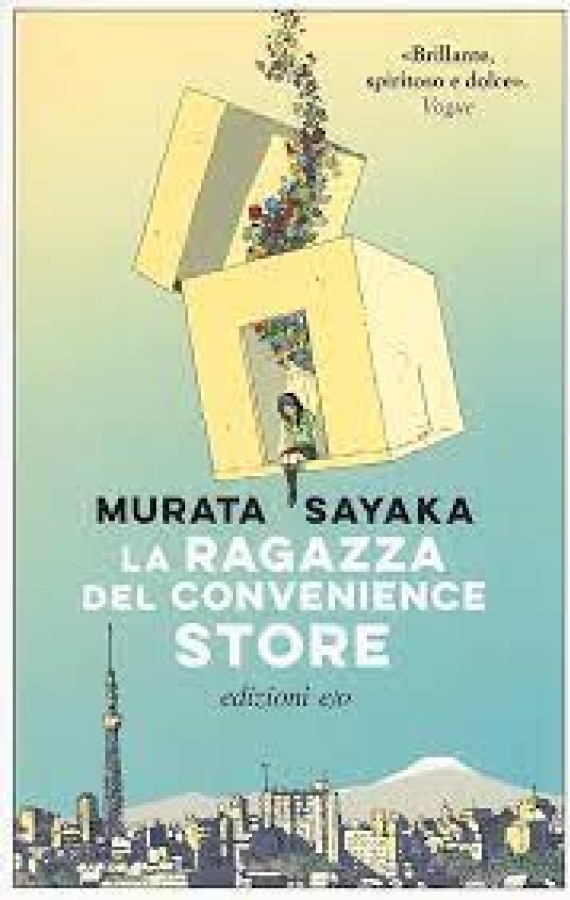
Convenience Store Woman
In Japan, *konbini* are small convenience stores stocking everything; and it is here that a story unfolds, seemingly light and predictable, which instead confronts a crucial issue: as the protagonist observes following a conversation with her sister, people prefer someone who is > "normal," even if plagued with problems, to a sister who is quiet but "abnormal," from another planet. Keiko grew up in a peaceful household, with attentive parents and a loving sister; yet from early childhood she was a "strange" girl—antisocial, at times even aggressive. The widespread disapproval following singular acts, such as killing a sparrow, led her to withdraw into herself. > I was approaching adulthood, the hour of truth, and kept telling myself that I had to be cured at all costs. The turning point comes when she is hired at a *konbini*. After a brief training period, Keiko learns how to stock shelves, highlighting promotional items, keep the store clean, and, above all, greet customers in a loud voice. > Irasshaimase! (welcome, in Japanese) I cried (...) bowing by the book and beginning to scan the items. In that moment, for the first time in my life, I savored the feeling of having found my place in the world. I am born, at last!, I thought elatedly. (...) The repeated chime that heralds the entrance of customers rings out like church bells. The rectangular box of luminous, transparent glass takes me into itself. A perfect world, which continues to turn relentlessly. I hold a blind, absolute faith in this gleaming microcosm— With gentle irony, the author guides us to appreciate life in the *konbini*: the bustle of customers, colleagues growing increasingly indistinguishable in their demeanor and even their accents, the succession of store managers, each to be accepted along with their flaws, and then the merchandise on the shelves—the heart of the store—products that have evolved over time to adapt to shifting patterns of consumption. The years go by; Keiko grows older under her part-time contract, living in a squalid studio apartment, still a virgin. She is content, fulfilled by the "music of the *konbini*," > a myriad of sounds blending together and seeping endlessly into me. For her parents and sister, for her friends as well as her own coworkers, Keiko cannot be happy because she is different, estranged from social conventions dictating that a woman must marry, procreate and raise children, and hold a secure job with a decent wage. To justify her "strange" life, Keiko invents an illness, but this excuse cannot hold up for long. To silence everyone—and not out of affection—Keiko takes in a selfish, deadbeat young man; at last, she can claim to have a man, perhaps even marry. > Virgin, spinster, and a poor *konbini* clerk, (...) everyone will believe you are sexually the same, and you will be just like all the other women on the planet. Yet Keiko discovers that within her "gleaming microcosm" she is no longer merely the clerk to be dealt with professionally; she is a vulnerable woman, before whom > it was no longer my eighth manager, but merely a male of the human species, eager like all the rest to see one of his own kind mate and reproduce. In the name of the perpetuation of the species. What is left to do? Flee the *konbini* in search of something else, or recognize without pretense that > even before being a human being, I am a *konbini* clerk? With engaging prose and a narrative detached from psychologisms and moral judgments, the author shows us that not everyone must belong to the "tribe of the normal," that the pursuit of happiness takes many paths, and that embracing one's own—however modest and devoid of ambition—allows one to be at peace with oneself. In the tale of the *konbini* girl, there is undeniably a critique of Japanese social conventions; from a distance, there also emerges the desire to turn inward, to avoid being inevitably ensnared by love, sex, and childbearing. The *konbini* functions like a monastery where a woman can finally be free, shielded by the armor of professionalism within a workplace that is stationary, yet radiant with lights and sounds. The plot is tenuous, the narrative develops slowly, burdened by long, often tedious and inconclusive dialogues. The secondary characters are either banal or implausible, serving merely as foils to the protagonist: she never truly breaks free, in fact, from her own "narrating I," ironic and sharp, yet ultimately stale and predictable.
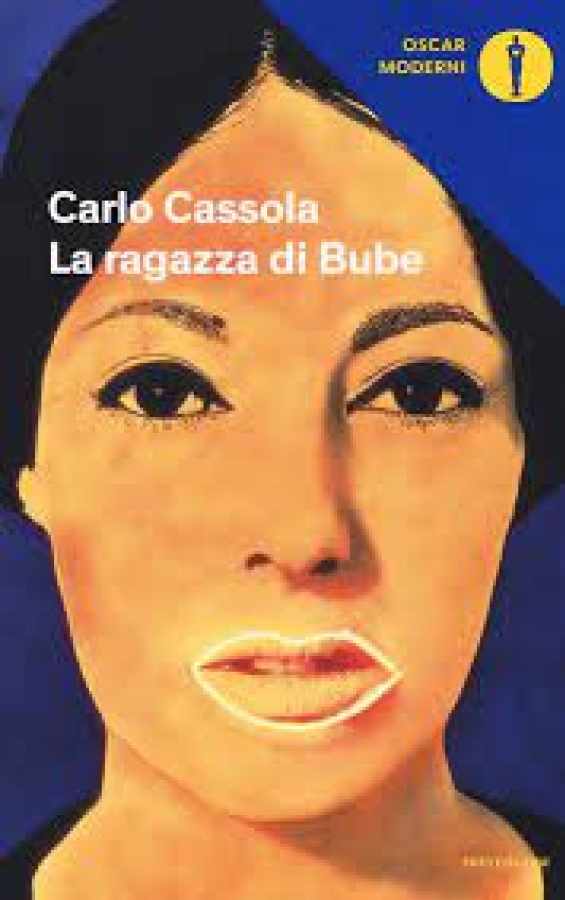
Bebo's Girl
In a celebrated ballata, Guido Cavalcanti sings of the pains of love: “this (is) a desperate and fierce torment,/which consumes and aches and burns and embitters”. Love does not bring happiness, especially if > I can find none of whom to beg for pity,/thanks to that lord/who turns the fortune of grief . This state of mind is depicted with melancholic sweetness by Cassola, and he does so from the point of view of an adolescent girl in an impoverished working-class family in a small Tuscan town newly liberated from the Nazi-Fascists in 1944. The setting is not what matters; it is far more worthwhile to delve into an adolescent girl’s discovery of love, recounted with a surprisingly feminine sensibility. Mara is the daughter of a “shiftless” bricklayer and an affectionate mother, shattered by the death of her son Sante, killed by the Nazi-Fascists. And it is none other than Bube, a partisan and friend of her brother, who upends Mara's life while she is still at the threshold of her first courtships. The young man has come to visit Mara’s father, a figure in the local Communist party. The girl is drawn to the reticent Bube, who possesses the aura of a grown man, yet remains shy and awkward. Mara > was used to daydreaming, and having long conversations with herself. (...) Bube: she didn’t like that name very much. (...) > I’ll call him... Bruno, Bruno is a handsome name, and besides, it suits him, because he really is dark . And when he gives her a pair of high heels, she feels more beautiful, and is thrilled to be alone with her fiancé. > Then Mara said to him: > how wonderful it would be to dance, you and I! Everyone would say what a lovely couple! (...) They kissed. (...) He kissed her several times: each time pressing his lips harder against hers, (...) had he wanted to take her, he could have, because she was as if devoid of strength. (...) No Bubino, no; not now, no; that’s enough now«. It could be the usual languid courtship story when »the fortune of grief breaks in > . Bube, urged on by his comrades, kills a maresciallo and his son. He hides in a country farmhouse, taking Mara with him; from there, he is forced to seek refuge in France to escape the Italian police. Mara goes into domestic service with a family in the city. The memory of Bube fades in her mind, but she feels like a changed person. > The petty vanities of the past, the bickering with her cousin, the gossiping with her friends, made her smile with commiseration when she thought back on them. (...) She would look at her reflection in shop windows: but no longer out of vanity, to confirm that she had a well-proportioned body and a pretty face. The figure that appeared for a moment on the pane of glass was a tragic, sorrowful image. It is as if the bond with Bube, with that reckless and nervous young man, dragged her toward an inevitable destiny. Even her relationship with Stefano, a thoughtful and educated factory worker, is not enough to prompt Mara to break with Bube—a rupture her parents urge her to make. The boy has been arrested and is in prison awaiting trial. Mara goes to visit him in prison, and is told that she must go in alone. > No, not alone... I give up > , Mara was about to say, but suddenly she felt an extraordinary strength sweep through her entirely; she raised her head proudly, and said: All right, I’ll go alone > . (...) She could not have given it a name, but she knew that it was irresistible: that it shattered every fear, every hesitation; that it made her calm and self-assured and indifferent to anything other than the fulfillment of her duty... (...) That was it, that was how it was: she was Bube’s girl. Pasolini seems to have been referring to Cassola when in his poem *In morte del realismo* > he said that > to that ingratitude (Cassola’s), more than to the wound (Tomasi di Lampedusa’s dagger)/realism bowed its head, surrendered. In its day, Cassola’s novel stirred controversy across the cultural sphere and drew fierce criticism from Neorealist poetics; it was accused of being a mawkish tale dealing with banal events and ordinary characters. In truth, the novel speaks of small feelings that grow stubbornly strong when confronted with the vast and painful trials of life. A young girl longing for a simple and joyous love, in the face of unfolding events—recognizing Bube’s culpability as well as his boyish innocence—Mara reveals herself as a courageous and resolute woman, fully conscious of the weight of the role she has assumed. Mara is a discreet hero > , fighting for an ideal of fidelity unto sacrifice. Cassola’s writing has been defined as clear and communicative”, capable of alternating tight dialogue with refined yet simple, readily accessible psychological insights. The plot is structured along conventional novelistic lines, without any lapse in pacing. Beneath the fine Italian prose, one senses a sentence flow that is fluid yet too facile, a lexical poverty (lacking regional idioms and vernacular Tuscan expressions), and a flattening of the language that betrays a certain literary childishness. Whether all this was deliberate or not matters little: the novel would exert a major influence on Italian fiction of the second half of the twentieth century and would be adopted as a reader in the newly reformed compulsory education system. Even today, it remains a novel that adolescents could profitably read. Why read it? Stylistically pleasing; the figure of Mara is beautifully drawn.
The Boys of the Massacre
It is chilling to read this novel in light of a recent news story, in which a boy stabbed his French teacher, unleashing upon her a hatred and violence one would never wish to see harbored in an adolescent. We are in the 1960s, in an “old and poor Milan,” yet already convulsed by traffic that was “unpleasant, irritating; drivers glared at one another with hatred, the traffic lights were always red, (...) and outside nothing could be seen, only the fog.” In this city so different from today's, a heinous crime has been committed: eleven boys have raped, beaten, tortured, and ultimately murdered a frail night-school teacher. True, they are already petty criminals: some the children of “honest parents,” others with fathers in prison and mothers working as prostitutes, but all of them known to the police for acts of violence, petty theft, and alcohol abuse. For the chief inspector, it is a straightforward case: they are all guilty, and the essential thing is to get rid of this “rabble” as quickly as possible, handing the matter over to the investigating magistrate, the reformatory, and prison. Not so for Duca Lamberti, the protagonist of Scerbanenco’s detective novels (see the review of *Venere Privata* on this site): an unusual policeman for whom “truth was the only thing that mattered (...), even if, in the end, it was of no use.” It arouses his suspicion that they all say the exact same thing: “namely, that they hadn't done anything, that they had been forced to stand in a corner while the others did everything.” It is too clever a defense, and maintained by all of them, as though prearranged. “This line of defense was concocted before the crime, and by someone smarter and not drunk like those boys,” Duca Lamberti concludes. From here unfolds a police investigation made not of deft, subtle reconstructions designed to trap the suspects and force them into confession; nor does the inquiry dissolve into sociological analyses or excuses to narrate the protagonist's life. Everything remains in the background. Only occasionally are there brief brushstrokes of a Milan that longed to remain that of the late nineteenth century, with its taverns, still *trani* and not yet bars, where the drunkards “still fell asleep, as in the days of Porta, their heads resting on their arms, and there were the aging prostitutes, (...) and there was the tired, kind flower seller, limping gently. (...) The row of parked cars stretching the entire length of the street took nothing away from this innocence: they were the intruders.” And feelings appear fleetingly, timid, conveyed through small gestures: “‘Sleep,’ she said, ‘and keep me warm.’ They would make love another time, she knew. He warmed her, but did not sleep; he tickled her neck with his stubbly, unshaven cheek, and his breath was a warm whisper on her breast that kept her from sleeping.” Duca Lamberti’s approach stems from the empathy he feels for these boys, or at least for some of them. He attempts to forge a relationship of care with them, encouraging them to open up not out of fear of the police, but so that they might understand the evil they have committed—an evil devastating first and foremost to themselves. Not that he fully succeeds: the first boy, frail and young, a homosexual, kills himself, destroyed by guilt; the other, fourteen-year-old Carolino Marassi, an orphan and petty thief, comes close to being killed. Duca Lamberti makes mistakes; he is often depressed when confronted with such cruelty, and dispirited when Carolino runs away, betraying the trust placed in him. “‘He’s a good boy,’ Duca said, ‘but you’ve never been in a reformatory or in prison or an orphanage, and you cannot understand what freedom means to a boy like that.’” Confined to a literary genre, Noir, traditionally regarded as second-rate, Scerbanenco is rarely counted among the great Italian writers of the second half of the twentieth century. Perhaps his dry, concise, unadorned style, often mistaken for literary poverty, contributed to this as well. Far from it: Scerbanenco’s style is the result of a deliberate pursuit of essentiality, mirrored in a plot admirably stripped of redundancy, as well as in his prose and vocabulary. There is no need for distractions or idle digressions: the story and the “boys of the massacre” speak for themselves. They reveal more about our society, and about abandonment, than any number of sociological analyses or moralistic reflections. The writer’s sole task is to recount their despair, shouldering its weight. Why read it? A splendid noir, an intense social novel.
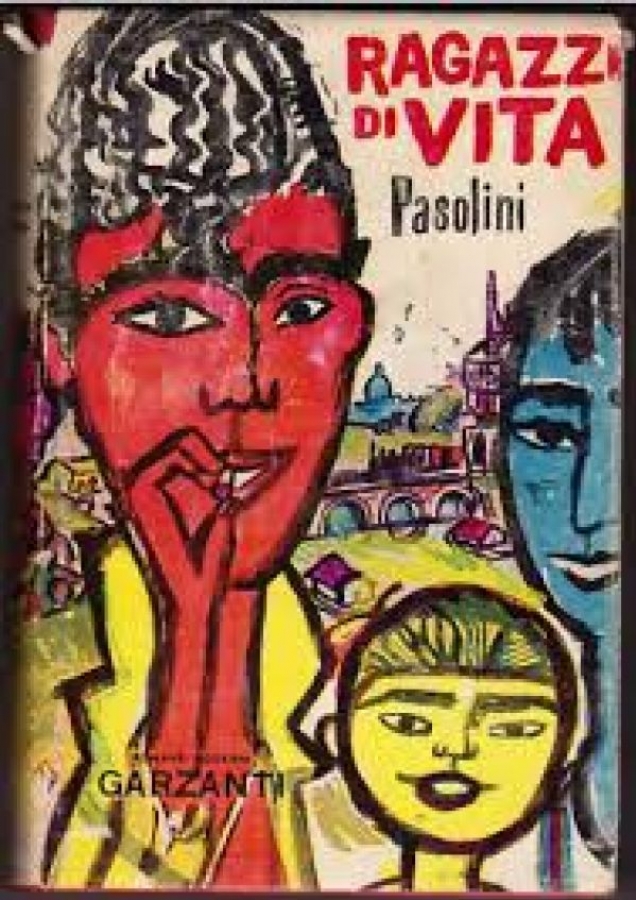
The Ragazzi
> It was hot, not with the heat of the scirocco or a scorching drought, but just hot. It was like a coat of paint brushed over the light breeze, over the yellowish walls of the *borgata*, over the fields, the carts, the buses with clusters of passengers hanging from the doors. A coat of paint that held all the joy and squalor of summer nights past and present. (...) And in the centers of the *borgate*, at the crossroads, like there in Tiburtino, people swarmed, ran, shouted, (...) even in the loneliest spots there was turmoil, with lines of youths out looking for some cheap whore, (...) one great siege encircling Rome, between the city and the surrounding countryside, with hundreds of human lives teeming among the vacant lots, their shacks of evicted paupers, or their tower blocks. And all that life was not just in the suburban *borgate*, but inside Rome as well, in the heart of the city, right beneath the Great Dome . Set in a Rome of the early 1950s—yet in truth timeless—Pasolini chronicles the daily existence of poor, ragged slum youths who, > disordered like a little swarm of flies on a dirty table (...) wanted (...) to take on the world at large, just like that, along with the whole race of men who did not know how to enjoy themselves as they did . It is a “crafty gang” of young males, narrated in their coarse Roman dialect, so far removed from the contrived Italian of the bourgeoisie. > “So what do we do here now?” Alduccio said. “Let’s take a walk, come on!” said the Begalone. (...) They kept on guffawing for a while even when the whores could no longer hear them, doubling over at the knees, leaning against the low wall or cuffing each other: more than laughing, they were making coarse faces with their mouths and spitting. (...) They were both so horny they would have done it even with a seventy-year-old crone. (...) “Man, they’re gorgeous!” yelled the Bègalo. Gorgeous were two girls sitting on the steps of the little temple: two bold, dazzling blondes firing on all cylinders, in husband-hunting skirts that were absolute knockouts, and necklines revealing half their tits. (...) “Which one would you ravish down to the bone,” Begalone asked, “the blonde or the redhead?” “Both of 'em,” said the other. (...) “Either both or neither, 'cause otherwise the other gets sour” . Naturally, they both strike out, as the two girls pay them no mind. The book is a collection of short stories centered on the same group of youths; there is no overarching plot, merely slices of human lives. The finest is “Il bagno sullʼAniene,” linked to the final tale: *La commare secca*. On a putrid river, choked with trash and industrial runoff from a nearby factory, a swarm of youths and young boys strip naked, shedding their filthy and wretched clothes to bask in the sun, play, prank and bully one another, and plunge into the water—to find relief, to wash themselves, and to prove their manhood by swimming through the river’s hazardous currents. They have fled cramped and squalid dwellings to escape violent, drunken fathers, to distance themselves from their mothers' screams and from teenage sisters already pregnant: they seek freedom. Like a pack of stray cats, they turn on the weakest among them, who is set on fire while “the boys kept on kicking and shouting.” Cocky and reckless, they drown while trying to swim across the river; in the face of death, the reaction is sheer indifference. > From below, Borgo Antico and Mariuccio could be heard shouting and crying, Mariuccio still clutching Genesio’s undershirt and shorts to his chest; and already they were starting to scramble up the embankment using their hands. \- Let’s beat it, it’s better - Riccetto said to himself . The stories remain perpetually suspended, devoid of development because there is no future for the urban lumpenproletariat; and perhaps it is better that way, for were they to rise above their wretched condition, these boys would lose their fascination, their raw authenticity, thereby precluding > that immediate, human, so-called vital experience, (...) (wherein) ideological bombardment has not yet touched, except generically, the problems of sex. (...) Therefore, the sociological necessity having subsided, I nonetheless continue to live necessarily in the periphery . So wrote Pasolini in 1958 in an article for the journal *Città Aperta*. In this aestheticizing depiction of the subproletariat, is there not the intellectual relish of “a momentary regression” from high culture to subculture? Furthermore, did not the freedom sought by these “boys of life” along the banks of the Aniene and through Roman nights in Villa Borghese inevitably evolve into the gratuitous, criminal violence of the 1980s? Are these not the forebears of the Banda della Magliana? Behind biographical and sociological justifications, Pasolini conceals a deep-seated pessimism regarding Italy, a conservative vision, and a total incomprehension of modern society. The defining peculiarity of Pasolini’s novel resides in his use of the language spoken by the inhabitants of the Roman periphery. Pasolini follows in the footsteps of Fogazzaro, Verga, and Gadda, attempting to narrate through actual spoken idiom. Yet while this constitutes the work's primary virtue—lending tangible depth to characters and situations alike—the book's limitation lies in its static nature: lacking a narrative arc, it ultimately becomes tedious. Why read it? It remains an original novel from a stylistic standpoint.

The Wild Boy: A Mountain Notebook
It is difficult not to be swayed by the news of the severe depression that struck Cognetti (see the *Corriere della Sera* website, 20 December 2024). The long “mountain notebook” (the story’s subtitle) seems to herald that “bipolar syndrome with manic episodes” which required involuntary psychiatric treatment. Or rather, was leaving the city to go live in an isolated cabin the last illusory attempt to overcome a void that > I had never experienced?. The story is written in the form of a diary, following the cycle of the seasons, each corresponding to a state of mind for Cognetti: winter is solitude, spring the company of others, summer exploration and the end of the adventure, autumn the return to the city. The first stage of this redemptive journey is solitude, in a house in the woods, far from the noise of other human beings. Then came neighbors, the shepherds and the livestock of the alpine pastures, > so I had something to watch, besides the clouds bringing endless rain. (...) If I woke up early in the morning I could spy on the elderly shepherd moving the pasture’s boundaries, advancing the stakes by a few meters each day so as to ration the grass. (...) And then seven calves and some thirty adult cows would come rushing down, toward the new strip of tall grass. (...) But the biggest change in my daily life was brought about by the dogs, (...) they had a bell hanging from their neck thanks to which I could hear them coming from afar. (...) After almost two months at the cabin, along with spring my season of solitude was coming to an end. These neighbors—the shepherds, the dogs, the goats, and the “baracche,” that is, the cows—are described minutely, yet without evoking any sort of atmosphere; they seem alien to the psychology of the author-narrator, useless secondary players in an inner drama. Indeed, with the arrival of summer Cognetti takes another step. > I wanted to push beyond the area I knew, to discover what lay two or three days’ walk away. I set off weighed down with gear, and yet shutting the door behind me, I felt as though I were unburdening myself. (...) What else are we fleeing from if we flee from home? Farewell, the wild boy said to the domestic one, then turned his back on him and once again took the path that climbed upwards. Here, once again, is the trap of the mountain! Imagining there is something magical up there, something capable of freeing us from the mystery within us. It is not so! The much-fancied lake at an altitude of 2,700 meters is nothing more than a mundane body of water, > you could easily walk right by without even noticing it. (...) It was then that I felt a lump rise in my throat, my eyes blurring. Go ahead and cry, I thought, nobody is watching you. I began to sob, lying on that rock because I was exhausted, I missed everyone, and I no longer knew where I was. (...) More than a cabin in the woods; solitude was like a hall of mirrors: wherever I looked, I found my own reflection, distorted, grotesque, multiplied ad infinitum. Why is the notion that the mountain elevates the human spirit and imparts balance and serenity so widespread? Pastures, alpine lakes, wooded paths, and towering peaks are merely places that we mythologize out of romanticism, or because we are desperate, immersed as we are in the chatter of the city, or, more banally, because we are driven by a competitive urge to exalt our own power. Cognetti chronicles the collapse of this mirage: there is no peace except by working upon oneself. The prose is straightforward, facile, and fluid. These are indisputable virtues; yet they neither succeed in probing the author’s inner world nor do they manage to kindle the reader’s imagination. One reads on through sheer inertia, wholly unengaged. Why not read it? It is pointless.
Reasonable Doubts
Defense attorney Guerrieri has just been left by his girlfriend when he is asked to represent on appeal a man named Paolicelli, who has already been convicted at first instance of international drug trafficking. From the name, Guerrieri recalls that he is a former fascist thug who took part in beating him during his student days. For this reason, he hesitates to take the case, but meeting the defendant’s stunning wife and an inkling of the man's innocence prompt him to mount his defense. Thus begins the search for evidence to prove that the traffickers used Paolicelli’s car without his knowledge to transport the drugs. Meanwhile, Guerrieri enters into a relationship with Paolicelli’s wife, finding himself in an ambiguous predicament: on the one hand, he has every interest in seeing Paolicelli’s conviction upheld so as to continue the affair and avenge the old beating; on the other, professional duty and a growing awareness of his client’s innocence compel him to commit ever more rigorously to gathering exculpatory evidence. The narrative thus arrives at the appeal trial, where Guerrieri displays his full skill in cross-examining the real culprits and demonstrating to the judges that there is reasonable doubt regarding Paolicelli’s guilt. Yet this success leaves Guerrieri once again alone. The novel unfolds through a continuous alternation between the detective plot and Guerrieri’s personal tribulations, accompanied by bitter reflections on the existential poverty of a life spent shuttling between courtrooms, books, and romantic relationships that never culminate in building a family. The finest part of the book lies in the trial scenes, where the background of the author—a magistrate by profession—plainly shines through. The absence of surprises and the somewhat ritualistic references to the protagonist’s existential and romantic troubles do little to sustain the narrative’s vigor, which ultimately turns predictable. Guerrieri’s moral dilemma (whether to let Paolicelli be convicted or defend him so as to prove his innocence) is treated superficially, without ever bringing the protagonist’s inner conflict into sharp relief. Why read it? It is enjoyable, very well written, and the pages devoted to the courtroom proceedings are of genuine interest.

Iraqi Rhapsody
> Words that outlive their author take on a life of their own. They shift, assume new forms, generate new meanings. And they always retain their intrinsic ambiguity . This reflection by Ibn Khaldun, who lived in the fourteenth century and is regarded as one of the greatest Arab philosophers, introduces the essence of this short tale. We are in 1980s Iraq, during the bloody war between Saddam Hussein’s country and Iran. The dictatorship’s repression is particularly harsh, pervading every aspect of society, even the most intimate sphere. The author imagines the discovery of a manuscript belonging to a young inmate named Farat, who has been imprisoned and tortured for no real reason other than failing to conform to the regime’s ideas and rules, believing that “imagination fights reality.” In prison, he is given blank sheets of paper and a pencil. > The whiteness of the paper seduces me, offering me the freedom to wander within my solitude. I will tear through the silence with my ravings. Words will transform into mythological beings that will dig a tunnel and carry me outside. Or they will be prisms that I will hang all around me to look through . The blank page is a gift that seems to say: “take me and do with me what you will!” And the young man begins to recount episodes from his life, finding himself “down (t)here,” both inside and outside prison at the same time. And the reader, too, like the young narrator, is swept into the delicate freshness of everyday life: Farat’s affectionate bond with his grandmother, his only surviving relative; the clever stratagems to evade the regime’s agonizing and ridiculous rituals; the pervasive sarcasm through which anger at a power indifferent to its people’s needs is vented; the search for authentic reading; the yearning for poetry and truth; and, finally, the discovery of love and the female body. In this wandering between memories and words, it matters little if one forgets to add diacritical marks, leaving room for the ambiguity inherent in a language like Arabic, rich in semantic roots and potential variations and combinations of the alphabet’s letters. What matters to Farat are the naive sweetness and gentle irony that characterized his brief life before prison. The “over there” makes the “down here” bearable, yet it is like crouching “before the wall of this vast nightmare.” > Born of the whiteness of the pages, suns pierce the gloom of this night and summon another galaxy. Yet they are captive suns, themselves trapped behind rows of bars . When, in full delirium, the young narrator speaks of his release, we readers believe it too—only to remember that we are in 1989. “This is my last sheet... Yes, I want to keep writing.” To fully appreciate the story, one must detach oneself from the Iraqi reality and Farat’s cruel fate. One must surrender to the scattered, varied episodes of his life, to the novel’s many delightful fragments. Farat falls in love: > that day you were leafing through a magazine. You were alone, motionless as an island of silence amidst the roar of applause and slogans, indifferent to the abject circus surrounding you. In class I always tried to sit next to you, and while the students attempted to conjugate French verbs in various tenses, I tried to conjugate the details of your body in the present. I read them with the voracity of a child learning a new language . Far from the philosophy of language, fleeing bloody and obtuse dictatorships, what endures is the timeless story of youth: open to the world, irreverent, restless, and naive. Why read it? A delightful tale, if one forgets the context.
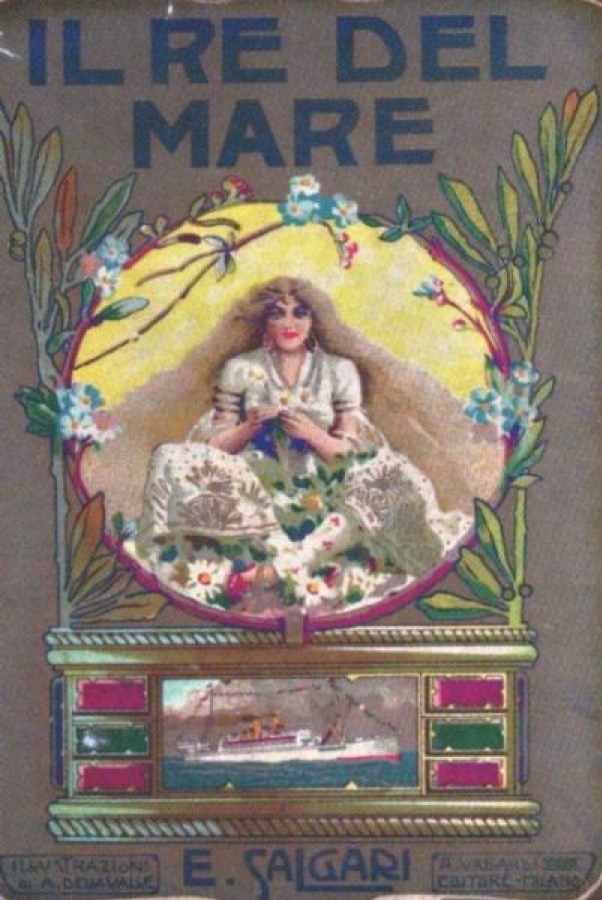
The King of the Sea
The book is structured in two parts. The first part recounts the adventure of Yanes, who sets out to rescue Tremal-Naik and his daughter Darma. The setting is Borneo, rich in strange fauna and an exotic atmosphere. Plot twists follow one after another, yet a certain artificiality and repetitiveness emerge, rendering the reading tedious. This section of the book closes with yet another surprise: the terrible leader of the Thugs had a son, who now seeks to avenge his father’s death and has allied himself with the British to defeat Sandokan. The island of Mompracem has been conquered, and the pirates of Malaysia decide to declare war on England. In the second part, the true protagonist emerges: the cruiser *Re del Mare*, aboard which the Tigers roam, fight, and conquer. Seascapes return—a tempestuous sea and rugged, inaccessible coastlines. And an impossible love story unfolds, between Darma and the son of the terrible Thug. The narrative becomes more intricate, as combat episodes alternate with conversational interludes, gradually forging a kind of friendship between the son of the Terrible Thug and the pirate chieftains. As in *The Black Corsair*, one would expect an unhappy ending; indeed, here matters reach the point where Sandokan and Yanes could well be defeated, killed, or taken prisoner. Sandokan, in particular, is weary; he is no longer the man he once was, far less marmoreal than he appeared in the other novels. Yet in the end comes the plot twist: love triumphs, and out of love, the son of the terrible Thug realizes that vengeance is pointless, not least because by pursuing it he would lose his beloved. The pirate chieftains are freed. Unlike the other books in the Malaysian cycle, here one faces a flagging narrative momentum (so much so that the author leans heavily on his well-worn techniques without any innovation), and even the depiction of the setting (the sea and the jungle) seems marginal to the tale. What does emerge, however, is a theme absent from the other novels: technology, embodied in the cruiser's sheer power and the introduction of an inventor capable of triggering remote explosions. Technology renders Sandokan and Yanes obsolete: their life cycle has ended because the world has changed; it is no coincidence that they are defeated by four cruisers, likewise powerful and swift. Yet technology has its frailties: the *Re del Mare* sails under the constant dread of finding no coal to feed its boilers, and the inventor perishes, struck down by a mere shell. The age of sail fades away, but the new technologies grant the "heroes" far less autonomy and independence.

The Queen of the Caribbean
The novel is the continuation of *The Black Corsair*. The pirate is still in pursuit of the hated Duke Wan Gould, and the book unfolds across a series of combats and adventures, interspersed with long, captivating descriptions of the Caribbean forest. The Duke perishes with his ship, and in the end the pirate is reunited with his beloved Honorata, who has become queen of the cannibals. The book displays a highly complex structure and develops across several planes, with the introduction of new characters. At the center of the novel lies the fatalism of the Black Corsair, now convinced that he is condemned to unhappiness and destined to bring grief to others as well. In a conversation with Yara, the young Indian woman who will be killed by the Spaniards, the pirate confesses his conviction of being predestined to bring misfortune to women: > One cannot love the Black Corsair, maiden. I bring misfortune to the women who draw near me. You have seen it! and again, after Yara's death, > I am fatal to all – he said in a somber voice – take care of this maiden, Marchioness . On the other hand, the thirst for vengeance overwhelms the Black Corsair, constituting a destiny from which he cannot escape, even should he wish to. In his conversation with the Marchioness of Bermejo (a splendid new character of Salgari’s), when asked what he would do with the Duke if Honorata were alive, the Black Corsair replies > do you believe, Madame, that the souls of my brothers have been appeased? When the sea turns phosphorescent, the Red Corsair and the Green, the Duke's victims, resurface: they demand vengeance. When the hurricane sweeps in from the East, amidst the howling of the wind, I hear a voice that comes from the shores of Flanders: it is that of my elder brother, treacherously murdered by the Duke, and that voice demands vengeance as well . Even at the moment he meets Honorata, whom he is finally free to love since the Duke is dead, the Black Corsair yearns for death ("Yes, death, oblivion!") and his dark despair is such that he seems to see the dead calling to him ( > Look at them, Honorata, look at them... There is the Green Corsair... there is the Red... there is your father... and my other brother, too, slain on the lands of Flanders... ) and the pirate wishes to join them ("I am coming!... Brothers!... I am coming!"). Only love saves him, and to the Black Corsair's question of whether to choose between life and death, Honorata whispers, "Your love." Alongside this struggle between hatred and love move the secondary characters surrounding the Black Corsair, who are in fact central to the novel: in particular, his companions, Carmaux, Wan Stiller, and Moko, who tend to the Black Corsair with fraternal devotion and lend the novel a sense of brio by tempering its dramatic intensity: an extraordinarily modern device, essential in giving the book rhythm and reading pleasure. Nature, too, emerges as a major protagonist: a lush nature, teeming with fantastic fauna, especially birds and reptiles, which Salgari describes with meticulous precision and a desire to seek distraction and forget the despair that dominates the figure of the Black Corsair. To claim that this is merely an appetite for exoticism is to overlook the contrast between the surrounding setting and the pirate’s emotions: the description of the environment carries the tone of escape and repose. The final theme of the novel consists of combat, particularly naval battles and shipwrecks; the sea is yet another protagonist, and splendid are the pages depicting the clash between the *Folgore* (the beloved *Folgore*!) and the Duke’s ships. The book is flawless, both in terms of its rhythm and with respect to its characters and plot.
The Queen of Paper Castles
The book picks up from the closing scene of Larsson’s previous volume: *The Girl Who Played with Fire*. Lisbeth Salander, after gravely wounding her father, has been rescued by her friend Mikael Blomkvist. She is, however, in critical condition, undergoing surgery and hospital confinement. Meanwhile, a special unit within the secret service attempts to have Lisbeth recommitted to a psychiatric institution to prevent the exposure of plots orchestrated over many years—targeting prominent politicians as well—which hinged upon the figure of Lisbeth’s father. The latter is murdered by a secret service operative, further killings are carried out, and, above all, evidence is fabricated to frame the young woman once again. Complementing the main narrative is the work of Mikael, a true journalist, who gathers information and corroborating evidence to save the girl and unmask the "rogue" secret services. Action is subsequently set in motion by the "good" secret services, who collaborate with Mikael to expose the rogue unit and excise the "cancer" threatening to destroy Swedish democracy. As is typical of the author, other subplots unfold, one of which centers on Mikael’s business partner—and lover—who takes charge of a major newspaper, endures sexually charged smear campaigns, and is ultimately forced to resign after discovering that the paper’s owner exploits child labor in an East Asian country: this does not, however, prevent her from publishing the investigation—as true journalism demands—and ruining the avaricious chairman. Ultimately, everything concludes happily with Lisbeth’s exoneration and the triumph of hard-hitting journalism and of a country that—unlike others—possesses robust institutional antibodies. The book’s underlying theme appears to be the stark confrontation between good and evil: the villainous doctor is contrasted with the benevolent, competent one; the superficial, easily manipulated prosecutor is counterbalanced by honest police officers and judges; and so forth. The conflict is far too overt and so entirely devoid of ambiguity as to become utterly predictable. It is a thriller, yet even more so than the author’s first two novels, the plot unfolds slowly and at times tediously, weighed down by an overabundance of characters and a redundancy of dialogue at the expense of actual action. Furthermore, the formidable operational prowess attributed to a task force made up of secret service retirees strains credulity, making it glaringly obvious from the outset that the threat will be thwarted with ease. Moreover, the sheer multiplicity of themes addressed (rogue intelligence services, the resilience of democratic institutions, the duties of real journalism—which must investigate and speak the truth—sexual intimidation, and women’s uphill battle to assert themselves) produces a sense of fragmentation that undermines the narrative’s cohesion. One gets lost in the digressions, blunting the overall effectiveness of the storytelling. What remains is envy for an honest, investigative journalism so far removed from the Italian variety: if only our own country had a magazine like *Millennium*!!
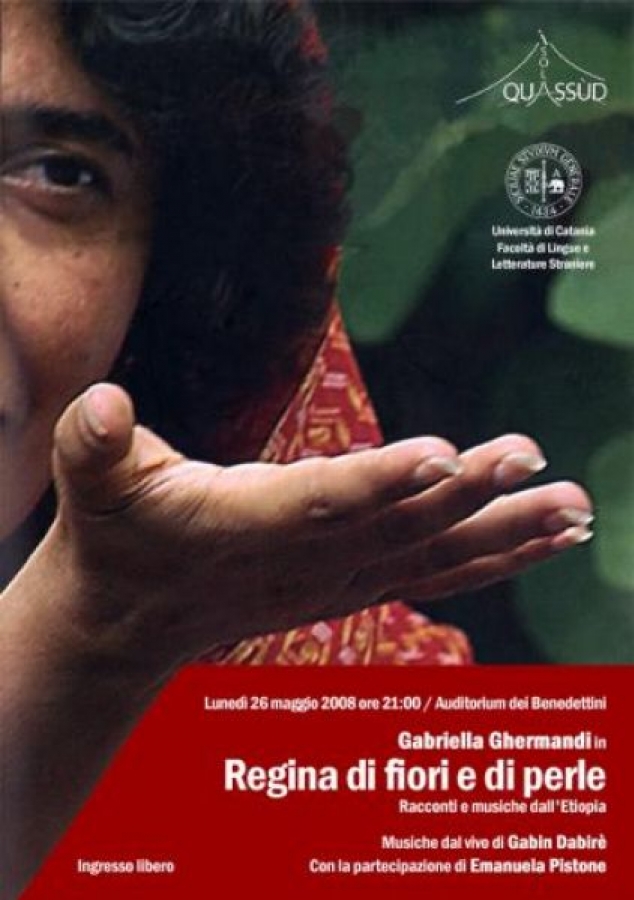
Queen of Flowers and Pearls
The first-person narrator is a young girl, then an adolescent, and finally a young woman, who recounts how she became the “cantora” of the history of her people (Ethiopia) and of the Italians, when the latter conquered her country. The book opens with the great-grandfather’s account of the birth of the girl’s grandmother during the resistance against the Italians and the violent death of her parents, an Italian man and an Ethiopian woman. The book thus takes as its starting point an act of great love that binds the two peoples together, yet the cruelty of the racial laws, which forbade an Italian from marrying an Ethiopian woman, surfaces from the very beginning. The old man makes the girl promise that she will tell these stories, so that a memory may endure for the future. The girl grows into an adolescent, forgets her promise, and decides to go study in Italy, in Bologna. Now twenty-three, she returns to Ethiopia upon hearing news of the old man’s death, but arrives too late to take part in the collective mourning that traditionally accompanies a funeral. She is thus left suspended in an unspoken, internal grief, and with a sense of estrangement from the others, who now perceive her as an outsider. The great-great-grandfather had left as a dying wish that the girl go pray at an important sanctuary. The central section of the book unfolds, then, over six days during which the young woman travels to the monastery, meets an elderly hermit, and above all, as she waits, listens to the stories of women—tales concerning the tragic and complex encounter between Ethiopia and Italy. Gradually, she manages to process her grief and realize that her destiny is to fulfill what her elders had asked of her: “you shall be our cantora.” One of the central themes of the book is undeniably Italian colonialism, its cruelties and aberrations: particularly tragic are the pages recounting the massacre perpetrated by the Italians in the wake of the assassination attempt on Graziani. It would be reductive, however, to limit the book to this theme alone. In reality, the narrative structure of the work is remarkably complex, revealing at least three distinctive features: its choral nature, derived from the collection of stories that form the heart of the book. The narrator says little about herself (even though she is the first-person narrator), for what matters is neither emotional introspection nor existential anguish; rather, the book aspires to be a progressive point of accumulation for the history of two peoples; the richness of its themes, which span from the processing of grief to the loss of roots experienced by those caught between two cultures, to the opposition of communal values against the loneliness of modern man. In this sense, the true setting of the story is Italy, interpreted through the vantage point of someone who comes from another culture: what emerges is a country defined by autumn colors, greyness, soliloquy and abandonment, and regret for the past; the narrative style, lean despite its rich vocabulary, which stands out favorably against the verbosity of many Italian writers.

Distant Relations
The novel is set in Paris and recounts the strange parallel story of two homonymous families: a peculiar Mexican figure living in France in a secluded villa, and the young, unlikable son of a friend of the narrator. It is a surreal narrative that unfolds in a tedious and prolix manner. I was unable to finish the novel.
The Human Resources Manager
The novel revolves around the affairs of the human resources manager of a large company. An employee is killed in a terrorist attack, and the personnel director is tasked with overseeing the identification of the body and its transport to her native land: a nation of the former Soviet Union. Thus begins a journey that constitutes, in some sense, a path of purification and at the same time an escape from a state of war, such as the one in which Israel finds itself. The protagonist undergoes a rebirth from an existential condition—both private and collective—of uncertainty and anxiety: confidence in life and in one's own abilities is regained. As usual, the novel is very well written, but it is exceedingly weak in terms of content and narrative pacing, so much so that it proves tedious and insipid.
Regenesis
The novel hinges on the daughter’s account of her parents’ story, of their love and how the latter dissolved into incommunicability. I did not finish the book because I found it tedious and difficult to understand. According to the Encyclopedia: > Madsen has centered his inquiry on literary experimentation and on the exacerbated problem of identity, incommunicability, and the futile pursuit of reality; he fits squarely within the sphere of a literature—the Danish one—that seems profoundly focused on the existential themes of a society in crisis .
The road
> The ashes of the lost world spread across the desolate wasteland, (carried) hither and thither into the void by storm winds. Hauled and tossed and hauled again. Everything torn from its roots. Unsupported in the dusty air. Sustained by a breath, trembling and brief. If only my heart were stone . In a post-apocalyptic era (following an unspecified catastrophe) > all food stores had been exhausted and murder was everywhere upon the earth. The world was soon largely peopled by men who would eat their children before their very eyes, and the cities themselves were ruled by bands of filthy scavengers who rummaged through the rubble and crawled from the refuse, (lit only) by the white of teeth and eyes, carrying charred and anonymous tins of food in nylon bags, like patrons in the restaurants of hell. (...) Out on the road the pilgrims sank down, fell, and died, and the veiled and barren earth (like a shroud) continued to glide with the sun and revolve again like the trackless, unmarked course of any sister world, unnamed and unreachable in the primordial dark. This lengthy quotation gives a sense of this novel’s style: lyrical, rich in evocative imagery, syntactically and lexically intricate, difficult to translate, captivating to critics, far less so to ordinary readers. Evoking the author’s own words introduces the setting of the slender plot: a father and his son, still a young boy, journey through a devastated world of charred trees and desolate wastes, bereft of animals and plant life, amid other human beings who have turned to cannibalism to survive. The father knows he will soon die (the dust is killing him) and wants to lead his son to the sea: he is convinced that along the coast there are still "good people." They could stop, but they cannot, for they risk being ambushed by murderous gangs. > Ten thousand dreams buried within their wandering souls. They went on. Crossing the lost world on a cart, hidden like rats. The dead nights in their fixity and deader still in the darkness. So cold . The father shows no pity; he does not answer cries for help, refuses to be moved by human beings who will likely become food for others and desperately beg for aid; he cannot afford to, having a mission: to survive and bring the boy to safety. The son, by contrast, is the critical conscience; not only does he plead for humanity, but he demands that his father remain consistent with the stories he tells him. "You want me to tell you stories," the man says. > The boy looked at him and looked away. (...) Those stories are not true. They don't have to be true. They are stories. Yes (says the boy). But in stories we are always helping people and instead we don't help other people.(...) Well. I think we are still here. A lot of bad things have happened but we are still here . When they reach the coast, there is no scent of the sea; the water is not blue but gray, covered in ash, > only fish bones in their millions scattered along the beach as far as the eye can see like a line of death. A huge salt sepulchre. Senseless. Senseless . The novel can be interpreted in many ways. One can read the narrative literally, as the tale of what will become of us after a catastrophe—whether climatic, pandemic, or nuclear; yet too many narrative elements are missing (not least the causes of the environmental disaster) to suggest that the author intended to write a standard dystopian work. One might turn to another of McCarthy's books (see the review of *All the Pretty Horses* on this site), in which the writer dwells on the demise of the cowboy world and wild horses across the green plains of the West; *The Road*, too, is set across vast prairies, albeit ravaged by catastrophe, as if the author had returned to mourn, now without hope, the inexorable and agonizing loss of his world—transformed into an apocalyptic landscape by the disorderly and pervasive spread of factories, reckless overdevelopment, and shopping malls with their glut of commodities. How vast our hoard of goods and food must be if, even after years of looting, we can still unearth something useful amid the rubble and refuse! Reading it imparts a metaphysical sense of existence, beyond time and space, transcending the individual story. The journey of the two pilgrims is a metaphor for Death, a march toward the end of being. Not only is there no meaning in living in a horrifying reality where even memory slips away and dreams can only be nightmares; death is our inevitable arrival, yet dying is an agonizing ordeal in a world devoid of peace. Viewed from this perspective, the narrative centers entirely on the bond between father and son. Why does the man go on living and struggling? Why does he insist on recounting stories falsely steeped in humanity? Why does he deceive the boy? A powerful message emerges: our attachment to life must not reside in material possessions, in the mundane routine of an increasingly futile, fragile, and painful existence; we insist on not dying because we must still protect our loved ones. When an eschatology no longer exists—be it the City of God or the Sun of the Future—all that remains is to anchor ourselves to our responsibilities toward those nearest to us, in foundational bonds such as that between father and son. The narrative is structured in brief paragraphs, like a collection of prose poems that could almost stand alone. The fascination of the reading lies precisely in the sound that springs from the lexical richness of the words and an unconventional syntactic structure, hovering as if suspended and inexplicable. It is a tour de force of stylistic mastery, yet a quest for effect that comes at the expense of the story: everything repeats in an eternal return; the landscapes, situations, and dialogues (effectively confined to father and son) unfold monotonically and, in the end, predictably. One waits anxiously for something to break the tedium, yet nothing comes, save for an improbable ending. A sense of oppression lingers, and perhaps that was precisely the author’s intent. Still, the book's immense success remains hard to fathom; it is prolix, and reaching the end is a struggle. Why read it? Solely out of obligation, and drawn by its stylistic mastery.

Romanzo Criminale
We are in the Rome of the 1970s and '80s, in an Italy stepping into the consumer society and traversed by terrorism and subversive plots. A few youths from the Roman outskirts decide to > assert undeniably a dominion destined to last forever over the Old Whore . From drifters, they become a gang and turn into the masters of Rome: they are the famous Banda della Magliana. What gives the group strength is friendship, a leader (the Lebanese), and > the dream of finally counting for something, all of them intolerant of the old bosses and the foreigners coming to lord it over our home turf. All fired up by the fantasy of taking, once and for all, the eternal old whore, complete with she-wolf and twins. (...) But even that wasn't entirely true. Beyond all agendas, well beyond reason, the cement of it all was action . It is hardly surprising, then, that their political ideology is fascist, that the group gravitates toward black squadrismo. In their race toward criminal dominion over the city, the gang contends and, in spite of itself, allies with a series of surrounding organizations and figures: the Mafia and the Camorra, who concede control of Rome to the gang, but dictate its boundaries and use it for their own criminal ends; the fixers, who allow dirty money to be laundered into clean—or near-clean—enterprises; the institutions (the police, the judiciary, the lawyers, the prison system), which in one way or another abet the gang's criminal operations, sometimes unwittingly out of a legalistic conception of justice, and far more often because they are collusive, corrupt, and acquiescent. Yet presiding over it all is the Old Man, who > commanded an intelligence unit (of the Secret Services) with a neutral name (and played) at throwing the world into disarray . He is the master puppeteer and the gang one of the puppets: > you take a deviant or presumed deviant, you make him deviate, you grab him while he’s deviating. (...) And now he had the Lebanese and his boys. To do what with them? To play with them, of course . The only one to realize the trap is Freddo, the gang's "pure" soul, who yells at the Lebanese: "So now we work under a boss! And what a boss! The State! The filthy State! > Amid the general apathy and cowardice, the only one standing up to the gang is a police commissioner: Nicola Scialoja. To him it is clear, right from the start, that this is a criminal organization, and not merely a gang of petty hoodlums, that drugs were the key to everything. (...) Whoever controls the drug market controls the city. The Lebanese's boys controlled the city > ; and slowly he realizes that behind the gang there is a puppet master, pulling the strings from an obscure office of the Secret Services. Scialoja is the positive hero: he stubbornly fights the gang; he is defeated, betrayed, vilified, yet he never lets go. He witnesses the unraveling of the Banda della Magliana. The Lebanese is killed, and from that moment the ties holding the group together snap: the boys went their separate ways. (...) The loyalty to the group was becoming loyalty to the groups > . Scialoja knows the gang is becoming more vulnerable; he attempts to strike at it by every means, but as long as the Old Man shields it, all his efforts shatter against the wall of omertà, corruption, and collusion. Scialoja defeats the Banda della Magliana only after the Old Man, by now dying, designates him as his heir, co-opting him as head of his obscure yet all-powerful office. He had the Old Man's diary! He was the custodian of the Republic's secret history. (...) He could do virtually anything. He had power. (...) But as he slipped into the elevator, (...) he felt a sharp, painful pang deep in his heart. At the moment of triumph, from what obscure recesses of the past could this incomparable sense of defeat possibly be welling up? > The story can be read from different angles: a fictionalized chronicle of real events, a desolate fresco of Italian society and of Rome in particular, a painful, resigned indictment of Italy's dark malady: the perverse connection between politics, the underworld, rotten businessmen, rogue Secret Services.... when this cancer is rooted out... if it ever is rooted out... > . There is a simpler reading: the story of a group of boys, of their desire for rebellion and freedom, and of how their dreams, and their friendship, founder in the Roman quagmire of money, drugs, and compromises. When Roberta, after making love, asked him for the umpteenth time why he did all this, (Freddo) managed to find the honest answer: 'cause this way I feel free > . In the prologue, a survivor of the gang, after gunning down a petty criminal in cold blood, indifferent to the weeping, the sound of footsteps, the approaching sirens, turned his back on him, and aiming his weapon at the bastard moon screamed with all the breath in his lungs: I was with the Lebanese!" The setting is the book’s fundamental asset. Its flaws lie in the characters and the plot. The former are stereotypes, treated superficially—perhaps because the author does not favor the trajectory of certain figures over others: they all crowd onto the very same plane, appearing and disappearing in ways that cause the reader to lose track of their trials and sentiments. The plot unfolds slowly, devoid of surprises, in repetitive fashion: years go by, the gang evolves, yet the events feel perpetually identical, as though criminal deeds were inherently monotonous, forever repeating themselves; without a great writer to grant them depth and rhythm, boredom inexorably sets in. Why read it? It represents a chapter of our history, but in the end, the novel is prolix and tedious.
Russian novel
The novel is set in Russia between 1987 and 1991, during the Mikhail Gorbachev years, amid those turbulent events that led to the dissolution of the Soviet Union in December of that same year. What unfolded was > a carpet woven of countless threads , a sort of Rubik's cube across which fingers chase > the colored squares that never click into the right place. To untangle this knot, without success, Barbero imagines "someone" recounting what occurred: a first-person narrator, perhaps an obscure Muscovite Jewish actor who, faced with a demonstration of anti-Zionist hatred, > suddenly had a flash of an idea which, for who knows what reason, did not seem monstrous to him at all, but rather most felicitous: well now, he thought, I will stand by and watch, and then I will describe everything in my novel. For, of course, how else could one survive such filth?. And if the plot lacks the order of great nineteenth-century novels, one must resign oneself to it, for it is devised by an actor, or perhaps by a historian who, like Ariosto with *Orlando Furioso*, is delighting in the captivating passion of storytelling. Besides, even the great Emmanuel Carrère lost his way describing recent Russian events (see *Limonov* on this site). The novel revolves around two characters. Tania, a young historian, has decided to write her doctoral dissertation on the obscure disappearance of Party officials in Baku during the 1940s. Why are they no longer mentioned in the minutes of congresses and regional committees? It must be a delicate matter, since the novel itself opens with a scene at once amusing and alarming: two envoys from Baku dump tomato sauce over the desk and suit of Tania's supervisor to make him understand that it would be best for the girl to abandon her inquiry into what happened. > Never mind the merits and the faults. But oblivion, no. A free people must remember , and with the resolve of one who believes in "historical truth" as a moral imperative for the researcher, Tania sets off for Baku to uncover the mystery, unbeknownst to the Historical Institute where she works, and at the risk of her life. Nazar is a federal prosecutor: he believes fiercely in justice—a legality by now eroded by the Brezhnevian swamp—nostalgic as he is for Stalinist severity, to the point of championing capital punishment (at home he proudly keeps the "pink slips" recording the executions of his death sentences!). He is assigned to investigate the murder of an ayatollah in Baku; it is feared that Armenians might be blamed, unleashing the vengeful fury of the Azerbaijanis: we are witnessing the disintegration of Soviet power. As in a thriller, the two plotlines unfold with twists, moments of danger in distant Baku as well as in a safer Moscow, intertwining in surprising and haphazard ways. In a world disintegrating in terms of values as well as state institutions, who cares about historical or judicial truth? Nothing remains but to withdraw into familial affection. Losing oneself in the narrative, a doubt arises: is Barbero speaking of Russia or of Italy? Rampant corruption at every level, the intertwining of political power and criminality, ideology reduced to mere ritual, the complete absence of any vision of the future, the disregard for "truths" except on the part of a stubborn few—all are elements we find in our own country's recent history. As in *Limonov*, one must admit that dissolving societies, whether Russian or Italian, possess a certain allure, especially when described ironically, without passing pointless moral judgments. Moreover, the world of historians is depicted in its inner workings, where power, complacency, archival research, and methodology mingle in unpredictable ways, and only those driven by an unshakeable faith, like Tania, can see it through to the end. Barbero speaks of himself, as both historian and Italian. Barbero writes the way he speaks: colloquially, with constant parentheticals and delectable descriptions, blending factual events with sketches of social mores, not forgetting a dash of sex. The pages turn briskly and pleasantly; nevertheless, the reader gets lost in the narrative’s countless embellishments, to the detriment of the overall pace—essential in what is ostensibly a thriller—and of a coherent grasp of the plot. Barbero must have realized this toward the end, for he offers a preemptive defense: > And it all comes down to this, that one has to be good: it would be too easy if the first comer were able to write in a flash what crosses the minds of his characters at a moment like this. (...) The pen writes and knows not what, the ink does not corrode the paper, the notebook does not catch fire.... Why read it? Enjoyable and interesting; the figure of Tania is finely drawn.
Red as a Bride
The book is by an Albanian writer who writes in Italian. In the first part of the novel, the author retraces the history of her family in a small mountain village. It is a story of female characters, and in particular of the author’s grandmother: Saba. > It is a life caught in the boundless web of silence of the mountain. Disturbed only by the murmuring of trees stirred by the wind. People went about their usual chores. They occupied themselves with past stories that continually returned to life as though they had occurred the evening before . In this motionless and timeless world, the griefs and the burden of life fall upon the women: courageous, hardened, determined to defend their families, yet also ruthless toward other women when any of them fail to abide by the community’s rigid rules. In this world, “which begins and ends here,” the fate of women is inexorable, and they are not permitted to experience love. Only death establishes a powerful bond between men and women. Before her dying husband, who never knew how to love her, Saba > weeps thus, for the time, right or wrong, that has passed... lies down beside him, takes his face in her hands. Strokes his wrinkles, strokes the years lost without love . The first part of the novel is undoubtedly the most effective, not least because the author did not experience it directly; memory thus breathes life into imagination and into a lyrical, deeply evocative style. The second part is more autobiographical and recounts the dissolution of old Albania, showing how a country steeped in strong traditions loses its identity upon contact with Western society, particularly Italian. The loss of the mother tongue, Albanian, in favor of Italian epitomizes this dissolution and renders any dialogue with the past impossible. The author wishes to speak with Saba, her beloved grandmother, but can no longer manage to do so. > I speak an idiom unknown to her, and so we chase one another from one side to the other. Yet her tongue, azure, green, yellow, like the seasons of her fields, the one she would wish to hear from me, is no longer mine . It is a novel composed of numerous vignettes, often very fine, but which come at the expense of the overarching narrative. The pursuit—stylistic as well—of individual fragments compromises the novel’s cohesion. While in the first part the reader is captivated by the individual stories, by the intense emotions arising from the depiction of a harsh and atavistic society, in the second part of the book the events feel predictable, at times banal, and fail to convey the profound social and personal transformations that defined Albanian society. Ultimately, there is a rift, also in the narrative’s efficacy, between a peasant world, now distant and clouded by nostalgia, and the new urban, industrial life, which cannot help but be Italian. Why not read it? Certain fragments of the narrative are very beautiful. On the whole, however, the narrative fails to sustain interest precisely when it shifts to depict the transition of Albanian society toward the West: consequently, even the representation of the peasant world remains suspended, reduced to a kind of folkloric anthropology.

Vermilion Red
> I feel as though I have lost myself in an underground cave full of perilous crevices and labyrinthine hollows unknown to me, so many chasms into which I might slip. Questo mi succede adesso, quando guardo avanti e mi accorgo che non cʼè più strada, e allora mi volto indietro e vedo che di strada non ce nʼè neanche lì . The protagonist, the first-person narrator, is now an elderly woman living on an estate in Tuscany where she has succeeded in producing a wine of great quality, *Rossovermiglio*. Her mind now frequently wanders back to distant times, and the novel unfolds, indeed, through a continuous alternation between present and past. Born into an aristocratic Turinese family, she marries very young to a man of her own social station. It is an arranged marriage that will bring the young woman nothing but misery. Betrayed, wounded in her deepest sensibilities, repulsed by the coldness of her husband and of a formal, vacuous social class, the protagonist decides to take refuge in Tuscany on an estate inherited from her brother. And here she leads an isolated life, with her beloved horses and a growing passion for the land. When a man with whom she had once been infatuated reappears. An affair begins, and the young woman finds herself pregnant. Yet the man disappears, and the woman, to preserve propriety, decides to pass off her own child as that of the estate bailiffs. Why did the man disappear? Up to this point, the protagonist appears as a “sleeping beauty”: young, wealthy, restless, slightly eccentric, over whom the great shifts of history—such as fascism, the world war, the partisan struggle, the dawn of the republic—merely glide. Yet at the very end of her life, the protagonist discovers that the man she loved disappeared because he received a handsome sum from her husband, who, even from afar, meddled once more in her life. She was condemned to live as others dictated. From her social class she received nothing but sorrow and deceit, while she is surrounded by the affection and loyalty of the local people. Only the land (the vines, the olive trees, the woods) is something steadfast and true. > At times I dismount from my horse and sit on a stone, and I remain there looking at this land, unchanged through time, with these colors and these scents, slow and silent as I have known it . Yet on the other hand, “we do not live tragedies, we only have sorrows.” At the beginning of the novel, the reader is left somewhat disconcerted by the vacuity of the events, settings, and characters. Why should we care about nobles who squander their fortunes on elegant, refined receptions? First comes the prose, exquisitely refined and meticulous, and then the growing discovery that the superficiality and detachment from the present of aristocratic life are the interpretive key to the novel. We often live a life “made of nothing,” and thus find ourselves swept along by chance and by others. Why read it? It is written in beautiful Italian.

The Noise of the World
The novel is set between 1838 and 1848 in Savoyard Turin, poised between the Restoration and Risorgimento values, between conservatism and the desire for change, not least economic. In those years, Great Britain—and London in particular—served as a touchstone for technological innovation, the growth of trade and manufacturing, and the dissemination of new ideas, which also encompassed the condition of women. The author imagines Anne, the young daughter of a wealthy cloth merchant, given in marriage to Prospero, a Piedmontese nobleman raised under the most rigid and traditional Savoyard tenets: military discipline, an obtuse allegiance to the crown and to social conventions, and a disdain for economic matters—even for the very landed estates from which, nonetheless, he derives handsome revenues. It is an improbable match, one might say; it allows the author to investigate how to “recognize something of oneself in a country that is not one's own,” how to remain oneself while forced to adapt to foreign customs and to languages so vastly different from English as Italian and the Piedmontese dialect. Anne, moreover, grew up frequenting warehouses and shops, accustomed to discerning the quality of textiles from across the globe, to speaking of fabrics, innovations, and trade. These are modern values, fostered by a grandfather with Jacobin leanings and a governess who grants the utmost intellectual freedom to her charges, Anne and her sister—independent spirits receptive to the new. The first question Anne's father posed to Prospero was the following. > “So tell me, are you interested in silk?” (...) An expression of disdain crossed Prospero's gaze. While he knew nothing of commerce, he was well versed in good breeding, and he was at a loss as to how to take his father-in-law's vulgarity. (...) In Turin, he thought, tradesmen enter through the service door and wait in the anteroom . It is not smallpox, then—which strikes Anne on her journey to Turin and mars her skin—that ruins the marriage; rather, it is the cultural divide between her, forced to adapt, and Prospero, obtuse and aloof. In a letter to her sister, Anne confesses that > several months had to pass before I came to understand that the journey meant to deliver me to Prospero was not an approach, but a departure—both from all I held immensely dear and from the person I had been until that moment. No one parts willingly from what they love and know, so you can imagine my state of mind now that I have understood that the person I was about to abandon once and for all was myself. To be estranged from oneself is the deepest sorrow . And yet, in the Piedmont of the 1840s, swept by a quest for innovation in agriculture and manufacturing, Anne—pragmatic, tenacious, economically adept, and immensely wealthy—could well find her way; and for a moment we dare to hope, when she strikes up a friendship with Enrico, an adventurous entrepreneur, and when the obtuse Prospero dies on the battlefield in 1848. Instead, the frail and overly faithful Anne > ever since arriving in Piedmont has had but a single desire: to be left alone, to fade. As happens with bitter griefs, generously tempered by time . Anne belongs to the multitude of characters who marked the transition from the Restoration to the new Italy: > their opinions, their hopes—often naively grand—their desires and their failures belong to that twilight realm that is literature . The book suffers from numerous flaws, both in content and narrative structure, which compromise its quality despite starting from an interesting premise and a potentially intriguing protagonist. The author attempted to say too much: to paint a sweeping fresco of 1840s Piedmont, to recreate the allure of Italy in the English imagination by introducing the theme of the “Grand Tour,” to flesh out the differences between London and Piedmont with a painstaking detail that obscures the broader picture, and to crowd the canvas with secondary characters who overshadow the protagonist, herself rigidly immobilized in her sorrowful fate. The narrative structure lacks rhythm: it unfolds in a slow, verbose manner, fragmented by ceaseless leaps in time and space, and above all weighed down by an excessive reliance on the literary device of correspondence—not only the protagonist’s, but that of the other characters as well. In the end, it all becomes redundant; the novel ought to be rewritten with sweeping cuts. Why not read it? The premise is interesting, but the narrative structure renders it prolix and tedious.