Finished reading on: January 06, 2025
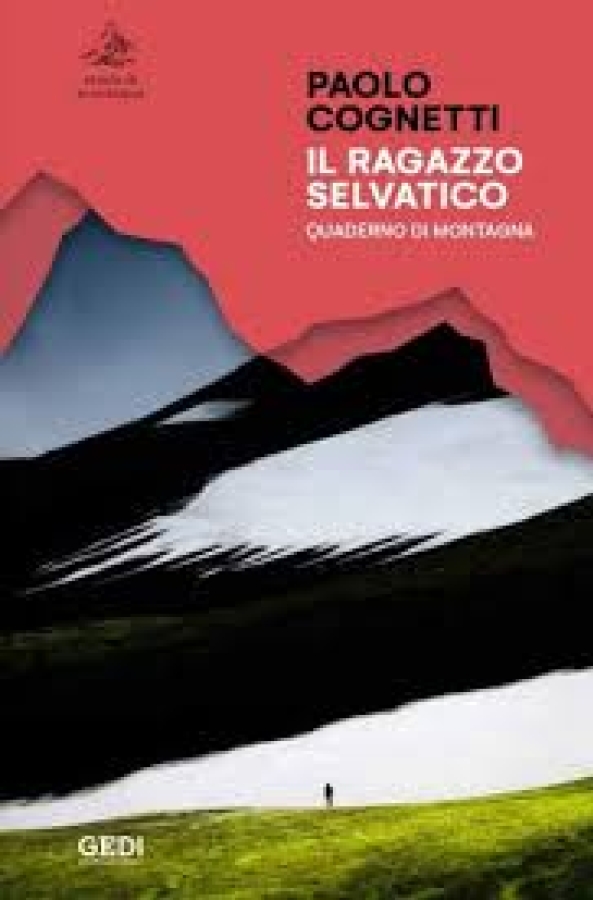
The Wild Boy: A Mountain Notebook
Title of the original version reviewed: «Il ragazzo selvatico: quaderno di montagna»
AI Translation Notice: This review was translated from the original Italian using artificial intelligence. Book quotes and excerpts are translated interpretations and will not match the author's original English phrasing or official published translations.
It is difficult not to be swayed by the news of the severe depression that struck Cognetti (see the Corriere della Sera website, 20 December 2024). The long “mountain notebook” (the story’s subtitle) seems to herald that “bipolar syndrome with manic episodes” which required involuntary psychiatric treatment. Or rather, was leaving the city to go live in an isolated cabin the last illusory attempt to overcome a void that
I had never experienced?. The story is written in the form of a diary, following the cycle of the seasons, each corresponding to a state of mind for Cognetti: winter is solitude, spring the company of others, summer exploration and the end of the adventure, autumn the return to the city. The first stage of this redemptive journey is solitude, in a house in the woods, far from the noise of other human beings. Then came neighbors, the shepherds and the livestock of the alpine pastures,
so I had something to watch, besides the clouds bringing endless rain. (...) If I woke up early in the morning I could spy on the elderly shepherd moving the pasture’s boundaries, advancing the stakes by a few meters each day so as to ration the grass. (...) And then seven calves and some thirty adult cows would come rushing down, toward the new strip of tall grass. (...) But the biggest change in my daily life was brought about by the dogs, (...) they had a bell hanging from their neck thanks to which I could hear them coming from afar. (...) After almost two months at the cabin, along with spring my season of solitude was coming to an end. These neighbors—the shepherds, the dogs, the goats, and the “baracche,” that is, the cows—are described minutely, yet without evoking any sort of atmosphere; they seem alien to the psychology of the author-narrator, useless secondary players in an inner drama. Indeed, with the arrival of summer Cognetti takes another step.
I wanted to push beyond the area I knew, to discover what lay two or three days’ walk away. I set off weighed down with gear, and yet shutting the door behind me, I felt as though I were unburdening myself. (...) What else are we fleeing from if we flee from home? Farewell, the wild boy said to the domestic one, then turned his back on him and once again took the path that climbed upwards. Here, once again, is the trap of the mountain! Imagining there is something magical up there, something capable of freeing us from the mystery within us. It is not so! The much-fancied lake at an altitude of 2,700 meters is nothing more than a mundane body of water,
you could easily walk right by without even noticing it. (...) It was then that I felt a lump rise in my throat, my eyes blurring. Go ahead and cry, I thought, nobody is watching you. I began to sob, lying on that rock because I was exhausted, I missed everyone, and I no longer knew where I was. (...) More than a cabin in the woods; solitude was like a hall of mirrors: wherever I looked, I found my own reflection, distorted, grotesque, multiplied ad infinitum.
Why is the notion that the mountain elevates the human spirit and imparts balance and serenity so widespread? Pastures, alpine lakes, wooded paths, and towering peaks are merely places that we mythologize out of romanticism, or because we are desperate, immersed as we are in the chatter of the city, or, more banally, because we are driven by a competitive urge to exalt our own power. Cognetti chronicles the collapse of this mirage: there is no peace except by working upon oneself.
The prose is straightforward, facile, and fluid. These are indisputable virtues; yet they neither succeed in probing the author’s inner world nor do they manage to kindle the reader’s imagination. One reads on through sheer inertia, wholly unengaged.
Why not read it? It is pointless.