Franz Kafka
Books by this author (1)
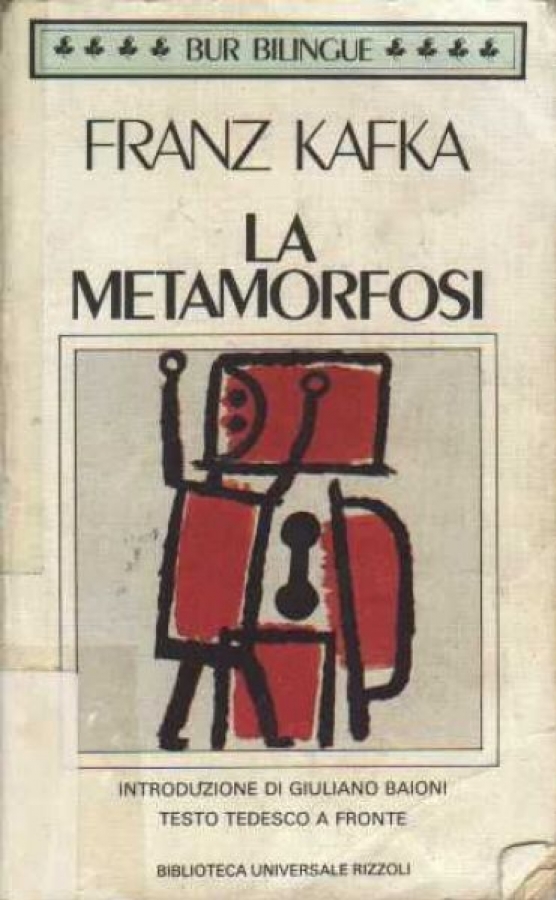
The Short Stories of Franz Kafka
Kafka’s stories are generally brief writings, characterized by a paradoxical plot and cryptic, scarcely accessible content. Undoubtedly his most important story is *The Metamorphosis*, which can be regarded as a masterpiece both from a strictly literary perspective and in terms of its thematic substance. Gregor, a model employee, awakens transformed into a large insect, likely a cockroach. At first, the family is stunned; then they feel a stir of pity and compassion toward him (particularly the sister), and finally indifference and contempt set in. Ultimately, Gregor lets himself die, and his parents and sister do not even care where his body has been discarded. The story lends itself to multiple interpretations. First of all, what is the cause of this transformation? Is it, perhaps, the revolt of a young man compelled, at an early age, to support his family (the debt-ridden, idle father; the sister who aspires to be a violinist) under the rigid, oppressive control of an office manager? Following the night of the transformation, in the morning Gregor ought to depart early as usual, and the fact that he remains in his room is regarded by all as a display of indolence—itself already a defiance of social rules. > "Chief Clerk," Gregor cried out, "be patient for just a moment! Yet I am already feeling much better. How can such a thing happen!" . It is the theme of a bureaucratic, oppressive society that in no way tolerates the breach of rules. Yet there is, for me, another theme that is even more universal. What happens when a person falls prey to a serious illness? At first, everyone stands by him, full of compassion and kindness; then, little by little, people begin to alienate the patient, altering his habits and his furniture because he is no longer needed, until abandoning him to indifference. This is what happens to Gregor. At first, his sister cares for him, unlike his father, who from the very beginning rejects him to the point of grievously wounding him. Then the mother and sister decide to clear the room of furniture so as to make it easier for Gregor to crawl along the walls (a clear demonstration of a kindness that disregards the patient’s wishes). Gregor does not want this, because it signifies relinquishing his nature as a man, as a healthy person, and he reacts to the point of clinging to a picture to prevent them from taking it away. Then one day, as his sister plays the violin, Gregor, the large insect, is entranced by the sound and longs to draw near to his sister, to embrace her and have her play for him alone. Instead, he is cruelly repelled because he is a monster. Nothing remains but solitude and death. Alongside Gregor’s transformation, a change takes place within his relatives. The father goes back to work and struts around in his uniform, the sister works as a shop assistant and wears open collars, and the mother works as well. When Gregor is gone, a new life begins, wholly forgetful of the kinsman who had nonetheless helped them so much.