Finished reading on: December 27, 2014
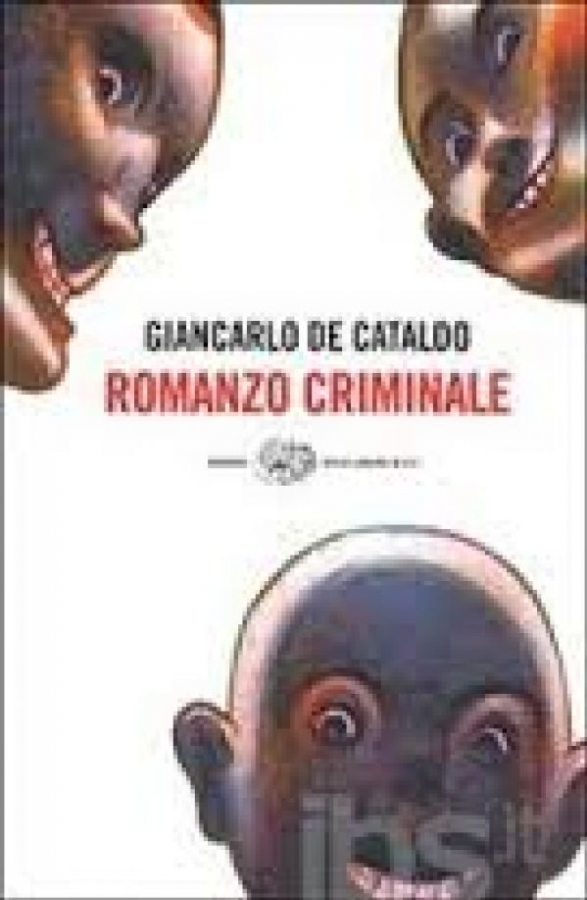
Romanzo Criminale
AI Translation Notice: This review was translated from the original Italian using artificial intelligence. Book quotes and excerpts are translated interpretations and will not match the author's original English phrasing or official published translations.
We are in the Rome of the 1970s and '80s, in an Italy stepping into the consumer society and traversed by terrorism and subversive plots.
A few youths from the Roman outskirts decide to
assert undeniably a dominion destined to last forever over the Old Whore
.
From drifters, they become a gang and turn into the masters of Rome: they are the famous Banda della Magliana.
What gives the group strength is friendship, a leader (the Lebanese), and
the dream of finally counting for something, all of them intolerant of the old bosses and the foreigners coming to lord it over our home turf.
All fired up by the fantasy of taking, once and for all, the eternal old whore, complete with she-wolf and twins.
(...) But even that wasn't entirely true.
Beyond all agendas, well beyond reason, the cement of it all was action
.
It is hardly surprising, then, that their political ideology is fascist, that the group gravitates toward black squadrismo.
In their race toward criminal dominion over the city, the gang contends and, in spite of itself, allies with a series of surrounding organizations and figures: the Mafia and the Camorra, who concede control of Rome to the gang, but dictate its boundaries and use it for their own criminal ends; the fixers, who allow dirty money to be laundered into clean—or near-clean—enterprises; the institutions (the police, the judiciary, the lawyers, the prison system), which in one way or another abet the gang's criminal operations, sometimes unwittingly out of a legalistic conception of justice, and far more often because they are collusive, corrupt, and acquiescent.
Yet presiding over it all is the Old Man, who
commanded an intelligence unit (of the Secret Services) with a neutral name (and played) at throwing the world into disarray
.
He is the master puppeteer and the gang one of the puppets:
you take a deviant or presumed deviant, you make him deviate, you grab him while he’s deviating.
(...) And now he had the Lebanese and his boys.
To do what with them? To play with them, of course
.
The only one to realize the trap is Freddo, the gang's "pure" soul, who yells at the Lebanese: "So now we work under a boss! And what a boss! The State! The filthy State!
Amid the general apathy and cowardice, the only one standing up to the gang is a police commissioner: Nicola Scialoja.
To him it is clear, right from the start, that this is a criminal organization, and not merely a gang of petty hoodlums, that
drugs were the key to everything.
(...) Whoever controls the drug market controls the city.
The Lebanese's boys controlled the city
; and slowly he realizes that behind the gang there is a puppet master, pulling the strings from an obscure office of the Secret Services.
Scialoja is the positive hero: he stubbornly fights the gang; he is defeated, betrayed, vilified, yet he never lets go.
He witnesses the unraveling of the Banda della Magliana.
The Lebanese is killed, and from that moment the ties holding the group together snap: the boys
went their separate ways.
(...) The loyalty to the group was becoming loyalty to the groups
.
Scialoja knows the gang is becoming more vulnerable; he attempts to strike at it by every means, but as long as the Old Man shields it, all his efforts shatter against the wall of omertà, corruption, and collusion.
Scialoja defeats the Banda della Magliana only after the Old Man, by now dying, designates him as his heir, co-opting him as head of his obscure yet all-powerful office.
He had the Old Man's diary! He was the custodian of the Republic's secret history.
(...) He could do virtually anything.
He had power.
(...) But as he slipped into the elevator, (...) he felt a sharp, painful pang deep in his heart.
At the moment of triumph, from what obscure recesses of the past could this incomparable sense of defeat possibly be welling up?
The story can be read from different angles: a fictionalized chronicle of real events, a desolate fresco of Italian society and of Rome in particular, a painful, resigned indictment of Italy's dark malady:
the perverse connection between politics, the underworld, rotten businessmen, rogue Secret Services....
when this cancer is rooted out...
if it ever is rooted out...
.
There is a simpler reading: the story of a group of boys, of their desire for rebellion and freedom, and of how their dreams, and their friendship, founder in the Roman quagmire of money, drugs, and compromises.
When Roberta,
after making love, asked him for the umpteenth time why he did all this, (Freddo) managed to find the honest answer: 'cause this way I feel free
.
In the prologue, a survivor of the gang, after gunning down a petty criminal in cold blood,
indifferent to the weeping, the sound of footsteps, the approaching sirens, turned his back on him, and aiming his weapon at the bastard moon screamed with all the breath in his lungs: I was with the Lebanese!"
The setting is the book’s fundamental asset.
Its flaws lie in the characters and the plot.
The former are stereotypes, treated superficially—perhaps because the author does not favor the trajectory of certain figures over others: they all crowd onto the very same plane, appearing and disappearing in ways that cause the reader to lose track of their trials and sentiments.
The plot unfolds slowly, devoid of surprises, in repetitive fashion: years go by, the gang evolves, yet the events feel perpetually identical, as though criminal deeds were inherently monotonous, forever repeating themselves; without a great writer to grant them depth and rhythm, boredom inexorably sets in.
Why read it? It represents a chapter of our history, but in the end, the novel is prolix and tedious.