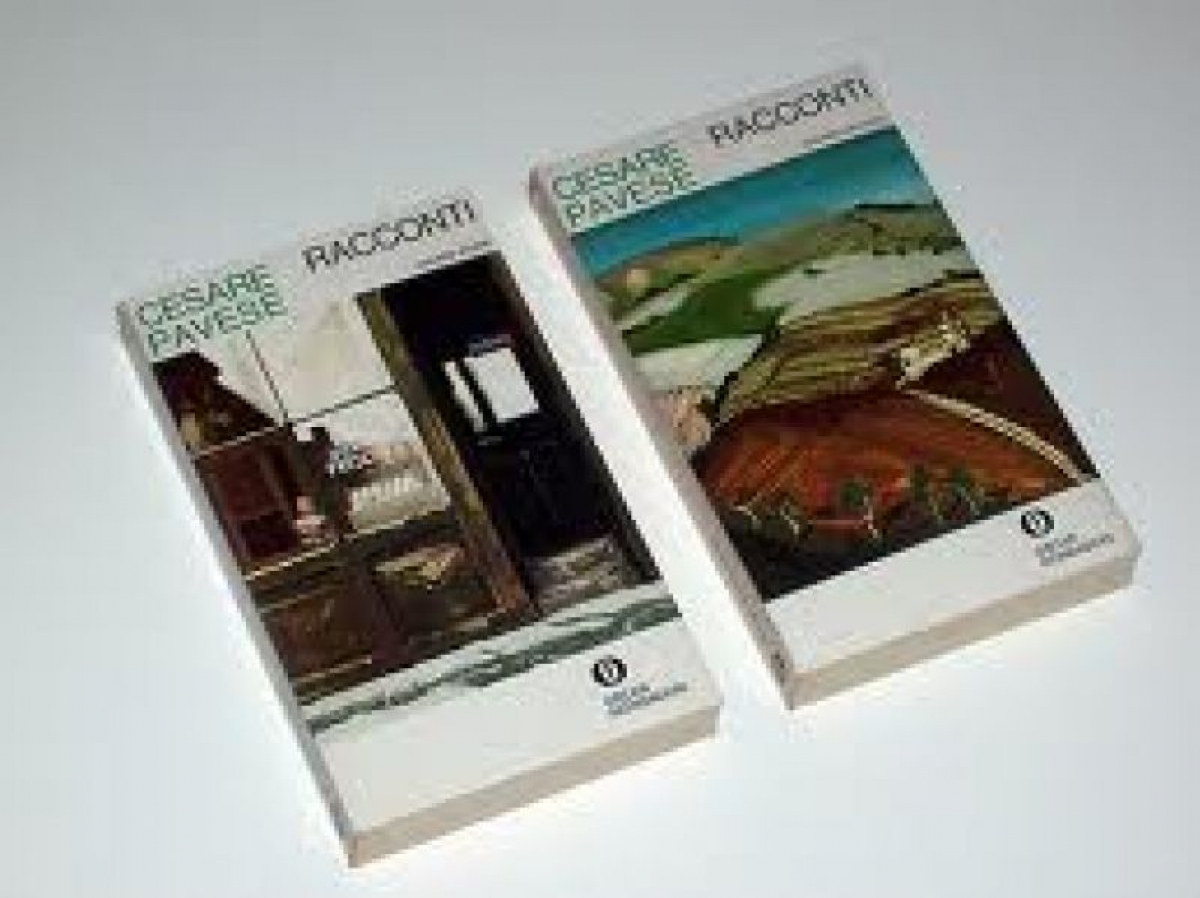
Finished reading on: July 16, 2012
Short Stories
Title of the original version reviewed: «Racconti»
AI Translation Notice: This review was translated from the original Italian using artificial intelligence. Book quotes and excerpts are translated interpretations and will not match the author's original English phrasing or official published translations.
This volume brings together Cesare Pavese’s short stories written between 1936 and 1946.
Many of them had already been published, principally in the collection Fiera dʼAgosto, while others are unpublished, at times left unfinished.
These are the years of the author’s imprisonment and internal exile, of the partisan war, and of the early postwar period.
The earliest stories possess the structure of miniature novels, displaying an attention to character and context that is no longer found in the postwar narratives, which become briefer, more meditative, and increasingly introspective.
Already in "Terra dʼesilio", which opens the collection, the protagonist—"cast by strange turns of work to the very end of Italy"—reveals one of the stories' guiding threads: a sense of estrangement and yearning anticipation born of the contemplation of nature, of the sea, and of the hills.
Down there lay the sea.
A remote, faded sea, which even today hovers deliriously behind all my melancholy.
There all land came to an end upon barren, low-lying shores, a hazy immensity....
I would have wished for sheer void beyond that inhuman cliff
.
The style is spare, yet already symbolic.
As one moves through the stories, it is possible to trace the evolution of the author's prose and expressive universe, culminating in the collection’s masterpiece: "Villa in collina".
The protagonist has been invited to a reception at the villa he used to frequent as a boy.
The narrative revolves around his unrequited love for Ginia—fatuous, enchanting, and treacherous all at once, yet never truly guilty.
The story’s incipit is masterful.
I was walking back up the hill road, and the old backdrops of greenery and low stone walls, as they emerged around each bend, seemed false to me.
I had lived away from them for so long, barely thinking of them in fleeting, distracted moments, that their actual presence now affected me merely as a symbol of the past.
Yet the evening breeze and the scent of that earth were no symbols.
Here I bodily recovered the atmosphere of my youth, for these things I had never forgotten; rather, in distant countrysides or along city avenues, I had often caught that scent in the air, savoring other times anew
.
The return to the world of youth, once so rich with expectations, proves to be a disillusionment, for Ginia now moves within a web of relationships wholly alien to him.
Nothing remains for him but to walk away
without memories, barely answering in conversation, yearning for the moment I would be alone
.
Memory, nostalgia, and the pursuit of solitude become, in the subsequent stories, a "sweet captivity" (as Montale phrases it in Riviere), within which the author remains ensnared in increasingly existential terms.
A stunning short story, "Il campo di granturco", provides the author with an occasion for self-reflection, since often "certain remote dialogues congeal and materialize over time into natural figures." One day he must have encountered this cornfield, though he could not recall it, but
every time I had dared to take a step inside that yellow forest, the field must have welcomed me with its crackling, sun-drenched voice....
in that crackling there was a deadly silence, characteristic of an enclosed, deserted place, which unfolded in the distant sky a promise of unknown, arduous life, seductive as the hills
.
Yet if in this story there still remains a sense of a future, in one of the last despair alone takes over.
In "Risveglio", the protagonist does not answer his friend’s question about what he will do the following day.
He merely turns around and walks away, abandoned to himself.
Nothing could now abolish the wretched reality of my existence...
I resolved then to await the day out in the streets....
since the entire city was deserted, and the creaking of a distant cart belonged not to the city, but to the countryside
.
As many critics have observed, the characters in these stories are "the defeated," whose defeat nevertheless does not prevent them from preserving a mythical, boundless conception of life itself.
This resides in the landscape of the hills and in the longed-for anticipation of the sea, while the social context and the various characters recede ever further into the background, mere supporting players in the only dialogue that truly matters: that between the author and nature.
Pavese’s stylistic mastery lies in moving toward a lyrical and figurative dimension, all while maintaining a lean, seemingly realist prose.
Why read it? Not all the stories are, of course, of the same caliber, but those highlighted here are reason enough to devote time to the reading.