Carlo Cassola
Books by this author (1)
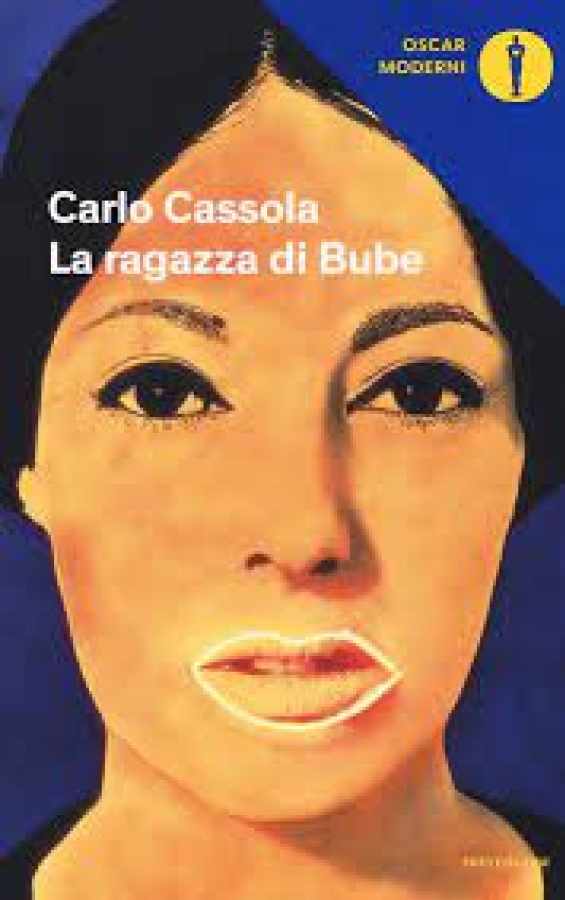
Bebo's Girl
In a celebrated ballata, Guido Cavalcanti sings of the pains of love: “this (is) a desperate and fierce torment,/which consumes and aches and burns and embitters”. Love does not bring happiness, especially if > I can find none of whom to beg for pity,/thanks to that lord/who turns the fortune of grief . This state of mind is depicted with melancholic sweetness by Cassola, and he does so from the point of view of an adolescent girl in an impoverished working-class family in a small Tuscan town newly liberated from the Nazi-Fascists in 1944. The setting is not what matters; it is far more worthwhile to delve into an adolescent girl’s discovery of love, recounted with a surprisingly feminine sensibility. Mara is the daughter of a “shiftless” bricklayer and an affectionate mother, shattered by the death of her son Sante, killed by the Nazi-Fascists. And it is none other than Bube, a partisan and friend of her brother, who upends Mara's life while she is still at the threshold of her first courtships. The young man has come to visit Mara’s father, a figure in the local Communist party. The girl is drawn to the reticent Bube, who possesses the aura of a grown man, yet remains shy and awkward. Mara > was used to daydreaming, and having long conversations with herself. (...) Bube: she didn’t like that name very much. (...) > I’ll call him... Bruno, Bruno is a handsome name, and besides, it suits him, because he really is dark . And when he gives her a pair of high heels, she feels more beautiful, and is thrilled to be alone with her fiancé. > Then Mara said to him: > how wonderful it would be to dance, you and I! Everyone would say what a lovely couple! (...) They kissed. (...) He kissed her several times: each time pressing his lips harder against hers, (...) had he wanted to take her, he could have, because she was as if devoid of strength. (...) No Bubino, no; not now, no; that’s enough now«. It could be the usual languid courtship story when »the fortune of grief breaks in > . Bube, urged on by his comrades, kills a maresciallo and his son. He hides in a country farmhouse, taking Mara with him; from there, he is forced to seek refuge in France to escape the Italian police. Mara goes into domestic service with a family in the city. The memory of Bube fades in her mind, but she feels like a changed person. > The petty vanities of the past, the bickering with her cousin, the gossiping with her friends, made her smile with commiseration when she thought back on them. (...) She would look at her reflection in shop windows: but no longer out of vanity, to confirm that she had a well-proportioned body and a pretty face. The figure that appeared for a moment on the pane of glass was a tragic, sorrowful image. It is as if the bond with Bube, with that reckless and nervous young man, dragged her toward an inevitable destiny. Even her relationship with Stefano, a thoughtful and educated factory worker, is not enough to prompt Mara to break with Bube—a rupture her parents urge her to make. The boy has been arrested and is in prison awaiting trial. Mara goes to visit him in prison, and is told that she must go in alone. > No, not alone... I give up > , Mara was about to say, but suddenly she felt an extraordinary strength sweep through her entirely; she raised her head proudly, and said: All right, I’ll go alone > . (...) She could not have given it a name, but she knew that it was irresistible: that it shattered every fear, every hesitation; that it made her calm and self-assured and indifferent to anything other than the fulfillment of her duty... (...) That was it, that was how it was: she was Bube’s girl. Pasolini seems to have been referring to Cassola when in his poem *In morte del realismo* > he said that > to that ingratitude (Cassola’s), more than to the wound (Tomasi di Lampedusa’s dagger)/realism bowed its head, surrendered. In its day, Cassola’s novel stirred controversy across the cultural sphere and drew fierce criticism from Neorealist poetics; it was accused of being a mawkish tale dealing with banal events and ordinary characters. In truth, the novel speaks of small feelings that grow stubbornly strong when confronted with the vast and painful trials of life. A young girl longing for a simple and joyous love, in the face of unfolding events—recognizing Bube’s culpability as well as his boyish innocence—Mara reveals herself as a courageous and resolute woman, fully conscious of the weight of the role she has assumed. Mara is a discreet hero > , fighting for an ideal of fidelity unto sacrifice. Cassola’s writing has been defined as clear and communicative”, capable of alternating tight dialogue with refined yet simple, readily accessible psychological insights. The plot is structured along conventional novelistic lines, without any lapse in pacing. Beneath the fine Italian prose, one senses a sentence flow that is fluid yet too facile, a lexical poverty (lacking regional idioms and vernacular Tuscan expressions), and a flattening of the language that betrays a certain literary childishness. Whether all this was deliberate or not matters little: the novel would exert a major influence on Italian fiction of the second half of the twentieth century and would be adopted as a reader in the newly reformed compulsory education system. Even today, it remains a novel that adolescents could profitably read. Why read it? Stylistically pleasing; the figure of Mara is beautifully drawn.