Finished reading on: March 04, 2021
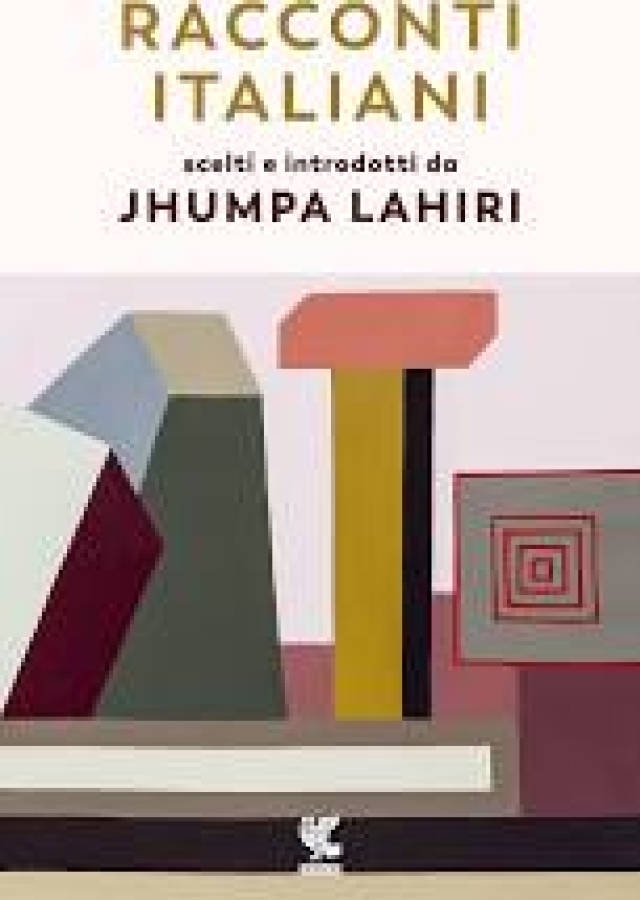
Italian Short Stories
Title of the original version reviewed: «Racconti italiani»
AI Translation Notice: This review was translated from the original Italian using artificial intelligence. Book quotes and excerpts are translated interpretations and will not match the author's original English phrasing or official published translations.
Jhumpa Lahiri is an Anglo-Bengali writer (see the review of The Namesake on this website); captivated by the Italian language, she has performed "a kind of reverse game" (as she writes in the foreword): translating an anthology of short stories from our literature into English, and subsequently presenting that same anthology to the Italian public. The authors, some renowned and others less so, are examined through the magnifying glass of a foreigner, of a writer with her own distinct interpretive and literary imprint. The selection is vast: 40 authors presented in alphabetical order, from Elio Vittorini to Corrado Alvaro, in an innovative departure from the chronological criterion typically adopted by anthologies. Despite the extensive time span, from Giovanni Verga's Fantasticheria, published in 1880, to Controtempo
by Antonio Tabucchi from 2009, Lahiri sends us an important message: literature is timeless, the social and literary context does not matter; it is what is said and how it is said that must hold value for us. And so a curiosity arises: what holds value for Lahiri? To attempt to understand this, we can start with an Italian writer who is now forgotten. In an exquisite story,
La noce d'oro
, Cristina Campo brings to light moments of her childhood and draws us into the origins of her passion for fairy tales and mysteries. Delving into her grandmother’s books, there appears before the young Cristina's fertile imagination
a setting of tender funereal gloom where wasp-waisted princesses appeared to wear corsets and perhaps even hairpieces, in vast, gloomy-grey palaces. (...) I discovered then, with a shudder, that those fateful places and characters were not, all things considered, different from the yellowed and unsettling cabinet photographs of my grandmother as a young woman and of other beautiful dead kinswomen which my mother, in green leather cases, always carried with her on her travels
. What difference, then, is there between the realm of fairy tales and the real world? None; it is like visiting one's dead at the cemetery and discovering, stunned and frightened, the marvel:
the ciphered names, the hieroglyphic inscriptions were suddenly replaced, on the soft marble, by their names, my very own, the ones I myself wore around my neck on the gold medallion. (...) The fairy tale was there, terrible and radiant, resolved for a moment and irresolvable: the eternal one, ever-returning in dreams, a viaticum for pilgrimage, a golden walnut to keep in the mouth, to crush between the teeth in the moment of extreme danger
. Literature is that golden walnut which, blending fantasy and reality, shields us from the thought of Death. Giuseppe Tomasi di Lampedusa had only a few months left to live when he wrote a disquieting story of rare elegance:
La sirena. The narrator, the sole "surviving specimen"
of an ancient Sicilian family, meets in Turin a fellow countryman, the most illustrious Hellenist of his time. He manages to win the eminent professor's confidence, to the point of being invited to his home. Here he discovers that the elderly scholar lives alone and has never associated with the opposite sex, despite having been a young man of extraordinary beauty, a kind of Greek god. What are the reasons for a misogyny pursued throughout an entire lifetime? As in
The Thousand and One Nights
(see the review on this website), we enter a literary matryoshka that leads us into a legendary mythological tale set within a prosaic bourgeois narrative. On a beach of rare beauty, before a pure expanse of sea, the professor, still young, declaimed
aloud the verses of the poets, and the names of those forgotten Gods, ignored by most, once again brushed the surface of that sea which once, at their mere sound, would rise in turmoil or calm into stillness
. And as if the ancient tongue, recited by the young Hellenist, had revived the wonders of myth and sorcery, a Siren emerged:
lying on her back, her head rested on her crossed hands; with calm shamelessness she showed the delicate down under her armpits, her parted breasts, her perfect belly; from her rose what I have clumsily called a perfume, a magical scent of the sea, of youthful voluptuousness." And the Siren said to him, "You are young and handsome, you should follow me now into the sea and escape pain, escape old age. (...) I have loved you and, remember, when you are weary, when you can bear no more, you need only lean out over the sea and call me: I will always be there, for I am everywhere, and your dream of slumber will come true
. There is, then, somewhere within our own imagination, a lifeline against suffering and Death. It may be a fleeting encounter with a gentleman that makes us dream, as occurs in
La signora
by Lalla Romano, or it could be a hybrid creature, like the Centaur, whose unrequited love unleashes his fury (see Primo Levi's
Questio de Centauris
), or, finally, escape from grief might reside in an ancestral and ill-fated affection for a young doe, as in the story
La cerbiatta by Grazia Deledda. As we read in the magnificent tale "The Porter and the Ladies" from The Thousand and One Nights,
all that you see us do, all that you observe around us... do not seek to understand the reason for it
.
The selection of stories and authors is intensely personal; fortunately, Lahiri did not study Italian literature from the critical handbooks of our homegrown professors. Instead, she allowed herself to be guided by curiosity, by even serendipitous recommendations, and by a very distinct taste regarding who and what ought to be read. With this approach, a literature emerges that is markedly different from the one we studied: off to the scrapheap with supposed verismo and neorealism; a welcoming embrace for ambiguous, fantastical, and far-fetched tales; and a rediscovery of authors—both male and female—who had been neglected or even ill-treated. Some writers emerge as not so timely or vital (consider the celebrated Un marziano a Roma by Ennio Flaiano), while others return to the fore, such as Fabrizia Ramondino with her story La Torre.
Why read it? An engaging and innovative survey of Italian literature.