Finished reading on: February 15, 2023
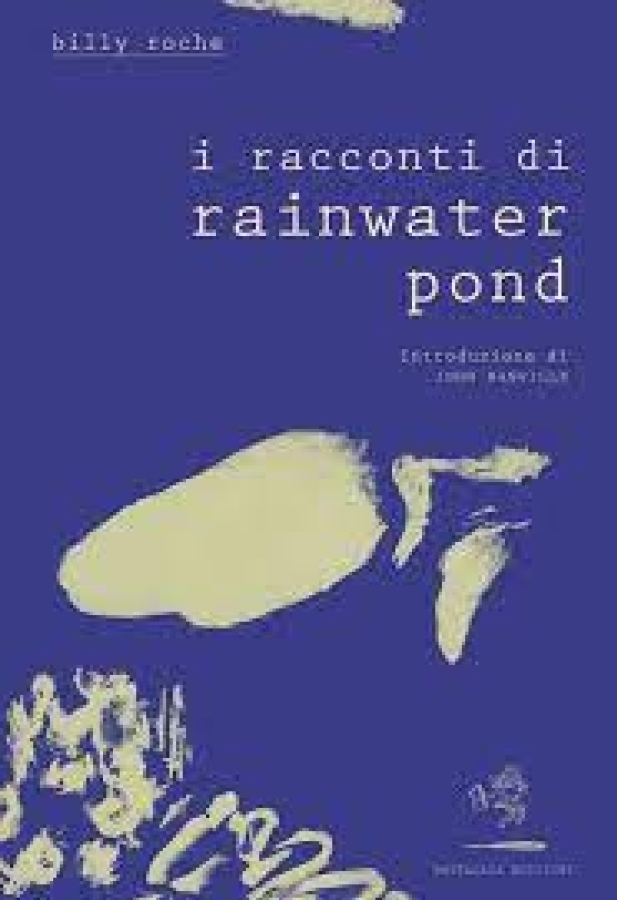
The Tales of Rainwater Pond
Title of the original version reviewed: «I racconti di Rainwater Pond»
AI Translation Notice: This review was translated from the original Italian using artificial intelligence. Book quotes and excerpts are translated interpretations and will not match the author's original English phrasing or official published translations.
We are in Wexford, a county located in the north-eastern part of Ireland and depicted by Billy Roche across numerous theatrical works. The setting common to all the stories is the Rainwater pond:
a dark and treacherous place. You could drop a coin in and watch it enter the murky water, go home, have your tea, go to the cinema, return home a second time, (...) and that coin was still sinking as you walked back in for dinner
. The dark allure of the pond led the protagonist of one of the most evocative stories, One Is Not a Number, a poor cripple marginalized and tormented by the other boys, to believe that “the place had magical properties that could somehow cure him,” if only he dipped his poor foot in the water. And lingering further on this splendid tale, magical indeed this pond must be if at a certain point a doppelgänger appears—the boy the wretched cripple wished he could have been:
he was the other me, the real me, the one who lived inside me, (...) handsome, strong, and healthy, with wheat-coloured hair and not a single freckle, (...) an elegant bearing, I thought, and he possessed a deep voice he never overused
. And Evelyn, the girl loved in vain by the cripple, “walked home, floating an inch or two off the ground,” looking like a fairy. Has the ugly toad transformed into a graceful white swan? As in all the stories, the individual lives fade away, at times without a definitive conclusion, into the banality of existence—as though we were all trapped in our fate, in a prosaic, narrow, and stagnant everyday life; and Rainwater Pond is simultaneously a physical place and a metaphor for our suffering consciousness, powerless to break free. As the protagonist reflects in the final story, tellingly titled A Quiet Place, all that fretful striving to have a life of one’s own had merely been
a mysterious twist of fate that had ultimately worked for his own good; and at that moment it was all over, the actors had packed their costumes back into their suitcases and returned to everyday life
.
Across the sequence of stories, a rupture emerges, dividing the collection into two parts. Up to the tale of the cripple and his desperate loneliness—a long, intricate story—an ancestral magic realism holds sway, recalling Elsa Morante’s Menzogna e Sortilegio and Anna Maria Ortese’s Il mare non bagna Napoli and Il Cardillo addolorato (see the reviews on this site); at times, a yearning for love emerges that is meant to compensate for physical flaws (as with fat Maggie) or to help escape an unhappy condition: consider the splendid ending of The Northern Lights, where the protagonist returns home to find her husband disappointed to see her, without a trace of suspicion or jealousy:
she sighed to herself. Everything was clearer to her now. That night, after tea, she would go upstairs to paint a portrait of him: a solitary man seated at the window, before a silvery night sky
. Incidentally, this is a very different reaction from that of Alba de Céspedes’ protagonist in Da parte di lei, who kills her husband because he is indifferent and bored (see the review on this site). In the second part, the narrative pace becomes brisk; the characters seem to be on a stage performing a play; the reading flows swiftly, intriguing and effortless, but the fantastical atmosphere of the earlier stories slowly disperses, and even the pond dissolves into the background, losing the uncanny and mysterious presence that lent the narrative its charm.
We are far removed here from other Irish writers, with their captivating, evocative, at times impenetrable vocabulary, characterized by an intricate, often challenging syntax: neologisms, cadences that seem to stem from languages other than standard English, long sentences, digressions, and parenthetical clauses. Here, the sentences are short, with extensive punctuation, as is often the case in contemporary American fiction. The translation succeeds in conveying the deeper meaning of the stories, though one wonders whether it might have simplified the diction, as so frequently happens. Perhaps the prose and narrative structure reflect the author’s predominantly theatrical background.
Why read it? A meditation on the human condition, viewed through a microcosm.