Finished reading on: November 19, 2023
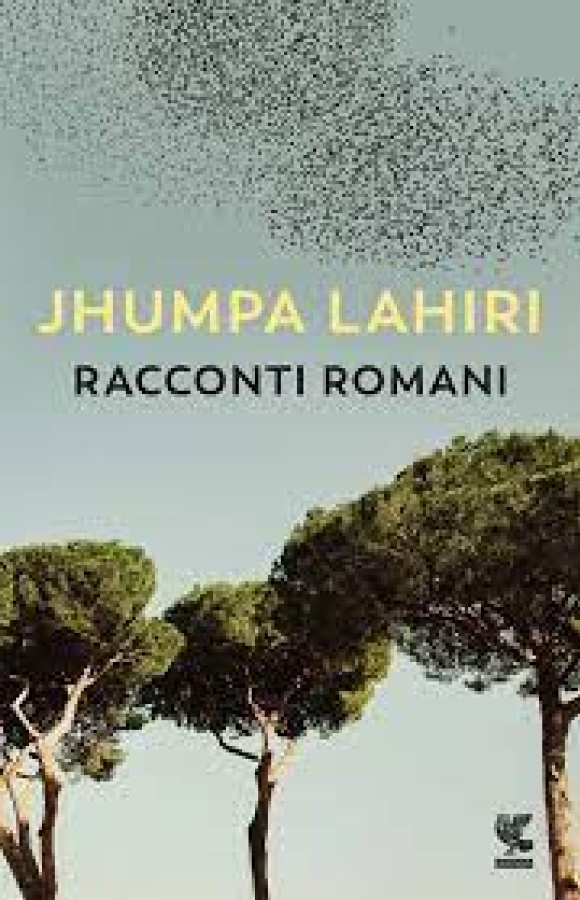
Roman Tales
Title of the original version reviewed: «Racconti romani»
AI Translation Notice: This review was translated from the original Italian using artificial intelligence. Book quotes and excerpts are translated interpretations and will not match the author's original English phrasing or official published translations.
In the short story Casa Luminosa, a young migrant family has arrived in Rome, believing they have found a home where they can live in peace; but the neighbors, incited by the "crow-women," insult and threaten the harmless married couple. The wife returns to her native country while the husband stays in Italy. He goes into a bar and watches a gentleman quietly sipping a chinotto.
I must say I was somewhat amazed, and perhaps also a bit envious of someone who felt so at home in that place, who couldn't care less about boundaries, who wasn't afraid of being a nuisance. Watching him, I had realized how much I had felt, my entire life, either an intruder or merely passing through.
The theme of the wanderer who no longer has a place of his own is the common thread running through this collection of short stories, which, rather than Moravia's prose—echoed in the title—evokes that of Mario Soldati (see the reviews of this author's novels on this site, particularly L'attore) and the claustrophobic atmosphere of Dino Buzzati's Sessanta racconti (likewise reviewed on this site). The intruder is not merely the migrant; it is all of us, isolated and scattered across a Rome poised "between inferno and paradise." The protagonists of the splendid story La scalinata (a pivotal juncture of the collection) are all the adrift souls of our society. "The mother" climbs the steps in the early morning
and takes her cell phone out of her bag to snap yet another photo of the view. She immediately sends it to her son, (...) he lives with his grandparents on another continent, in a humid city full of crows and palm trees and dust.
"The widow"
who walks down the steps in the late morning, is afraid of the shattered glass and struggles to place her feet. (...) She also feels assaulted by everything they write with spray cans on the walls lining the steps.
"The expatriate"
who, at lunchtime, walks briskly across the steps, will undergo surgery the next day. (...) She would have preferred to return to her hometown, (...) but it would be too difficult to organize.
"The girl,"
who walks down the steps at two in the afternoon, is surrounded by many other girls. (...) Only, unlike the others, this girl doesn't wear miniskirts that look like soft lampshades. (...) Every day, for two or three minutes, (...) without their knowing, she merges into the collective organism, into the arms, the smooth, bare legs, the loose hair, and temporarily imagines being one of them.
The "two brothers," who sit on the steps toward sunset having a beer, discover that their father is moving in with a friend and nothing remains of their childhood but a nostalgic memory. "The screenwriter," who lives in a building right beside the steps and wanders through Pasolini's wondrous Rome only in summer (while his wife is at the seaside), ends up mugged on the steps. How does the author, who divides her life between America and Italy, position herself in relation to these exiles and to a Rome that is dazzling yet repulsive, where everyone feels like a foreigner? Like Manto, the "crude virgin" sung by Dante in Canto XX of the Inferno, the writer is condemned to "fecer malie con erbe e con imago" (line 123 of the Canto), not to prophesy the future, but to remain imprisoned in remembrance, like Dante's soothsayers walking with their heads turned backward. In the final story, Dante Alighieri (a title evocative of her love for our language), the narrator's "I" steps into the open. As the plane descends toward Fiumicino, the author surveys her life as if from above, returning in her mind to the naive, desperate little letter from her first love, who wrote "Dante Alighieri" on the envelope, perhaps to suggest she was his Beatrice. Why, the author wonders, do memories resurface precisely when
the skin has grown thin? And why in Rome of all places,
by now full of broken, mistaken, scarred, discarded, departed things, and yet I cannot bring myself to sever the threads?
Jhumpa Lahiri is a great Anglo-Bengali writer (on this site one can read The Nickname); she has edited an interesting and wide-ranging anthology of Italian short stories, spanning from Verga to Tabucchi (see the review of Racconti italiani on this site). It is precisely from the choice of stories and authors, often unmentioned in school anthologies, that the author's attention to "outsiders" and to "reverie" emerges. It is a trait also found in Racconti romani, which collects and rearranges many pieces previously published in magazines. At first, Lahiri's writing is timid and at times hesitant, but it grows increasingly confident, with complex syntax and rich adjectival phrasing: a style undeniably born of a close reading of our classics, particularly Dante. Moreover, even in English, Lahiri is not a sparse, minimalist author; rather, she loves elegance and the meticulous pursuit of words—perhaps this, too, is why she fell in love with our language.
Why read it? Intense and enjoyable.