Finished reading on: October 21, 2006
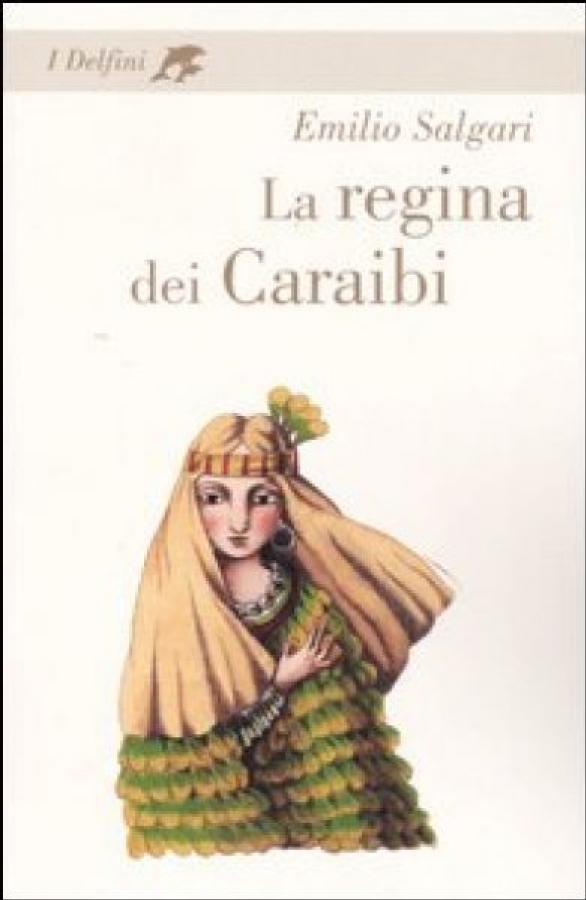
The Queen of the Caribbean
Title of the original version reviewed: «La regina dei caraibi»
AI Translation Notice: This review was translated from the original Italian using artificial intelligence. Book quotes and excerpts are translated interpretations and will not match the author's original English phrasing or official published translations.
The novel is the continuation of The Black Corsair.
The pirate is still in pursuit of the hated Duke Wan Gould, and the book unfolds across a series of combats and adventures, interspersed with long, captivating descriptions of the Caribbean forest.
The Duke perishes with his ship, and in the end the pirate is reunited with his beloved Honorata, who has become queen of the cannibals.
The book displays a highly complex structure and develops across several planes, with the introduction of new characters.
At the center of the novel lies the fatalism of the Black Corsair, now convinced that he is condemned to unhappiness and destined to bring grief to others as well.
In a conversation with Yara, the young Indian woman who will be killed by the Spaniards, the pirate confesses his conviction of being predestined to bring misfortune to women:
One cannot love the Black Corsair, maiden.
I bring misfortune to the women who draw near me.
You have seen it!
and again, after Yara's death,
I am fatal to all – he said in a somber voice – take care of this maiden, Marchioness
.
On the other hand, the thirst for vengeance overwhelms the Black Corsair, constituting a destiny from which he cannot escape, even should he wish to.
In his conversation with the Marchioness of Bermejo (a splendid new character of Salgari’s), when asked what he would do with the Duke if Honorata were alive, the Black Corsair replies
do you believe, Madame, that the souls of my brothers have been appeased? When the sea turns phosphorescent, the Red Corsair and the Green, the Duke's victims, resurface: they demand vengeance.
When the hurricane sweeps in from the East, amidst the howling of the wind, I hear a voice that comes from the shores of Flanders: it is that of my elder brother, treacherously murdered by the Duke, and that voice demands vengeance as well
.
Even at the moment he meets Honorata, whom he is finally free to love since the Duke is dead, the Black Corsair yearns for death ("Yes, death, oblivion!") and his dark despair is such that he seems to see the dead calling to him (
Look at them, Honorata, look at them...
There is the Green Corsair...
there is the Red...
there is your father...
and my other brother, too, slain on the lands of Flanders...
) and the pirate wishes to join them ("I am coming!...
Brothers!...
I am coming!").
Only love saves him, and to the Black Corsair's question of whether to choose between life and death, Honorata whispers, "Your love."
Alongside this struggle between hatred and love move the secondary characters surrounding the Black Corsair, who are in fact central to the novel: in particular, his companions, Carmaux, Wan Stiller, and Moko, who tend to the Black Corsair with fraternal devotion and lend the novel a sense of brio by tempering its dramatic intensity: an extraordinarily modern device, essential in giving the book rhythm and reading pleasure.
Nature, too, emerges as a major protagonist: a lush nature, teeming with fantastic fauna, especially birds and reptiles, which Salgari describes with meticulous precision and a desire to seek distraction and forget the despair that dominates the figure of the Black Corsair.
To claim that this is merely an appetite for exoticism is to overlook the contrast between the surrounding setting and the pirate’s emotions: the description of the environment carries the tone of escape and repose.
The final theme of the novel consists of combat, particularly naval battles and shipwrecks; the sea is yet another protagonist, and splendid are the pages depicting the clash between the Folgore (the beloved Folgore!) and the Duke’s ships.
The book is flawless, both in terms of its rhythm and with respect to its characters and plot.