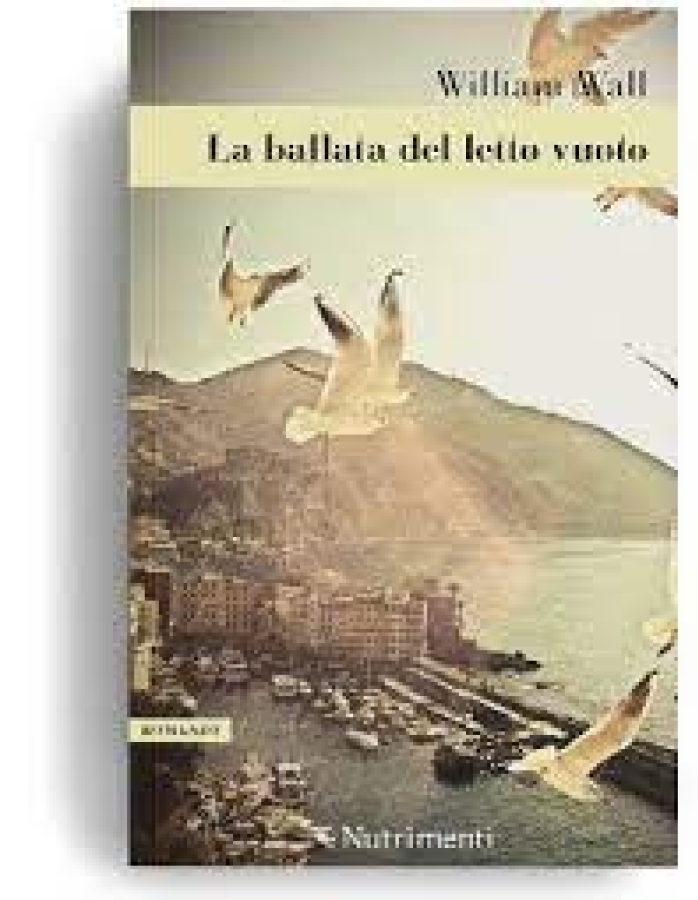
The Ballad of the Empty Bed
Kate lives in Dublin and is a middle-aged university lecturer. One day, she finds her husband dead in the bathroom and discovers herself buried in debt, hounded by creditors and banks. The man with whom she shared most of her life in an increasingly weary relationship was a scoundrel. > I wake up this morning with an awful headache, my new man had just left me a room and an empty bed . It is Bessie Smith's empty bed blues, a blues that echoes in Kate's mind with “the sax groaning in the background” and Bessie’s throaty, sensual voice. This state of stunned despair seems to offer no way out, until a young woman places a set of keys in her hand. From here unfolds a story of multiple narrative threads. Kate tracks down the house to which these keys belong: an apartment above Camogli, where “the sea eats away the land” and where Kate can see > the gleaming smoothness of newly tumbled stones beneath the cliffs of the Portofino sea, mica crystals sparkling in the winter sun, (...) the looming tenement blocks, the medieval arch, the old village, the little bars and restaurants bathed in pale golden sunlight, thin as cardboard silhouettes, (...) capable of radiating enough light and warmth to warm a soul or a heart. Perhaps even mine. In my head echoes the voice of change. Along with the splendid Ligurian harbor, Kate falls in love with Italian—with its musicality, but also its grammatical forms, which seem to reflect our own existence, > so uncertain or so complex that even the verb we use to express it must leap frenetically between different forms and even different roots . There is pleasure in addressing her husband's mistress as a *zoccola*, a sewer rat, only to discover that the masculine ending of the word carries many other meanings, but never that of a prostitute. In short, in Italian only a loose woman is a sewer rat—a subtle, ironic observation that perhaps only a non-Italian could make, accustomed as we so often are to taking the sexist usage of certain words for granted. Kate then meets Anna, an elderly neighbor with whom she forms an increasingly intimate friendship. In sketching this character, the author notes having drawn on Rossana Rossanda; what is certain is that this figure allows Wall to voice his own leftist sensibilities, mirroring himself in the image of a woman born out of the communist and activist traditions of Italian political culture. Yet an image it remains: a stereotype that impedes any genuine deepening of a singular friendship between a middle-aged, lonely, and betrayed Irish woman and an elderly, cultured lady still haunted by abandonment and nostalgia. Thus, the novel's core theme, “this headlong descent into Italy,” is not enriched by the psychological depth of an encounter, but is instead weighed down by reflections far too predictable to evoke wonder or stir our imagination. > Is it true that we can shed our lives just as snakes shed their skin? Or are we, on the contrary, tethered to old places and past times by invisible cables that bind us and thwart our every move . Wall answers these questions through Kate's journey, as she becomes a resident of Camogli and an adoptive Italian. It is striking that this question is posed on Bloomsday. Here emerges a defining trait of Wall's narrative: deceptively plain and straightforward, far removed from the stereotypically Irish idiom, yet replete with profound and evocative philosophical and literary reflections, the latter framed by quotations from Joyce's *Ulysses*. Could it be that the epiphany of the great Irish writer, in its apparent prosaicness, expresses a quest for renewal that remains too steeped in the Dublin world to ever truly succeed? The prose flows smoothly and pleasantly, marred only by an overreliance on rhetorical questions—a literary device that injects movement into the narrative but fractures and weighs down the discourse. The landscape and people of Camogli are depicted with immense affection and communicative vigor; the observations on the Italian language are engaging and gently wry. The plot, however, is fragile and ultimately unravels, and it is a pity that the psychological dimensions of the relationship between these two women—so divergent in history and culture—were not probed more deeply. Why read it? It is the chronicle of falling in love with a place and a language.
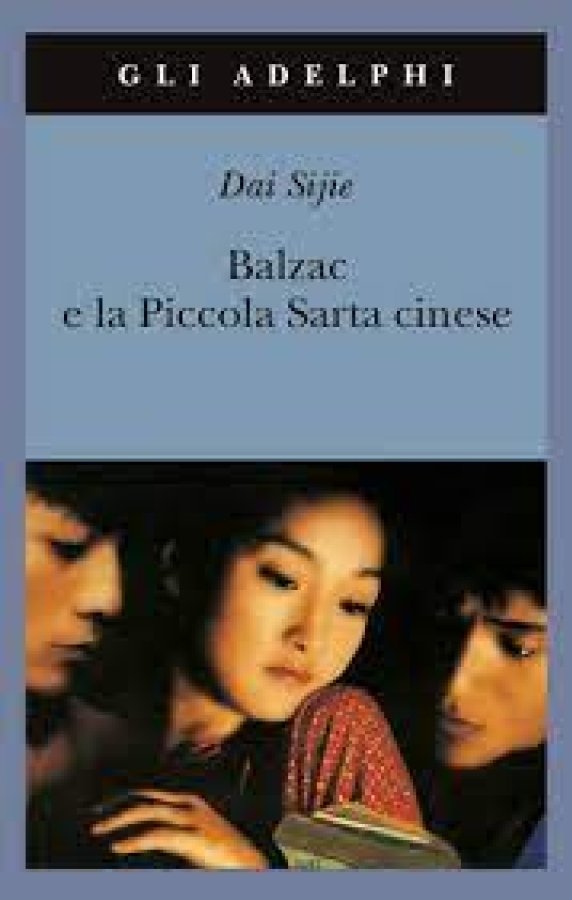
Balzac and the Little Chinese Seamstress
The year is 1971, in China during Mao’s Cultural Revolution. Two youths are sent for re-education to a remote mountain village. One is the narrator, while the other is his friend Luo. Unquestionably, a critique of the Communist regime runs through the entire novel—a critique mounted with irony and lightness, yet no less incisive for it. Were it confined to recounting how two charming and unfortunate city boys survived in an environment so far removed from their social and cultural origins, the book would remain trapped within its historically dated dimension; in truth, the author engages with the universal theme of the book as self-discovery and an instrument of emancipation. The two friends cross paths with a young woman, the daughter of the local tailor. > When she bent over the sewing machine, the gleaming metal base reflected the neckline of her white blouse, her oval face, and the sparkle in her eyes, undoubtedly the finest in the district . Sophisticated and elegant, “in a place where nearly everyone went barefoot,” the Little Seamstress captivates the boys, lending meaning to their wretched existence. Another event intervenes to alter the destiny of the two friends, and of the Little Seamstress: the discovery of a trunk containing the great masterpieces of French literature, from Balzac to Flaubert. They come into possession of the books and devour them ravenously. > Leafing through them with my fingertips made me feel as if my fragile hands were touching human lives . It is a wondrous yet insidious sensation, for immersing oneself in human nature through the pen of the great nineteenth-century writers will overwhelm the young men and transform the Little Chinese Seamstress. “She will no longer be a simple mountain girl.” In Luo, now her lover, there arises something akin to a delusion of omnipotence: the ability to govern the cultural maturation of the Little Seamstress. Is that possible? > She wants to go to the city, (the father) said. She mentioned Balzac. (...) She said she learned one thing from Balzac: that a woman’s beauty is a treasure beyond any price . Was it perhaps better to have left her in ignorance? For the most part, the novel follows a linear plot, rich in delightful, surprising, and joyful episodes. It is as if the two friends were revelling in it: they disguise themselves, for instance, as Mao to coax the lyrics of folk songs from a wild old mountaineer and hand them over to the owner of the books in exchange for several novels—a scheme crowned with success, yet ultimately doomed because the songs are brazenly erotic, and thus at odds with socialist morality. At a certain point, the narrative shifts tone, turning somber and oppressive. Two metaphors emerge—the precipice and the raven—omens of the disaster toward which the two friends are hurtling (in Chinese culture, oracles bear fundamental significance, revealing as they do “the Way of Heaven”). Later, the narrator steps back to make way for the accounts of other characters: the old mountaineer, Luo, and the Little Seamstress. It is a lyrical juncture, detached from the narrative approach maintained until then. It is as though the narrator has definitively accepted a subservient role; nevertheless, we perceive that he too is traversing his own path toward an understanding of femininity. And finally, we witness the resigned, desperate account of the Little Seamstress’s abortion, as she makes her choices unbeknownst to Luo, who impregnated her. It is as though a woman’s freedom always demands a painful act. The writing is elegant, adept at orchestrating diverse lexical and syntactic registers. Fluid, spirited, effervescent, the author manages never to dissipate the narrative drive despite engaging with numerous themes, many of which overlap and even clash. He can steer a steady course through to the end—surprising and unsettling—because the story revolves around the mysterious allure of the book. Why read it? It is a gem!
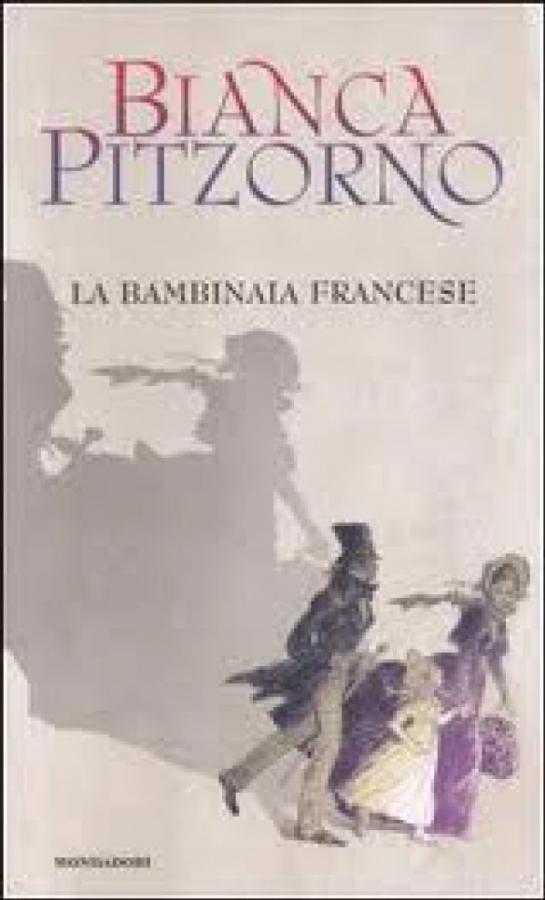
The French Nanny
Nineteenth-century fiction holds an enduring fascination, often inviting modern reinterpretations. Such is the case with *The French Nursemaid*, which rewrites a great classic novel: Charlotte Brontë's *Jane Eyre*. Here, the protagonist is a young French girl. The novel falls essentially into two parts. The first is set in Paris. Sophie is an impoverished child who lost her father during the glorious days of 1830, which brought Louis Philippe, the bourgeois king, to power. Through workers’ mutual aid societies, Sophie learned to read and write, advancing from a “Bear” to a “Monkey”—terms that, in the vernacular of printshop laborers, distinguish the illiterate, fit only for manual tasks, from those educated enough to be entrusted with typesetting. Reading great novels, newspapers, and periodicals secures Sophie a social role within her modest community and, above all, fires her imagination while elevating her ideals and aspirations. This is the finest portion of the book, as the author diverges from much nineteenth-century fiction by embracing a realist, Zolaesque approach rather than a pious, sentimental one. Sophie loses her mother as well, but fortuitously finds shelter with a celebrated actress, Céline, who is married—or rather, believes herself married—to the villainous Edward Rochester. Sophie becomes both nursemaid and companion to Adèle, the couple’s daughter. In Céline’s household, Sophie meets a Black youth, Tùssi, and Céline’s godfather, an elderly French Enlightenment thinker. The author uses this eccentric aristocrat to articulate her ideal school: one where learning is inquiry, open equally to rich and poor without class distinction. Because Tùssi is still legally an enslaved person, this also provides an occasion to address slavery and colonial conditions, though it must be noted that this theme, which tormented the entire nineteenth century, is handled superficially, striking a forced and discordant note throughout the novel. Céline’s fortunes, and by extension Sophie’s, unravel abruptly upon the godfather’s death: grasping relatives have Céline imprisoned and turn Sophie and Adèle out into the street. Tùssi is forced into domestic servitude with one of the relatives. One might expect the wealthy Rochester to intervene; instead, this callous and self-absorbed man reveals that his marriage to Céline was an orchestrated sham and carries Adèle off, even as he disowns her as his daughter. In the second part, the setting shifts to England and the somber manor of Thornfield. Sophie manages to follow Adèle, securing employment as her French nursemaid by pretending not to understand English. This device allows her to recount, from her own vantage point, the narrative of Charlotte Brontë’s masterwork. Needless to say, the story draws to a happy ending for our protagonists, who eventually reunite in France, their fortunes restored once Céline claims the legitimate inheritance left by her godfather. A distinctive feature of the novel is its narrative structure. In the first part, the letters Sophie and Tùssi write to Céline, already behind bars, are juxtaposed with a third-person account of Sophie’s circumstances up to her departure for England. It is a device that enlivens the prose, effectively balancing three viewpoints: the authorial voice and the inner reflections of the two main characters. In the second part, the epistolary mode takes precedence. The correspondence between Sophie and Tùssi chronicles the happenings at Thornfield. It must be said, however, that this narrative device becomes repetitive and dull, not least because the letters possess so little intimacy or genuine emotion. Confronted with detached, formal accounts of the plot, the reader is left disappointed, expecting the two protagonists to probe their feelings and finally declare the love of which we are certain from the outset. In the final pages, Sophie assumes the role of first-person narrator, yet the text never rises above a perfunctory chronicle of events. The novel is plainly an amalgamation of nineteenth-century narrative conventions. The reimagining of Charlotte Brontë’s work is trite, mirroring an overly romanticized and conventional reading of *Jane Eyre*. What weighs the story down most heavily is a sluggish narrative pace, a dearth of action, and an absence of psychological depth in the characters. An encouraging start soon gives way to mounting tedium. Why not read it? It is long and boring.

The Boy on the Train
All too often we forget the importance of places for our lives, for the shaping of our feelings, for the transmission of an individual and collective memory. As Paolo Casadio observes, walls, objects, and landscapes have the task of bearing witness to the past, of making it outlive ourselves, even if > walls know, but they can never say anything, only bear such a heavy burden in their mute immobility . At times they are not well-known or particularly distinguished sites; they are “non-places,” like the decommissioned station of Fornello on the Florence–Faenza railway line. It is with a “knot of anguish” that Lucia, wife of Giovannino, the new stationmaster, observes it: > that place overlooking the viaduct, that opening of trees and broom around the station, that drop behind the building which could conceal a fissure or a torrent, those marl stratifications that surfaced powerfully amid the garrigue, reflected back to her the image of an exile, the feeling of an invincible hostility . These are the years between 1935 and 1943, and yet, perhaps out of some dark premonition and a naturally fearful disposition, Giovannino experiences this isolation as a shield against the outside world. > Mount Castelpotente watched over the valley, and that mountain had stood there ever since the seabed had risen to form the Apennines. Nothing would happen. And nothing will ever happen, stationmaster. We, here, are forgotten. So spoke the blind man of Piandolci, like an ancient seer. Fornello and the small family—Lucia and Giovannino with the young Romeo—stand as a metaphor for Italian familism, for a life strategy that encloses everything within the realm of affection and familiar, unchanging surroundings; yet we know this to be an illusion, a vain and dangerous hope. With a slow, dreamy rhythm, the novel traces little Romeo’s childhood: the mountain environment, the village school with teachers and classmates unimaginable to us city dwellers, the relationships with peasant families, distant in space yet close in heart. It is a wondrous world for a child, where the few dangers fall within the eternal order of things and events. Nature is ultimately a friend, even when the blizzard rages, or the fields, paths, and houses are buried under snow. Everything changes when the most terrible tragedy of the Second World War bursts onto the scene: the deportation of the Jews. A train laden with poor souls destined for death halts for a night at the small Fornello station. They are permitted to disembark, sleep, and take refreshment with Lucia and Giovannino. Romeo befriends a little girl: a childish infatuation that could have a tragic outcome. > He does not yet know it, but nothing, after all, has any meaning other than what we assign to it, since everything disappears. He has truly grown up, the experience having served as a kind of initiatory ordeal: he has entered the land of loss and regret, and there is nothing more adult than grasping their irremediability and their meaning. And meaning, in that December of 1943, is truly difficult to find . It is a novel about childhood, underpinned by a haunting question for us adults: is it possible to be children? No, if even in an isolated Apennine village a child cannot grow up in peace. It would seem that the blame for this existential unhappiness lies entirely with an outside world gone mad, that it is the responsibility of others, against whom familial affection, friendships, and a benign nature are utterly powerless. Is this truly so? We cannot reveal the ending; we can say, along with the author, that we are all powerless > to alter the course of things, to neutralize the hostile relentlessness of fate, which so often turns into unappealable verdicts . And nothing remains but > the embrace, involvement, meager consolation, (...) communion in sorrow. The fundamental merit of the novel lies in its writing—perhaps somewhat unfashionable in its classicizing Italian, yet so elegant and refined as to satisfy a nostalgia for fine language. What is lacking, unfortunately, is the plot: the narrative pacing unfolds without surprises, except in the final pages: a long wait that is not redeemed by the characters, who are too sketchily drawn, nor by the description of the Apennine setting; and this latter proves a bitter disappointment—the failure to convey the magical, ancient atmosphere of a landscape and a society that have now vanished. Why read it? Beautiful, even if a bit dull.

A Boat in the Woods
Gasparre lives on an island and is the son of a weigher. He excels at school, particularly in Latin, and moves to Turin with his mother to pursue his studies. At high school, he soon realizes that the teachers themselves demand conformity and integration, regarding him with apprehension as a student who is “too good.” Mediocrity is the hallmark of the school system, and Gasparre’s life is defined precisely by his fraught adjustment to this prevailing social value. Disillusioned, he earns a law degree but opens a bar, implicitly rejecting culture and formal education. Yet, in plants, he finds an outlet for his quest for freedom and self-expression, turning his home into a woodland. The opening of the book is thoroughly engaging: the young student’s experiences, the discovery of the school and the metropolis, the encounters with his peers, and the struggle to be accepted. It is a delicate telling of a story that could belong to any young person. The style is linear and simple, highly effective. Then the book veers toward the paradoxical, toward an escape into a New Age ethos—that of salvation through nature—which, though the author may not realize it, is itself a token of conformity. The style, too, grows heavier, and the rhythm becomes prolix.

Barrier
Barriera is a suburb of Turin roughly two kilometers from the city center: once a working-class town, now a multiethnic neighborhood rife with petty crime and drug dealing. > Barriera never changes. (...) Families go to the supermarket or the shopping mall. The old folks to the cemetery. The poor to the flea market. The Chinese to their shops. The Senegalese pushers to their corners. Nigerian and Moldovan prostitutes dividing up the rest. Here, all you can ever become is a label they’ve slapped on you. A label you can’t shake off . If in *Il lato oscuro della Luna* (see the review on this site), Marco Magnone and Fabio Gedda recounted an ill-fated love story between two teenagers in a Berlin still divided by the Wall, here the core of the narrative is the relationship between two brothers: Malik, the elder, freshly released from prison, "carries wounds that don’t have time to scar over, they just kill you"; Yasin is gentle, slender, and slightly built, completely different from his brother; yet Malik > was the superhero. Mine. Even when he ended up inside. Even when, after getting out, he walked out of the house without saying a word. That’s why when he offered for me to go live with him, start over from scratch, together, I fell for it right away. Because it was him and me again. Playing piggyback. Fighting the bad guys. But now instead . Malik has become a drug dealer, peddling a dangerous synthetic drug on behalf of a Nigerian criminal organization; in doing so, he has caused the death of a girl with whom Yasin shared his first romance. "You killed her, (...) with those damn pills," Yasin shouts, > Now it’s my turn to step toward him. And raise my voice against him, for the first time in my life . Yasin pleads with his brother to go to the police to report the criminal syndicates he works for. It would be too neat if Malik actually went to the police; the culture of violence is too deeply ingrained in him to ever put his faith in the law. The narrative structure mirrors the one adopted in the previous novel: the events are recounted by both brothers in dedicated, alternating chapters. The story is thus observed from differing points of view, yet it all too often turns out repetitive and fragmented, losing any sense of the overarching whole. Moreover, violence is the defining hallmark of this book; at times, Castagna and Magnone seem fond of lingering over brutal scenes where the strongest always prevails—one need only think of the boxing bouts and the gym milieu, populated by brawling yet valiant characters presented in an almost edifying light. While in *Il lato oscuro della Luna* a sense of melancholic sweetness prevailed, however devoid of a future, here no hope remains, and these adolescents stand before the void: Barriera is a metaphor for our present day, > nothing but the damn cold biting hard. And the silhouettes of abandoned factories looming here and there as if out of thin air . The prose is characterized by short sentences that leave little room for depicting the setting and the characters; while this approach reflects the starkness of the story, it does little to deepen the tragedy of Malik and Yasin and their shattered brotherhood. The extensive use of full stops and frequent verbless clauses makes for an easier read, clearly targeted at young adults, but it impoverishes the language—and, it must be said, not everyone is Cesare Pavese (see the review of *La casa in collina* on this site). Why skip it? Fragmentary and superficial
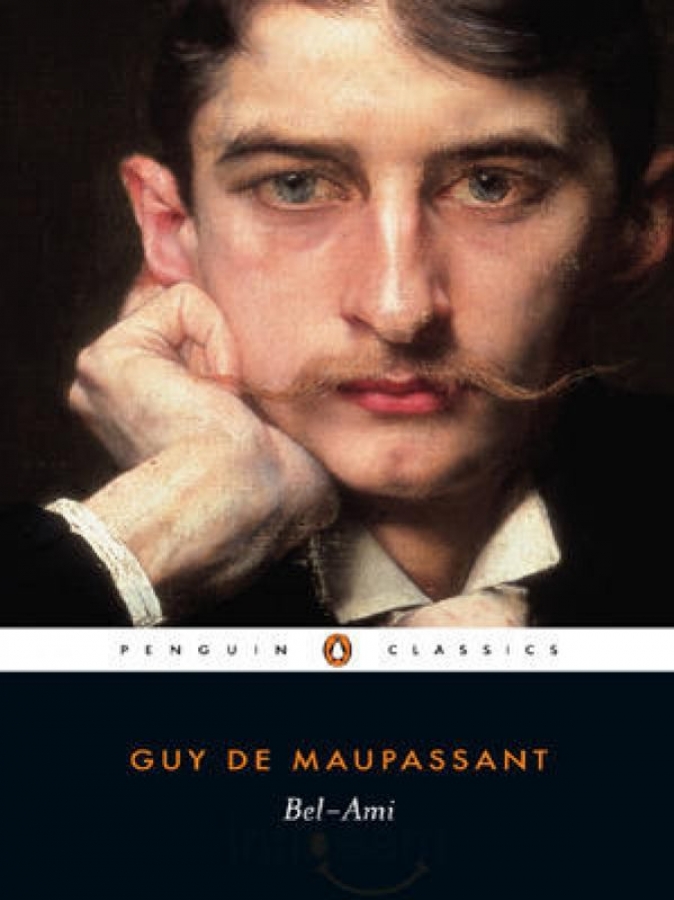
Bel-Ami
The novel is largely set in Paris during the 1880s, the period of the Third Republic following the fall of Napoleon III’s Empire. France, governed by an unscrupulous and corrupt political class, is embarking on its colonial adventure with the conquest of North Africa. Georges Duroy is a young man > tall, well-built, fair, with a reddish-tinged chestnut blondness, upturned moustaches that seemed to foam upon his lips... he looked remarkably like the worst rogue of popular romance . He is a young man from the provinces who has arrived in Paris without any precise aim, save for the allure of > places where _filles publiques_ swarmed, their dance halls, their cafés, their streets; he loved to follow them, speak to them, use familiar address, breathe in their violent perfumes . In short, he is a good-looking fellow, shallow and conceited, who will rightly come to be nicknamed Bel-Ami. Penniless, he can do little more than drift with the crowd until he happens upon a former comrade from his military service, Forestier, who has become the political editor of the newspaper _La Vie française_, owned by Monsieur Walter, an ambitious social climber who entwines business and politics, weaponising the press for his own, often illicit, ends. His friend secures him a post at the newspaper, and thus, despite himself, the young man launches into a journalistic career. Maupassant depicts with subtle irony this nascent world of the press, already by that time a compliant instrument in games of power. Duroy’s swift indoctrination enlightens the young man as to the true nature of journalism. One day, he is dispatched alongside a more seasoned colleague to interview several ambassadors. The two stop at a café; after all, there is no need to gather actual news—it suffices to construct it from secondhand information, even inventing it if necessary, and to cobble together with minimal effort an article containing precisely what the master desires. Are we speaking of nineteenth-century France or of contemporary Italy? Moving in Forestier’s social circle allows the young man to meet two women who will prove pivotal to his Parisian fortunes: Clotilde, "a little brunette, of the sort one calls pretty dark-haired women," and Madeleine, Forestier’s wife. The former shares Duroy’s tastes: she loves pleasure, is unpretentious, and takes life as it comes. She soon becomes Duroy’s ideal mistress, the only woman in whose presence he feels truly at ease and for whom he feels genuine sexual attraction, perhaps because Clotilde is somewhat of a _fille publique_. Madeleine is a modern, independent woman who relishes meddling in political and financial intrigues. As a woman, she cannot expect to play a leading role in the public sphere; she operates instead from behind the scenes through her men—her husband (a mediocre sort), her powerful lover, and Duroy himself, who allows himself to be steered, even as he chafes at her intellectual superiority. For Bel-Ami is vain and frivolous, yet the acute awareness of his own intellectual and moral inferiority breeds in him a vengeful resentment toward the very people from whom he receives aid—often crucial aid—for his career. Upon Forestier’s death, Duroy marries Madeleine; their relationship resembles a business partnership far more than a conjugal bond. Bel-Ami knows full well that Madeleine has several lovers (all men of prominence and power), but he cares little, not least because he too reaps tangible benefits from his wife’s connections: confidential intelligence, money, and honours. Yet he consistently harbours a certain bitterness and disdain toward Madeleine, who endures it patiently, perhaps out of genuine affection for the young man. Out of pure caprice and vanity, Duroy also seduces Madame Walter, the wife of the newspaper’s proprietor; she proves, however, to be a tiresome mistress, having fallen genuinely in love with him and being plagued by guilt over betraying her religious and moral values. How curious—a sincere person in a world of artifice! Life suspended between Clotilde’s eroticism and Madeleine’s intellect might have carried on placidly enough—setting aside the tedium of his liaison with Madame Walter—were it not for Duroy’s decision to marry the newspaper proprietor’s young daughter (and thus Madame Walter’s child). He must rid himself of his wife, and so he arranges for Madeleine to be caught in flagrant adultery, thereby securing a divorce. He then succeeds in marrying the young and wealthy Walter girl, once again through deceit: he persuades the girl (not yet eighteen) to elope with him, creating the necessary pretext for a shotgun wedding. Has Duroy achieved his ends: power, wealth, success? In reality, Bel-Ami’s exploits—the betrayals, the ignominious acts, the abused affections—do not stem from the pursuit of grand ambitions: the young man seeks merely the gratification of his vanity. On the day of his lavish wedding, Duroy > walked slowly down the high steps between two rows of spectators. Yet he saw no one: his thoughts drifted back to the past, and before his eyes, dazzled by the blinding sun, hovered the image of Madame de Marelle (Clotilde), rearranging before the mirror the curls upon her temples, which were always dishevelled when she rose from bed The book may be regarded as a realist novel, insofar as it portrays, with a touch both light and brutal, Parisian high society, power struggles, the role of the press, the enchantment of the boulevards, and even emergent artistic currents. It is a period of monumental upheaval, cultural as well, yet an atmosphere of vacuity pervades the narrative. The social milieu, much like certain existential themes (death, for instance), serves merely as a backdrop to Duroy’s transformation into Bel-Ami, and thence into the wealthy son-in-law of a powerful bourgeois grandee. The young man slips down a moral slope, occasionally feeling revulsion at his own deeds, only to shrug off these fleeting qualms. He is embarrassed when Clotilde suggests he meet her husband—with whom the young man will subsequently become fast friends. When Madeleine inherits a substantial sum from a lover, the young man initially refuses with righteous indignation, as accepting would lay bare his wife’s liaison with the man; yet he soon convinces himself—and seeks to convince Madeleine—that if he pockets half the estate, appearances are preserved, and all is well. It has been called the novel of money, of the press, of politics and careerism; in truth, it is the book of vacuity. And it is noteworthy, whether intentional or not, that it falls to two women (the female sex being a mere instrument for Bel-Ami) to tear through this veneer of bourgeois morality. It falls to Clotilde to fling the truth in his face: > you deceive everyone, you exploit everyone, you take money and pleasure from everyone, and you expect me to treat you like an honest man? Yet what truly enrages him is his mistress’s accusation that he bedded the proprietor’s wealthy daughter before marriage—a girl he had, in fact, respected (out of vanity? or a genuine sense of honour?). "He could endure anything, but this falsehood drove him to distraction." The question remains, then, whether Bel-Ami is entirely incapable of decent feeling, or whether he is fundamentally swept along by circumstance. It falls next to Madeleine to prove that a path through life can be forged beyond the mere chase of petty gratifications. Unlike Bel-Ami, Madeleine possesses a project of her own: to act as a mentor to men, thereby redressing the subjugation of women in nineteenth-century bourgeois society. The greatest virtue of the book lies in the writing of _Bel-Ami_. Maupassant conjures a muted, realistic atmosphere across his settings, admirably capturing the spirit of nineteenth-century Parisian society. His descriptions often seem rendered in pastel, reminiscent of Degas’s portraits. His description, for instance, of the hotel room where Madeleine is caught with her lover succeeds, in just a few strokes, in evoking that sense of the vulgar and the drab one expects from an adulterous rendezvous (within nineteenth-century bourgeois culture): > it was an ordinary hotel room with standard furnishings, where hung that hateful, stale smell peculiar to hotel bedrooms—a smell that emanated from the curtains, the brasses, the walls, the chairs; the smell of all those who had slept or lived, for a day or six months, in this public lodging, leaving behind a trace of their scent, that human scent which, blending with those that had gone before, formed over time a confused, sweet, and intolerable stench, identical in all such places . Why read it? It is a remarkably modern work in its milieu and its characters. The prose is both pleasurable and refined.

The Good Life and Others' Wars of Mr. Pyle, Gentleman
Imagine a Martian sent to Earth to understand what Humans are doing: whether war is to be expected or if we may hope for peace, which would allow interstellar commerce to continue. On the one hand, this visitor, bewildered yet indifferent (Earthlings' problems, after all!), would glean only a muddled impression; on the other, he might be an inquisitive traveler, somewhat horrified by our squalor and somewhat captivated by ancient monuments and beautiful women. Poised between metaphor and history, Barbero recounts the experiences of an American gentleman, Mr. Robert Pyle, traveling through the Prussia of 1806, at the height of the Napoleonic Wars, tasked with sending weekly dispatches to the United States ambassador in London. The first evident reality is that, traveling from Amsterdam to Berlin, he constantly encounters so many borders—some within Prussia itself—as to suggest that > the geography of European states resembles a puzzle left unfinished by a petulant child rather than a product of human reason, and it is hardly surprising that their politics should be guided above all else by fear of their neighbors. Could he be speaking of our own Europe? And then, with > that freedom the traveler enjoys to choose the roads to take, the dishes to savor, the girls to caress , Mr. Pyle can > spend the afternoon in the palace of a grand seigneur conversing in French , and end > the evening in the inn's courtyard, listening to the landlady's chatter and watching the scullery maid wash dishes in the kitchen by lantern light. Our gentleman does not merely observe; whenever possible, he reaps the fruits of fleeting encounters—be they prostitutes, young maidservants, or peasant girls persuaded by a few thalers, or fleeting, Byronic liaisons with noblewomen of the Berlin court. The only thing that holds him back is the risk of contracting some venereal disease. There are other pleasant diversions: conversations with Prussian officers, > capable even of philosophical reflections , card games where our Pyle unfailingly loses a tidy sum of thalers, the elegant salons where French is spoken and one is either for the war or against it, yet always admiring Bonaparte. Our gentleman even manages to meet Fichte and Goethe—the former just as history of philosophy presents him, the latter disappointing: a garrulous drunkard. Is this the mission entrusted to him? Amid brothels, grueling travel between coaching inns, and long conversations, our Robert even manages to meet Prussian ministers, Frederick William III himself, and the drowsy sovereigns of the minor North German states, such as Hanover and Saxony. And when he has no news to report, no matter: it is enough to read the Parisian *Moniteur*, even days old, or fabricate supposed intelligence to be denied or corrected in the following dispatch. For Mr. Pyle, it is an exhausting yet ultimately pleasant journey; for us, a splendid portrait of early nineteenth-century Germany awaiting an inevitable war, for at stake is the pride of a military caste forged by Frederick the Great and the nascent nationalism of the German nation. What shatters this grand tour, rendering all martial pretensions fatuous and reckless, are the disastrous defeats of Jena and Auerstedt, which lay bare the Prussian army's lack of preparation and the strategic backwardness of its generals. With a historian's precision, Barbero exposes the dark underside of war: soldiers marching to their deaths poorly equipped and in disarray, yet driven by the ancestral fatalism of obedient serfs; burned and pillaged homes, with civilians murdered, raped, or desperately fleeing; generals traveling in carriages, sticklers for protocol and mindful of their comforts; officers caught between discipline and solidarity toward their men, whom they cannot even provide with bread—though, after all, the soldiers are peasants accustomed to starvation. > It is all written in a little leather-bound notebook , says Mr. Pyle in the prologue, > which has been yellowing ever since, in the drawer of a wobbly desk, exiled for many years in the drawer, (...) a regrettable account of things done many years ago, and done poorly. Already in *Romanzo russo*, written in 1998 and set in Gorbachev's Russia (see the review on this site), one senses a kind of alienation regarding the moral and institutional dissolution of the Soviet Union; here, that feeling is even more pronounced, perhaps because the events are so distant in time. Robert Pyle is, at bottom, a spectator; even during the bloody Battle of Jena, his primary concern is his own survival, astonished to find himself caught up in this tragedy despite everything. On the other hand, Barbero is first and foremost a historian, and his profession compels him to remain detached, subtly ironic at times, but never emotionally enmeshed with his characters or their painful plights. To be sure, the author's convictions are clear: it is easy to talk of war from afar; one must experience it from the perspective of the humble, only then discovering the vast gulf between crisp, orderly maneuvers on a parade ground and what actually unfolds on a battlefield. Not to be seduced by technology, we must always remember that there are men and women, children and the elderly, and they are the true protagonists of war. Even more than in *Romanzo russo*, an intense ethical dimension shines through—a stern indictment of the fatuity of the ruling and intellectual classes, whether Fichte and Goethe or our American gentleman. One might say Barbero writes as he speaks: fluidly, laden with parenthetical remarks, precise and evocative in his descriptions. It reads smoothly, were it not for the fact that one all too often loses one's way in a repetitive, prolix plot. The extensive description of the Battle of Jena redeems the entire narrative, which had threatened to fray to the point of unraveling into formless excess. Why read it? For history lovers it is a gem—a remarkably timely novel.
Benediction
Dad Lewis and his wife return from Denver > away from the mountains, back out onto the high plains: in the pastures an expanse of buffalo grass, sagebrush, weeds, and blue grama, in the cultivated fields wheat and cotton. On either side of the highway there were dirt country roads running in all directions under a pure blue sky. Holt is a small Colorado town like so many others, a place hardly worth identifying because it is the same everywhere, it is where normal life is lived, > the precious ordinary life: mundane stories, with nothing exceptional about them, stories that could belong to anyone, yet which hold within them love, familial affection, unhappiness, guilt, memories, and the expectation of Death. Dad has just learned he has only a few months left to live, due to lung cancer. We witness the man’s slow, inexorable physical decline. Through frequent flashbacks, the author offers glimpses of what now torments Dad. In the past, as the owner of a supermarket, he fired an employee who had stolen from him; Dad was unrelenting, cast from a single mold, offering no second chances—not even to the man’s wife, who had gone so far as to offer her own body to pay back what had been taken. The man killed himself, leaving his family in destitution. This unyielding attitude led to a rupture with his son. When he caught him, still an adolescent, wearing his older sister’s clothes, he beat him, terrified of scandal and rejecting his homosexuality; the boy ran away from home, leaving no trace behind. With his elder daughter as well, who has returned home to care for him, he was emotionally detached, stern, and distant. Now, he realizes he has never caressed his daughter. > I was too busy. I didn't pay attention. No, she said, You weren't. She put her hand on his cheek, now. Forgive me, he whispered. I missed out on so much. I could have done better. I have always loved you. He wants to see his son again, he waits for him, he longs to reach out to the woman to apologize, he wishes he could turn back time, but now the people of his life, those he has lost, are merely part of a terminal patient’s nightmares. While Dad’s inexorable journey toward Death is the central narrative, other lives revolve around it, all marked by suffering. > Every life passes through some kind of unhappiness, (...) but there is good as well. (...) There are only brief moments. And as in Kader Abdolah's *The Parrot Flew Over the IJssel* (see review on this site), the cycle of the seasons rolls across the Great Plains. > In autumn the days turned cold and the leaves fell from the trees and in winter the wind came down from the mountains and out on the high plains of Holt County there were night storms and three-day blizzards. The novel demonstrates how our lives slip by without us seizing the opportunities to show humanity toward others, to comprehend the suffering of those around us. To be sure, Dad displayed great moral integrity in refusing the advances of an attractive woman; but wouldn't it have been better had he accepted them, had he been more forgiving of himself? Even in our prosaic lives, so far removed from those of great men, we are constantly faced with choices, and these decisions concern our relationships with others. At the end of life, nothing remains but remembrance, yet Death dissolves even that. > If one does not die, one lives, so writes Salvatore Satta in *The Day of Judgment* (see review on this site). > And this truth, seemingly obvious, is instead heavy with consequences, for life transforms everything; nothing can withstand its implacable truth. (...) To know oneself, one must live out one's life to the very end, to the moment one is lowered into the grave. The fundamental strength of the book lies in its prose: crisp, spare, and mesmerizing all at once. Short sentences, taut dialogue, and sparse digressions on the setting follow in succession; the characters are not merely described, but reveal themselves, always wrapped in that aura of mystery, of the incomprehensible, that shadows us throughout our lives. If Dad reveals himself in Death, who are the others? It is a pity that the narrative rhythm, elsewhere so intense, is compromised by an ending of a melodramatic and frankly verbose register. Why read it? Splendid prose.
Berlin
On this site, we have already published a review of the first volume of the great Berlin saga, written between 2015 and 2018 by Fabio Geda and Marco Magnone (see *I fuochi di Tegel*). In a “worn and decaying Berlin,” an epidemic had wiped out all adults, leaving only those under the age of eighteen alive: they had plummeted into a > violent, primordial world beyond time, [that] was robbing them even of words . They must carry on living, even though > they were certain that something hideous would leap out at them from a balcony, or from inside a car, catching them unawares . They have banded together into factions with distinct values and dynamics, within a wall encircling the whole of Berlin—a kind of prison that protects them yet confines them to a claustrophobic fate, living with the knowledge that they will die at eighteen. While in *I fuochi di Tegel* the authors introduced the setting and characters, the subsequent volumes chronicle life in this feral world: in *L'alba di Alexanderplatz*, it is the fight against a panther, a ferocious beast lurking in abandoned subway tunnels; in *La battaglia di Gropius*, amidst a freezing winter, with the vast supplies of food and firewood from abandoned supermarkets and buildings exhausted, hunger and cold drive a major battle between the Tegel faction, led by the savage Wolfrun, and the Gropius faction, headed by the hesitant Jacob; in *I lupi di Brandeburgo*, our heroes must venture beyond the wall to rescue little Nina; and finally, in the last two books (*Il richiamo dell'Havel* and *L'isola degli Eroi*), the epic saga culminates in a clash between adults and youths, in a haunting finale albeit brightened by a Hollywood-style epilogue. The narrative is kaleidoscopic, multifaceted and rich in viewpoints, allowing each reader to pursue whichever dimension appeals most, should one wish to look beyond the adventure—which remains consistently surprising and compelling. Identifying a common thread might seem challenging, yet it becomes clear if one follows the trajectory of a single character. Sixteen-year-old Jacob has found himself reluctantly thrust into leadership of the Gropius group; Sven, the former leader, was a charismatic figure, confident in his choices because he was always guided by the values of solidarity and peace. Jacob, by contrast, longs to continue living his adolescence (first loves, friendships, nostalgia, melancholy), but cannot; he must shoulder his responsibilities. And he does so in his own way, not always conforming to conventional notions of leadership: he is hesitant, often ponders what Sven or his father would have done, and does not always make decisions that prove right. It is his conscience that drives the pivotal choice of the entire epic saga. In a frozen and hostile landscape, a brave few have ventured beyond the wall in search of Nina. They cross paths with Wolfrun, the ruthless leader of the Tegel faction, an unsparing enemy driven by hatred toward life. Stranded with her horse, Wolfrun has fallen into icy water and would surely perish were it not for Jacob’s decision to rescue her. > Jacob thought of that idea of the world they had tried to build day after day, a world where saving one's own life was not enough to feel safe, and without giving himself any more time to think, he turned back . And it will be Jacob and Wolfrun, so divergent yet now allied and perhaps already in love, who lead the youths to face their final, most daunting challenge. Deftly constructed in terms of style and narrative, it reads like an epic poem, a blend of the *Aeneid* and the *Iliad*. Alongside the grand battles shines a sense of mutual humanity, a Virgilian *pietas*, the bedrock of familial sentiments of care and friendship. To be sure, the narrative depicts mechanisms of power and domination, extending to the racist attitudes of adults toward the young, yet the numerous positive characters consistently make choices that defy the delusion of subjugation. It is regrettable that the authors eventually abandon the backbone of the narrative—namely, the rebuilding of a society liberated from the burden and errors of the “grown-ups”—only to become ensnared (who knows why) in a plotline recalling the horrors of Nazism, weighing down the narrative unnecessarily and redundantly. Why read it? It captivates through its setting and characters.

Berlin: The Fires of Tegel
In a Berlin still divided by the Wall, a virus has wiped out all adults. The sole survivors are girls and boys under the age of eighteen; once they reach that threshold, the fate of the grown-ups awaits them as well. > They procured food through hunting: they had learned to build traps for rabbits; to dig pits to snare wild boars and deer. (...) They had taken over urban vegetable gardens, trying to tend them with clumsy, inexperienced gestures. (...) It had not been easy. They had suffered, especially during the first winter. But then they had learned to get by . As Francesco Petrarca wrote, “both remembrance and expectation grieve my heart”; the new masters of Berlin live in a continuous, anguished oscillation between memory—increasingly evanescent and imagined—and reality: a present orphaned of parents. > As for me, when I try to focus on their faces, I see them all blurred. But I hear their voices. And every now and then, in the air, I feel like I catch the scent of my mother’s clothes. As Ryszard Kapuściński writes in the final chapter of *The Shadow of the Sun* (see the review on this site), dissolving the memory of one’s yesterday means turning into > people without a past, which is to say, nobody. Those men would lose what bound them together, scattering each on his own way, alone. In *Berlin*, there is no future simply because they know they will all die upon turning eighteen. The girls and boys live without prospects because there can be no utopia when one is alone. Within the group, they seek that bond which might give meaning to existence, while carefully avoiding interference with the other clans—especially those with radically different values and rules. And it is out of respect for this overarching norm of coexistence that Sven, the charismatic leader of the Gropius, chooses not to aid the girls of Havel in taking back Theo, an infant kidnapped by the terrifying boys of Tegel. > Sven looked at Nora gently; she reminded him of a classmate he had fallen in love with in another life. (...) Cooperation. Solidarity. Weren’t those the rules? Sven dragged his eyes along the stained walls, down to the floor, and finally fixed them on his own feet. He knew those had been his words, just two years earlier. At the dawn of the new world. Was Tegel right, then, when mocking the Gropius kids for trying to replicate their parents’ society? > Young flesh, danger, excess: such was Tegel’s revolution, their response to the cruelty of fate. Their way of denying that the virus had snuffed out an extraordinary season of life, the one in which physical strength gives way to awareness and experience . We stand at a crossroads: we must choose between a world of solidarity and coexistence or slide madly down into the dark tunnel of blind force. It marks the opening of a battle from which a new humanity may yet be born. The reader must not be misled by what I have written. *Berlin* is not a treatise on moral philosophy; it is an adventure novel, a kind of chivalric tale, rich in plot twists and populated by characters, some of whom we will grow to love as the narrative unfolds (the book is the first installment of a saga). Adopting the adolescents’ perspective, Geda and Magnone plumb the forces beneath youth’s turbulence (the perpetual swinging between friendship and anarchy, detachment from and attachment to parents, the lure of risk and the dread of it) and confront us adults with a question: we, the absentees and the indifferent—will it fall to our children and grandchildren to find their own way alone? Will they be forced to fight for a better world without us? One is left with the urge to read on, both for the plot and to see who is right: the madness of Tegel, the solidarity of Gropius, or both. The prose is nearly flawless—perhaps excessively so. No distinct idiosyncrasies emerge, in either vocabulary or syntax, capable of mesmerizing or imparting an unusual rhythm to the narrative. The characters remain suspended within the roles they occupy in the group, lacking distinct personalities and backstories of their own. Why read it? Adventurous, distinctive, and profound.
Between the assassinations
The book is a collection of short stories set in a town in South-Western India, Kittur. The author traverses the various corners of the city, its people, and its social life, like a modern-day Guy de Maupassant. Yet in truth, as an editor remarks when rejecting the stories, > your characters want absolutely nothing. They simply walk through richly described situations and think deeply. They walk through cows, trees, roosters, and think, and then walk through roosters, trees, and cows, and think a bit more. That is all. The narrative, in fact, unfolds between the realistic, stark, and often repetitive depiction of modern Indian society, and the pessimistic chronicle of an unalterable social and existential condition. Despite India’s intense economic dynamism, there is no real shift in the social fabric, in caste relations, in the mechanisms of power—ever dominated by corruption and abuse—nor in the lives of the characters, who, whenever they aspire to or believe they have attained even a modicum of social mobility, are thrust back into the immutable roles of a stratified society. All the stories are remarkably fine, but the most emblematic of the entire collection is *“Market and Maiden”*. Keshaya is a boy from the countryside looking for work in the city: “he is small, thin, dark-skinned, with huge eyes that wander dreamily.” Full of energy yet at the same time “capable of staring at the ceiling for hours,” the boy does not quite know what he wants, but remains captivated by the life of the tram conductor, who works outside, clinging perilously to the vehicle. He manages to secure this job and is thrilled because he rides to work on a bicycle given to him by his employer. It belonged to a former tram conductor, who now begs in the street after being crippled in an accident. One day, Keshaya falls, strikes his head, is fired, and finds himself wandering through the market like a madman, like a wild man. And everyone pretends not to recognize him, yet “he was the king of tram number 5,” cries the lame man, the only one standing by him, bound by the solidarity shared among the poor and the wretched. “That is the way of the world,” remarks the protagonist of another story, “and so it’s a rotten world.” And what can the writer do? If he does not wish to go mad, like another character in the book, he must convince himself that > every true word, as soon as it has been written, is like the full moon, in a day it vanishes and passes entirely into darkness. And this is the way of all things . What is truly remarkable in these stories is Adiga’s writing. It succeeds in transfiguring social realism into the anticipation, or the possibility, of an escape—wholly contemplative and interior—from the deterministic and inexorable forces of economics and sociology. In *“The Bunder”*, Abasi is a small-business owner, beleaguered by the corruption of public officials, who endures a profound inner conflict between the necessity of providing security for his family and the harrowing awareness that the manufacturing processes in his factory will inexorably lead the female laborers to blindness. What is to be done? He climbs onto the roof of his factory: > from here a man can see the limits of Kittur... and see the Arabian Sea stretching out from Kittur. The setting sun is shining above it. A ship is slowly leaving the harbor, sailing where the blue waters of the sea change color and turn a deep dark. And it is about to meet a broad swath of the brilliant setting sun, an oasis of pure light Will Abisa throw himself from the roof, or will he submit to the inexorable laws of economics? We are left in a state of suspense, of waiting, which forms the resolution to most of the stories. Why read it? Splendid stories, marvelous prose, and human and social narratives of powerful resonance.

The Librarian
> The earthly USSR was a crude, imperfect body, but in the hearts of old romantics and the children of happy cities, its artistic ideal existed apart: the Celestial Union. With the disappearance of mental spaces, the inanimate geographical body had died as well . The dissolution of the Soviet Union was not merely a shattering political and institutional phenomenon; it inflicted a deep psychological and cultural laceration upon the collective consciousness. In present-day Russia, small communities attempt to recover an identity by reading the works of a deceased writer. There are six books which, read exclusively in their original editions, are capable of transmitting positive feelings and energies. These groups—the smaller ones known as reading rooms, the larger ones as libraries—fight among themselves to defend their own volumes and seize others. The battles, invariably brutal, are waged according to the customs and rules of medieval armies, reminiscent of the feudal lords who held sway in pre-Tsarist Russia. Aleksej, a disoriented young man lacking any clear perspective for his future, finds himself drawn, against his will, into the bloody conflicts between the rival communities, inheriting the role of Librarian upon the death of his uncle, who held this position in a small reading room. Aleksej is hardly a warrior at heart, yet he must acquire the courage and resolve necessary to lead his faction in clashes with other gangs. In truth, the book is an unrelenting succession of combats, painstakingly detailed by the author. The most significant of these, and the decisive one for the protagonist's future, unfolds in a forest. Aleksej’s small reading room takes refuge in a now-abandoned village, specifically in the Village Council building—where the council of elders once gathered in Tsarist Russia and the soviet convened during the Soviet era. Here, numerous gangs, led by a malevolent old crone, attack Aleksej’s group while singing hymns lauding the heroic deeds of Soviet Russia’s soldiers and workers. The depiction of the battle evokes the *Iliad*: a valiant few hold off hundreds of assailants, only to be slaughtered in the end, save for Aleksej. The young man is captured and taken to a retirement home that has been seized by its elderly female residents, invigorated by reading the six books after massacring the staff. The protagonist is locked in a cell to read, and reread, all six books. And it is then that Aleksej's destiny is fulfilled: to be the living icon, the eternal repository of the soul of Great Mother Russia. > If the Motherland is free, its borders inviolable, it means that the librarian Aleksej Vjazincev stubbornly stands guard in the underground bunker, tirelessly weaving the thread of the protective veil of the Intercession cast over the Country. In defense against enemies visible and invisible . The idea of small communities dedicated to safeguarding a country’s historical heritage and the appeal to the power of books to awaken and fortify human consciousness are truly two brilliant premises. In a fragmented and violent world, what remains to us if not the solidarity of comrades and the defense of the past? Yet might this not lead to a new Middle Ages? The problem is that well over half the book’s pages are devoted to describing savage clashes and bloody combat, while a modest—and decidedly insufficient—space is allotted to the characters' personal stories and their relationship with the books. The narrative arc suffers heavily as a result, growing verbose, tedious, and redundant. The conclusion feels weary and muddled, leaving the reader exhausted by an excess of battles. In short, it is a missed opportunity. Why not read it? If one has no fondness for battle scenes, it is better left unread.

Bilal
This book belongs to a literary genre whose pinnacle is *Gomorrah*, and which could offer an opportunity for revival to an otherwise bloodless Italian literature. It is a hybrid of novel and investigative journalism. Fabrizio Gatti is a journalist who conducts his investigations into immigration by masquerading as a migrant, thereby experiencing their living conditions firsthand. The novel arises organically, as the author personally lives through the events narrated and the encounters depicted. In the first part of the book, the author retraces the route between Dakar and the Libyan border, chronicling the inhumane conditions and, above all, the violence inherent to these journeys. In reality, people are at the mercy of criminal syndicates—colluding with local police forces—who seize every opportunity to extort these desperate souls. Transit relies on makeshift vehicles (dilapidated trucks, off-road vehicles) that routinely break down along the way, abandoning passengers to certain death in the desert. The lack of funds to continue the journey reduces migrants to a form of servitude in transit hubs, where they are forced to work merely to have something to eat. This is the finest section of the book, both for its descriptions of place (at times almost evoking travel literature) and, above all, for the bonds of friendship the author forms with some of his companions. Here, the author's driving impulse behind these experiences becomes strikingly clear—a quest for adventure coupled with an investigation into the roots of one of the great agonies of our era: > and tonight, as I update my journal, tucked inside my sleeping bag with the mini flashlight wedged between my neck and shoulder, I feel that I am at the mercy of this immense river of arms. I realize there are no safe havens. It is no longer I who am making this journey. It is the journey, in its boundless cruelty, that is shaping me . In the second part of the book, the author reproduces an email correspondence with two friends, met during the earlier leg of the journey, who became stranded in Libya. It is the novel's weakest section, yet it still offers an insight into Libya and the plight of migrants within this country—which is not merely a transit point, as commonly assumed in Italy, but frequently an end destination for labor. Under Italian pressure, Libya carries out a veritable persecution of migrants, who are often rounded up in camps at the edge of the desert and subsequently abandoned to certain death. There are then two sections of the book that do not allow us to detach ourselves from the issue by dismissing it as someone else's affair. First, Fabrizio Gatti manages to pass himself off as a Kurd and gets himself "imprisoned" in the Lampedusa reception center. What emerges is a shameful picture of the material living conditions and the conduct of the Italian police, in flagrant violation of the principles enshrined in our constitution. Next, the journalist recounts his undercover investigation into the living and working conditions among tomato pickers in Apulia. The essence of its impact on the reader is encapsulated in a reflection by the author: > would you have let them be killed? The answer is a watershed. There is no middle ground. There is no room for compromise between a world of civil struggles and its surrogates of violence . Finally, in the closing section, the author retraces the journey "in reverse" from Libya to Dakar, partly to document the expulsion of migrants from Libya and partly in search of his lost friends. It is a muddled section, one where the limitations of Fabrizio Gatti’s prose become starkly evident—too journalistic to sustain a book of such length and complexity. The question one must ask is why such a "forceful" book met with such modest resonance. A primary explanation certainly lies in the shortcomings of style and narrative pacing: the former too fragmented to be fluid, the latter frequently repetitive and verbose. A second reason is to be found in the general Italian apathy toward the plight of migrants. We are confronted with pervasive indifference toward the "modern slave trade." Alas, dear Fabrizio Gatti, there is indeed a compromise between a world of civil struggles and its surrogates of violence: burying one's head in the sand and retreating into the seclusion of one's apartment building.

Billiards at Half-Past Nine
Il romanzo si avvia in un'atmosfera kafkiana: l'ingegner Robert Fahmel, esperto di calcoli strutturali, si lamenta con la segreteria per aver disubbidito a un suo preciso ordine: non dire mai dove si trova, se non alla madre e al padre, ai figli, e a un certo Schrella, che scopriremo poi essere suo cognato e amico di liceo, quando entrambi non aderirono alla gioventù nazista. Siamo nel 1958, nella Germania dell'immediato dopoguerra, quando > everything seemed submerged in the past, yet present. In the regular, even liturgical routine of his life, the distinguished engineer Fahmel goes every day, from nine-thirty to eleven, to play billiards in a grand hotel, doing so solely in the presence of an errand boy, to whom he recounts his high-school years when his classmates had partaken of "the sacrament of the buffalo" (a clear reference to Nazism, which is never explicitly named) and beat the "lambs of God," those who refused to adhere to Nazi ideology. > He struck a ball with a stroke now gentle, now hard, seemingly without reason or purpose; (...) five times, six times, as the struck ball hit the cushion or the other balls. (...) The carousel of lines was always anchored to the corners, obedient to the laws of geometry and physics. Is the daily, solitary game of billiards the pastime of a man enamored of the laws of statics, or does it conceal some mystery that engineer Robert Fahmel carries within himself? For a while, the question finds no answer in a novel characterized by a continuous shifting of narrators, from the third person to the first, and by ever-new windows opening onto the past and the present, as the laws of remembrance dictate. For pages on end, we follow the account of Robert’s father; of when, in 1909, he arrived in the city from the countryside to take part in an important competition: the construction of the Abbey of St. Anthony. The description of the hours spent in a café preparing the project drawings, eating cheese with ginger, is a light and amusing interlude in a grim, hopeless novel. Robert’s father, on the other hand, harbors great expectations, confirmed when he is awarded the construction of the Abbey, which will open up for him a future of success and renown as a great architect, and allow him an advantageous marriage, with the promise of a large family of children, grandchildren, and great-grandchildren. But at the very moment he was submitting the drawings, Robert’s father sensed an omen of the future: > squinting my eyes, the entire massive construction seemed to stand before me, already real, as if I were looking at it from a window: the monks bent over their work, the pilgrims quenching their thirst, and the female workers already singing below, anxiously awaiting the end of the workday, their voices bright and somber, reaching me up here like a death knell. Then I closed my eyes and already felt that chill that only fifty years later, as a grown man in the midst of swarming life, I was to feel again. Illness, Nazism, and the Second World War will take away many of his children and his young daughter-in-law, culminating in his wife’s descent into madness; the Abbey itself will also be destroyed, demolished by the Germans themselves to leave scorched earth for the Allies. From the past we return to the present, in 1958, with a seemingly marginal scene. Joseph, Robert's son, is with his fiancée, but he is taciturn, withdrawn into himself, unwilling to speak and reluctant to attend a family lunch. An architect himself, Joseph is working on the construction of the new Abbey and has discovered some numbers written by his father in several spots among the ruins of the old building: they are the markings indicating where to place the dynamite to demolish the Abbey. It was Robert, then, an officer in the combat engineers, who destroyed that masterpiece, which had meant so much in his grandfather's life. The balls, > red on green, white on green, the monotonous music of the balls, like the rhythm of a Gregorian chant, (...) almost tokens of a severe poetry , are the metaphor for the quest for an order that might heal, through its daily liturgy, the incurable wounds of a Germany in which the guilt of a people is intertwined with that of individuals, and torn family destinies are bound up with a nation's delusion of power. "Why why why"—this questioning refrain recurs often in the novel. How is it possible that an intelligent and cultured people spawned so much death? And is reconciliation with the past even possible? Through a family history pivoting on the meticulous rationality of engineering—in construction as in demolition—Böll succeeds in conveying the pain and confusion, the disorientation and despair of a people. In *And Never Said a Word* (1952), Böll depicted the condition of a people reduced to starvation amid the rubble of post-war Germany; later, in 1963, in *The Clown*, Böll would delineate the moral ravages of the economic miracle (see the reviews on this site); in this novel, the writer seems to want to distance himself from the Nazi madness, yet without succeeding: the past resurfaces incessantly, and the characters are like extras, groping between madness and indifference—perhaps the only way to process their grief. Whatever the outcome, Böll reckons with history without taking refuge behind an easy self-absolution. Have we Italians done the same? Did the likes of Moravia, Calvino, and the other post-war writers write of our own guilt, or did they retreat into familism, abstraction, or victimhood, as in Elsa Morante's *History* (see the review of this novel on this site)? We must not expect a linear plot; to appreciate the novel, one must let oneself be captivated by the writing, by the allure of a prose that at times recalls Thomas Mann (see the review of *Buddenbrooks* on this site) and at others the musicality of László Krasznahorkai (see the review of *The Melancholy of Resistance* on this site). It is a pity that, in the end, the novel loses itself in a delirious drift toward nothingness. Why read it? An anguished masterpiece upon which we Italians ought to reflect.

The Brewer of Preston
The initial premise is a true event that took place in 1875 in Sicily. The prefect of Caltanissetta, a Florentine, insisted that the town’s new theatre be inaugurated with a virtually unknown opera, namely *The Brewer of Preston*. Numerous disturbances ensued, left largely unresolved by the inquiry that followed. Taking this real-life occurrence as his point of departure, Camilleri crafted a novel open to multiple readings, so much so that the chapters themselves could easily be rearranged in an order different from that of the narration. One possible trajectory is undoubtedly the detective plot, centered on the police delegate, Puglisi—the novel’s sole genuinely honest character, who may well be regarded as a precursor to Montalbano. In Camilleri’s imagination, the theatre is set ablaze by Mazzinian agitators on the very night of its opening. Acting as a true investigator, Puglisi uncovers the arson behind the fire, a crime for which the police commissioner is equally culpable, having chosen—out of petty political squabbles, and despite having been alerted by Puglisi himself—not to arrest the Mazzinian agitators upon their arrival in the city. Puglisi’s death at the hands of one of the arsonists proves expedient for many, not least the authorities of the newly formed Italian state. The book’s other interpretive key lies precisely in the corruption and arrogance of the officials dispatched to Sicily, chief among them the prefect himself, who colludes with the local mafia: an unholy alliance that bodes ill for the future of the island. Then there is the world of Sicily itself, and it is here that the author is at his finest, offering evocative, affectionately ironic, and at times paradoxical portraits of a society that watches, from the heights of a millennia-old history, the descent of new conquerors (the Piedmontese): a mix of pessimism, cynicism, pride, and stubbornness in defense of its own *sicilianità*, alongside an ingrained habit of submitting to the powerful and to violence. Further narrative threads and motifs can also be identified, particularly as the author structures each chapter around references to masterpieces of Italian and world literature, which one presumes are among those Camilleri held in highest regard. In this sense, the novel’s table of contents serves as a reading guide to other authors. The novel unfolds through continuous temporal shifts back and forth, with the result of fragmenting the plot into numerous vignettes, thereby compromising the narrative’s cohesion. The recourse to the Sicilian language, both in dialogue and narration, intrigues and at times makes for an agreeable read, yet on the whole it leaves an overriding impression of mannerism and literary preciousness pursued for its own sake. Why read it? It is an engaging read, even if one is ultimately left somewhat disappointed. What was the author trying to say?

Blood and Thunder
The book’s subtitle is “the epic story of Kit Carson and the conquest of the West.” Indeed, the book spans a very long period, from 1809, the year of Kit Carson’s birth, to his death in 1868. Even though the great scout lies at the heart of the book, in reality it features all the protagonists of those years who contributed to an exceedingly complex and multifaceted history, shaped by competing ambitions: the imperial dream of the United States aimed at conquering the entire continent from East to West at the expense of a weaker nation, Mexico; economic expansion toward territories whose wealth was often overstated; the American Civil War and the role played by Indigenous nations; the clash of cultures (North Americans, Mexicans, and Indians); and, finally, the heavy imprint of a Methodist vision intent on imposing its own rules without acknowledging particularities and cultural distinctions. At the core of the book, therefore, lies the American dream: the conviction of being inherently in the right, and consequently the inability to understand the indigenous peoples. The latter, accustomed to a nomadic society rooted in raiding, fail to realize that they are up against a new adversary—one quite different from the Spanish and the Mexicans, equipped with technological superiority and, above all, an obstinacy driven to see matters through to the bitter end. It is the Navajos who pay the heaviest price, despite having been one of the strongest and wealthiest Indian nations. They are destroyed: first by starvation, then by the long march toward a settlement intended to serve as an experiment in civilization, which proves instead to be an inhospitable wasteland where disease, poor harvests, and contaminated water deal a mortal blow to the Navajos. It is a chronicle of clashes and battles, of plunder and cruelty, laying bare a violent society on both sides. A curious code of conduct effectively binds Americans and Indians alike: an eye for an eye, a tooth for a tooth. In this context, Kit Carson—already a legend in his own lifetime—stands as an emblematic figure: a consummate scout gifted with both diplomatic and martial prowess, a commander, yet ultimately an executor who, against his own inclinations, is compelled by obedience and gratitude toward others to wage wars and endure conditions he does not himself condone. Deep down, he is frail, a weakness evident in his physique and his voice to such a degree that visitors who had read accounts of his life and exploits failed to recognize him when meeting him in person. He is a hero who becomes one in spite of himself, almost an artfully crafted figure within the American collective imagination. This persona served to open the conquest of the West to the American people and to rationalize the slaughter of the Indians. Like all heroes, he is also an antihero. The book is a compelling work. It appears historically well-documented, and while not a novel in the strict sense, the narrative possesses all its hallmarks. The overlapping of episodes, which develop in parallel before converging into a central storyline, likewise generates an atmosphere of suspense typical of a detective story or contemporary fiction. The approach is cinematic. Its most compelling aspect is the extensive reliance on the very diaries of those who took part in the events. For instance, a woman who followed the wagon train toward the conquest of Santa Fe, the capital of New Mexico, writes with scandalized outrage about a ball held in honor of the conquerors, where Mexican women appeared in low-cut, provocative gowns.
The Book of Illusions
The protagonist loses his wife and children in a plane crash. To escape despair, he writes the biography of a silent-film actor who had vanished without a trace. Tracked down by Alma, with whom he falls in love, he learns that the former actor lives on a farm, where he has continued to make films that he has resolved to destroy upon his death. The protagonist reaches the country house to witness the former actor's death, manages to watch one of the films that had been produced, and then stands by as a spectator to the fire that destroys the entirety of the cinematic works. The narrative concludes tragically with Alma’s death. It is a complex novel, in many respects intellectualized and erudite, unfolding through paradoxical events around two philosophical and existential themes: the world is entirely an illusion, where the boundary between what is real and what is fiction or the product of our imagination remains blurred; and destruction—death—is the arbitrary outcome of the illusion in which we live. The theme of illusion is personified by the former actor Hector: his origins are unknown, and he does everything to keep them obscure; he leads a double life in love that ends tragically; he is perpetually on the run, pretending to be someone else and fabricating situations until finally secluding himself in the countryside to produce cryptic films destined never to be shown in theaters. The theme of destruction, of tragedies overwhelming human lives, of inexplicable events, is embodied in the very plot of the book and in the protagonist's torments. > It is a book of fragments, a gathering of nostalgias and dreams only partially remembered . The book is very well written, in a pleasant and fluid style. Yet there is an intellectualist undercurrent that frequently renders the narrative pace cumbersome and redundant.

Borders no Borders
*Borders* (2022) and *No Borders* (2023) are two novels that develop the same story and must be read and reviewed together. The common thread can be identified in one of the many literary references found in both books: the short story *The Seven Messengers* by Dino Buzzati. The prince, having set out to explore his father’s kingdom, after years of travel recognizes that > there is no border, I suspect. (...) There are no separating walls, no dividing valleys, no mountains closing the pass. I will probably cross the boundary without even noticing, and I will keep going forward, unaware (see the review of Buzzati’s *Sessanta Racconti* on this site). Borders are those between peoples, just as they are the barriers we erect between one another. Following an epidemic triggered by the environment’s revolt against human exploitation, the survivors built themselves a technological city, enclosed within high walls and surrounded by a vast desert of concrete. In this metropolis, called Magnolia to evoke the cruelty of Nature, > the past has been erased, and with it the literature of the past. (...) In Magnolia there is only one version of our history! With food and attentive care, they have turned citizens into faithful servants incapable of thinking! (...) everything is eco-sustainable, recyclable, and interconnected, where civil society is satisfied and the youth is confident in its own beliefs, disdainful of the beliefs of old. In this world where Utopia is forbidden, an elderly poetess continues to live, having adopted the metaphorical name of Olmo. She has taken in four young people. They bear the names of forgotten writers: Lindgren is a Black girl with a mass of bushy hair, and like Pippi Longstocking she looks at the world from her own perspective, wilful and stubborn; Dickens, like the English writer, is a great storyteller > but he is so charming that you forget about it ; Alcott, like the author of *Little Women*, > is so serious, always thoughtful yet always willing to listen ; Verne > sees beyond , capable of envisioning the future in harmony with animals and plants. Between the four of them is a deep bond of brotherhood: they grew up together, feel different from their peers, and are guided by Olmo, the bard of a different world, of an Earth regenerated to new life, which she remains convinced still exists somewhere out there. And so, when Olmo urges them to leave Magnolia without her, the youths feel abandoned. > You want to make explorers out of us! Deep down, nobody cares about us. We are worth nothing. Then, they realize that they are > the children of Olmo, (...) Magnolia cannot tolerate the presence of four young people endowed with the strength and power of Olmo. (...) To be sure, they have absorbed all her knowledge, but would they know how to use it?. Like the protagonist of the film *Poor Things*, who must break away from her creator to claim the world for herself, Olmo's children feel they must leave. It is time to cross borders, to venture toward the unknown, retracing a journey once undertaken by the great explorers and, further back still, the Argonauts: the quest for a Promised Land, the pursuit of a Utopia. Lindgren, Dickens, Alcott, and Verne abandon the safety of Magnolia and take to the road, like the father and son in Cormac McCarthy's *The Road* (see review on this site); awaiting them is a desolate, deadly reality at first, followed by a lush, wild nature that has reclaimed the planet, and ultimately a community of men and women desperately striving to safeguard the past—books, for instance—despite living an existence regressed to primitive levels, devoid of technology and science. Which is better? The hyper-advanced city where everything is regulated and diseases no longer exist, or returning to the dawn of humanity, when one fought merely to survive and ensure the reproduction of the species? Here lies Utopia: fighting for a world where an equilibrium is struck between Technology and Nature, between Progress and Freedom, and where Poetry may once again become the driving force of Humanity. Alongside the “Grand History” in which fundamental material and ideological forces contend, there is also the story of the four young people. Leaving the protective wing of Olmo and Magnolia leads them to encounter other youths, thus fracturing their bonds of kinship. Lindgren slowly discovers she has fallen in love with the very nephew of Magnolia’s Dictator, yet unlike *The Black Corsair* (see review on this site), she overcomes these barriers through a gradual journey of growing trust; Alcott meets a young woman who > walks straight as a queen, (...) uses unusual words, (...) raised by the characters of her novels preserved in the great library of the Lighthouse where she lives in solitude; Dickens falls in love, without knowing why, with a girl who wishes to live in Magnolia, where women are not forced to bear children as in her primitive village; and finally Verne finds, within this society returned to a primitive state, that loving bond with animals he has always yearned for. At first, the intruders are received with mistrust and threaten to break the brotherhood; then, affection, the desire for mutual support, and understanding of the other lead them to evolve from a closed group into an open community, where borders are blurred and constantly shifting. As Dino Buzzati’s character puts it, > Tomorrow morning a new hope will draw me even further ahead.... One should not think that this is a novel dominated by philosophical digressions. The narrative is rich in adventure, even if a lyrical dimension prevails and consistently overshadows the plot. The narrative structure is akin to that of *The Road*: short, almost self-contained paragraphs, providing occasions for evocative descriptions of nature and psychological insights into the characters—analyses that remain, however, perpetually suspended; the dialogues, very well constructed, alternate with detailed yet fantastical representations of the setting: consider the allure of the Lighthouse on the coast of Brittany, one of the most intense moments of the entire novel. The author fails to create plot twists, dramatic turning points, or moments of genuine tension. Perhaps it is a book addressed more to adults than to young adults. Why read it? Enjoyable, interesting, with a beautifully drawn figure in Lindgren.
The Forest of Wool and Steel
Those who listen to music often fail to realize just how much the quality of sound depends on the tuning of the instrument. Between musician and tuner there exists an intricate bond, rendered by the author through the imagery of magpies. In an ancient Chinese legend, magpies form a bridge across the Milky Way between the stars Vega and Altair on the seventh day of the seventh lunar month: celestial lovers, sorrowful in their separation, who on that day can finally unite in the fulfillment of a great love. Sound—an inexplicable and captivating creation of both nature and man—lies at the heart of this novel. Tomura is a high school student living in an isolated mountain town; for him, it was enough to > scrape through school somehow until graduation, find any kind of job, and keep on living . It would have been sufficient for him merely to contemplate, year after year, the miracle of spring in the mountains, when “the bare trees all bud at once.” (...) > The entire mountain seemed to radiate light, from the vast expanse of branches softly suffused with a reddish glow. Overwhelmed by the sight of those illusory flames burning across the mountains, I stood spellbound, unable to do a thing. And I was happy for it . His life changes when a piano tuner arrives to service the school’s modest piano. Watching the man work, Tomura chooses this vocation. He enrolls in a vocational school and is subsequently hired by a musical instrument firm. At first an apprentice accompanying more experienced colleagues on client visits, he is gradually—and not without setbacks—permitted to work on his own. > I have no talent (Tomura told himself). (...) I couldn't hide behind the word talent: I mustn't use it as an excuse to give up. Experience, practice, effort, wisdom, presence of mind, perseverance, and then passion: if talent wasn't enough, I would replace it with these. (...) Clinging to something, and using it like a cane to lean on and pull oneself up. Once again, the turning point erupts from the outside. He attends a piano performance by the very young Kazune and is entranced, captivated by the music and by the girl's playing. > Kazune's piano was a spring connected to the world, one that never ran dry; indeed, it would have continued to pour forth ceaselessly, even if there were no one to listen . And an episode from his childhood comes back to him. As a boy, he was walking in the woods when he saw lights that > crowded upon the slender branches of an elm and shone dazzlingly. I don't know what phenomenon it was. But it was beautiful. Almost terrifying. Listening to Kazune's music, Tomura is certain that somewhere in the mountains, in a place unknown to him, a tree was glowing. Love, unreserved and unconditional—a feeling that expects nothing in return—compels Tomura to overcome his self-doubt and become a concert tuner, in service of Kazune, the piano, and music itself. It is undeniably a *Bildungsroman*. Tomura learns a trade while simultaneously coming of age. Aided by a workplace environment that is benevolent, perhaps beyond plausibility, the young man comes to understand that his humble, rustic mountain origins are not an impediment; rather, they grant him a stubborn tenacity that will prove to be his strength. Up to this point, it might seem a conventional narrative, woven from protracted dialogues with colleagues who dispense “nuggets of wisdom,” and weighted down by technical minutiae regarding the art of tuning—intriguing yet redundant curiosities. What endows the novel with an original and compelling dimension is that sense of the magical arising from the juxtaposition of the piano's sound with the lights and murmurs of the forest: a Shinto-inflected touch quintessential to Japanese culture, possessing nothing of the Romantic nor of the trivially pantheistic. While the piano is an invention of nineteenth-century Europe, its sweet melody and luminous atmosphere evoke sensations of the forest that our own positivistic and idealistic culture has forsaken for centuries. Beneath its ostensibly realistic veneer, the tale beckons us to achieve harmony with the Universe, guided by music. The narrative style is spare, almost minimalist: short sentences, sparing with adjectives—fitting, after all, for a narrator in his early twenties who was never particularly gifted in school. The recurring allusion to Hara Tamiki, where the poet of the Holocaust defines the complex ambiguity of style, signals that the prose’s simplicity is a deliberate aesthetic choice by the author, and an entirely successful one. Paraphrasing Tamiki, we might say: > a style that may seem gentle, up to a point, but is instead fraught with severity and depth; a style as beautiful as a dream, yet as certain as reality . Why read it? Luminous, quiet, replete with love and nostalgia.
The Bottle Imp
*The Bottle Imp*, in Italian *Il diavoletto nella bottiglia*, is a short story that revolves around man’s ambiguous relationship with evil. Keawe, the protagonist, > was a poor man, brave and industrious; he could read and write like a schoolmaster, and was furthermore a first-rate sailor . One day, in San Francisco, he stops to admire a splendid house. When Keawe expresses his desire to possess such a home, the owner tells him that his entire fortune originated from a bottle in which an imp resides. Whoever purchases this bottle will have all their wishes granted. There are, however, drawbacks: one goes to hell if one dies while still in possession of the bottle, and it must always be sold at a price lower than its purchase cost. Keawe is torn, but ultimately agrees to buy the bottle for fifty dollars. His life swiftly undergoes a radical transformation: he becomes a wealthy man and can afford a magnificent home. He manages to sell the bottle and is thus able to live peacefully and happily, not least because he has since fallen in love with a young woman, Kokua, whom he intends to marry. One day, however, he discovers he has contracted leprosy and resolves to track down the bottle once more so that the imp may cure him. Thus begins a search that leads him to discover that the price of the bottle has been steadily falling, down to a mere two cents. Yet the bottle would then have to be bought for one cent—and how could it ever be sold afterwards, given that the cent is the smallest coin available? Keawe buys it nonetheless and marries Kokua, but finds no happiness, knowing that upon his death he will go to hell. Once she learns the terrible secret, Kokua decides to secretly purchase the bottle herself through an ingenious expedient: she travels to a French-held island where coins of lesser value than a cent are in circulation. Yielding to evil has created a sort of “reverse chain letter,” breeding further evil to the point where the two lovers become entangled in a paradoxical short-circuit, wherein the happiness of the one becomes the source of the other’s torment. Then, as in a fine fairy tale, comes the happy ending: Keawe manages to sell the bottle to a drunkard, ridding himself of it forever. The story mirrors the structure of a fable (the presentation of the initial situation, the hero confronting hardships until he successfully overcomes them) and also bears the hallmarks of a maritime yarn, unfolding as it does among ships and southern cities. The underlying concept, however, is the depiction of the trajectory of evil, played out entirely through its progressive loss of value. As if to say: the more one lives immersed in evil, the more one grows accustomed to it, to the point that the imp is worth less and less. Why read it? It is remarkably well written, if at times repetitive, but above all, the moral underpinning the tale remains profoundly relevant. In recent years, Italians have gradually accepted increasingly illegal, immoral, and vulgar behaviors, the cost of which drops ever lower because they have by now become part of the collective ethos. Beware! There is no end to the worst.
Five-player Briscola
Massimo runs a bar in a fictional coastal town near Livorno. Like so many provincial establishments, the bar is frequented by a group of old men who pass the time playing *briscola* and talking (or gossiping) about the affairs of the world and those of the small village. Then an extraordinary event comes along to shake up the daily grind: the corpse of a young woman is found in a dumpster. Needless to say, Massimo turns amateur detective, making his share of mistakes, but ultimately playing a decisive role in uncovering the killer. To avoid being accused of spoiling the culprit and the resolution, I will say nothing of the plot, confining myself to noting how trite and predictable it is. At first, Massimo’s attention to certain seemingly insignificant clues entices the reader, but the author’s eagerness to deliver a twist ending ruins the gradual buildup of evidence, motives, and the very logical architecture of the noir. The setting could open up intriguing possibilities if, for instance, the old men played a meaningful role in the detective plot or, conversely, if the writer were capable of portraying the atmosphere of the bar. Nothing of the sort! Setting aside the use of the Livornese dialect, the bar and its patrons remain in the background—flat, insipid, and superficial. The novel’s sole merit is the writing: simple, accessible, and clear. The reader breezes pleasantly through the pages without being subjected to any particular effort of concentration, yet without lapsing into boredom. Why not read it? It is the classic travel novel, but it leaves nothing behind.

The Broken Window
Anyone who has read or seen *The Bone Collector* in the cinema is already familiar with the book's main characters. Lincoln Rhyme is a renowned criminologist who bases his investigative techniques on the rigorous and meticulous use of "physical" evidence, even the most insignificant. Despite having been left paralyzed following a shootout. Rhyme continues to collaborate with the police, assisted by a team of detectives and by Amelia Sachs, a close and capable collaborator as well as his life partner. Rhyme's cousin is accused of rape and murder. All the evidence points to his guilt. Rhyme is quickly convinced that the clues have been fabricated by a serial killer who "knows everything." In the course of the investigation, Rhyme and his team discover the existence of a massive private organization that collects, stores, and processes information on virtually everything, selling it to corporations (for market research, for instance) as well as to public and state institutions. It is a "Digital Big Brother," whose data is seemingly inaccessible, yet which the criminal has managed to exploit and even manipulate. The thriller is skillfully constructed, boasting a plot rich in twists and an unpredictable conclusion. The best part of the book is its depiction of the world of big data processing corporations. Rhyme’s team proves remarkably inexpert (perhaps excessively so, given they do not even know Excel) and ventures into this realm step by step, left stunned, fascinated, and alarmed. Rhyme himself is disconcerted: can access to such vast amounts of information truly supplant the method and intuition that must govern criminology? And the reader, too, begins to wonder. On the surface, possessing powerful databases and sophisticated data collection tools would appear to be a monumental achievement. But is it worth it if a criminal can exploit them to commit rape and murder with impunity? Is the availability of so much information—which even enables the prediction of events—truly helpful in tracking down killers, or do traditional, obsolete investigative methods remain more effective? The premise is intriguing, the prose concise and effective, the plot well-engineered, and the characters—especially Amelia Sachs—compelling; it is a pity that, as so often happens with thrillers, the novel's sheer length renders it wordy and meandering. Are these authors paid by word count, as Salgari once was? Why read it? It is a solid thriller, and the theme is compelling.
The Brotherhood of the Grape
Henry Molise is the son of a tyrannical, drunken father. Summoned by his siblings because their parents appear poised for divorce after yet another of the father’s abusive outbursts, Henry finds himself roped into helping his father build a small stone shed at an out-of-town motel. During the journey in the company of his father’s old friends and by working alongside him, Henry rediscovers, with horror, his own familial matrix and his affection for his father. The shed, scarcely finished, is destroyed by a windstorm, starkly demonstrating that the aging father, once a renowned and skilled craftsman, is no longer physically and intellectually capable of carrying out a job, however simple. At this point, the story hurtles to its crisis: the father falls ill, is hospitalized, and subsequently flees the hospital to die at the home of an old friend who owns a vineyard and produces excellent wine. The overarching threads of the book are fundamentally two: the familial context, from which Henry sought to escape, only to rediscover through this homecoming that he belongs to it indelibly. This familial context is composed not only of the characters (the mother, the siblings, the father’s friends and the barroom regulars, the neighbors who endure the father’s excesses), but also includes objects (above all, wine and food) and the memories of a childhood deeply shaped by Italian roots. *The Brotherhood of the Grape* is the setting of a series of primordial relations that forge profound bonds among men. Emblematic in this regard is the figure of Angelo Musso, a sublime winemaker deprived of speech, who represents a “Greek god” to the members of the brotherhood, and who, when Henry comes to retrieve his father to return him to the hospital, proclaims with wise fatalism: “it’s better to die drinking than to die of thirst” and “it’s better to die among friends than among doctors.” Evident here is a nostalgia for an ancient time in which the rhythm of life and the bonds between men were determined by an authentic wisdom; the relationship with the father, who shaped the lives of all his children without ever succeeding in fulfilling his desire to pass on his craft as an artisan. This is not merely a question of traditional bonds, forged of conflict and affection toward the paternal figure; the core of the narrative lies primarily in the trade of stone quarrying and masonry, handed down to the father by his parents. The children reject this trade, which has weighed heavily upon their lives. The father’s failure in his final endeavor exposes all his fragility and weakness, thereby reopening the relationship with his son, who rediscovers an affection and a bond with his parent, but also with his craft, which had been lost over time due to the presumed omnipotence of the paternal figure. The style recalls that of the great American writers, such as Faulkner and Chandler, yet it is grounded in the deliberate use of words, in their careful juxtaposition so as to articulate a poetic and musical rhythm. The meaning of the narrative emerges not so much from the plot, nor from character study and the description of settings, but above all from the sensations that arise from the sequence of words and sounds.

Buddenbrooks: The Decline of a Family
The title and nineteenth-century framework suggest a great social novel centered on the decline of an upper-bourgeois mercantile family. As often happens with great books, as one delves deeper into the reading (and we imagine the same occurred for the author while writing it), another theme emerges: the unstoppable force driving toward dissolution, decay, and death. To express the novel’s profound meaning, Mann makes brilliant use of music. The adolescent Hanno, the last descendant of an entrepreneurial dynasty, plays “one of his improvisations” on the piano. He plays a motif > extremely simple, (...) a short-breathed invention, a meager invention, which nonetheless acquired a strange, mysterious, and significant value . At first the motif remains in the background, submerged by “bustling runs,” vigorous, as if urging on to “ever new efforts.” Then the first > sweet, wandering, tormenting motif, that first mysterious motif , takes over. > The tide of surfacing cacophonies fell upon her, gathering threateningly, surging forward, retreating, climbing, sinking, and straining once more toward an ineffable goal that had to arrive, to arrive at once, in that very instant, at the dreadful climax where the yearning torment had become intolerable. And it arrived: it could no longer be stopped, the convulsions of longing could be prolonged no more; it came as if a curtain were torn aside, as if gates were flung open (...) it was the motif, the first motif! What brought about the end of the Buddenbrooks was not ruinous speculations, the squandering of wealth through disastrous marriages, or competition from rival merchant families; it was an internal decay, a weariness, a slow yet inexorable loss of the founders’ primal energy. We are in Lübeck, a Hanseatic city on the Baltic Sea, and the story unfolds between 1835 and 1877. The firm of Johann Buddenbrook (founded in 1768) is at the height of its wealth and prestige. The novel centers on the siblings Antoine and Thomas. The first three hundred pages recount how the young Antoine, clever and restless, renounces love out of loyalty to the “firm,” in order to contribute through a marriage of convenience to the family’s good name and prosperity. Already betrothed to a Hamburg merchant, she falls in love with a young man, but upon reading the thick ledger recording the Buddenbrook genealogy, she feels > like a shiver, (...) like a link in a chain, her father had written. Yes, precisely as a link in that chain, she held great importance and responsibility: she was called upon to contribute with deeds and resolve to the history of the family . Antoine unhesitatingly devotes herself to being the vestal virgin of the family, the custodian of an upper-bourgeois decorum. Then emerges the figure of Thomas, who reaches the pinnacle of the social ladder with his election to the city senate. > Thomas Buddenbrook (...) showed in his face and carriage a pronounced sense of dignity; yet he was pale, and his hands especially (...) were as white as the cuffs emerging from his black sleeves, with an icy pallor that betrayed how cold and dry they were. Those hands, whose well-tended oval nails bordered on a bluish tint, could assume at certain moments, in certain postures of convulsive unconsciousness, an indescribable expression of hostile sensitivity and almost morbid reserve—an expression that hitherto had been alien and ill-suited to the rather broad, bourgeois, even if shapely, hands of the Buddenbrooks . From his very appearance, the inner suffering of Thomas is evident—one for whom shouldering the firm and the family is a duty, not a pleasure. > He felt a void in his soul. (...) But his need for action, his restlessness, his activity had been fundamentally different from the tenacious, steady industriousness of his fathers: an artificial thing, then, a craving of the nerves, a narcotic, (...) a martyrdom . Now ill, Thomas confesses to his sister how he has grown increasingly fond of the sea. > Long waves rolling in and breaking, one after another, endlessly, aimlessly, wild and desolate . His sister falls silent: > but one does not say such things! she thought, looking away so as not to meet her brother’s eyes . And so, when in its final pages the novel descends into long descriptions of the deaths of Thomas and Hanno, with sorrowful scenes of the few surviving women, helpless and stunned by the tragedies that have destroyed the Buddenbrooks, we are not surprised; for we are well aware that the vitality, the sense of sacrifice, and the allegiance to a great dynasty have all withered away. The anticipation of death lies at the center of Thomas Mann’s world, and this novel is no exception. At first, death seems distant, for prosperity fosters an atmosphere of placid bourgeois serenity; only the depictions of the characters and their surroundings are soft, ambiguous, decadent. And yet we are in the triumphant nineteenth century! More than the plot, it is the writing that skillfully, subtly conveys the sense of decay. Then, past a certain point, the narrative becomes explicit: the accounts of agony and illness (even of visits to the dentist) are meticulous, attentive to every physical and moral suffering; the settings turn dull, gray, joyless; the characters grow ever sadder. It is neither a social nor a psychological novel; the context always lingers in the background, the characters are drawn through their physical appearance without delving into their emotions or existential conditions: they are brushed in rather than delineated. It is the writing itself that speaks to us, creating the atmosphere, conveying the overall meaning of the novel. Why read it? It is long, at times redundant, but one must let oneself be carried by the words.
The Buddha in the attic (we all came from the sea)
The novel recounts the experiences of Japanese women sent to the United States to marry compatriots who had immigrated long before. > Some of us were from a small mountain village in Yamanashi and had only recently seen our first train. Others among us were from Tokyo, and had seen everything, and spoke a beautiful Japanese. (...) Many more of us were from Kagoshima and spoke in a thick southern dialect that those from Tokyo pretended not to be able to understand. (...) On the boat we were mostly virgins. (...) We had long black hair and broad flat feet and we were not very tall. What did they think when they saw their husbands, so different from the photographs in age and appearance? “The past was behind us, and there was no way of going back.” The novel follows these women into a reality where they must say > Yes, sir, or No sir, and do as they were told, Better still, say nothing. You belong to the invisible world . They learn to obey, to work hard, to speak English, or at least enough words to survive, and they even take lovers or find husbands among the Americans: they are hardworking and docile, just as men like them to be. When World War II breaks out, from good immigrants the Japanese turn into traitors, spies, and enemies, to be interned in concentration camps. And so Japanese women, even those married to Americans, find themselves locked away. “The Japanese had disappeared from our towns. And soon,” you can still see the official notices posted on telephone poles, (...) but they are already beginning to fray and fade. (...) What those instructions were exactly, no one can clearly remember. (...) In autumn there is no Buddhist harvest festival..(...) All we know is that the Japanese are out there somewhere, in one place or another, and we will probably never meet them again in this world.” To make overall sense of the novel, one can start from the title *The Buddha in the Attic*, banally translated into Italian as *Venivamo tutte dal mare* > . Japanese identity, a blend of Buddhism and Shinto, is put away in the attic the moment the women arrive in America: the new culture must be assimilated, they must become American. It is a mere suspension, because when they are consigned to an unknown place, a non-place > , these women disappear; they are no more; it is as though they had never been. There are two chapters worth reading: *Come, Japanese!* > the journey of these women: nostalgia and the severance of ties, fear and anticipation. These are the components of exile, whatever the origin and destination, feelings common to so many migrants. *The Disappearance* > recounts the evaporation of the Japanese, and the mind wanders to an evanescent novel by Coetzee (see on this site *The Childhood of Jesus* > ). The author intended to give the narrative a choral quality. To achieve this end, she resorted to a literary device: the use of the "we" when recounting the lives of the women, and the impersonal form when narrating the disappearance of the Japanese people. Unwilling to follow the stories of individual women, making them protagonists in their own right, she turned them into a mass, weighing down the narrative and rendering the novel verbose and repetitive. Why not read it? It is boring.

Good Conduct
Kosovo is a small Balkan state, nestled between Serbia and Albania: it declared independence from Serbia in 2008 and is inhabited by an overwhelming Albanian majority, alongside a Serbian minority along the border with Serbia. The latter has not recognized Kosovo, and the Serbian community lives in a state of suspension, in constant tension with the Albanians. In Sumor, the small village where the novel is set, > almost everyone had remained to live there, perpetually suspended between choice and damnation. They had adapted to the inclemencies of History, surviving as best they could. Miroslav is the village doctor, esteemed by all, Albanians and Serbs alike: a man who has always sought to keep to the sidelines, quiet and balanced, letting himself drift along with the flow of life. Thus Ludmila, the peculiar sister of his best friend, teasingly mocks him: > Miroslav, Miroslav. With such a name, / will you manage to become a lion? / Or will they sing over your corpse, / oh Miroslav, Miroslav, glory to calm?. But is this very meekness the man’s true nature? Often Miroslav recalls his mother’s last words: > I always thought you had killed someone, (...) the more people spoke well of you, the more I understood you were hiding something. The man’s dark side emerges when he has himself elected mayor of the village, in the hope of mending relations between Albanians and Serbs; he seems the right person, yet he would need to display a courage and determination that he unfortunately lacks. The man dispatched from Serbia to act as shadow mayor, on the other hand, has them to spare. Humiliated and marginalized, Miroslav feels the desire to kill for the first time. In a delirium, aided by a few drinks too many, he dreams of going to the man and shooting him. > The deafening gunshot startles him, he recoils, he fails to register what happens to the man he has shot; he can only discern the splatters of blood on his pajamas. (...) In the darkness before his eyes, the figure of his mother in the hospital bed materializes, along with that final question she had asked him before dying: > have you killed someone? She already knew back then; it was a question coming from the future!. It is only the dream of an anguished man. The plot will take a surprising turn, which I do not wish to reveal. The good conduct > of Miroslav as mayor does not alter the condition of the small village, for better or worse. Everything remains locked in a fragile stillness; the past continually resurfaces with its wounds and rancor; there is nothing left to do but flee or conform. The novel can be read as a metaphor for contemporary reality. Indeed, we all live in a claustrophobic world, waiting for a change that never arrives. We are inundated with apocalyptic reports, with high-sounding declarations, yet nothing seems to alter; everything remains motionless. We dwell in an enormous dystopia, within which we forge relationships, dream of the past with nostalgia, and draft the future without knowing whether it will ever genuinely come to pass. The interpretive key of the metaphor lends the novel a universal dimension that extends far beyond the small village of Sumor; this approach, however, relegates Kosovo and its tragedy to the background. Along with Bosnia and Herzegovina, this small nation has lingered for decades in a state of suspension: sustained by the European Union, opposed by Serbia, its inhabitants live as though in a prison, oppressed by a past that shows no sign of dissolving, within a forgotten and suffering microcosm. The author’s gentle and affectionate irony, her deft narration, and the cast of characters conceal the drama in which the population lives; and while underscoring its universal value, she neglects the claustrophobic plight reminiscent of Dino Buzzati’s tales, characterized by an oppressive dread (see the review of *Sessanta Racconti* on this site). > Taking the pill at the fountain / is better than rum from Havana , hummed the eccentric Ludmila as she tossed back her daily dose of psychotropic medication. The narrative structure centers upon the cast of characters: Miroslav and his wife, with their weary marriage; the homecoming of Zbranko, in search of a center of gravity; the eccentric and intriguing figure of Ludmila (in Serbian, dear to madness") and her romance with Nebojia, the shadow mayor, an ingenuous and ill-mannered petty delinquent. The novel's merit lies precisely in its ability to delineate these figures, skillfully portraying their personalities and their mutual relationships. Sumor remains in the background, a setting for personal histories that do not seem to possess any genuine development. The psychological depth, the oneiric brushstrokes of the narrative, the character profiles, and the lightness of touch are the novel’s fundamental virtues. Why read it? It is well written, yet one comes away somewhat disappointed: one expected it to speak of Kosovo.

Butcher's Crossing
The year is 1873 and Butcherʼs Crossing is a Kansas town, in reality a small settlement of buffalo hunters. Andrews is a twenty-year-old youth; he has abandoned Boston for a vague notion of freedom. > Sometimes, after listening to the hushed voices in church and school, he would pass beyond the borders of Cambridge into the lands and woods lying to the southwest. There, in some solitary place, standing motionless upon bare ground, he felt his mind fill with the clear air and plunged into infinite space: the emptiness and constraint he felt were dissolved in the wild nature that surrounded him . The young man meets a hunter and allows himself to be drawn into a venture: to go beyond the Great Plains, into the mountains, where thousands of buffalo still graze. > He realized that the hunt was merely a stratagem, a deception practiced upon himself. (...) No business impelled him... he was going there for freedom . An odd team is assembled: Miller the leader, a paranoid hunter who kills buffalo for the sheer pleasure of it, and not merely out of greed; Schneider, a pragmatic and cynical man, tasked with skinning the beasts with Andrewsʼs help; and with them an old alcoholic madman, Charley Hoge. With this group, Andrews ventures into the Wild West—at once an adventure and a physical and spiritual transformation. They represent another vastness and another horizon, yet the young manʼs mind remains “full of the wonders he had known as a child.” Francine, a prostitute, tells him affectionately, smiling gently: > you will come back; but you wonʼt be the same. You wonʼt be so young; you will become like the others. Andrews looked at her, confused, and in his confusion cried out: I will only become myself . The stages of his transformation, from youth to adulthood, are marked by the different phases of the journey. First, they travel for many days across the Great Plains, and Andrews must accustom himself to the long hours on horseback in a flat and monotonous landscape: > he felt like the earth, identityless and formless (...), he sensed his body slowly becoming lean and strong: he thought at times that he was entering into a new body, or a real body, previously concealed by an unnatural softness, whiteness, and delicacy . The second phase consists of the buffalo hunt: the merciless slaughter, the beast skinned and butchered. > To Andrews, the entire business seemed like a dance, a dark minuet ; the endless slaughter like > a mechanism, an automation, (...) like a cold, senseless response to life. (...) He realized he was turning away not out of some womanish nausea at the blood, (...) but from the shock of seeing the buffalo, moments before proud and noble and full of dignity, now stripped and helpless, an inert piece of flesh. (...) Its being had been killed, and in that killing he felt the destruction of something within himself, and he was unable to face it . And finally, there is the long winter: the group finds itself trapped by snow until spring, freezing and completely isolated. > He came to accept the silence in which he lived, and no longer sought any meaning in it. (...) He vaguely recalled the comforts of his home in Boston; but that seemed unreal and distant, and of those thoughts there remained only faint ghosts of remembrance : a sort of alienation, a loss of consciousness and identity. The wilderness, inscrutable and indifferent, gets the better of the young manʼs dreams: it creates a hard man, incapable of affection, solitary and individualistic. And when the party finally returns to Butcherʼs Crossing, having lost their entire cargo of hides while crossing a swollen river, and when Miller and his men discover that the price of hides has collapsed, that their toil was for nothing, Andrews wonders what the meaning of it all was. Where had he been, and why? Nothing remains but to leave, to take to the road again, alone. > Even now, in the light of dawn, the town was like a small ruin; the light struck the edges of the buildings and made all the more evident a emptiness that was already there. (...) He did not know where he was going; but he knew that (the direction) would come to him later in the day. He rode on unhurriedly, and felt behind him the sun rising slowly and warming the air . One must not be deceived by the story, by the meticulous descriptions of the landscapes and the buffalo hunt: the subject of the narrative is not the Wild West. Nor are we dealing with a *Bildungsroman*, because Andrews has not truly become an adult—borne out by the fact that he abandons the woman, Francine, who welcomed him with love upon his return from the long journey. The subject of the novel is estrangement from the world: the sense of not belonging to anything, a solitary man in an incomprehensible world, devoid of friendships and values. If the great conquest of the West, the American myth, had been this, what would become of the values of community and freedom that nevertheless underpin American society? The novel does not speak of this, though it might seem to; the narrative unfolds within the authorʼs own consciousness, addressing the failed search for a balance between individuality and sociality. The story is very well written. The style is elegant, the sentences flow smoothly and pleasantly, and the documentary element is well integrated with the plot and characters. One senses, however, a pronounced intellectualized quality, something contrived—the product of research rather than a lived world, at least in its ideals. It speaks of wilderness, of men struggling against a hostile environment, but if one compares the novel to the works of Jack London, and in particular to that masterpiece *White Fang*, it becomes quite clear how John Williams is merely yet another intellectual, writing about himself and—why not?—about men and environments he knows only from books, because he has studied them. Why read it? Fine prose, superb descriptions of setting, admirably etched characters.
By the sea (on the seashore)
> My name is Rajab Shaaban. It is not my real name, but one I borrowed. (...) It belonged to someone I knew many years ago . Already from this sentence, which introduces one of the two protagonists, we can grasp several of the novel's hallmark traits: the lie, as both subterfuge and a relish for storytelling; destiny and absolution from sin, for Sha'ban is the eighth month of the year, > when the fortunes of the coming year are decided and the sins of the truly repentant are forgiven ; the flight from memory, > before it becomes so solid as to hold us in its grip and crowd out every other thought . We also stand before a crossroads of civilizations and languages: Shaaban is in England and speaks English—the place and language of the colonizer; he hails from Zanzibar and East Africa, yet the entire narrative is steeped in Arab culture and wondrous, neighboring India. Shaaban has pretended not to know English; an interpreter is needed, and Latif, a young literature professor also hailing from Zanzibar, is called upon. As it happens, Latif’s father is also named Rajab Shaaban; is it a mere coincidence, or does someone else lurk behind this name, perhaps even Saleh Omar, who brought his family to ruin? The lengthy conversation between Shaaban and Latif, indicatively titled "Silence," is preceded by two preparatory sections. The first, "Flotsam," recounts Shaaban's arrival in England, the divestment of his culture of origin and of his past, like an old piece of furniture, the useless relic of a life that is no more and can never return. One must not be misled by the subtly ironic portrait of English society, nor by the reflections on British colonialism: the true themes are dislocation and remembrance. In the squalid room of the reception centre hangs a mirror, > too wide for that small, dark room, (...) in that oppressive light, my reflection looked like that of a creature suspended in an encroaching gloom, the circle of light slipping into shadow, hanging over my shoulders like a loose noose . But the darkness was precious to him because it was full of "murmurs and whispers," whereas before, (the noises) had been so dreadfully obvious. (...) Moments slip through our fingers. Even as I tell them to myself, I can hear the echoes of what I am suppressing, of something I have forgotten to remember. > The second part is characterized right from its title by narrative realism: Latif is the name by which the young man is known in East Germany, where he went to study, fleeing his family's social and economic decline. Lucidly, almost detachedly, Latif recounts his family’s vicissitudes: the inept, naive father; the mother who uses her beauty to engage in scandalous love affairs; his affection for his older brother and the latter's descent into ruin up to his disappearance; and the figure of Hussein, a Mephistophelian character, manipulator, and rogue. It is a commercial society built on deals, trade, negotiations, ups and downs, where one must be shrewd and where reputation is paramount. A prosperous transit hub of trade between India and the Arab-Muslim world, Zanzibar is swept away and impoverished by oppressive, obtuse British rule; yet it endures, ever in search of new commerce and sources of wealth. It will not be the colonialists who destroy Latif's family, but familial rivalries, Hussein's deceit, and Saleh Omar’s lust for financial retribution—Saleh Omar being, in Latif's eyes, the true culprit. Yet, into this expansive social chronicle, something magical creeps in. In rationalist East Germany, in the cradle of Marxism-Leninism, Latif has been deceived: he believed he had an epistolary romance with a young German woman, only to discover that she is a fifty-year-old lady who concocted stories, eager to dream and recount something out of the ordinary. And here we come to the pivotal section of the novel. Latif visits Shaaban to understand what happened, to complete those missing stories, (...) like a child or something like that, when your parents tell you what you did and said, and you have no memory of it." Yet, "some things are not worth knowing." And why does Shaaban agree to tell his tale? "I needed to be released. Not to be forgiven and cleansed of my sins. (...) I needed to be released from the burden of events and stories that I had been unable to tell, and that in telling I would fulfill the strong longing I felt to be heard and understood > . Shaaban is not interested in telling the truth; on the contrary, his narration of events transforms him from culprit into victim, destabilizing Latif. Shaaban needs to tell stories, like the narrators of *One Thousand and One Nights* (see review on this site), like Herman Melville's *Bartleby, the Scrivener*, "the unshakeable authority of that man's defeat, of the noble futility of his life > : in short, a fabricator of words. As in the *Odyssey* (see review on this site), the reader no longer wonders whether Ulysses is telling the truth or lying shamelessly: one surrenders to the spell of the narrative, to a fascinating, magical world of family quarrels, love and betrayal, lost affections and vendettas, until poor Latif loses all certainty about his own past; only in this way is it possible to begin a new life, to forget to remember. It is a mistake to chase the plot, to make futile attempts to reconstruct the backstory, to bring order to the characters and their mutual ties. To appreciate the novel, one must allow oneself to be carried along by the fluidity of the prose, as when floating in a splendid, saline, deep sea, yielding to the currents, swimming only occasionally to regain one's bearings. As in Dino Campana's *Canti Orfici*, the narrative winds around itself again and again, abandons and resumes, views the same episode from different angles; only occasionally does it open a parenthesis on history and society, but that is not what matters; what the author is eager to explore are the charms and perils of remembrance, the necessity of abandoning memory—as a mere chronicle of what has been—to advance into the present. To this end, the lie is also useful. The novel's flaw is not confusion or fragmentation; it is that in the end it runs on so long as to become verbose and redundant. The contamination of the English language can occur in many ways. Think of Nadine Gordimer, the great Achebe (see the review of *Things Fall Apart*") and Chimamanda Adichie ("*Half of a Yellow Sun* > on this site), where indigenous tongues innervate the English language, which retains its composure while enriching itself with new lexicon; think of the talented NoViolet Bulawayo, who transitions effortlessly from Zimbabwean English to the slang of American teenagers (see *We Need New Names* > ), and finally the D'Annunzian Salman Rushdie, with his magnificent neologisms (see his masterpiece *Midnight's Children*" also on this site). In Gurnah we encounter an elegant, clean style, which finds in the very fluidity of its storytelling the imprint of Arabic and East African languages. Why read it? It is captivating to get swept up in, if a little too long.