Finished reading on: September 10, 2021
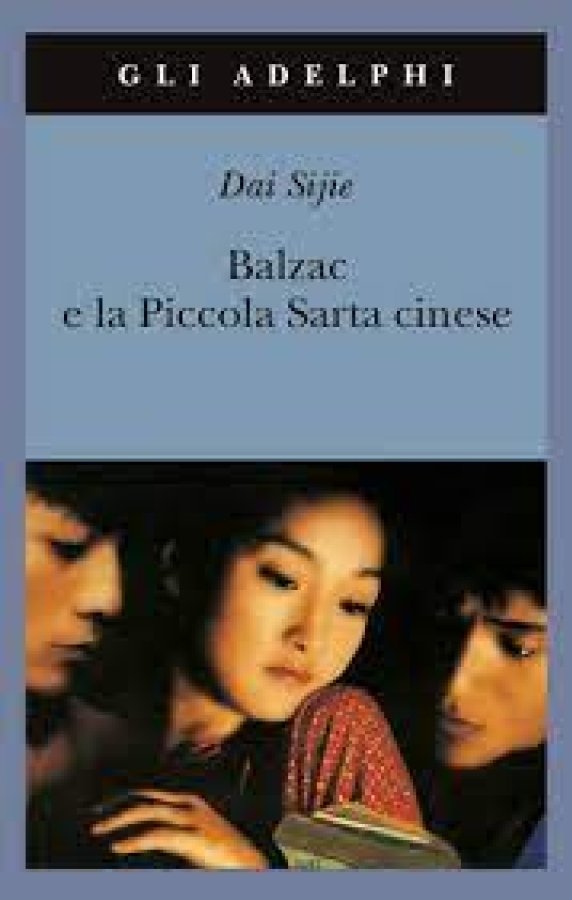
Balzac and the Little Chinese Seamstress
Title of the original version reviewed: «Balzac e la piccola sarta cinese»
AI Translation Notice: This review was translated from the original Italian using artificial intelligence. Book quotes and excerpts are translated interpretations and will not match the author's original English phrasing or official published translations.
The year is 1971, in China during Mao’s Cultural Revolution. Two youths are sent for re-education to a remote mountain village. One is the narrator, while the other is his friend Luo. Unquestionably, a critique of the Communist regime runs through the entire novel—a critique mounted with irony and lightness, yet no less incisive for it. Were it confined to recounting how two charming and unfortunate city boys survived in an environment so far removed from their social and cultural origins, the book would remain trapped within its historically dated dimension; in truth, the author engages with the universal theme of the book as self-discovery and an instrument of emancipation. The two friends cross paths with a young woman, the daughter of the local tailor.
When she bent over the sewing machine, the gleaming metal base reflected the neckline of her white blouse, her oval face, and the sparkle in her eyes, undoubtedly the finest in the district
. Sophisticated and elegant, “in a place where nearly everyone went barefoot,” the Little Seamstress captivates the boys, lending meaning to their wretched existence. Another event intervenes to alter the destiny of the two friends, and of the Little Seamstress: the discovery of a trunk containing the great masterpieces of French literature, from Balzac to Flaubert. They come into possession of the books and devour them ravenously.
Leafing through them with my fingertips made me feel as if my fragile hands were touching human lives
. It is a wondrous yet insidious sensation, for immersing oneself in human nature through the pen of the great nineteenth-century writers will overwhelm the young men and transform the Little Chinese Seamstress. “She will no longer be a simple mountain girl.” In Luo, now her lover, there arises something akin to a delusion of omnipotence: the ability to govern the cultural maturation of the Little Seamstress. Is that possible?
She wants to go to the city, (the father) said. She mentioned Balzac. (...) She said she learned one thing from Balzac: that a woman’s beauty is a treasure beyond any price
. Was it perhaps better to have left her in ignorance?
For the most part, the novel follows a linear plot, rich in delightful, surprising, and joyful episodes. It is as if the two friends were revelling in it: they disguise themselves, for instance, as Mao to coax the lyrics of folk songs from a wild old mountaineer and hand them over to the owner of the books in exchange for several novels—a scheme crowned with success, yet ultimately doomed because the songs are brazenly erotic, and thus at odds with socialist morality. At a certain point, the narrative shifts tone, turning somber and oppressive. Two metaphors emerge—the precipice and the raven—omens of the disaster toward which the two friends are hurtling (in Chinese culture, oracles bear fundamental significance, revealing as they do “the Way of Heaven”). Later, the narrator steps back to make way for the accounts of other characters: the old mountaineer, Luo, and the Little Seamstress. It is a lyrical juncture, detached from the narrative approach maintained until then. It is as though the narrator has definitively accepted a subservient role; nevertheless, we perceive that he too is traversing his own path toward an understanding of femininity. And finally, we witness the resigned, desperate account of the Little Seamstress’s abortion, as she makes her choices unbeknownst to Luo, who impregnated her. It is as though a woman’s freedom always demands a painful act.
The writing is elegant, adept at orchestrating diverse lexical and syntactic registers. Fluid, spirited, effervescent, the author manages never to dissipate the narrative drive despite engaging with numerous themes, many of which overlap and even clash. He can steer a steady course through to the end—surprising and unsettling—because the story revolves around the mysterious allure of the book.
Why read it? It is a gem!