Finished reading on: June 04, 2023
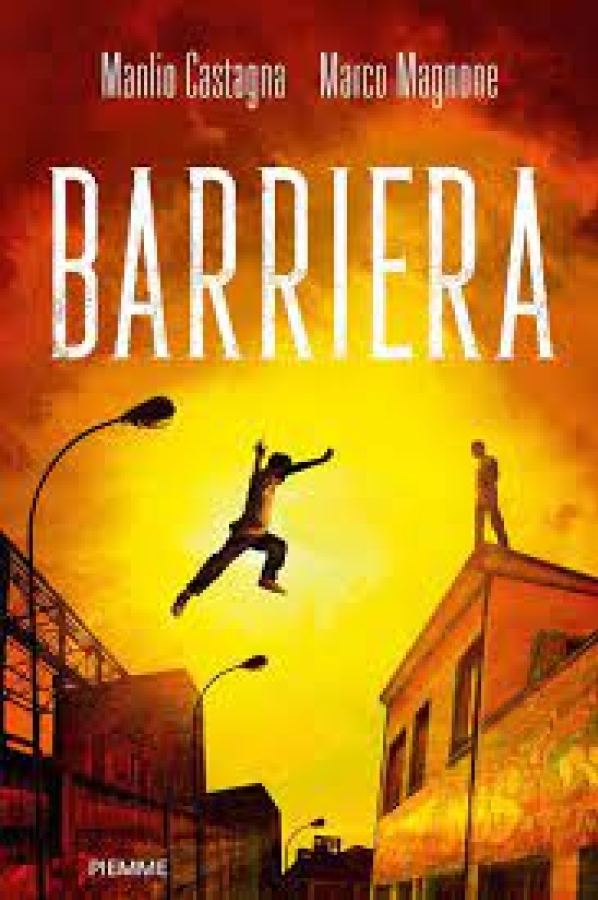
Barrier
Title of the original version reviewed: «Barriera»
AI Translation Notice: This review was translated from the original Italian using artificial intelligence. Book quotes and excerpts are translated interpretations and will not match the author's original English phrasing or official published translations.
Barriera is a suburb of Turin roughly two kilometers from the city center: once a working-class town, now a multiethnic neighborhood rife with petty crime and drug dealing.
Barriera never changes. (...) Families go to the supermarket or the shopping mall. The old folks to the cemetery. The poor to the flea market. The Chinese to their shops. The Senegalese pushers to their corners. Nigerian and Moldovan prostitutes dividing up the rest. Here, all you can ever become is a label they’ve slapped on you. A label you can’t shake off
. If in Il lato oscuro della Luna (see the review on this site), Marco Magnone and Fabio Gedda recounted an ill-fated love story between two teenagers in a Berlin still divided by the Wall, here the core of the narrative is the relationship between two brothers: Malik, the elder, freshly released from prison, "carries wounds that don’t have time to scar over, they just kill you"; Yasin is gentle, slender, and slightly built, completely different from his brother; yet Malik
was the superhero. Mine. Even when he ended up inside. Even when, after getting out, he walked out of the house without saying a word. That’s why when he offered for me to go live with him, start over from scratch, together, I fell for it right away. Because it was him and me again. Playing piggyback. Fighting the bad guys. But now instead
. Malik has become a drug dealer, peddling a dangerous synthetic drug on behalf of a Nigerian criminal organization; in doing so, he has caused the death of a girl with whom Yasin shared his first romance. "You killed her, (...) with those damn pills," Yasin shouts,
Now it’s my turn to step toward him. And raise my voice against him, for the first time in my life
. Yasin pleads with his brother to go to the police to report the criminal syndicates he works for. It would be too neat if Malik actually went to the police; the culture of violence is too deeply ingrained in him to ever put his faith in the law.
The narrative structure mirrors the one adopted in the previous novel: the events are recounted by both brothers in dedicated, alternating chapters. The story is thus observed from differing points of view, yet it all too often turns out repetitive and fragmented, losing any sense of the overarching whole. Moreover, violence is the defining hallmark of this book; at times, Castagna and Magnone seem fond of lingering over brutal scenes where the strongest always prevails—one need only think of the boxing bouts and the gym milieu, populated by brawling yet valiant characters presented in an almost edifying light. While in Il lato oscuro della Luna a sense of melancholic sweetness prevailed, however devoid of a future, here no hope remains, and these adolescents stand before the void: Barriera is a metaphor for our present day,
nothing but the damn cold biting hard. And the silhouettes of abandoned factories looming here and there as if out of thin air
.
The prose is characterized by short sentences that leave little room for depicting the setting and the characters; while this approach reflects the starkness of the story, it does little to deepen the tragedy of Malik and Yasin and their shattered brotherhood. The extensive use of full stops and frequent verbless clauses makes for an easier read, clearly targeted at young adults, but it impoverishes the language—and, it must be said, not everyone is Cesare Pavese (see the review of La casa in collina on this site).
Why skip it? Fragmentary and superficial