Finished reading on: March 02, 2023
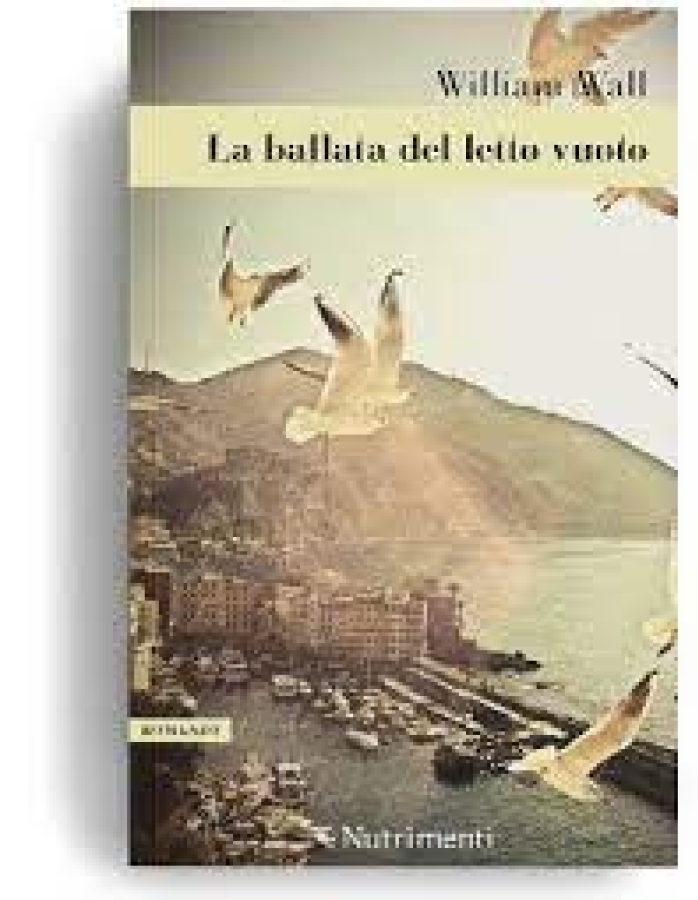
The Ballad of the Empty Bed
Title of the original version reviewed: «La ballata del letto vuoto»
AI Translation Notice: This review was translated from the original Italian using artificial intelligence. Book quotes and excerpts are translated interpretations and will not match the author's original English phrasing or official published translations.
Kate lives in Dublin and is a middle-aged university lecturer. One day, she finds her husband dead in the bathroom and discovers herself buried in debt, hounded by creditors and banks. The man with whom she shared most of her life in an increasingly weary relationship was a scoundrel.
I wake up this morning with an awful headache, my new man had just left me a room and an empty bed
. It is Bessie Smith's empty bed blues, a blues that echoes in Kate's mind with “the sax groaning in the background” and Bessie’s throaty, sensual voice. This state of stunned despair seems to offer no way out, until a young woman places a set of keys in her hand. From here unfolds a story of multiple narrative threads. Kate tracks down the house to which these keys belong: an apartment above Camogli, where “the sea eats away the land” and where Kate can see
the gleaming smoothness of newly tumbled stones beneath the cliffs of the Portofino sea, mica crystals sparkling in the winter sun, (...) the looming tenement blocks, the medieval arch, the old village, the little bars and restaurants bathed in pale golden sunlight, thin as cardboard silhouettes, (...) capable of radiating enough light and warmth to warm a soul or a heart. Perhaps even mine. In my head echoes the voice of change.
Along with the splendid Ligurian harbor, Kate falls in love with Italian—with its musicality, but also its grammatical forms, which seem to reflect our own existence,
so uncertain or so complex that even the verb we use to express it must leap frenetically between different forms and even different roots
. There is pleasure in addressing her husband's mistress as a zoccola, a sewer rat, only to discover that the masculine ending of the word carries many other meanings, but never that of a prostitute. In short, in Italian only a loose woman is a sewer rat—a subtle, ironic observation that perhaps only a non-Italian could make, accustomed as we so often are to taking the sexist usage of certain words for granted. Kate then meets Anna, an elderly neighbor with whom she forms an increasingly intimate friendship. In sketching this character, the author notes having drawn on Rossana Rossanda; what is certain is that this figure allows Wall to voice his own leftist sensibilities, mirroring himself in the image of a woman born out of the communist and activist traditions of Italian political culture. Yet an image it remains: a stereotype that impedes any genuine deepening of a singular friendship between a middle-aged, lonely, and betrayed Irish woman and an elderly, cultured lady still haunted by abandonment and nostalgia. Thus, the novel's core theme, “this headlong descent into Italy,” is not enriched by the psychological depth of an encounter, but is instead weighed down by reflections far too predictable to evoke wonder or stir our imagination.
Is it true that we can shed our lives just as snakes shed their skin? Or are we, on the contrary, tethered to old places and past times by invisible cables that bind us and thwart our every move
. Wall answers these questions through Kate's journey, as she becomes a resident of Camogli and an adoptive Italian. It is striking that this question is posed on Bloomsday. Here emerges a defining trait of Wall's narrative: deceptively plain and straightforward, far removed from the stereotypically Irish idiom, yet replete with profound and evocative philosophical and literary reflections, the latter framed by quotations from Joyce's Ulysses. Could it be that the epiphany of the great Irish writer, in its apparent prosaicness, expresses a quest for renewal that remains too steeped in the Dublin world to ever truly succeed?
The prose flows smoothly and pleasantly, marred only by an overreliance on rhetorical questions—a literary device that injects movement into the narrative but fractures and weighs down the discourse. The landscape and people of Camogli are depicted with immense affection and communicative vigor; the observations on the Italian language are engaging and gently wry. The plot, however, is fragile and ultimately unravels, and it is a pity that the psychological dimensions of the relationship between these two women—so divergent in history and culture—were not probed more deeply.
Why read it? It is the chronicle of falling in love with a place and a language.