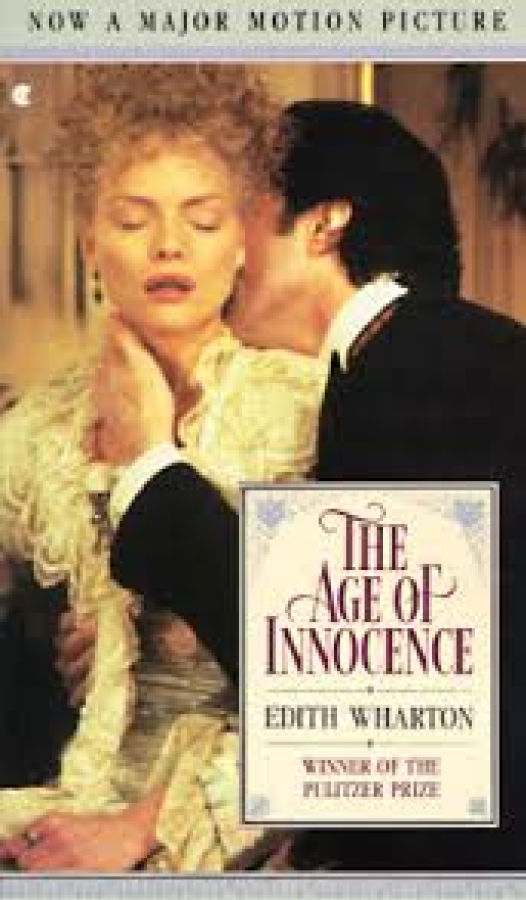
The Age of Innocence
The novel is set in New York at the end of the nineteenth century, when the old New York elite, with its oppressive social rituals, was overwhelmed by a new, upwardly mobile bourgeoisie—prejudiced and aggressive; it reacted by trying to ignore the changes, > until they crashed down upon them. What mattered was preserving the "traditional pleasantness" of social life. It is no coincidence that the tale opens with opening night at the Opera, meticulously described by the author: the arrangement of families in the boxes according to a rigid social hierarchy, the placement of individuals within them respecting family roles, the elegant gowns in the latest Parisian fashion, the hushed gossip that must cease when the solo is sung; an aristocratic atmosphere steeped in American Puritanism, and therefore superior to the frivolous European world. Amidst a crowd of minor characters, the three protagonists appear from the very beginning. Archer is a young lawyer with a passion for literature and a history of typical bourgeois transgressions (a mistress, perhaps a few young ladies), yet well aware that he must make a "good marriage." Reckless reading leads him to make nonconformist statements ( > women ought to be free—as free as we are ), but > he was a quiet young man endowed with strong self-control. Adherence to the discipline of a small society had become almost a second nature to him. Yet a restlessness stirred within him, leading him to feel as > though he were being buried alive under his future. Still at the Opera, in the family box in an unobtrusive position, as rigid etiquette dictates, sits the very young May, who > that very afternoon had allowed him to think there was on her part "an inclination" (the official New York phrase for a girl to declare an interest) ; a consummate representative of wholesome American society, who > would probably go through life facing each experience to the best of her ability, but never anticipating what was to happen by so much as a fleeting glance. Perhaps this heedlessness was what gave her eyes that innocence, and her face the semblance of a type rather than a person. Beside May is > a slim young woman, (...) with brown hair curling in thick locks around her temples, held by a narrow band of diamonds, (...) with a dark blue velvet skirt gathered beneath the bust by a belt with a broad, old-fashioned buckle. Her unusual carriage and attire catch Archer's attention: she is "poor Ellen Olenska," May's cousin, who has returned to America after separating from a Polish nobleman. Being taken in by the family is one thing, but displaying her in public, on opening night at the Opera, before all of New York's foremost families! From this opening scene, so voluptuously baroque, the story branches out: Archer is drawn to the mysterious and intoxicating Countess Olenska, who represents to him the promise of a different life, glimpsed through literature and now attainable through falling in love with the beautiful, melancholic Ellen. If we look beyond the haze of reverie, we discern that the figure of Ellen > had built up within him a kind of sanctuary where she reigned enthroned among his secret thoughts and desires. Little by little, this image became the scene of his real life, of his every rational activity. (...) Outside of this, on the stage of his actual life, he moved with a growing sense of unreality and inadequacy, blundering against family prejudices and traditional viewpoints, much like a madman colliding with the furniture of his own room. And yet, he imprisons himself in a bourgeois existence: he advances his marriage to May, counsels Ellen against seeking a divorce from her husband, leads an ordinary life beside an affectionate and understanding young wife, frequenting New York's customary social venues and fulfilling his duties to May's family. Slowly and silently, a muted curtain of protection forms around him: officially, no one knows of Archer's infatuation with Ellen—a burgeoning love marked by petty lies, abrupt business trips, and fleeting, supposedly clandestine meetings, as happens with all lovers. Then, all at once, May comes out into the open, having previously been eclipsed by the vitality of the splendid Countess Olenska; in a conversation made of insinuations, of truths half-spoken and withheld, May preempts Archer's irreparable confession by declaring that she is expecting a child and that, bold and cynical, she has used this still-uncertain pregnancy to induce Ellen to leave America. Innocent May has revealed herself to be an astute wife—not because she possesses any singular intelligence, but because she adhered to the well-worn patterns of the society to which she belongs. At a farewell reception for Countess Olenska (for appearances must always be kept!), Archer realizes that everyone knew about the affair and acted in solidarity to avert the scandal of a separation: in old New York, everything must proceed > without bloodshed: the way of people who dreaded scandal more than disease, who placed decency above courage. And on the other hand, Archer too shared these values, even if > he seemed to be witnessing the scene in a state of strange weightlessness, as if floating somewhere between the chandelier and the ceiling, nothing astonishing him so much as his own share (as a spectator) in what was happening. Written after the First World War, *The Age of Innocence* recounts the end of an era, narrating the loss of innocence of the American bourgeoisie. If in Alcott's books (see the reviews of *Little Women* and *Good Wives* on this site) the family is woman's natural destination, thus giving concrete form to her social role, in Wharton's novel marriage is a cage, a place of renunciation and duty. From this perspective, Countess Olenska is the longed-for figure, capable of living outside convention, like a butterfly flitting from flower to flower. This interpretation, emphasized by Martin Scorsese's 1993 film, does not encompass the tale's truest meaning. We must look from Archer's vantage point and from Wharton's conservative vision. In her introduction, Sarah Blackwood notes that two alternative endings to the book have been discovered. In both, the marriage is dissolved and Archer is able to go and live in Paris with the beautiful Countess Olenska. Why did the author decide that Archer should instead retreat into a flat bourgeois life, into the social and marital duties of old New York? The novel's primary theme is the weight of social rules, whose strength lies in their internalization within the conscience; they are a prison that charts our destiny, beyond our "secret thoughts and desires." And as occurred with Archer, nothing is left to us but to live in fantasy, to anchor ourselves to dreams and imagination, creating a parallel reality in our minds. Ever-renewed Don Quixotes of Cervantes or Quichottes of Rushdie (see the reviews on this site), we move about, lost and imprisoned in a world we would wish to be different, until, like Archer, we adapt, settled into a quiet life. How long can we keep doing so? Wealthy, influential, and surrounded by artists during her life in Paris, Wharton was also passionately devoted to being an "interior designer"; this accounts for the detailed descriptions of interiors and attire—veritable theatrical stagings, already cinematic, so rich in imagery, resonance, and symbols. It is a meticulous, seemingly realistic prose that radiates a dreamy, suspended, and evanescent charm. Whether Wharton ever knew Joyce or Proust I cannot say; yet behind the superficial nineteenth-century patina, we are clearly in the presence of an innovative narrative, an anti-novel. The lexicon is rich, with a distinctly American stamp, coupled with an articulate and refined syntactic structure; without question, fine English! Why read it? Archer is an interesting and modern figure, splendidly baroque.
Ask the Dust
The third book of the Bandini saga represents a further transition, both in terms of narrative content and stylistic and expressive aspects. Arturo is in Los Angeles, where he scrapes by, trying to write and get his short stories published. At the outset, the novel retains the defining elements of its predecessor: a strong predominance of imagination, a narrative rhythm still grounded in subjective expression, and a style characterized by strong lyrical accents rich in evocative power. Arturo falls in love with Camilla, a Mexican girl who works in a bar, and embarks on a tormented love affair marked by verbal clashes, written notes from Arturo, and an outing to the seashore, during which the young man fails to translate his feelings into sexual consummation, despite the girl’s expectations. Arturo still lives in a sort of delirium, swinging between phases of exaltation and depressive states. However, an episode occurs (imagined or real?) that seems to mark the turning point in the novel’s narrative and stylistic structure: a woman seeks Arturo out to pursue a romantic affair with him. From this moment on, his relationship with Camilla is inverted: the girl turns to Arturo for help and confesses that she is in love with another man, who nevertheless does not want her. Arturo accepts the situation, not least because he has realized that Camilla is using drugs and he wishes to help her. A complex relationship unfolds, through which Arturo matures, coming of age as an adult. The young man wants to take her to a house by the sea, but Camilla flees and vanishes into the desert: > across the desert was an utter indifference, the rhythm of night and another day, and yet the secret intimacy of these hills, their mystery, secret and comforting, made death of no great importance. You could die, but the desert would hide the secret of your death, it would remain after you, to cover your memory with ageless wind and heat and cold…. I carried the book a hundred paces into the desert, toward the southeast. With all my strength I threw it far out there in the direction she had gone. Then I went to the car, started the engine, and drove back toward Los Angeles . Coming to grips with the reality of emotions, rather than merely the delirium of his own aspirations and fantasies, spurs Arturo’s transition from youth to adulthood. The style also evolves in this direction. It preserves its richness of language, with a sentence structure and a choice of words particularly attuned to phonetic qualities and the evocative power of rhythm. The style, however, becomes leaner, less lyrical and redundant; the narrative structure is distinguished by dialogues, previously virtually absent due to the lack of characters of significant weight.
Between the assassinations
The book is a collection of short stories set in a town in South-Western India, Kittur. The author traverses the various corners of the city, its people, and its social life, like a modern-day Guy de Maupassant. Yet in truth, as an editor remarks when rejecting the stories, > your characters want absolutely nothing. They simply walk through richly described situations and think deeply. They walk through cows, trees, roosters, and think, and then walk through roosters, trees, and cows, and think a bit more. That is all. The narrative, in fact, unfolds between the realistic, stark, and often repetitive depiction of modern Indian society, and the pessimistic chronicle of an unalterable social and existential condition. Despite India’s intense economic dynamism, there is no real shift in the social fabric, in caste relations, in the mechanisms of power—ever dominated by corruption and abuse—nor in the lives of the characters, who, whenever they aspire to or believe they have attained even a modicum of social mobility, are thrust back into the immutable roles of a stratified society. All the stories are remarkably fine, but the most emblematic of the entire collection is *“Market and Maiden”*. Keshaya is a boy from the countryside looking for work in the city: “he is small, thin, dark-skinned, with huge eyes that wander dreamily.” Full of energy yet at the same time “capable of staring at the ceiling for hours,” the boy does not quite know what he wants, but remains captivated by the life of the tram conductor, who works outside, clinging perilously to the vehicle. He manages to secure this job and is thrilled because he rides to work on a bicycle given to him by his employer. It belonged to a former tram conductor, who now begs in the street after being crippled in an accident. One day, Keshaya falls, strikes his head, is fired, and finds himself wandering through the market like a madman, like a wild man. And everyone pretends not to recognize him, yet “he was the king of tram number 5,” cries the lame man, the only one standing by him, bound by the solidarity shared among the poor and the wretched. “That is the way of the world,” remarks the protagonist of another story, “and so it’s a rotten world.” And what can the writer do? If he does not wish to go mad, like another character in the book, he must convince himself that > every true word, as soon as it has been written, is like the full moon, in a day it vanishes and passes entirely into darkness. And this is the way of all things . What is truly remarkable in these stories is Adiga’s writing. It succeeds in transfiguring social realism into the anticipation, or the possibility, of an escape—wholly contemplative and interior—from the deterministic and inexorable forces of economics and sociology. In *“The Bunder”*, Abasi is a small-business owner, beleaguered by the corruption of public officials, who endures a profound inner conflict between the necessity of providing security for his family and the harrowing awareness that the manufacturing processes in his factory will inexorably lead the female laborers to blindness. What is to be done? He climbs onto the roof of his factory: > from here a man can see the limits of Kittur... and see the Arabian Sea stretching out from Kittur. The setting sun is shining above it. A ship is slowly leaving the harbor, sailing where the blue waters of the sea change color and turn a deep dark. And it is about to meet a broad swath of the brilliant setting sun, an oasis of pure light Will Abisa throw himself from the roof, or will he submit to the inexorable laws of economics? We are left in a state of suspense, of waiting, which forms the resolution to most of the stories. Why read it? Splendid stories, marvelous prose, and human and social narratives of powerful resonance.
Blood and Thunder
The book’s subtitle is “the epic story of Kit Carson and the conquest of the West.” Indeed, the book spans a very long period, from 1809, the year of Kit Carson’s birth, to his death in 1868. Even though the great scout lies at the heart of the book, in reality it features all the protagonists of those years who contributed to an exceedingly complex and multifaceted history, shaped by competing ambitions: the imperial dream of the United States aimed at conquering the entire continent from East to West at the expense of a weaker nation, Mexico; economic expansion toward territories whose wealth was often overstated; the American Civil War and the role played by Indigenous nations; the clash of cultures (North Americans, Mexicans, and Indians); and, finally, the heavy imprint of a Methodist vision intent on imposing its own rules without acknowledging particularities and cultural distinctions. At the core of the book, therefore, lies the American dream: the conviction of being inherently in the right, and consequently the inability to understand the indigenous peoples. The latter, accustomed to a nomadic society rooted in raiding, fail to realize that they are up against a new adversary—one quite different from the Spanish and the Mexicans, equipped with technological superiority and, above all, an obstinacy driven to see matters through to the bitter end. It is the Navajos who pay the heaviest price, despite having been one of the strongest and wealthiest Indian nations. They are destroyed: first by starvation, then by the long march toward a settlement intended to serve as an experiment in civilization, which proves instead to be an inhospitable wasteland where disease, poor harvests, and contaminated water deal a mortal blow to the Navajos. It is a chronicle of clashes and battles, of plunder and cruelty, laying bare a violent society on both sides. A curious code of conduct effectively binds Americans and Indians alike: an eye for an eye, a tooth for a tooth. In this context, Kit Carson—already a legend in his own lifetime—stands as an emblematic figure: a consummate scout gifted with both diplomatic and martial prowess, a commander, yet ultimately an executor who, against his own inclinations, is compelled by obedience and gratitude toward others to wage wars and endure conditions he does not himself condone. Deep down, he is frail, a weakness evident in his physique and his voice to such a degree that visitors who had read accounts of his life and exploits failed to recognize him when meeting him in person. He is a hero who becomes one in spite of himself, almost an artfully crafted figure within the American collective imagination. This persona served to open the conquest of the West to the American people and to rationalize the slaughter of the Indians. Like all heroes, he is also an antihero. The book is a compelling work. It appears historically well-documented, and while not a novel in the strict sense, the narrative possesses all its hallmarks. The overlapping of episodes, which develop in parallel before converging into a central storyline, likewise generates an atmosphere of suspense typical of a detective story or contemporary fiction. The approach is cinematic. Its most compelling aspect is the extensive reliance on the very diaries of those who took part in the events. For instance, a woman who followed the wagon train toward the conquest of Santa Fe, the capital of New Mexico, writes with scandalized outrage about a ball held in honor of the conquerors, where Mexican women appeared in low-cut, provocative gowns.
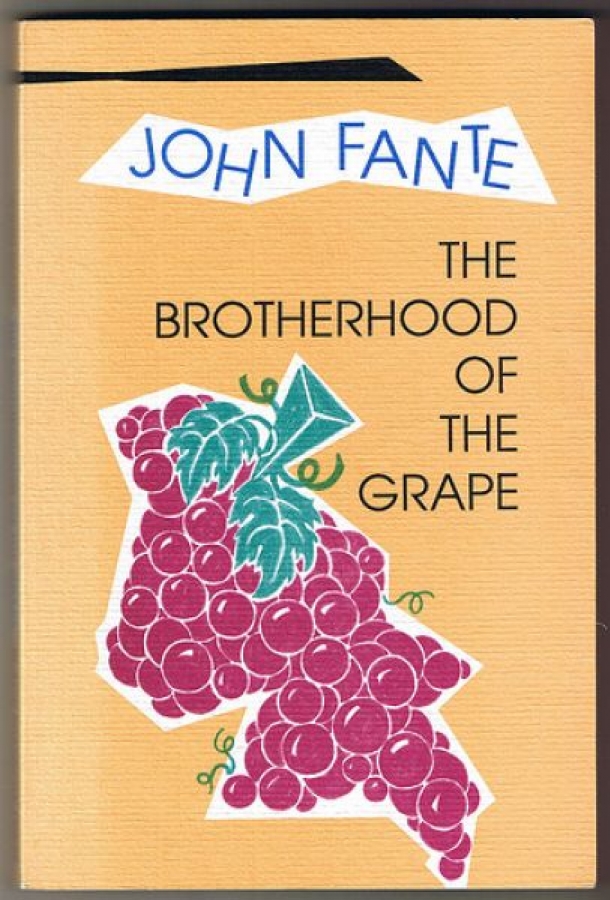
The Brotherhood of the Grape
Henry Molise is the son of a tyrannical, drunken father. Summoned by his siblings because their parents appear poised for divorce after yet another of the father’s abusive outbursts, Henry finds himself roped into helping his father build a small stone shed at an out-of-town motel. During the journey in the company of his father’s old friends and by working alongside him, Henry rediscovers, with horror, his own familial matrix and his affection for his father. The shed, scarcely finished, is destroyed by a windstorm, starkly demonstrating that the aging father, once a renowned and skilled craftsman, is no longer physically and intellectually capable of carrying out a job, however simple. At this point, the story hurtles to its crisis: the father falls ill, is hospitalized, and subsequently flees the hospital to die at the home of an old friend who owns a vineyard and produces excellent wine. The overarching threads of the book are fundamentally two: the familial context, from which Henry sought to escape, only to rediscover through this homecoming that he belongs to it indelibly. This familial context is composed not only of the characters (the mother, the siblings, the father’s friends and the barroom regulars, the neighbors who endure the father’s excesses), but also includes objects (above all, wine and food) and the memories of a childhood deeply shaped by Italian roots. *The Brotherhood of the Grape* is the setting of a series of primordial relations that forge profound bonds among men. Emblematic in this regard is the figure of Angelo Musso, a sublime winemaker deprived of speech, who represents a “Greek god” to the members of the brotherhood, and who, when Henry comes to retrieve his father to return him to the hospital, proclaims with wise fatalism: “it’s better to die drinking than to die of thirst” and “it’s better to die among friends than among doctors.” Evident here is a nostalgia for an ancient time in which the rhythm of life and the bonds between men were determined by an authentic wisdom; the relationship with the father, who shaped the lives of all his children without ever succeeding in fulfilling his desire to pass on his craft as an artisan. This is not merely a question of traditional bonds, forged of conflict and affection toward the paternal figure; the core of the narrative lies primarily in the trade of stone quarrying and masonry, handed down to the father by his parents. The children reject this trade, which has weighed heavily upon their lives. The father’s failure in his final endeavor exposes all his fragility and weakness, thereby reopening the relationship with his son, who rediscovers an affection and a bond with his parent, but also with his craft, which had been lost over time due to the presumed omnipotence of the paternal figure. The style recalls that of the great American writers, such as Faulkner and Chandler, yet it is grounded in the deliberate use of words, in their careful juxtaposition so as to articulate a poetic and musical rhythm. The meaning of the narrative emerges not so much from the plot, nor from character study and the description of settings, but above all from the sensations that arise from the sequence of words and sounds.
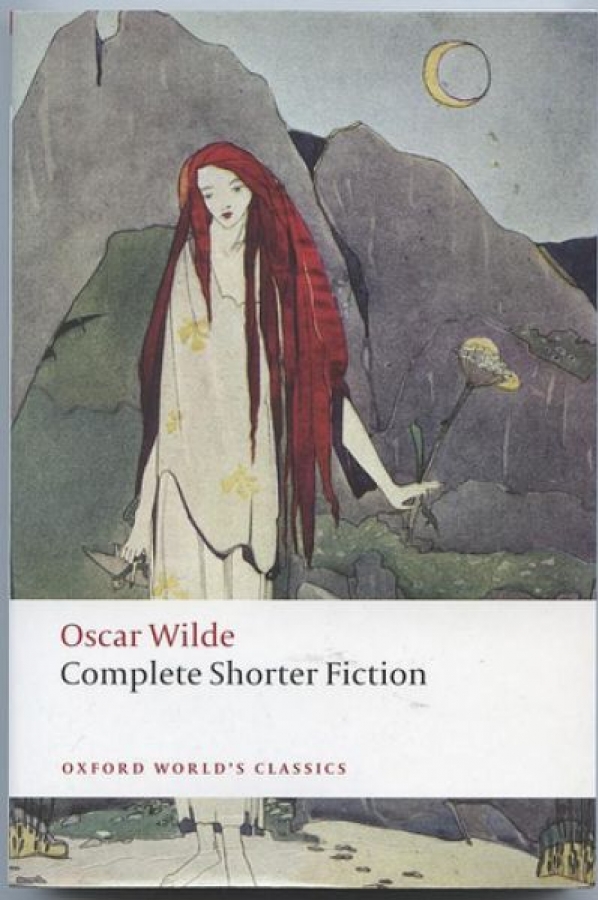
Complete Shorter Fiction
The book brings together Oscar Wilde’s major short stories, in which the style is above all remarkable, particularly the sentence structure. The phrasing is not overly elaborate, favouring short sentences, but the juxtaposition of words (simple and close to everyday language) succeeds in lending poetic, and in certain cases elegiac, qualities to the writing. The result is a splendid English that recovers the essential nature of words through conversational rhythm. The content of the stories is generally fantastical and in many cases paradoxical: it draws upon the world of nature and the supernatural, which provide the setting and often supply the protagonists. On a first reading, a broadly moralistic approach seems to predominate, accompanied by a pursuit of the improbable and a nostalgia for the “goodness” of nature in contrast to human selfishness and pettiness. In reality, what emerges is a pervasive melancholy, almost a search for something lost (a remembrance of things past?), and a celebration of beauty. All the protagonists (people, animals, natural environments) are characterized by sublime physical traits and remarkable intellectual attributes: ugliness does not exist. Aesthetics thus prevails over ethics: a sort of exaltation of aestheticism. In this way, the theme of melancholy is also clarified: it is a nostalgia for lost beauty. Of particular interest is the story *The Portrait of Mr W. H.*, in which the author puts forward several hypotheses concerning the addressee of some of Shakespeare’s sonnets. To appreciate it fully, one would need a deeper familiarity with Shakespeare’s poetry and drama, but it is evident that here, too, one of the central themes is the love of beauty, which emerges from the protagonist’s conviction that the person described in the sonnets was a young actor who played the female roles in the tragedies. Shakespeare did not seek to flatter an eminent figure, but was writing solely out of love for someone who worked alongside him (undoubtedly less “highborn”) and with whom he shared a kindred sensibility.

Disgrace
A literature professor is expelled from the university following a relationship—essentially sexual—with a female student. The man is over fifty and twice divorced. Accustomed to being courted by women, he now finds himself alone, reduced to seeking sex with prostitutes, and thus lets himself be drawn into the affair, in pursuit of his own vanity and his own eros. He moves to the countryside to stay with his daughter, who runs a smallholding and a dog shelter. He helps his daughter take her produce to market, meets a woman his own age who runs an animal clinic and puts surplus dogs to death, and works alongside Petrus, a Black man who helps his daughter run the farm. The man’s attitude, however, has not changed; his vanity continues to dominate even his relationship with his daughter, with whom he cannot achieve any genuine dialogue: neither recounting the events that led him to leave the university, nor understanding his daughter’s reasons for living in the country, so utterly isolated. An incident radically alters their lives: three Black men break into the house, ransack it, attempt to set the professor on fire, and rape his daughter. Even more shattering is the fact that the daughter does not report the crime and chooses, instead, to keep the child conceived through the assault and to marry Petrus to secure her existence in the countryside. The professor’s world dissolves—a world that had found its precise coordinates in the realm of imagination, poetry, and bourgeois conventions: as he had said at the beginning of the book when glossing a stanza by Wordsworth (the poet’s disappointment at the sight of Mont Blanc): > the great archetypes of the mind, the pure ideas, find themselves usurped by mere images that derive from the senses. Yet we cannot live every day in the world of pure ideas, sheltered from sense-experience... The question must be: How do we find a way for the two (imagination and reality) to coexist? Ideas of a narcissistic intellectual, to which his daughter replies that life is a concrete, simple matter. The man attempts to return to the city, but his former life has by now vanished. He therefore takes a room in the village near his daughter’s farm, works on a musical piece destined to center on the affair between Byron and his Ravenna mistress, Teresa, and helps run the animal clinic. The book draws to a close, bleakly, with the man’s decision to have a dog put down—a dog to which he had grown attached—because we must all make our way toward our end, toward death. It is a highly complex novel, one in which it is difficult to isolate a single narrative thread. Among the possible readings (the social fabric of South Africa, the clash between bourgeois European culture and the emerging values of the Black population, father-daughter relations, the acceptance of the codes of violence, animals and dogs in particular), the most compelling seems to me to be the theme of death and the awaiting of death. The former is addressed through the ordeal of the protagonist, who comes to terms with the passage of time: > he wanders aimlessly in the garden, a dreary feeling coming over him. It is not merely that he does not know what to do with himself. The events of the day before have shaken him to the core. The tremors, the weakness are merely the first, most superficial symptoms of shock. He has the sense that within him a vital organ has been bruised and abused, perhaps even his heart. For the first time he feels what it means to be an old man, tired in the bones, devoid of hope, devoid of desire, indifferent to the future. Sprawled on a plastic chair amid the stench of chicken feathers and rotting apples, he feels his interest in the world ebbing away from him drop by drop. It will take weeks, perhaps months before he is bled dry, but he is bleeding out. When all this is over, he will be like a fly enfolding itself in a web, brittle to the touch, lighter than a grain of rice, ready to drift away. The theme of waiting is embodied by Teresa, who spends her entire life waiting for the return of Byron, who has gone to Greece to die: > my Byron, she sings for the third time; and from somewhere within the caverns of the other world, a voice answers in song, wavering, disembodied, the voice of a ghost, the voice of Byron. Where are you? he sings, and then a word the woman did not want to hear: dry. It has dried up, the wellspring of all things. And finally, the harrowing conclusion of the novel, which epitomizes the protagonist’s despair, the end of life, of waiting: > bearing it (the dog) in his arms like a side of meat, he walks back into the surgery. I thought you wanted to save him for another week, Bev Shaw says: Are you giving him up? Yes, I am giving him up—or does the author, with the phrase *give up*, mean: "I surrender, I yield!"?

For whom the bell tolls
The novel is set in Spain during the Civil War and unfolds over the course of a few days. Jordan, an American, is dispatched behind enemy lines to blow up a bridge in support of an offensive by the Republican army. To carry out this mission, he makes contact with a band of guerrillas, among whom he meets Maria, with whom he falls in love. The group is led by Pablo, who clashes with Jordan, and Pilar, a fiercely strong and energetic woman. Despite internal friction, the group accomplishes the mission and Jordan destroys the bridge, but is killed during the escape. The novel’s true theme seems to be the futility of war, its inherent cruelty, manifested on both sides of the front. Powerfully tragic are the pages describing the capture of a town by Pablo’s band and the slaughter of the Fascists: one by one, they emerge from the church where they have been imprisoned and are forced to pass between the ranks of villagers and partisans, only to be hurled into a ravine. At first the crowd hesitates, but soon hatred and bloodshed take over. The same cruelty is pursued by the Fascists in the murder of a group of partisans who are decapitated. The anticipation of the final assault, the presence within the partisan group of a boy still very young who, shortly before dying, defends the integrity of a Communist party leader whose son has taken refuge in Russia, and the tragic impossibility of Jordan’s band to intervene and help represent magnificent moments in the novel that, more than any others, convey the cruelty of war. Yet war is not only cruel, it is also futile; moreover, it is senseless, and it always ends in death: > whether one is afraid or not, death is difficult to accept: there is no sweetness in its acceptance . The characters are caught in a machine whose futility and absurdity they grasp, yet from which they cannot break free. The destruction of the bridge is utterly pointless, as Franco’s army is aware of the Republican attack and possesses superior air power, thus making it highly probable that they will repel the offensive. Jordan tries to warn the Republican army commander, but bureaucracy, mistrust, and infighting prevent the message from arriving in time. And Jordan knows that «he will still have to destroy the bridge». Except for Pablo, who is a murderer, all the other characters are conscious of this cruelty: from old Anselmo, who does not want to kill yet finds himself forced to do so, to Jordan, who reads the letters of a slain soldier, making it starkly evident that he was a young man, with his own loved ones, likewise swept up in a senseless civil war. War overwhelms personal feelings as well. One must not dwell on loved ones or newly found love; the absurdity lies in Jordan, at the point of death and having had to leave Maria behind, deeming himself fortunate to have lived his final days with Maria’s love. Hemingway’s style is highly articulated, more effective in its descriptions than in its dialogue, which at times proves repetitive and tedious.
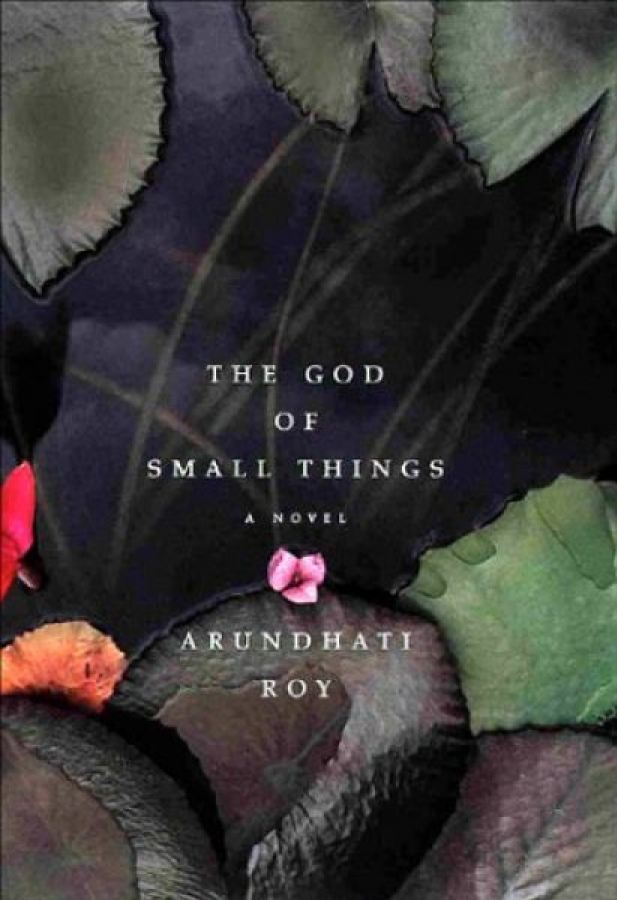
The God of Small Things
The narrative unfolds around an Indian family of the Greek-Syrian faith and takes place in a dimension that is, in some sense, timeless. The point of departure—and also of arrival—is the death of a young girl, Sophie Mol, who arrives in India with her mother to meet her father and drowns in the river during a boat trip with her cousins, the twins Rahel and Estha. This episode forms the watershed between an atmosphere of serenity and the devastation of the family, most notably the separation of the two twins. The almost symbiotic bond between Rahel and Estha is one of the book’s central themes, though more apparent than real. Indeed, none of the characters are analyzed or explored in depth; rather, they remain on the surface, at times in an exaggerated, almost caricatural form. The true protagonists of the book are “the things,” the environment surrounding the characters, in particular the river. The final chapter of the book is titled *The Cost of Living*: the anguish and precariousness that can be endured only through an attachment to small things: > Even later, on the thirteen nights that followed this one, instinctively they stuck to the Small Things. The Big Things ever lurked inside. They knew that there was nowhere for them to go. They had nothing. No future. So they stuck to the small things . The river, the flora, the insects, the birds, a boat, an abandoned house are the small things to cling to, shifting in shape and color according to one’s mood. In this sense, the small things do not reflect the human soul, its feelings and sensations; rather, they take on a life of their own in a dimension alien to Western culture, born as they are of despair. > He was exasperated because he didn't know what that look meant. He put it down to some sort of indifference, some sort of despair. He didn't know that in some places, like the country that Rahel came from, various kinds of despair competed for primacy. And that personal despair could never be desperate enough. That something happened when personal turmoil dropped by at the roadside shrine of the vast, violent, circling, driving, ridiculous, insane, unfeasible, public turmoil of a nation. That Big God howled like a hot wind, and demanded obeisance. Then Small God (cozy and contained, private and limited) came away cauterized, laughing numbly at his own temerity. Inured by the confirmation of his own inconsequence, he grew resilient and truly indifferent . The style and narrative rhythm oscillate between two extreme poles: a slow and at times muddled progression, with a lush prose occasionally reminiscent of Rushdie (without ever reaching that author’s almost D’Annunzian baroque); and sudden accelerations with a more concise sentence structure (especially in dialogue), as though conveying the author’s haste to make up for the time spent in the preceding pages. Is this style deliberate? It is difficult to say, but it undoubtedly leaves an impression of fragmentation and dispersion that weighs the book down and renders it less accessible, at least on a first reading. Undoubtedly splendid, however, are the descriptions of nature, especially for their attentiveness to its living elements: the insects and the birds.
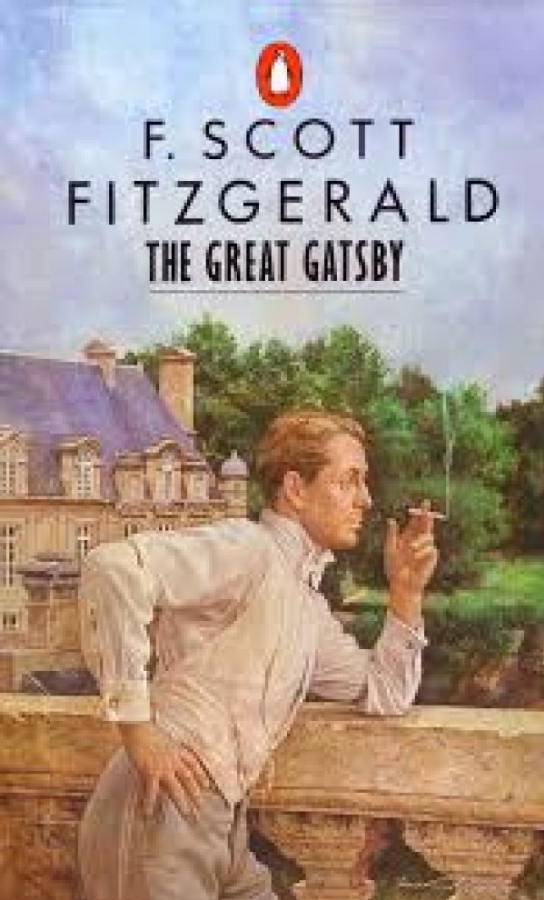
The Great Gatsby
As I set out to read this novel, my mind raced at once to another great book: *Reading Lolita in Tehran* by Azar Nafisi. The author imagines *The Great Gatsby* being put on trial; it stands accused of being the emblematic expression of bourgeois society, of a vacuous and amoral world in which all that matters is self-fulfillment. Over the course of the imaginary trial, one comes to understand that the true theme of Fitzgerald’s novel is entirely different: it speaks of the failure of a dream. Nafisi writes: > dreams.... they are perfect, ideal, complete in themselves. How can you impose them on a constantly changing, imperfect, and incomplete reality? (...) Gatsby wanted to fulfill a dream by retracing the past, and in the end he discovered that the past was dead, the present a disgrace, and there was no future. Was this not similar to our revolution, which had imposed itself in the name of our collective past and destroyed our lives in the name of a dream? These are considerations that would lead us far afield; it is better to turn to the narrative itself. In the rampant New York society of the 1920s, a young man mysteriously appears: seemingly wealthy, he lives in a splendid mansion where he hosts magnificent, crowded receptions; his conversation and his manners are exquisite and formal, so much so that he is thought to have studied at Oxford. Who is he? Where does he come from? What is the source of so much wealth? The most disparate, fantastical rumors spread about him, all imbued with a suspicious fascination with his past. Only the young Nick, the narrator of the great Gatsby’s story, grows fond of the man, because > it was an extraordinary gift for hope, a readiness for love, such as I had never found in any other person and likely never will . One arrives at an acquaintance with Gatsby leisurely, during a party that, in the sum of its constituent elements (narrative pace, dialogue, situations, characters), recalls the volume *The Guermantes Way* from Proust’s masterpiece, *In Search of Lost Time*; but when we suddenly meet Gatsby, the prevailing mediocrity vanishes in an instant. > He smiled understandingly. (...) It was one of those rare smiles that possess a quality of eternal reassurance. (...) It faced, or seemed to face, the whole eternal world for an instant, and then concentrated on you with an irresistible benevolence toward you. It understood you as you wished to be understood, believed in you as you would have liked to believe in yourself. Could the true theme of the novel not be a great friendship—that between Nick and Gatsby? Slowly the story unfolds. Gatsby once had a love affair with Daisy; he left her to fight in the Great War, and also because he was poor and knew he could not aspire to a wealthy young woman. He returned after five years, determined to find his old love again; he is convinced he can win her back, not least because he now has the money to do so. > No amount of fire or ice can challenge what a man has kept hidden in the mysteries of his own heart . Nick’s words, filtered through affection and imagination, lead us to the encounter between Gatsby and Daisy. > He knew that when he kissed this girl, and forever bound his unswerving visions to Daisy’s perishable breath, his soul would never again waver like the mind of God. So he waited, (...) then kissed her. At the touch of his lips she blossomed for him like a flower and the union was complete. (...) I was reminded of something, an elusive rhythm, a fragment of whispers heard somewhere long ago. For a moment a phrase tried to take shape and my lips parted like a mute’s, as though there were no more breath in them than a startled wisp of air. But they made no sound, and what I had almost remembered was incommunicable forever . Such romantic love cannot have a happy ending! Daisy is a shallow young woman; after viewing Gatsby’s vast wardrobe, she begins to weep bitterly: > they are such magnificent shirts, (...) I’ve never seen such beautiful ones before . Gatsby must pay > a high price for living too long with a single dream . He is killed in his garden: > a new world, material without being real, where poor ghosts, breathing dreams like air, drifted aimlessly about... like those white, fantastic figures gliding toward him through formless trees . To understand the great Gatsby, one must begin with the narrator. In his “more vulnerable years,” the young Nick received this advice from his father: > whenever you feel like criticizing anyone, remember that not everyone has had the advantages that you’ve had . Nick interpreted this guidance as a reason to avoid passing judgment, to be merely a spectator; yet he is, in fact, an impassioned young man in search of an ideal; and thus the great Gatsby is the personification of the dream of a young man, reserved by nature, visionary in heart. Through the great Gatsby, he elevates himself above mediocrity, committing himself to the very end in a bond with someone and something. The great Gatsby is a myth, he is the future, he is what we long to be. If the great Gatsby is the product of Nick’s imagination, it is only fitting that the narrative should not be a mere chronicle, but rather rest upon an evanescent, unreal, evocative prose. The plot is mundane, the dialogues are elegant yet often predictable, the characters are stereotypes, serving solely to throw Gatsby into relief. Why, then, such fascination? What captivates us in reading, what leads us into the mysteries of our own hearts and allows us to dream, is the narrative style, the words, the architecture of the sentences: a literary masterpiece. Why read it? Splendid!
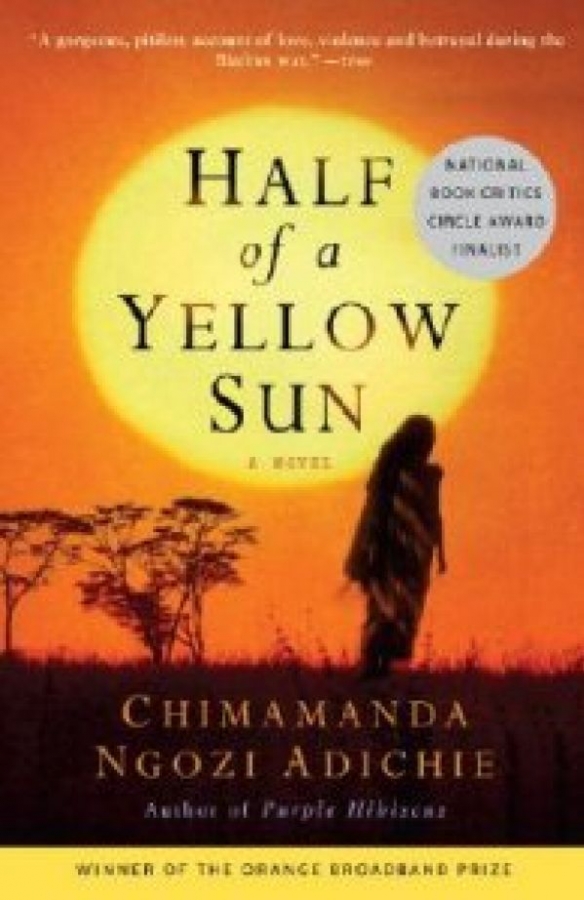
Half of a yellow sun
The book is set in Nigeria between 1960 and 1970 and is divided into two parts: the early 1960s in a Nigeria newly emerged from British colonial rule, marked by an apparent social tranquility; the late 1960s in Biafra (in southeastern Nigeria), where the predominantly Catholic Igbo fought an ill-fated war of independence against northern Nigeria, dominated by other ethnic groups that were predominantly Muslim. The narrative opens with the arrival of one of the protagonists, Ugwu, at the home of Odenigbo, a mathematics professor harboring fiery revolutionary ideas, anti-Western sentiments, and an impassioned defense of African identity. Ugwu is still a boy, yet he displays a keen intellectual ambition and deep devotion to his master. Two sisters then enter the scene, Olanna and Kainene, daughters of a wealthy and powerful family, strikingly different from one another: the former gorgeous, educated, and irremediably in love with Odenigbo, captivated by his intellect and culture; the latter pragmatic and entrepreneurial, who soon falls in love with Richard, a young Englishman who has arrived in Nigeria to write a book on African society. The novel is skillfully constructed around the impact of dramatic events (war, violence, and famine) on the relationships among the various characters and on their struggle to survive and salvage a sense of normalcy in their lives. The first part of the novel frames the characters' experiences within a society intensely stratified in social terms and still dominated by British culture. The two sisters, educated in London, react differently to the corruption of their milieu. Olanna moves in with Odenigbo into the academic world, brimming with ideals and often inconclusive debates about the country's future and its independence from the Western world. Kainene, on the other hand, embraces the rules of the business world, embarking on an entrepreneurial career with cynical boldness. A severe rift opens between the two sisters. Olanna discovers that Odenigbo has slept with another woman, fathering a daughter with her, and out of fury has a brief affair with Richard. The estrangement between the sisters is subsequently accompanied by Olanna's decision—both incomprehensible and courageous—to adopt the child born of the union between her husband and the other woman. The second part of the novel follows the protagonists amidst a war that grows more cruel and violent with each passing day. Gradually, poverty and destitution take hold, family structures shatter, the baseline of respect that ought to govern human relations dissolves, and everything—even body and soul—becomes currency for sheer survival. The protagonists themselves take part in episodes of extreme violence: Olanna is caught in a massacre, narrowly escaping only to discover during her flight that a woman is carrying her own daughter's severed head; Ugwu, conscripted into the army, is drawn into a gang rape; Odenigbo collapses psychologically, turning to alcohol and betraying his wife. Kainene and Richard, who seem more insulated from the terror of the war, watch powerlessly as one of their servants is slaughtered: the decapitated body stumbles forward before collapsing to the ground. The protagonists do not truly live; rather, life sweeps them along, and in the end they find themselves as though > in a candlelit room, where things are seen in shadow, only by half-glimmers of light . It is difficult to summarize the events of the book's second half, as the narrative often seems to lose its central thread, fracturing into distinct episodes and a multitude of characters. What remains striking, however, is the contrast between the dramatic gravity of the events and the serenity of the narration. It is as though the protagonists were moving through a dream, a nightmare from which they are certain they will awaken, returning to the world that dissolved with the war. The violence that engulfed them leads them to repress the horrific episodes they experienced, driving them to forgive even transgressions, mutual betrayals, abandonments, and acts of cowardice. “There are some things that are so unforgivable that they make other things easily forgivable.” Bonds are formed that shatter traditional social stratifications, such as the deep friendship between Olanna and Ugwu. Certainties dissolve, as do Odenigbo's; new allegiances are forged, such as Richard's devotion to the Igbo people; the struggle persists through entrepreneurial drive placed at the service of the community, as in the case of Kainene, who meets her death trying to secure vital food and medicine for her refugee camp. This sense of impermanence, of incredulity, stems not so much from the plot and dialogue as from the prose itself—never overwrought or emphatic, but consistently quiet, composed, and measured. The author's gaze is fundamentally introspective, reflecting how the protagonists witness and experience external events. In this light, the tragedy of Biafra becomes a universal one, which could be set anywhere people are overtaken by war and violence: Bosnia, Rwanda, and today the Horn of Africa and Pakistan. Can one remain oneself in the face of collective catastrophe? The novel offers no simple affirmative answer, but points instead to the resilience of each individual and the conditions in which each must endure the tragedy. Despite its length, the book is a deeply compelling read, both for its prose style and the emotional depth it explores: there is no forced psychological inquiry or striving for dramatic effect; the author simply describes, leaving it to the words, the characters, and the events to convey the tragedy of an entire people. A certain fragmentation nonetheless emerges, stemming from the overlapping of events and characters. Why read it? Because it depicts a tragedy that could unfold anywhere in the world: it portrays how easily one can be consumed by violence.
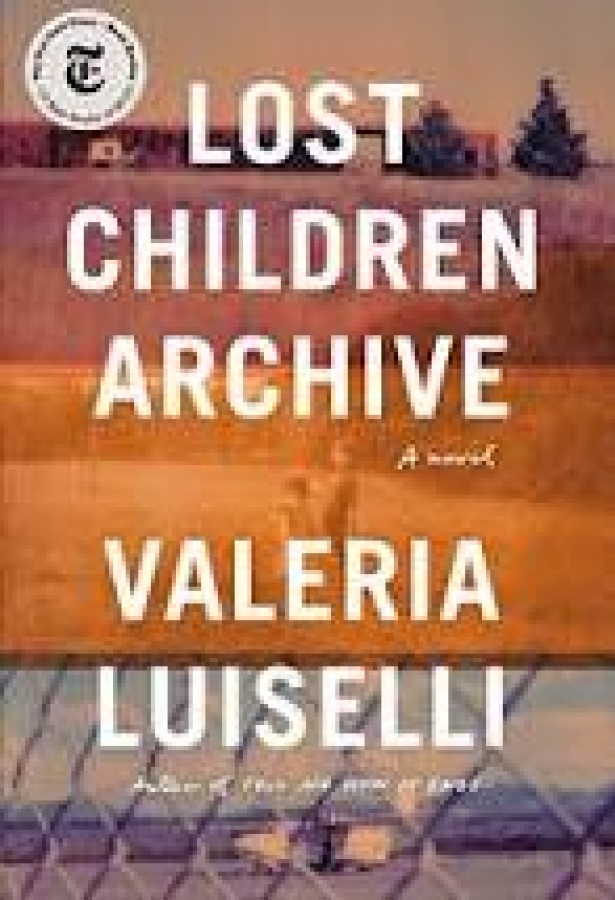
Lost Children Archive
There are books that overwhelm the poor reader with their narrative and stylistic complexity; one feels inadequate and wanders through the pages, fascinated and frightened, without finding the unraveling thread. And then one discovers, or believes one discovers, the path charted by the talented Valeria Luiselli, a Mexican writer writing in English. How can we ensure that the voices of the world do not become mere echoes of background noise? > Memory / day by day disappears / the heart grows ever deafer / to distant, wretched plights (Carlo Vallini, *«Da un giorno»*). The author seems to find the answer in children: in the stories of those who are lost and in the journeys of those who courageously retrace the experience of disappearance. If in Torquato Tasso’s *Gerusalemme Liberata* it is knights who set out in search of the holy sepulchre, of truth and light (see review on this site), here it is children, like the “Eagle Warriors” (Native American child warriors), who venture into a tunnel, fearful yet determined. > Children used to play in this tunnel, they held their breath as the train rushed toward darkness, they allowed themselves to breathe again only once the train car had crossed the entrance vault, returning into the light, and the valley opened wide again, like a terrifying and blinding flower, before their eyes . In the first part, a journalist is the first-person narrator: mother of a four-year-old girl, she is married to a researcher specialized in collecting and archiving the sounds of the city; he is, in turn, the father of a 10-year-old boy. It is a marriage in crisis: love has cooled, and above all the differing interests of the two partners have emerged—the man a dreamer, ever distant in his thoughts; she, instead, practical, attentive to the care of the children and to what is unfolding in society. The husband decides to embark on a journey toward the American South in search of traces of the Apaches; the choice is grudgingly accepted by the journalist, who ultimately agrees to it because she wishes to gather information and testimonies about the “lost children”: having entered undocumented and locked in detention centers awaiting repatriation, all trace of these children is lost. Confined to the cabin of a car, the four travel together the many miles between New York and the South, > looking out the windows at a landscape wounded by decades or perhaps centuries of systematic agricultural aggression: land dissected into quadrangular grids, gang-raped by heavy machinery, fattened with modified seeds and drenched in pesticides, (...) land caged within circles of green crop strips, resembling Dante's Inferno; (...) and land turned into non-land, under the weight of concrete, solar panels, storage tanks, enormous wind turbines... At first, the children are helpless spectators to the crumbling of the marriage and everything happening around them; then, slowly, > our rational, linear, and organized world dissolves in the chaos of our children's words, (...) their thoughts are filling our world... (...) I understand now, perhaps too late, that my children's repetitive games in the back seats were perhaps the only way to really narrate the story of the lost children . The turning point comes from the sight of the young migrants boarding, all in a mournful line, the plane that will take them back to their country of origin. The older boy, imbued with his mother’s civic passion and captivated by his father’s evocation of Echo Canyon, where the voices of the last Apaches dispersed, decided to go in search of the lost children. He sets off, backpack in hand, together with his little sister. At this point, the narrative structure and the writing change. The boy becomes the narrator of this adventure while the story of seven children in search of their families unfolds in the third person: these are the “Lost Children Elegies”: a series of fragments that elevate one of the tragedies of our time into song, recalling David Grossman’s poem in their intensity and evocative power (*Falling Out of Time: A Novel in Voices*, reviewed on this site). If in the first part the style is linear, almost essayistic, it becomes increasingly lyrical, relying on words rather than syntax, lending force to a rhythm so pressing and relentless as to leave the reader’s conscience defenseless. The two stories converge in the desert, in a makeshift shelter, and the children, now together, can tell each other their adventures: the “lost” children can leave a testimony of themselves. By a stroke of fortune, the two runaways manage to find Echo Canyon, and by shouting their names they are heard by their parents. Our children are saved, while the young migrants disappear into the desert, and only their little skeletons will speak of their fate, one day. The happy ending confirms how even the courage of children is futile. After photographing the seven young migrants, > I was looking at them, concentrating hard, when you suddenly came up with an intuition, which was true and smart but also terrifying. You said: look, everyone in this picture is disappearing . And then the echoes are merely incomprehensible words, merely noises, > so strange that I didn't know if they were in my mind or in the air, (...) and I wondered if we were listening to the sound of all the dead in the desert, of all the bones scattered there . “The world is broken,” the author synthesizes. > No one is capable of capturing what is happening and saying why. Perhaps it is just that we sense the absence of a future, because the present has become too oppressive, so the future has become unimaginable. And without a future, time is perceived only as an accumulation. An accumulation of months, days, natural disasters, television series, terrorist attacks, divorces, mass migrations, births, photographs, sunrises . All that is left for us is to > record the sound of the wind, (...) trying to capture their past presence, make it audible, despite their absence today, archiving whatever echo still reverberates of them. (...) Echoes of the echo: mem, mem, mem, mem, wa, wa, wa...cow, horse...bzzzzz, bee buzzing... “As the poet says,” and imagine the boundless number / of perturbed open permutations (like a limitless / lyricist, in an unstable / Scrabble-like kaleidoscope), which thus multiplies us” (Edoardo Sanguineti from “*Senza titolo Glosse 15* > ). It is impossible to express the kaleidoscopic beauty of Luiselli's writing: the richness of the vocabulary, the shimmering style, shifting from traditional prose to sentences unburdened by periods, the continuous and innovative experimentation, the intense engagement of language with the subject narrated, never approached in a bureaucratic or prosaically literary way. It is a masterpiece! We urge the reader to read and reread the Fifth Elegy, magnificent and powerfully evocative, as well as the telephone game of the lost children,” the desperate nostalgia: a page that takes our breath away, to be savored in apnea. Why read it? A masterpiece.

Matterhorn
The novel is set in Vietnam and recounts the dramatic ordeal of a company of the American military, forced first to garrison an outpost in the middle of the jungle, then to abandon it when deemed useless by military command, and finally to retake it in a bloody battle. Matterhorn is a mountain, a circumscribed territory, a microcosm that allows the author (a highly decorated former Marine) to narrate the absurdity of war and the perverse mechanisms that sustain it. And he does so from the perspective of the soldiers, all very young. In war, a soldier is nothing but > the ash of a cruel game... nothing more than a collection of empty events that will end up as a faded photograph above his parents' mantelpiece. They too will die, and relatives who do not know whose photograph it was will throw it away . In war > the people one loves will die to give meaning and life to what was always thought to be senseless words, a language of death . The novel is structured in three parts, which can also be interpreted as a kind of military life path of a young man, still a student: from his initiation as an officer to his forging in the epic struggle against the enemy, down to existential despair and the loss of the only bond that holds value in war: friendship. Mellas is a nineteen-year-old officer who, as dictated by an absurd military tradition, is sent to the front despite his inexperience. Mellas must make decisive choices for his own survival and that of the soldiers entrusted to him. They move through a hostile environment, amid fog, jungle, aggressive insects, and ferocious beasts. The enemy is invisible, and one often fires without knowing whether anyone is truly there or if a target has been hit. Yet the young officer is never alone, for the commanders—comfortably safe, drinking and smoking—hound him over the radio, demanding his position, the enemy body count (often fabricated to pacify them), and the reasons why he does not act with greater resolve. > Already weary from lack of sleep, Mellas was now fighting the physical exhaustion of hacking a path through almost impenetrable brush, climbing muddy slopes to gain a ridgeline, to search for a path, a trail. He was drenched in both sweat and rain. Strain, Weight, Flies, Cuts. Vegetation. He no longer cared where they were or why.... (still) three hundred and ninety-nine days and then stand up and walk away . Yet Mellas, too, is seized by ambition, by the desire to advance his career. He volunteers to go on patrol with a few soldiers. Deep within the dense tropical forest, they finally encounter a Viet Cong fighter, who is mortally wounded. He is a young man, just like him and his comrades. Terrified, he begs for help, but Mellas knows that the only real mercy would be to kill him rather than leave him as prey for the tigers. He cannot bring himself to do it and returns to the outpost in tears. He cannot accept that this is what war is, and > in doing so he opened himself up to the pain of seeing thrown away the bonds tying those slain enemies to those who loved them: mothers, sisters, friends, and wives. Command has decided that the company must abandon the outpost and reach another location as quickly as possible, still deep in the jungle. And the Marines are forced into an exhausting march, dragging behind them the wounded and even the corpses of fallen soldiers—one mauled by a tiger, another killed by a strain of malaria found only in that specific region of Vietnam. Because they failed to reach this new outpost—every bit as useless as the last—within the allotted time, the company is designated as an emergency reserve for the front’s most precarious sectors. Mellas wants to protest such an unjust decision, but his friend Hawke reminds him that one must play politics—not for one's own sake, since they are merely reserve officers after all, but because command, out of spite, might withhold the helicopters needed to resupply companies at the front and evacuate the wounded and the dead. The helicopter is a weapon of blackmail! In the novel's second part, Mellas's company is sent to retake Matterhorn, now occupied by the enemy. Military command does not know how many Vietnamese there are, but it does not matter. A heroic feat must be performed to cast the regiment’s senior officers in a favorable light and advance their careers. The company finds itself embroiled in a horrific battle. It is an epic narrative, a kind of *Iliad*, complete with its heroes and martial episodes. What drives the American soldiers is certainly no ideal (why are we here? the soldiers ask themselves; does Vietnam have gold, oil, or some other raw material?). What moves them to extraordinary acts of valor is brotherhood and rage: saving their comrades, recovering the wounded or at least the dead; fighting with the conviction that their true enemies are the very men who led them into this butchery. And then there is the taste of killing for killing's sake. Tension and fear forge a bond between enemies, who are as if bound together in a web of violence and death. In the third part of the story, Mellas is wounded in combat and consequently sent to convalesce. Yet upon his return, he discovers that during the lull, the company has been gripped by the racial strife between whites and blacks that plagues American society—a conflict that had temporarily vanished during combat operations. The solidarity and friendship forged in combat merely suspend social and racial rivalries. War is not a moment of genuine change; it only habituates one to violence. Indeed, his friend Hawke is killed in an attack orchestrated by a faction affiliated with the Black brothers. Nothing truly changes; they are merely shadows, > moving through this landscape of mountains and valleys, changing the character of things as shadows move but leaving nothing changed when they leave. Only the shadows themselves can change . War triggers an individual transformation, not a collective one. It is undeniably a war book, one in which the epic element prevails. Yet it would be reductive to view this novel merely as an account of the Vietnam conflict, a sort of prose poem, a modern *Iliad*. It is not merely that. It is an indictment of war. Narrating it from such a circumscribed space—Matterhorn and its surrounding territory—already allows the reader to enter the mundane yet tragic reality of individual men's experience, shedding the overarching, particularizing frame of the Vietnam conflict. It speaks of war—of any war. Then there is the figure of Mellas, undoubtedly autobiographical. The young man refuses to accept the inexorable laws of military life and war. Yet he rejects them not out of nostalgia for civilian life, which for him, as for the others, is already considered forfeit. He refuses to accept the futility of the decisions, the gratuitous suffering inflicted upon the soldiers, and the killing of enemies—unknown to him, yet fellow human beings with lives back home, young men who also had a future. It is the chronicle of the tragedy of all wars. The book is very long, meticulously detailed, and at times slips into reportage. By the end, one grows somewhat weary of so much slaughter. Yet this is perhaps the author's very intent: to sicken us with war. Why read it? It is a magnificent war book.
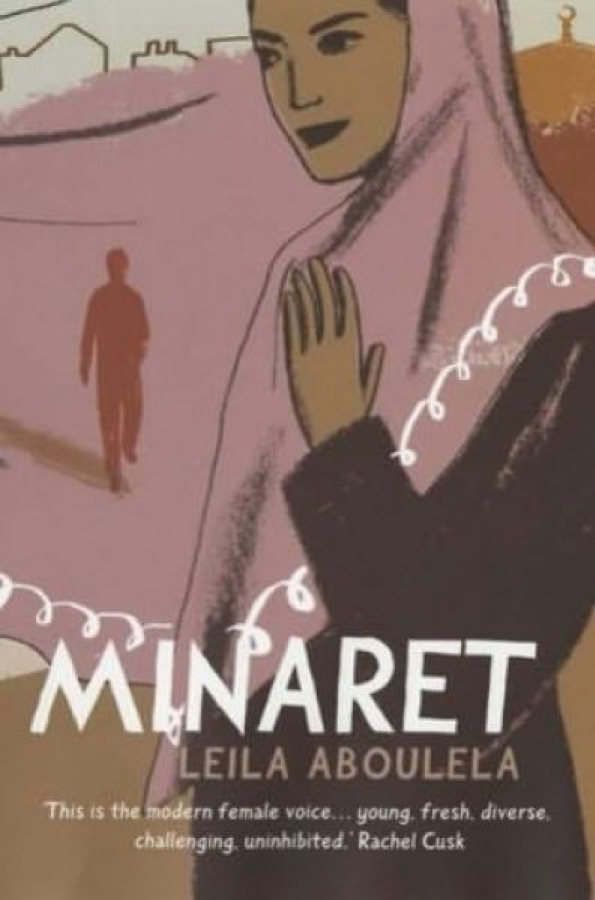
Minaret
Najwa is a Sudanese young woman, the daughter of a wealthy and influential family. Following a coup d'état in which her father is imprisoned and sentenced to death, Najwa moves to England with her mother and brother. Here, her life changes radically: her mother dies, her brother is convicted of drug use, and she is forced to work as a maid for wealthy London families, mostly of Arab descent. She crosses paths again with a Sudanese friend with whom she had had a flirtation in her youth, one she had ended because of his accusations regarding her father's corruption. It is a fraught and contradictory relationship: the young man often proves selfish, self-centered, possessive, yet at the same time fragile, while continuing to voice criticism of Najwa's father. In the wake of her mother's death, Najwa is drawn to the mosque community and begins to pay closer attention to Islam, which evolves into a profound faith as her relationship with her partner unravels. Moreover, faith also offers a way to reclaim her roots—no longer national, but religious. Years pass, and Najwa goes to work for a wealthy Egyptian family, where she begins a relationship with a young student, who is likewise steeped in religious ideas. Yet by now the social divide is insurmountable, and their relationship ends the moment it is discovered. The book operates on two levels. The first, and more superficial, is tied to the Muslim milieu. The quest for roots through religion is an ever-present theme, though one left largely unexplored, both in terms of analyzing the underlying motivations for the protagonist's ideological evolution (from a largely indifferent background to deep religiosity) and in the depiction of the mosque community. The second, far more substantial level concerns Najwa's personal plight: her loneliness, her attachment to her family, her yearning to recapture—if only vicariously—the tranquil world of her childhood, and ultimately her ill-fated encounters with men. Najwa's fragility and her desires are ultimately transcended through the very serenity granted by her rediscovered faith. This enables her to take the most painful and difficult step: giving the young student's mother the "key" to persuade him to leave Najwa. > She does not know, she does not know that he has his own frustrations and ideas of the world. She does not know that he is not an extension of her. I tell her. And by telling her I lose him. I give the key into her hands . In this way, Najwa forfeits the hope of a romantic and family life of her own, resigning herself to a vicarious existence, like a nun or an elderly aunt. The novel thus chronicles Najwa's inner evolution from the carefree days of adolescence through life's disillusionments to a restored inner balance—one fostered by faith, but above all by a growing awareness of solitude as a deliberate choice. It is beautifully written in a lucid style, devoid of rhetoric yet felicitously expressive. It is somewhat reminiscent of Nadine Gordimer, albeit less dense and complex.
Morning in Jenin (every morning in Jenin)
"I wonder: is there, in the listener, / a place where my voice may rest? / A harpoon, / tiny and concealed, / to hold memory fast before it scatters." (from Francesca Mannocchi, “The Harpoon of Memory,” from the collection *Crescere, La Guerra*, 2026). Is it possible to anchor ourselves to something within, so as not to forget "the particles of blood-soaked dust and the sickly-sweet smell of decay exhaled by unravelling lives and desertified soils"? Is it right to "live within the serene depths of the sea, where cries and weapons cannot be heard, and the stench of death does not reach"? Amal, the protagonist, lives between these two sides of consciousness: a dilemma not of her choosing, yet one that ensnares her entire life. She was born into a happy family, in a Palestine glowing with olive trees and vibrant hues: an ancient society that weathered the various empires that dominated it, forever anchoring itself to the land, its genealogies, and its sweet, centuries-old narratives. "Amal with the long vowel means hopes, dreams, (...) we place all our hopes in you." So her father told her when Amal was still a child, but he added: "we come from the land, we give our love and toil for it, and it feeds us in return. When we die, we return to the land. In a sense, it owns us. Palestine owns us and we belong to it." Amal's life is punctuated by the tragic milestones of post-WWII Palestinian history: the Nakba (the catastrophe) of 1948, with the forced exodus of 700,000 Palestinians and the Jenin refugee camp, where up to 50,000 people were interned, and where Amal’s family was forced to live in the narrative; the Sabra and Shatila massacre of 1982, when several thousand Palestinians were slaughtered by Lebanese Phalangists under the compliant gaze of the Israelis, and where Amal lost her husband and her brother's family; the Second Intifada in 2002, when Israeli troops assaulted Jenin, massacring hundreds of civilians, and where Amal met her death. After the Nakba, Amal had the opportunity to go to the United States on a scholarship, resigning herself to being called "'Amy', Amal without the hope, (...) a word drained of all meaning. A woman hollowed out of her past." In her heart dwell the profound sentiments of longing and abandonment: longing for "the sun that embraced everything it touched while the sumptuous aroma of lamb and cumin dispelled anguish, (...) the air filled with joyous sounds from people drunk on the fruit of trees that had survived across centuries, piercing the fog of exile"; abandonment, through the estrangement from her brother Yousef and her childhood friend Huba, the inability to understand why her mother had never embraced her as other mothers did, and the yearning to see her missing father once more: "I closed my eyes and kept them that way for as long as I could, opening them only as much as was necessary to banish the images from my mind." Amal returns to Palestine, reunites with her brother, and reclaims the familiar sights, sounds, and colors of her people. She falls in love with Majid, marries him, and becomes pregnant. Everything is suffused with Love and a serene anticipation. This is mere months before the 1982 massacre, preceded by the Israeli army's siege of Beirut. As an American citizen, Amal can return to the United States, while her husband remains behind in Lebanon to lend his medical skills to hospitals in critical need; and it is there that Majid meets his death. Amal, once again "Amy," gives birth to a daughter. The Palestinian tragedy recedes once more into memory, yet it seeps deep into Amal's heart, barring her from bestowing Love upon her child. "God forgive me, the more she grew, the more I feared being close to her, touching her. I was afraid of passing on to her my icy hardness, that my touch might have hardened her, that it would be the wrong complement to her soft, unconditional tenderness. So, I fulfilled the duties of motherhood, containing the ardor of my love behind the cold walls of fear and long hours of work." Only a feminine sensibility could grasp the sheer depth of pain inflicted upon a refugee's heart by the loss of what is gone: one's homeland, one's culture, and one's loved ones. It is no coincidence that the author titles the final section *Nihaya* and *Bidaya*, with the seemingly contradictory subtitle "an end and a beginning." In Arabic, *Nihaya* means "end," and Amal knows that in returning to Jenin in 2002 she is going to meet her death, for this is her destiny, foretold by her father. *Bidaya* in Arabic means "the beginning of a story." During the Israeli siege of Jenin, "I kept my daughter sheltered in a dream entirely my own, falling in love with her as though I had just given birth to her anew. We spoke for nine days, dismantling the unspoken words of a lifetime. As death rained from the sky and bullets struck the outer walls of the house, Sara and I laid bare the grief and bitterness each of us held so dear, finding our shared sorrow for Majid despite, or perhaps because of, the terror we felt." And so, as the poet sang: "if in the twilight of memory we / should meet once more, / we shall speak together again / and you shall sing / to me a deeper song. / And if our hands should meet / in another dream, we / shall build another tower in the sky." The writer has struck a difficult balance between Grand History and the "small" stories of the human beings who are simultaneously its protagonists and its victims. We traverse the tragic fate of the Palestinian people, horrified and at once embarrassed as Europeans. The author does not shrink when forced to delve into the horrors of persecution; she does so almost like a historian, albeit an engaged one, and when she fears losing composure, she relies on the pen of a great journalist like Robert Fisk, who penned monumental reportage in his *Pity the Nation* (*The Martyrdom of a Nation*). Beside the dramatic events of "Grand History" lies the world of emotion: on one hand, that which is universal and eternal (such as the bond between mother and daughter); on the other, how such emotions are shattered by events unfolding beyond the pale of fundamental human relationships. Horror induces indifference in those who can keep their distance; for those trapped within it, however, grief leads to emotional desiccation, to a feeling of incapacity to bestow Love, to the dread of passing on one's own barrenness—the necessary armor—to someone untainted by it. And yet, one cannot withhold the truth from those one loves, for sparing the beloved means betraying them. In the relationship between Amal and Sara, one senses the author's own fraught experience, confronted with the dilemma of whether to shelter her daughter or make her part of her people's destiny. Within such an intense narrative, the father's friendship with an Israeli and Amal's reunion with her brother—abducted as a young boy and adopted by a Jewish family—feel redundant. Did the author wish to grant humanity to the "enemy"? Eighty years of war have inflicted suffering upon the Israeli people as well: one need only think of David Grossman's *To the End of the Land* (see the review on this site), but let each people bear the duty of mourning their own fate. The prose reflects the balance of the narrative. Shifting deftly from passages of intense lyricism to analyses of remarkable psychological depth, the language is rich in cadence, interweaving the musicality of Arabic with the resonance of English. The lexicon is played like a piano keyboard, with a harmonious and evocative command of words, particularly verbs—words consistently woven into elegant, fluid grammatical structures. It would be fascinating to know the linguistic gestation of this novel, especially considering the author's scientific background and how she came to write this book spurred by a surge of indignation—a cry that lends vigor to the entire narrative. If one truly feels something within, one can become a great writer without being one by profession. It is a welcome sign of hope, and a lesson for many Western—and Italian—authors! Why read it? It is a masterpiece, a stinging slap in the face to our timid and hypocritical selves.

One of us and Home, sweet home
These are two short stories which, as is customary for Fante, are set within the milieu of the typical Italian family. In the first story, a telegram arrives announcing the death of a cousin, a boy who had been a childhood playmate of Mike, one of the family’s many brothers. A deeply humorous scene unfolds: while the mother weeps for the grief of her sister, who has lost a son, the boys fight over the telegram to the point of tearing it to pieces, thereby opening a dispute over how the cousin died and when the funeral will be held. The scene shifts to the funeral, attended by the mother, Mike, and his younger brother, the narrator. What strikes the boys is that the uncle does not weep for the death of his son, whereas all the relatives, particularly the women, unleash a flurry of wailing and shrieks. Mike, in particular, is afraid to approach his uncle, fearing that his resemblance to the dead cousin might make him the target of resentment. Yet it is precisely the sight of Mike—of what his own son might have been—that breaches the solitude of grief and moves the uncle to tears: > they sat there. Mike greedily sipped a milkshake, and Uncle Frank sat opposite him, his face in his hands, large tears sliding down his cheeks and dropping onto the table as he watched Mike and his milkshake . In the second story, Jimmy returns to his parents' home, which he had left after a stormy quarrel with his father. Once again, the portrait of a classic Italian family emerges: the mother has prepared a fine dinner with the sweets Jimmy loves, hoping that all will go well, without fights or arguments; the father pretends to have forgotten, unemployed, heading off to the tavern after dinner as he does every evening; the siblings greet their older brother enthusiastically, yet inevitably settle back into the everyday routine from which Jimmy now feels alienated. The conclusion cannot be otherwise: > I’ll get up and throw away the cigarette, and I’ll want to be with her (his girlfriend), not here, in this goddamned insignificant town forgotten by God . The stories, particularly the first, are very fine. The style is quintessentially Fante’s: elegant, tender, and effortlessly fluid.

Our Man in Havana
The novel is set in Cuba in the period immediately preceding the revolution. The protagonist, a vacuum cleaner salesman (business is bad) and a widower with a fourteen-year-old daughter, is recruited by British intelligence as an agent in Havana. Enticed by the money, the protagonist fabricates a fictitious network of spies and invents a stream of reports, which are, of course, utterly false. Given the importance his operation assumes, London dispatches two agents to support him, among whom is Beatrice, with whom the protagonist falls in love. The narrative unfolds around this paradoxical premise, satirizing the machinery of espionage. Even when unmasked, the protagonist will be offered a position within the organization, as admitting a mistake is out of the question and, in any case, some grain of truth might still reside in the intelligence provided, blatantly fabricated though it is. Graham Greene himself placed this novel in the category of "entertainments," and this classification has undoubtedly influenced critics and readers in their interpretation of the book: a mockery of the world of espionage and an indictment, albeit framed as satire, of its tendency to distort reality (a remarkably timely subject). In truth, if one reads the novel outside this interpretive framework, other thematic layers emerge: the imaginary world forged by the protagonist (a web of spies and false reports) sets in motion a sequence of events, some of them tragic, that destroys the peace and the bonds of friendship that had defined his life. Furthermore, the latter acts by prioritizing familial devotion (providing his daughter with a prosperous future) over the demands of politics and the values of allegiance to one's country. What emerges is the contradiction between "genuine" values, formed by friendship and family ties, as opposed to "false" ones > , represented by a sense of belonging to abstract entities, such as the nation and ideologies. In the epilogue Beatrice, in truth the only genuinely positive character in the novel, explains to her superiors that even had she known, she would not have stopped the protagonist, because he was working for something important, not for someone's conviction about a global war that might never happen... and what does one's country mean anyway: a flag that someone invented two hundred years ago." The most significant limitation, which renders the label of "entertainment" appropriate, lies precisely in the figure of the protagonist, who seems not to realize what he has created, passively enduring events and leaving it to others to create and resolve problems. This is a passive attitude, which at times renders the novel monotonous and predictable. The style is highly effective, closely tied to dialogue, with a sentence structure displaying clear cinematic hallmarks: the English is classic.
The power and the glory
The novel is set in Mexico during the period of civil wars between 1911 and 1924, when various revolutionary governments pursued a vigorous anti-Catholic policy in open opposition to the Church of Rome. The protagonist is a priest, a «whisky priest», an alcoholic, father to a daughter he abandoned, a coward to the point of letting hostages who refused to betray him be condemned to death; in short, a «bad priest». Hunted for years by the police, he manages to cross the border, and once he is finally safe, he decides to return to Mexico to hear the confession of a dying murderer. He is subsequently captured and executed by firing squad: he dies like a saint, and the Church ultimately triumphs. Generally interpreted through a religious lens as a celebration of the superiority of faith and the Church’s capacity to continually rise again from persecution, the most compelling part of the novel lies in its depiction of the profound material and human squalor of a poor, wretched society in which—and to whose detriment—the protagonist’s ordeal unfolds. It is peasant, mestizo Mexico, composed of uneducated people endowed with great dignity and a religiosity so naive and deeply felt that they are willing to risk their lives to preserve it. The pages describing the priest’s arrival in the village where he was once parish priest and where he had a lover (if only for a single night) who bore him a daughter are deeply evocative. The villagers are afraid and urge him to leave, yet they shelter him, asking to confess and to attend Mass, even though the soldiers are only a few miles away. When the troops arrive, take a hostage, and interrogate the villagers, the priest hides and remains unbetrayed. In this circumstance, as in others, there emerges the stark contrast between the strength of the peasants’ feelings and the vacuity of the protagonist, who, the moment he resumes his sacerdotal role, instantly recovers the arrogance, smugness, and self-assurance of a man who knows he holds the conscience of the people in his hands. Far from being a novel celebrating the Church of Rome! Perhaps in spite of the author’s own intentions, what emerges with dramatic force is the desolation of a religion founded on hypocrisy and the manipulation of consciences. The novel seems almost a companion piece to Dostoevsky’s splendid dialogue between Christ and the Grand Inquisitor. The novel ought to have concluded at the end of the second part, when the priest finally finds a church and > si sedette improvvisamente sul prato intriso di pioggia e appoggiando la testa contro la parete bianca cadde addormentato, con la casa dietro le spalle. Il suo sogno fu pieno di suoni gioiosi . Instead, the author chose to provide a conclusion that exalted sacrifice, burdened with a long, tedious description of the capture, implausible conversations between the priest and a police officer, and a final celebration featuring the reappearance of another priest: utterly gratuitous chapters that severely compromise the quality of the book in terms of both content and narrative pacing. The style is characteristically Greene’s, structured across different episodes and undeniably evocative in its portrayal of atmosphere; as usual, however, the dialogue and the psychological introspection of the characters fall short of the vivid illustration of the setting.
Reading Lolita in Tehran
A very fine book, especially the first chapter, in which the writer achieves a density of prose and depth of concept reminiscent of Nadine Gordimer. The book is structured around four periods in the writer's life: each is in some way symbolized by four great authors of literature in English: Nabokov with *Lolita*, Fitzgerald with *The Great Gatsby*, James, and Austen. The narrative does not follow a chronological path. In the first chapter, the author has already left the university and established a reading group in her home. The young women, her former students, arrive at the gathering clad in veil and chador, rendered impersonal by the attire and posture they must adopt to walk the streets; they undress and thereby assume their true personalities. The character of Lolita, a twelve-year-old girl who becomes the lover of an older man, lies at the center of their conversation as a symbol of their existential condition, forced to behave and even think as men dictate. Alongside the literary theme, their personal stories emerge and their interpersonal relationships intertwine, forged of rivalries but also of profound understanding and tenderness. The synthesis of this chapter, and of the entire book, is encapsulated in a profound phrase: "not to be a fragment of someone else's imagination." Lolita possesses no personality of her own; rather, she is forged by the old man, who desires her precisely because he can mold her to his will. In much the same way, Iranian women are expected to conform to the dictates of religious society, unable to genuinely express their individuality or live their own lives. And so literature is not "a luxury, but a necessity"; the realm of the imagination allows one to reclaim the freedom that society seeks to suppress. At this point, the writer introduces the theme of beauty, emphasizing how the younger generations are indifferent to ideology and political stances. > I still find it in the letters from my students when, despite their fears and anxieties about a future without work or security and a fragile, uncertain present, they write about their search for beauty . > I think that somehow our readings and discussions of novels in that class became our respite, our link to another world of tenderness, brilliance, and beauty . In the second chapter, the context is the revolutionary phase, during which it is unclear who will take power, the clerics or the leftist forces. It is thus a transitional phase, yet one characterized by a conviction shared by fundamentalists and leftist revolutionaries alike: individual liberties and the role of women must be subordinated to a massifying ideology. The writer's critique is therefore directed at the Left, which fails to grasp the importance of civil rights and reasons, in effect, no differently than the religious factions. The most interesting episode, from a narrative standpoint as well, is the trial of *The Great Gatsby*, singled out by some as an emblematic figure of Western individualism. The dynamic of the trial sets in motion a dialectic within the classroom, revealing more clearly that the true subject of Fitzgerald's novel is the dream of self-realization in a society that tends to homogenize the individual: > Dreams... are perfect ideals, complete in themselves. How can you impose them on a reality constantly changing, imperfect, and incomplete? You could become a Humbert, destroying the object of your dream: or a Gatsby, destroying yourself. When I left the class that day, I did not tell the students what I myself was beginning to discover: how similar our fate was to Gatsby’s. He wanted to fulfill a dream by retracing the past, and in the end he discovered that the past was dead, the present a shame, and there was no future. Was this not like our revolution, which had imposed itself in the name of our collective past and had destroyed our lives in the name of a dream? . The third chapter is set during the Iran–Iraq War. The revolution has by now firmly imposed itself, women's freedom has been eradicated, and the country lives suspended within a nightmare (the casualties, the bombings, etc. ), gripped by a fierce nationalism and without any hope that this war might come to an end. These are terrible years, in which one cannot help but retreat into feeling. The writer quotes a passage by James, the master of feminine ambiguity, > I cannot tell you not to grieve and not to rebel, writes James, because I have such an imagination of all things and because I am unable to tell you not to feel. To feel, I say, to feel for what is worth it, and even if it kills you, for this is the only way to live, especially living under this terrible pressure, and it is the only way to celebrate and honor this admirable being who is our pride and our inspiration . And the writer adds, > feeling creates empathy and reminds us that life is worth living . It is a profoundly feminine sentiment, harboring that solidarity based on care and relationships that underpins feminine thought. The fourth chapter returns to the context of the first. The war is over, and it becomes fully apparent that there is no genuine possibility of evolution within a regime structurally opposed to civil liberties and the feminine dimension. Nothing remains but flight into intimacy and exile abroad. In a world where religion has become ideology, there seems to be no room left for the individual dimension. In this sense, Austen is hated by the regime. > Austen's women, gentle and beautiful, are the rebels who say no to the choices of foolish mothers, incompetent fathers, and a rigid, orthodox society. They risk ostracism and poverty to win love and friendship (to assert the importance of love and understanding in marriage, and not the importance of marriage itself) in order to embrace that unattainable goal of democracy: the right to choose . Beyond Iranian society, the book addresses universal themes (freedom of choice, the primacy of affection over rigid dogmas, the power of literature and the imagination, etc. ) that can be traced back to the statement: not to be a fragment of someone else's imagination. Yet how is this possible in an increasingly oppressive and homogenizing society, even if ostensibly democratic? How can one defend oneself against the invasion of images, of clichéd commonplaces broadcast by television, of clamorous debates, and so on? It seems to me that the true perspective lies in the rediscovery of literature and culture in general—both as a return to the individual sphere and as a revival of the imagination, and thus as an instrument of resistance and redemption for tomorrow: thinking and feeling are, perhaps, the keystones to conceiving and ultimately realizing a better society.

The road to Los Angeles
It is the second book of the Bandini saga. While the first book still revolves around the theme of the Italian family, rendered in a realistic style lacking in evocative resonance, this novel effectively abandons ethnic and folkloric references to chronicle the coming of age of an eighteen-year-old youth who reads voraciously and lives primarily through imagination and fantasy. The Italian family context is indeed present (the deeply religious mother and sister, an uncle who expects his nephew to shoulder his responsibilities), yet Arturo’s experiences are fundamentally those of any young man his age, compelled to reconcile labor—often grueling and alienating—with his own aspirations and dreams. The book’s first theme is rage, the urge to rebel against an unjust society, frequently expressed through acts of violence (superb is the scene where Arturo slaughters crabs, imagining himself an ancient knight), through diatribes against the Catholic religion, and in allusions to the great nineteenth-century philosophers. The second theme is the erotic realm, the pursuit of a connection with women, which inevitably passes through pornographic magazines and the solitude of his room. Truly extraordinary from a stylistic standpoint is the chapter in which the author recounts Arturo’s destruction of the photographs of the women he loves! The final theme, and perhaps the most important, is that of imagination—the dreams and fantasies bound up with Arturo’s ambitions, with his desire to feel like a great writer. And it is precisely the disappointment resulting from the reading of his first story that drives Arturo to flee his family and journey toward Los Angeles, and thus toward his own independence and maturity. Fante abandons the cold, realistic style that had characterized the first book, moving toward increasingly intense expressions and syntactic constructions, rich in evocative power. To the meaning of the word are added increasingly rich and nuanced "signs," generated by rhythm, phonetics, and the deployment of adjectives, often heightened by neologisms.

Saturday
Henry is a neurosurgeon living in London with his wife, a lawyer, and two children: his son, a musician, and his daughter, a poet temporarily living in Paris. He wakes up one Saturday morning, watches an airplane make an emergency landing from his window, and imagines it to be an act of terrorism. Thus begins Saturday, a day shaped both by broader events (television news reports on the impending war in Iraq, the anti-war pacifist march, the aftermath of the plane's emergency landing) and private occurrences (his relationship with his wife, a squash match with a friend, a visit to his mother suffering from Alzheimer’s, attending his son's gig, preparing dinner for his daughter’s return and the arrival of his father-in-law, himself an eminent poet). The narrative unfolds within this contrast between the catastrophism of the external world and the quest for domestic peace, for a serene existence beyond the external turbulence. This attempt fails, and a minor car accident is enough to let violence and the unforeseen burst into intimate, family life. To avoid the peace march, Henry commits a traffic violation and collides with a car carrying a group of thugs, who attempt to assault the surgeon. Henry nevertheless manages to extricate himself from a perilous situation by destabilizing the thugs' ringleader, named Baxter, recognizing that he suffers from a severe neurodegenerative disorder. Baxter vows revenge for the humiliation and breaks into Henry's home just as the family is celebrating the arrival of the daughter and the grandfather, the renowned poet. Baxter threatens Henry’s wife and orders the young woman to strip: amid extreme tension, she recites lines of poetry, which mollify Baxter; he abandons his violent intent and is subsequently pushed down the stairs by Henry and his son. The novel concludes with Henry’s decision to operate on Baxter, who was gravely injured, followed by a series of existential reflections on the surgeon’s part: > all he feels is fear. He is weak and ignorant, frightened of the unpredictable consequences of an action that has slipped out of control and is generating new events, new consequences, until you are led to a place where you never dreamed of being and would never have chosen, a knife to your throat . The book revolves around deeply philosophical themes: human helplessness in the face of an increasingly inexplicable world, the impact of catastrophism on everyday life, the pursuit of domestic serenity, the fragility of the barriers separating the outside world from intimacy, the burden of heredity and a life beyond our control, and the role of affective bonds. Yet the narrative's most compelling theme is the clash between scientific culture—which strives to impose order and rationality—and literary culture, poetry in particular, which interprets the world through frameworks irreducible to scientific reason and, perhaps for this very reason, succeeds in grasping the innermost meaning of things and resolving crises. It is the poem recited by his daughter that draws Baxter out of his madness, not Henry’s logical reasoning. What, then, is the way out of a situation that can no longer be comprehended through the tenets of scientific rationality? One finds oneself at an impasse, encapsulated by the words of the poet Matthew Arnold: > ah, love, let us be true to one another! For the world, which seems to lie before us like a land of dreams, so various, so beautiful, so new. Hath really neither joy, nor light, nor love, nor certitude, nor peace, nor help for pain; and we are here as on a darkling plain, swept with confused alarms of struggle and flight, where ignorant armies clash by night . The clash between desire (the love that makes us see the world as a land of dreams) and reality, which appears to us only as a bearer of death—is this contradiction not resolvable solely through a rational approach? The heavy philosophical content and the multiplicity of themes do not serve the narrative pace or the cohesion of the discourse. It is, as usual, very well written, yet at times it leans too heavily into intellectualism, and the characters remain flattened within assigned roles that conform more to stereotypes than to any genuine depth of character.
Selected Short Stories
According to the introduction, the four stories encapsulate the author’s style and evolution. The first story revolves around a love of myth and beauty. In *The Last of the Valerii*, an Italian count has married a wealthy and beautiful American heiress, yet falls in love with a statue of Juno unearthed on his estate. The narrative is related by a character who seems to stand in for the author, watching with amusement, wonder, and keen interest as a living being falls in love with a statue. In *The Real Thing*, an artist who routinely works as a book illustrator is approached by a genteel couple fallen on hard times. They ask to serve as models for the artist, who initially agrees, but soon realizes that real life is one thing, and a figure in an artistic representation is quite another. The story is thus entirely constructed around the tension between real life and artistic expression, which is itself the offspring of the imagination. *The Lesson of the Master*, the least successful of the stories, takes duplicity as its subject. A young writer falls in love with a young woman, but is persuaded by an older writer to devote himself entirely to art: marriage or any strong romantic attachment are, after all, disruptive forces, compelling one to confront the prosaic nature of ordinary life. Upon returning from an extended journey to Italy, the young writer discovers that his “master” has married the young woman: it was all a ruse. Finally, the last story, *Daisy Miller*, is set in continental Europe, and specifically in Rome. Several of the author’s signature themes are present: Americans abroad; an independent yet naive young American woman; the corrupting Italian; and the smitten young lover. The settings are those of the upper middle class traveling abroad, and a Rome fraught with malarial fevers, however captivating in the remnants of a great civilization. The contrast between American society—uncouth yet wholesome—and European, particularly Italian, society—decadent yet the heir to a grand culture—is unmistakable. James’s style is invariably fascinating, at times convoluted, yet richly evocative. In particular, it is the descriptions of nature, cities, and settings that constitute the author’s greatest strength, whereas the dialogue often proves tedious and predictable.
Sugar (in Sugar and other stories)
This is a short story. The narrator’s father is admitted to a hospital in Amsterdam, where he has been diagnosed with prostate cancer, which will soon lead to his death. He is a taciturn and reserved man who opens up to his daughter, the narrator, speaking of the family and the grandfather. One of the themes is his wife’s habit of “telling lies”—that is, inventing family episodes. The narrator thus realizes that “much of my past could have been fabricated by my mother.” The theme of the story is the family myth: the capacity to mythologize, idealize, and imagine a familial memory, which subsequently exerts a decisive influence on the mental, psychological, and cultural development of descendants. > During those extreme weeks in Amsterdam I thought about origins. I thought around my grandfather. I also thought about certain origin myths I had pieced together as a child to explain things that were important, my sense of being from the north, the fear of art, the inevitability of the end . Mythological elaboration is the defining element of this memory, which does not photograph reality, is not history, but allows one to receive a world of values and sensations. The narrator imagines that her paternal family was like the pantheon of Norse gods, “wild, extravagant, harsh, sturdy, and terrifying,” and that > her mother’s lies were to sweeten and soften my father’s stormy, cold world . Invention in storytelling is a way to free ourselves from grief, from the barrenness of life, from the inexorable approach of death: > what is all this, this entire story I am telling you, if not a careful selection of things that can be spoken, that can be brought into the light of day? Alongside this construction stretch the dark shadows of unspoken things, because I do not want to, or do not dare to say them, or else I do not remember them, have misunderstood them, have forgotten them, or never knew them . If life is not what is real, but what is remembered and therefore narrated, then life is literature. It does not restore people to us: “none of these words can bring him back to us.” Only the myth and the story remain. A short story, yet one of profound depth, both philosophical and literary. The style is highly effective, constructed around an elaborate yet lucid syntax that makes reading it both pleasurable and effortless.
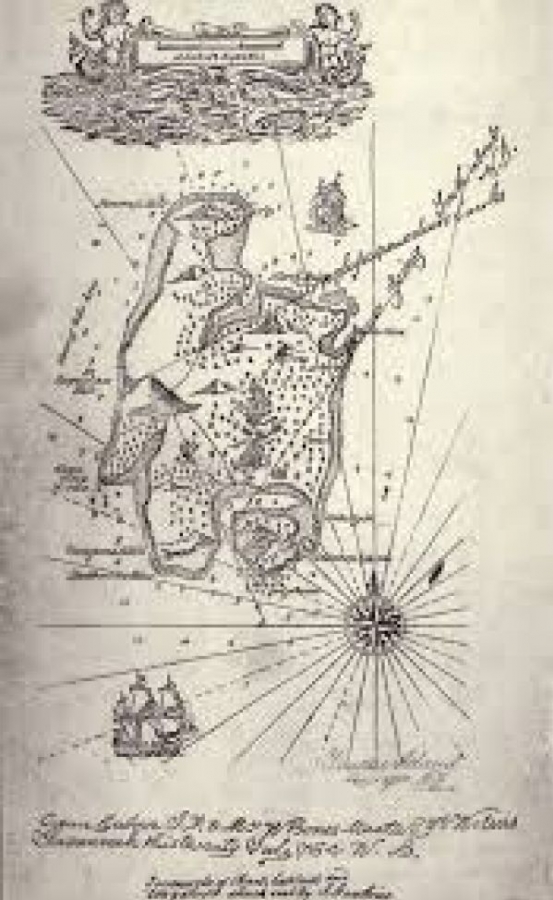
Treasure Island
In the introduction, Stevenson addresses a “hesitating purchaser”, inviting him to buy the book, > if sailor tales (told) to sailor tunes, storm, adventure, heat and cold, if schooners, islands, and maroons, and buccaneers and buried gold, and all the old romance, retold exactly in the ancient way, can please the wiser youngsters of today, as they pleased me when I was a boy . These words, whose charm in the English language is difficult to express in Italian, encapsulate the essence of a masterpiece: a great adventure novel that also aims to be instructive for the young, drawn in by “entertaining hours” of reading. Entertainment and morality, fantasy and education, exotic voyages and bourgeois solidity converge admirably, achieving a literary feat never equalled by other writers. The balance would be perfect were it not for the meddling hand of the pirate Silver, the personification of the dark glamour of evil. The author imagines that the protagonist, a boy named Jim, is asked to recount, “keeping nothing back but the bearings of the island”, the events that led to the discovery of the treasure. And Jim does so from the very beginning, from the moment a brooding sea-dog, who went by the name of the captain, arrived at his father’s inn. A man of few words, when drunk he would tell dreadful tales of hangings, great storms, treachery, and sailors cast overboard as punishment (“walking the plank”, literally walking on a plank). Yet above all, what terrified young Jim were the verses the man loved to sing under his breath: > fifteen men on the dead man's chest, yo-ho-ho, and a bottle of rum! , a refrain that agitated the captain just as he was terrified by the thought that a seafaring man with “one leg” might turn up at the inn. Jim is still a child; his nights are haunted by nightmares born of the terrifying tales, the mysterious song, and the ominous one-legged man. Though terrified, he was forced to summon all his courage to save himself and his mother from a band of pirates attempting to steal the treasure map from the captain. On a stormy night, abandoned by the frightened neighbours, alongside the lifeless body of the captain, Jim displayed the qualities that would stay with him throughout the novel: audacity, intelligence, and presence of mind. Not only did he bring his mother to safety, but he also managed to secure possession of the map. The boy then recounts the expedition to Treasure Island. The carelessness of Jim’s friends—the village doctor and a country squire—results in a crew that is largely untrustworthy, made up of shady characters or weak personalities easily swayed by the prospect of easy riches: the fatal lure of evil. Worse still, Long John Silver is hired as ship’s cook—a man who, as fate would have it, has only one leg. Jim suspects he might be the very figure feared by the captain, but > I thought I knew what a buccaneer was like—a figure very different, in my eyes, from this clean and pleasant gentleman.... very tall and strong, with a face as big as a ham ( a face as big as ham > ), plain and pale, but intelligent and smiling... under his left shoulder he carried a crutch, which he managed with wonderful dexterity, hopping about upon it like a bird . From the outset, an ambiguous bond forms between Jim and Silver. The wordplay, the flattery, the professions of friendship, the anecdotes of ships and sailors—accompanied by knowledgeable and seasoned explanations—win over the boy, captivated by the harbour, the sea, and the maritime world. Be that as it may, Jim is shrewder than the heedless adults. En route to the island, he discovers Silver’s plot and reveals it to his friends, saving their lives. Then, boldly, he ventures inland and stumbles upon a man abandoned for years in this wild wilderness, far from civilization: a character who will prove pivotal in overcoming the pirates. Even more daringly, Jim sets out alone in a frail coracle to recapture the ship, which is poorly guarded by the pirates. The scenes of this exploit, which will forge the boy’s character forever, are among the finest in the novel. The stormy sea, the rocky coast teeming with giant shellfish, the depiction of the fierce buccaneers attempting—and failing—to kill Jim: all these elements evoke a hostile world while serving to highlight the boy’s steadfastness. The true peril for Jim is fear, which he continuously overcomes, growing steadily stronger and more mature. Yet the final ordeal he must face to achieve full adulthood is the most daunting. Taken prisoner by Silver—who nevertheless saves his life—Jim witnesses the pirate’s double game: on the one hand pledging loyalty to Jim’s friends (those who embody order and justice), while on the other ready to deceive and betray, just as he betrayed his fellow buccaneers whom he dragged into mutiny. The boy is fully aware that Silver is a cunning and insidious liar, yet he cannot help feeling a stir of affection for the cook. > Certainly he took no pains to hide his thoughts; and certainly I read them like print.... in the immediate nearness of the gold, all else had been forgotten... and I could not doubt that he hoped to discover where the treasure was, find it, and aboard the ship, under cover of night, cut the throat of every honest person... but my heart was sore for him, wicked as he was, to think on the horrid perils that surrounded him, and the shameful noose that awaited him . In the end, however, Silver saves himself, even making off with a small stash of the treasure. Jim and his friends are only too glad to be rid of him and to return, safe and wealthy, to civilization. > To my inexpressible joy, the highest mountains of Treasure Island dissolved into the blue curves of the sea . Alongside the theme of adventure, Stevenson’s tale is many other things: a *Bildungsroman* of the journey into adulthood; a “swan song” of maritime England, which, now secure in its empire, looks with distaste upon the perils of the sea that nonetheless granted it power and wealth; nostalgia for a tranquil world, identified with bourgeois, urban society; and the indulgence of a great writer trying his hand at a canting, somewhat archaic English. There is no doubt, however, that Stevenson returns to a theme dear to him: the fascination of evil. The virtuous gentlemen set off in search of a treasure that was the fruit of theft, plunder, and violence. Silver is villainous, yet he saves himself and ends up rich as well, while his comrades are killed or marooned on the island to die of privation; and this perhaps because the cook assumes the guise of the “clean and pleasant gentleman”, the educated man—after all, he could belong to the very same caste as the doctor and the squire. What lesson, then, does young Jim draw on his path to adulthood? The language, the vocabulary, and the syntax are an essential component of the book’s appeal, making it challenging to read in English and demanding to render effectively in translation. *Treasure Island* belongs to that category of great, somewhat timeless books that nevertheless risk slipping into oblivion, rather like our own Gadda. And yet it is the writing itself that makes it an “inexhaustible treasure” of discovery, suited to readers of all ages. Why read it? Read it, read it, read it—read it unceasingly.
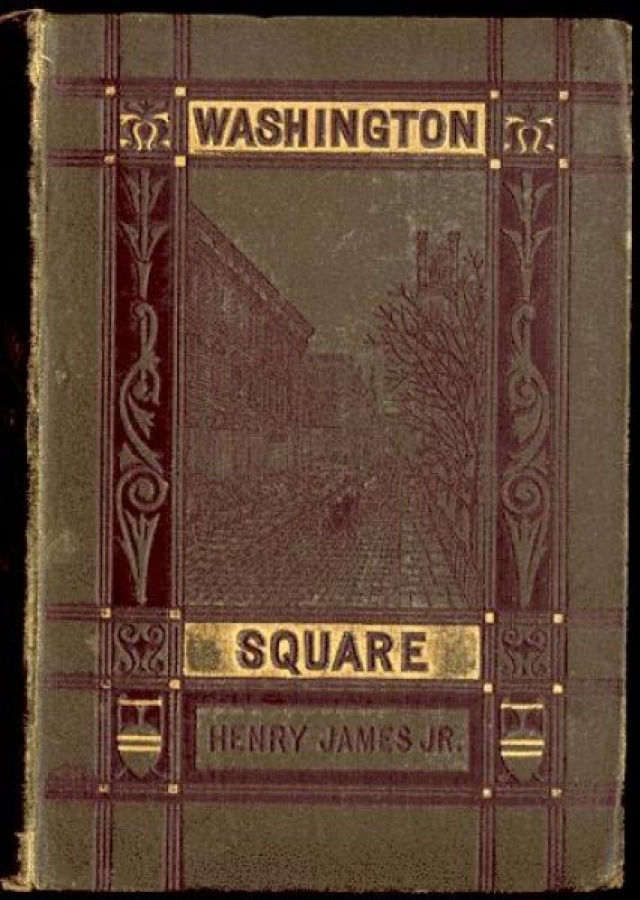
Washington Square
The book is set in late nineteenth-century New York. Catherine, the daughter of a prominent physician in the city, is courted by a young man who is interested in her dowry. Catherine’s father refuses and declares that he will not grant the girl her inheritance. A romantic drama unfolds, in which Catherine’s aunt assumes an important role: a woman who, driven by a romanticized conception of love and the futile pursuit of extraordinary occurrences, wishes the girl would abandon her father and marry the young man regardless. Following a journey to Europe with her father, Catherine realizes that he holds no esteem for her whatsoever, and decides to marry the young man even against her parent’s will. Yet the young man, who had hoped the father would change his mind, abandons the girl, knowing he cannot gain access to the doctor’s fortune. Years pass, Catherine does not marry, and after her father’s death the young man reappears—now an aging man—hoping to resume their former relationship. But Catherine turns him away. The underlying theme of the book is the story of a young woman who is the object of the aspirations and notions of others. The father believes his daughter to be foolish, devoid of qualities, and maintains toward her until the very end a contemptuous attitude, aimed more at asserting his own intellect and foresight (he had grasped from the outset that the young man was after the dowry) than at considering his daughter’s feelings. The aunt is in search of emotional thrills to fill her life and does not consider that her actions (her friendship with the young man, her attempt to manipulate the girl, etc. ) might cause harm to the point of ruining Catherine’s life. The young man is patently a scoundrel, a vacuous figure who seeks until the very end to use the girl to secure a position for himself, unconcerned about returning after so many years to wound her anew. Throughout this story, Catherine’s personality gradually emerges; she finds the strength to take a solitary stand, determined not to compromise with anyone, even at the cost of her own happiness. She has been and continues to be manipulated; her father holds an opinion of her shaped by stereotypes, yet she lives her own life, now indifferent and in opposition to those around her. To the young man, now a mature man, who asks if she is angry, Catherine replies: > no, I am not angry; anger does not last that way for years. But there are other things. Impressions that endure, when they have been strong. But I cannot speak... Catherine picked up her knitting needles, sat down with them again, for life, as it were .
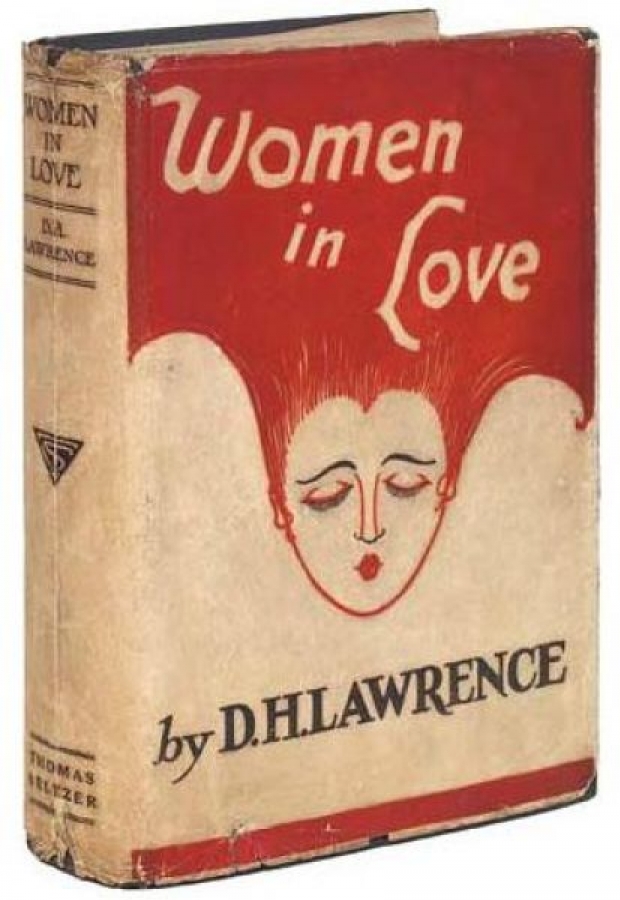
Women in love
The narrative unfolds within a framework of relationships among four protagonists: two men bound by a close friendship, and two sisters, both young schoolteachers. The historical context is England in the second half of the nineteenth century, marked by the advent of machines, positivism, and a yearning for a poetic world, epitomised by the English countryside. The two men operate within the roles assigned to the male by English society. Birkin is a romantic young man who seeks in woman a submissive companion (a wife and a mother), believing that true friendship, essential to a man's completeness, is that shared with other men. One might say his touchstone is Plato's *Symposium*, even if he does not go so far as a homosexual relationship—which, in fact, he gently declines when proposed by his friend. Gerald is a young engineer, a wealthy industrialist who has radically overhauled the organisation of the mines he owns, defying his father’s authority. A horrific childhood incident (he inadvertently contributed to his brother's death), a troubled relationship with his father, and a positivist world-view—which nevertheless conflicts with profound inner torment—conspire to lend him an outward confidence while driving him to seek comfort and solace in woman. In him, male friendship borders, almost overtly, on the pursuit of a homosexual relationship. While the men serve as a point of reference, locked as they are within their social roles and their egos, it is the two women who shatter convention entirely: and this not out of an impulse toward social emancipation, but because sensuality and physical restlessness contribute to subverting the concept of woman as wife and mother. It is Ursula, one of the sisters, who entices Birkin, drawing him into a sexual relationship—intensely erotic even by contemporary standards—that the man himself perhaps did not seek. It is Ursula, once again, who resists marriage, prevaricates, and, when she finally yields, finds herself in conflict with her parents. Gudrun's personality appears more complex: she too is driven by a powerful sensuality, which is sublimated into an intellectual quest for freedom, for an unconventional life. Her relationship with Gerald develops precisely around this contradiction: on the one hand, she experiences a fierce physical attraction; on the other, she disdains him for his prosaic nature, for his conventional view of gender roles. From this contradiction the final tragedy erupts, in which Gerald attempts to kill the young woman before taking his own life. Alongside the protagonists stands nature, which forms an integral part of the tale. It is a kind of pantheism, a living nature that merges with the protagonists: > nothing else would work, nothing else would give satisfaction, except this coolness and this netting of vegetation, which penetrated into the blood. How fortunate he was that there was this pleasant, subtle vegetation interacting, waiting for him as he waited for it; what a fullness, what a joy! . Yet nature also leads toward dissolution, toward death. > A small, bright moon shone just ahead, a brilliant thing, a bearer of sorrow, that was always there, eternal, from which there was no escape. He (Gerald) wanted to go to the end, he could bear no more. Yet he could not sleep . The plot unfolds slowly. At the outset, there is the depiction of the small English town along with the introduction of the protagonists. In truth, these appear as standalone scenes, unframed by a broader narrative arc. Each of these scenes is meant to introduce certain interior themes, tied to the web of relationships, which will later erupt in the second half of the story. At times, the author embarks on digressions into social philosophy, using the protagonists (Birkin in particular) as mouthpieces. The death of Gerald's father and the erotic scene between Ursula and Birkin mark the turning point of the novel, which moves, ever slowly, toward Ursula's marriage to Birkin, Gudrun's decision to enter into a romantic relationship with Gerald, and ultimately the journey to Austria, amidst the snow and cold. Here, Gerald's jealousy of Gudrun, his realisation that he cannot master the young woman, and her decision to leave him drive everything toward the final tragedy. The writer writes exquisitely, with a style steeped—both in its diction and in the cadence of its prose—in a pantheistic sensualism reminiscent of D'Annunzio. The two authors appear remarkably similar in the elegance and refinement of their language as well.