Finished reading on: June 26, 2005
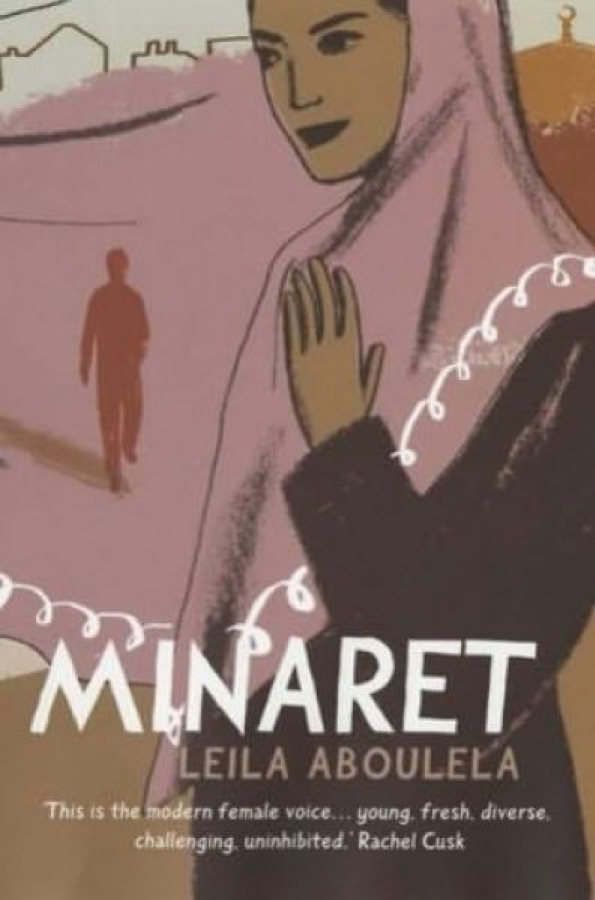
Minaret
AI Translation Notice: This review was translated from the original Italian using artificial intelligence. Book quotes and excerpts are translated interpretations and will not match the author's original English phrasing or official published translations.
Najwa is a Sudanese young woman, the daughter of a wealthy and influential family.
Following a coup d'état in which her father is imprisoned and sentenced to death, Najwa moves to England with her mother and brother.
Here, her life changes radically: her mother dies, her brother is convicted of drug use, and she is forced to work as a maid for wealthy London families, mostly of Arab descent.
She crosses paths again with a Sudanese friend with whom she had had a flirtation in her youth, one she had ended because of his accusations regarding her father's corruption.
It is a fraught and contradictory relationship: the young man often proves selfish, self-centered, possessive, yet at the same time fragile, while continuing to voice criticism of Najwa's father.
In the wake of her mother's death, Najwa is drawn to the mosque community and begins to pay closer attention to Islam, which evolves into a profound faith as her relationship with her partner unravels.
Moreover, faith also offers a way to reclaim her roots—no longer national, but religious.
Years pass, and Najwa goes to work for a wealthy Egyptian family, where she begins a relationship with a young student, who is likewise steeped in religious ideas.
Yet by now the social divide is insurmountable, and their relationship ends the moment it is discovered.
The book operates on two levels.
The first, and more superficial, is tied to the Muslim milieu.
The quest for roots through religion is an ever-present theme, though one left largely unexplored, both in terms of analyzing the underlying motivations for the protagonist's ideological evolution (from a largely indifferent background to deep religiosity) and in the depiction of the mosque community.
The second, far more substantial level concerns Najwa's personal plight: her loneliness, her attachment to her family, her yearning to recapture—if only vicariously—the tranquil world of her childhood, and ultimately her ill-fated encounters with men.
Najwa's fragility and her desires are ultimately transcended through the very serenity granted by her rediscovered faith.
This enables her to take the most painful and difficult step: giving the young student's mother the "key" to persuade him to leave Najwa.
She does not know, she does not know that he has his own frustrations and ideas of the world.
She does not know that he is not an extension of her.
I tell her.
And by telling her I lose him.
I give the key into her hands
.
In this way, Najwa forfeits the hope of a romantic and family life of her own, resigning herself to a vicarious existence, like a nun or an elderly aunt.
The novel thus chronicles Najwa's inner evolution from the carefree days of adolescence through life's disillusionments to a restored inner balance—one fostered by faith, but above all by a growing awareness of solitude as a deliberate choice.
It is beautifully written in a lucid style, devoid of rhetoric yet felicitously expressive.
It is somewhat reminiscent of Nadine Gordimer, albeit less dense and complex.