Finished reading on: December 24, 2008
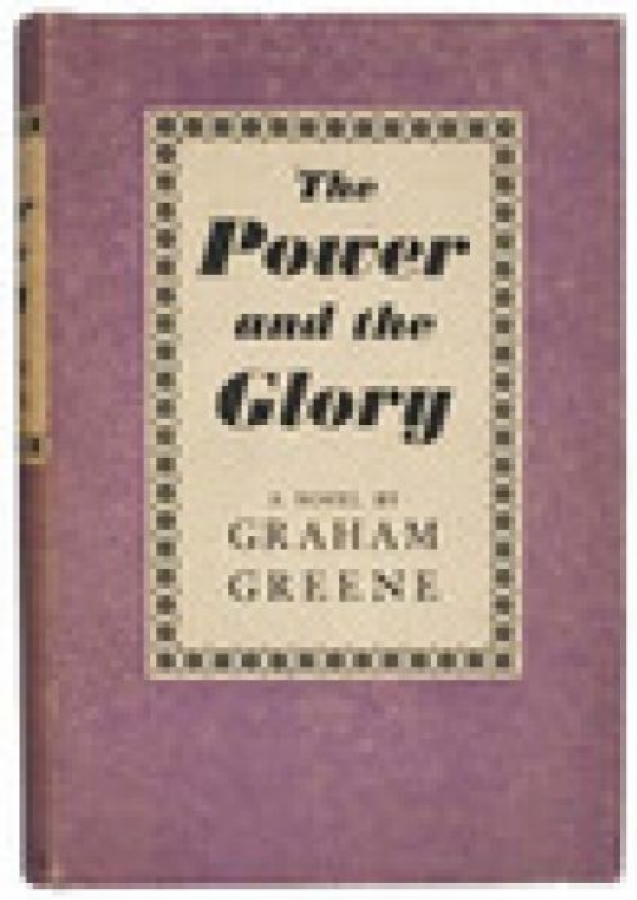
The power and the glory
AI Translation Notice: This review was translated from the original Italian using artificial intelligence. Book quotes and excerpts are translated interpretations and will not match the author's original English phrasing or official published translations.
The novel is set in Mexico during the period of civil wars between 1911 and 1924, when various revolutionary governments pursued a vigorous anti-Catholic policy in open opposition to the Church of Rome.
The protagonist is a priest, a «whisky priest», an alcoholic, father to a daughter he abandoned, a coward to the point of letting hostages who refused to betray him be condemned to death; in short, a «bad priest».
Hunted for years by the police, he manages to cross the border, and once he is finally safe, he decides to return to Mexico to hear the confession of a dying murderer.
He is subsequently captured and executed by firing squad: he dies like a saint, and the Church ultimately triumphs.
Generally interpreted through a religious lens as a celebration of the superiority of faith and the Church’s capacity to continually rise again from persecution, the most compelling part of the novel lies in its depiction of the profound material and human squalor of a poor, wretched society in which—and to whose detriment—the protagonist’s ordeal unfolds.
It is peasant, mestizo Mexico, composed of uneducated people endowed with great dignity and a religiosity so naive and deeply felt that they are willing to risk their lives to preserve it.
The pages describing the priest’s arrival in the village where he was once parish priest and where he had a lover (if only for a single night) who bore him a daughter are deeply evocative.
The villagers are afraid and urge him to leave, yet they shelter him, asking to confess and to attend Mass, even though the soldiers are only a few miles away.
When the troops arrive, take a hostage, and interrogate the villagers, the priest hides and remains unbetrayed.
In this circumstance, as in others, there emerges the stark contrast between the strength of the peasants’ feelings and the vacuity of the protagonist, who, the moment he resumes his sacerdotal role, instantly recovers the arrogance, smugness, and self-assurance of a man who knows he holds the conscience of the people in his hands.
Far from being a novel celebrating the Church of Rome! Perhaps in spite of the author’s own intentions, what emerges with dramatic force is the desolation of a religion founded on hypocrisy and the manipulation of consciences.
The novel seems almost a companion piece to Dostoevsky’s splendid dialogue between Christ and the Grand Inquisitor.
The novel ought to have concluded at the end of the second part, when the priest finally finds a church and
si sedette improvvisamente sul prato intriso di pioggia e appoggiando la testa contro la parete bianca cadde addormentato, con la casa dietro le spalle.
Il suo sogno fu pieno di suoni gioiosi
.
Instead, the author chose to provide a conclusion that exalted sacrifice, burdened with a long, tedious description of the capture, implausible conversations between the priest and a police officer, and a final celebration featuring the reappearance of another priest: utterly gratuitous chapters that severely compromise the quality of the book in terms of both content and narrative pacing.
The style is characteristically Greene’s, structured across different episodes and undeniably evocative in its portrayal of atmosphere; as usual, however, the dialogue and the psychological introspection of the characters fall short of the vivid illustration of the setting.