
The house of sleep
The theme of sleep purports to be the book’s unifying thread, to the point that the novel is divided into parts corresponding to the various stages of sleep. In reality, it is a device—perhaps overly intellectual—to tell the story of the love between Robert and Sarah. We find ourselves in a university hall of residence. Sarah suffers from a sleep disorder that leads her to confuse dreams with r

The Heroine of Port Arthur
Emilio Salgari was exceptionally swift at fashioning stories around events that gripped the public imagination; he did so by blending a certain exoticism with wars and romantic intrigues. Such had been the case with *La capitana del Yucatan* and *Le Stragi delle Filippine* (see the reviews on this site), and so it is in this novel, published under a pseudonym in 1904. The backdrop is the Russo-Jap
L'immensa distrazione
> Ettore Manfredini, nonostante fosse appena morto, (…) ebbe la netta sensazione di svegliarsi. (…) Ora che acquisiva una strana dimestichezza, (…) per la prima volta dal suo risveglio, intravedeva qualche spezzone della sua vita mortale come se fosse estraneo a sé stesso e potesse assistersi nell’atto del trapasso. (…) Morire, si disse a quel punto Ettore Manfredini, è come diventare un narratore

The Sentimental Man
An opera singer recounts a dream in which he relived a love affair: several years earlier, in Madrid, he had met and spent time with a couple—the wife of a prominent businessman and her male companion. The singer had fallen in love with the woman, whose husband later killed himself out of despair. While writing down the contents of the dream, news reaches him of the accidental death of his forme

The Bloody Pearl
Although he went by the moniker "Captain Salgari," the Veronese writer never actually traveled; for his novels, he relied on the numerous accounts of explorers and geographers who brought back to Europe tales of hitherto unknown worlds—accounts that blended reliable reports with fanciful inventions, steeped in a burgeoning racism. Our author was always deft at promptly seizing upon "the trend," ch

The Lantern of Diogenes
This is a narrative that can be divided into two parts. In the first, the author recounts his bicycle journey from Milan to the Romagna coast, although, in reality, he stops in the mountains of Modena. The second part depicts his stay in Bellaria. The first part is very fine and lively. One senses a feeling of escapism, of flight from the city and industrial society; the landscape, the inns, a

White Nights
> I am a Dreamer... I have so little real life! In reality, I have lived moments such as these so rarely that I hope to make them live again in my dreams. I will dream of you all night, every week, every month, all year round.... This is how the first-person narrator expresses himself when, one night, he meets a weeping girl who also describes herself as a "dreamer." We will never learn his name;


The Vanished Reader
Vince, an eternally precarious literature teacher, has invented a new profession for himself: bibliotherapy—dispensing reading advice to help people resolve their existential and psychological issues. But do books truly possess this therapeutic power, which «wards off the pull of emptiness and black bile» as the ancient Greeks believed? Or does reading fiction merely and humbly lead us to daydream
The love of a good woman
This is a series of short stories exploring the lives of women. The narratives unfold delicately, pivoting entirely on emotion, the depiction of context, and interpersonal relationships. The stories have no definitive conclusion, imparting a sense of how life, seen through the eyes of women, is somehow more attuned to the “process” than to the results. The prose contributes admirably to creatin
The Silent Duchess
We are in eighteenth-century Sicily. Marianna belongs to a wealthy aristocratic family from Palermo. She is deaf and mute, but her impairment has not prevented her from becoming a resolute, cultured, courted, and ultimately independent woman, capable of disregarding the rules and customs of her contemporary society. Indeed, > her impairment has made her more attentive to herself and to others

Notes from Underground
In the preamble, the author himself divides the tale into two parts. In the first, entitled "Underground", > the character presents himself, his views, and seems to wish to elucidate the reasons why he appeared, and was bound to appear, in our midst, that is, how in the era of positivism and dominant reason, it was necessary to acknowledge a primordial force within man—one rising from the unde

Memoirs of an Ethiopian Princess
> When I was four years old, in my father's house, life tasted of true happiness, and before my siblings and me lay the opening of a fairy-tale existence . Memories, nostalgia, and a sense of one's own rank are the distinctive traits of this autobiographical novel, set in Ethiopia and Italy between 1925 and 1946. The author is the daughter of Dejazmach Nasibu Zamanuel, a prominent figure of the f

The Merchant of Cursed Books
The inside back cover likens the book to Umberto Eco’s *The Name of the Rose* and Ken Follett’s *The Pillars of the Earth*. Nothing of the kind: if one insists on finding a literary reference, one might point instead to *The Da Vinci Code*. The setting is the Middle Ages. A merchant arrives at a monastery in the Polesine region. He is in search of a mysterious book, but also of a young novice

The Alaskan Miners
The true title of *The Miners of Alaska* ought to be *The Great Crossing of the Plains and the Rocky Mountains All the Way to Alaska*; indeed, the search for gold is marginal to the overall story, serving merely as an occasion for Salgari to depict the North American environment as it was related in the nineteenth century. To gain insight into the true history of the American West, and of the Unit

The Makioka Sisters
The setting is Japan across a chronological span that stretches from the years immediately preceding the Second World War up to the outbreak of the conflict. Against a backdrop of unease and mounting economic hardship, a family drama unfolds: the story of four sisters. An ancient family, now in decline, has split into a main branch—which moves to Tokyo and retains the authority over fundamental

A noble madness
Igino Ugo Tarchetti lived between 1839 and 1869. He is, therefore, a Risorgimento writer who was sidelined because he advanced a fierce critique of war and a clear recognition of the value of desertion and conscientious objection. The novel, partly autobiographical, relates the trials of Vincenzo D.: > one of those minds that cannot choose between prosperity and conscience, and are ever wretch
Nostromo
The novel opens with the description of the setting in which the story will unfold. Sulaco, a natural harbor on the western coast of Costarica, is an > enormous semicircular and unroofed temple, open to the ocean, with its walls of lofty mountains adorned with mourning draperies of clouds . In this natural amphitheater there is a > sanctuary inviolable by the temptations of world trade in t

New Italian Short Stories
The book brings together 29 short stories, an anthology that includes famous writers such as Bassani, Buzzati, Gadda, Moravia, Pasolini, Pratolini, Cassola, and others; but also lesser-known authors, nonetheless representative of our country's literature. It is impossible to account for every story—many, in fact, not particularly successful—so I shall dwell only on a few. They share a common tra

The Shadow of the Hills
The novel opens with a dream. The protagonist, Stefano, who is also the first-person narrator, is taken hunting by his friend Francesco among the hills of his native Piedmont. The woods are a composite of «cascades and pyramids of assembled nightingales», a paradise of happiness; and then, suddenly, the > treetops were mounds of tiny, corroded, greenish skulls, chiming sinisterly against one a
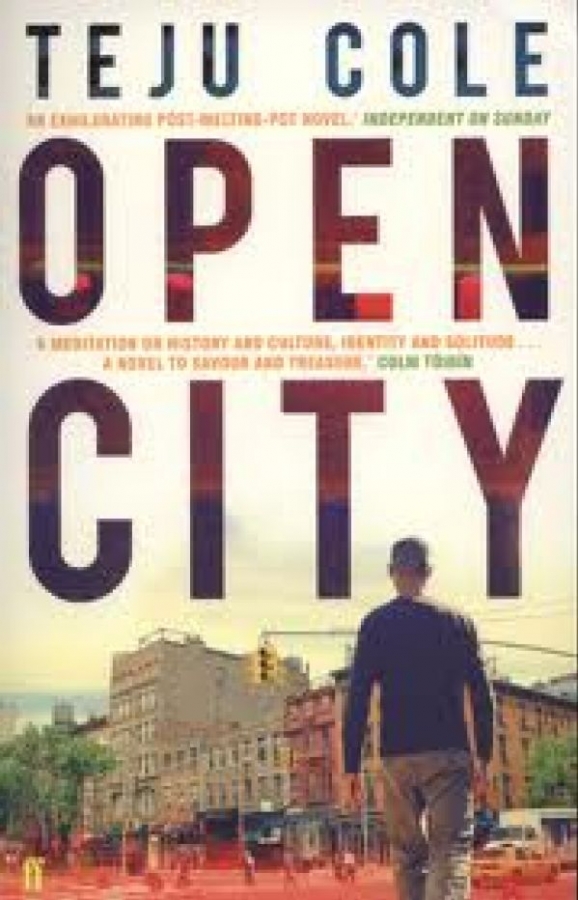
Open City
When walking the streets of a city > every decision, where to turn, how long to linger lost in thought before an abandoned building, was of no consequence, and for this reason was a sign of freedom. I traversed the city’s neighborhoods as though I had to measure them with my stride, and the subway stations served as recurring motifs of my unending wandering . The protagonist and narrator of t

Greek Lessons
In the first canto of the *Paradiso*, Dante uses the word “trasumanar” to denote that transcending of human limits without which it would be impossible to contemplate God in all His power; then, as we read this cantica, we discover that the journey through the various Heavens will be a transformation of sight and hearing, so as to endure the light and sounds of the Empyrean. But what if, instead,

Homeland
On a rainy evening, a small Basque entrepreneur is killed by an ETA commando, a terrorist organization that bloodied Spain from 1968 to 2011, causing over 800 deaths, including 240 civilians (source: Wikipedia). Txato, as the victim was named, had refused to pay protection money, and his assassination was preceded by a barrage of insults and increasing ostracism by the village where the businessma

The Little World of the Past
The setting is Lake Lugano, and Valsolda in particular. We are between the two Wars of Independence. Franco is the grandson of a powerful marchioness and is in love with Luisa, a young woman from a respectable and honorable, yet modest, family. The conflict between the marchioness and Franco is not limited to the young man’s love for Luisa, but extends to their divergent political views: the wo