
Sardinia Blues
Three young men—Davide, the protagonist, Licheri, and Corda—drag out their existence in a Sardinia far removed from the one known to tourists: the sun and the sea are there, but above all, there is boredom and a yearning to escape the provinces to experience the wider world. All three have spent considerable time abroad falling in love with extraordinary women, dancers, but have returned disillusioned to their homeland, whiling away their days between nightclubs and petty thefts. The protagonist, Davide, is thalassemic and therefore bound to constant blood transfusions. Yet his illness is not the root of his *mal de vivre*: what weighs on him most heavily is his mother’s death and the unraveling of his family, marked by his father’s remarriage and the emotional—even spiritual—estrangement of his sister. For the most part, the novel drifts between depictions of the three youths' nightlife, Davide’s memories of his adolescence and his life in London, fleeting love affairs, and episodes of petty delinquency: everything unfolds with lightness and resignation, devoid of anger, almost in acceptance of life’s futility. Then events spiral: Davide sleeps with Daniela, one of the most beautiful girls at the club, and the two are caught by her boyfriend, who murders them. The fundamental theme of the novel is what it means to be Sardinian: > often my friends and I would have dinner and smoke, holding forth on love and art, on being Sardinian and the meaning—or lack thereof—of this fortuitous element of our existence, on our desire to travel and understand the world, on our phobias and our aimlessness . And it is precisely this need to transcend parochialism, “the identitarian and anti-identitarian paranoias,” that constitutes the book’s most compelling trait: in an Italy increasingly diminished and provincialized by the rhetoric of territory, this novel serves as an anthem—perhaps unintended by the author—to globalization, to an openness toward the world, to “accepting that we are like everyone else.” It is no coincidence that Davide consistently refers to foreigners when speaking of other thalassemics: illness unites rather than divides. Sorigo’s prose is highly idiosyncratic and innovative: the narrative unfolds without punctuation (or with faulty punctuation), as though the words tumble forth unchecked, staking everything on musicality and verbal juxtapositions. The touchstone is poetry rather than prose. This stylistic approach is occasionally effective, yet it renders the reading experience fragmented, eroding the novel’s overarching coherence and leaving it, in the end, as an assemblage of episodes and impressions.
The Murderer's Ape
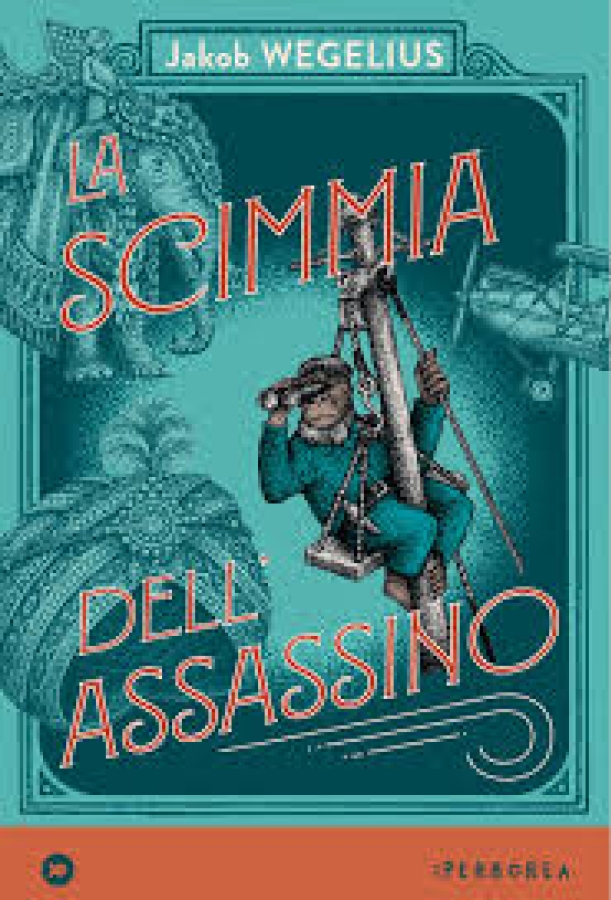
> For those who do not know me, it is best to state first of all that I am not a human being. I am an anthropoid ape. (...) How I ended up among humans I do not know, and in all likelihood I never will. Sally Jones, the simian narrator of this novel, is intelligent; she lacks only the gift of speech, but understands human language, knows how to write (which is how she communicates), and is exceptionally skilled at repairing mechanical objects, from ship engines to musical instruments and an old typewriter, with which she presumably penned "her memoirs." Her gifts (technical prowess, dedication to work, a deep sense of friendship) have made her the indispensable companion of a solitary seaman, owner of an old boat. Finding themselves in Lisbon, waiting for cargo to haul, Sally Jones and her Chief cross paths with Alphonse Morro, ( > he had a thin, deathly pale face and a tormented look), who charters the ship to pick up cargo—officially tiles, in reality crates filled with weapons. In a series of unpredictable events (the sinking of the boat, the unexpected encounter with Alphonse Morro ( > his eyes seemed to be bulging from their sockets in terror ) and the latter's disappearance at sea, the captain is accused of having murdered Morro, whose body is nowhere to be found. While the man is taken to prison, Sally Jones flees into a hostile, shadowy Lisbon. Trembling and hungry, she takes shelter in an attic, when there reaches her, as if in a dream, a song, > a sad and beautiful voice, (...) and suddenly, without understanding why, I felt a sense of warmth wash over me. (...) The woman was sitting before the open window of a dormer. As she sang, she worked on something in her lap. She wore a shawl, and her dark hair was gathered in an untidy bun. From this point on, the narrative unfolds into a series of adventures that lead Sally Jones from Lisbon on the run to distant India, only to return to the Portuguese city, ever determined to prove her captain's innocence. It would be tedious to retrace every episode, continually marked as they are by dramatic twists, new characters, and a suffused atmosphere of melancholic hope. Whence comes the gentle strength of Sally Jones, this strange ape? It springs from Love, expressed through the profound bond linking the ape to the people she encounters—those who help her and whom she helps in turn: the sorrowful Anna, a poor factory worker and wondrous Fado singer; Fidardo, the surly musical instrument repairer; the cemetery keeper where Sally Jones discovers the grave of Morro’s fiancée and her tragic love story; the eccentric maharajah, to whom Sally Jones is no courtier, but a true friend; and finally Alphonse Morro himself, in truth a suffering victim racked with remorse. There are villains too, manifestly stronger than the poor ape; how often does Sally Jones curl up on the bed, feeling tears well up, overwhelmed by fear and longing! Stubborn, seemingly fragile yet steadfast in her values, Sally Jones is a harbinger of hope at a time when we—adolescents and adults alike—stand in great need of it. The novel is divided into three parts: the first and third set in Lisbon, the second in India. One must wonder why the author devoted so many pages to Sally Jones's sojourn with the maharajah, dissipating Lisbon's enchanting atmosphere in trite descriptions. Reading the pages set in the Portuguese city, one feels imbued with that melancholic sense of existence so distinctive of Lisbon; and the author has proven exceedingly deft at lending contrasting palettes to the streets and the sky—somber in the first part, radiant in the last, when Sally Jones returns to her friends and familiar haunts. And what can be said of the song, the Fado, which threads through the entire narrative, managing to convey even to the maharajah the sweet sorrow of Portuguese music, capable of transforming a self-absorbed man into a generous and benevolent soul, at least once in his life. The plot alone would not have sufficed to give depth to the story. It is the prose that defines the entire narrative: fluid, deceptively simple, alternating between dialogue, the ape's inner reflections and states of mind, and deft atmospheric descriptions; the style captivates the reader, even in passages that are frankly prolix and redundant. Why read it? Sally Jones seems to personify Kant’s categorical imperatives: liberty, equality, and fraternity.

Senso and Other Stories
Camillo Boito, elder brother of the more renowned Arrigo, was an art expert who engaged only marginally in literature. Yet his short stories are strikingly modern in the cold detachment and amorality with which the author confronts the ambiguous, unspeakable egoism lurking within the human soul. In his most famous story, *Senso*, Livia is a harsh, shallow, and conceited woman who entrusts a terrible secret to a “sheaf of papers.” And she does so with the joy of > confiding solely in oneself, free from scruples, from hypocrisies, from reticence, honoring the truth in memory even regarding that which stupid social affectations make hardest to proclaim: one's own vileness! Still very young, yet already wed to a wealthy, elderly aristocrat, she takes an Austrian officer as her lover. Even while acknowledging him to be a dissolute, cynical man of virtually no moral principles, Livia is swept away by physical passion. The description of the beginning of their affair is a masterclass in literary craft. With few words, light and veiled, the author captures the profound sensuality of the bond between Livia and her lover. The woman is in a bath, naked, reclining supine in complacent admiration of her own beauty, of the “rosy beauty of her skin,” when, through the wide apertures connecting the pool to the men's quarters, her lover bursts in. > I did not cry out, I was not afraid. He seemed carved from marble, so fair and beautiful was he; yet his broad chest heaved with deep breaths.... standing erect, half-veiled by the water, still trembling, he raised his soft, muscular arms: he seemed to thank the gods, as if to say: At last! But the man soon reveals himself to be a rogue, constantly extorting money from the wealthy countess, even to the point of stripping her of her jewels to bribe doctors and evade the war. Livia lives in Trento; the man must remain in Verona, where his military regiment is stationed. The distance allows the man to deceive his mistress further, professing his fidelity while carousing with other women on the countess’s dime. Yet blind love can transform into cruel hatred. Livia discovers the betrayal and, out of revenge, denounces her lover, who is executed by firing squad. Will this infamy weigh forever on Livia’s conscience, or was it merely the wretched conclusion of a whim? The author offers no answer to this question; he is not interested in passing moral judgment, much less in conducting a sociological analysis. Ultimately, the author is like a painter whose sole task is to depict—with all its chiaroscuro—a landscape, a state of mind, an ensemble of characters: nothing more. The narrative plot is Boito’s fundamental virtue. It is linear, simple, yet brimming with suspense. Another compelling aspect of the author’s style lies in his depictions of landscapes, especially the subalpine foothills, an environment that must have been particularly dear to him. There is a meticulous attention to detail, almost Verist, accompanied by a transfiguration that hinges on imagery and colors. Consider, for instance, this excerpt from a minor tale, *Il demonio muto*. > Between those two barren slopes of a dark, reddish hue, one sees, almost horizontally, the pale blue ridge of a distant mountain. The clouds had parted, and, across the wide blue field, from that lower corner, a white cloud rose and rose, illuminated by the sun. At first it seemed a silver crown set upon the peak of the far-off mountain; then it expanded, engulfing a vast portion of the sky. It took the shape of an immense bull, advancing with its horned head... Then, in a minute, the bull altered its appearance: its massive head lengthened, turning into the snout of a pig, and the figure, once majestic, became grotesque . Why read it? It is enjoyable—entertainment of no trivial sort.
The Shadow King (The Shadow King)
The novel is set in Ethiopia during the Italian occupation (1935–1941). The first part, entitled "Invasion", deals with the war between October 1935 and May 1936 that led to the capture of Addis Ababa by Italian forces and the flight of Haile Selassie; the other two parts, "Resistance" and "Return", recount the bloody partisan war that deeply undermined Italy’s colonial ambitions in Ethiopia. Finally, a brief epilogue takes place in 1975, when Mengistu deposed and imprisoned Haile Selassie. In addition to historical research, notably that of Angelo Del Boca (*Gli italiani in Africa orientale*, Volumes I and II), the author drew upon photographic documentation, also from Italian sources. And it is precisely from the "photograph as memory" that the narrative takes its cue, right from the introduction of the protagonist: the servant Hirut. In 1935, a French photographer visits the home of an Ethiopian feudal lord and is asked for a portrait of the servants. > This is Hirut. This is her broad, friendly face with a curious gaze. Eyes full of light are suspicious but calm, (...) a pretty girl with a slender, attractive neck and slightly rounded shoulders. (...) She looks away from the lens, trying not to squint, her face turned toward the blinding sun. (...) No other way to remember the untainted body she once carried with the lightness of a child. The depiction of Ethiopian feudal society and the condition of women is ruthless: brutal exploitation of the peasantry, total subjugation of women—even those belonging to the feudal caste—violence, and sexual abuse. Hirut is a proud young woman; she keeps the sword left by her father, out of affection and to assert the rank to which she believes she belongs; the weapon is stripped from her by her master, as women are not permitted to fight. Hirut’s persistent disobedience is punished by rape, and the other women, rather than showing solidarity, condemn her to ostracism. Her fate is not so different from that of her mistress: the aristocratic Aster, who is likewise forced to acknowledge her husband’s superiority, humbling herself. When Aster asks to fight, she is met with a flat refusal. > Get back here with your women. (...) She looks at him for a long time, long enough for the resentment to vanish from her face. She lets it fall between them like a curtain dropping onto a stage. Then she nods and walks away. The condition of women changes radically when, following defeat, the resistance begins, and the role of women becomes pivotal to a struggle that requires the involvement of the entire population. We know from Angelo Del Boca that there were numerous and famous female partisans; these are historical figures who truly lived, even if transfigured by the imagination. Haile Selassie's exile dismays the Ethiopian people in their struggle against the Italians; a stratagem is devised: the resemblance between a beggar and the Negus is exploited to spread the rumor that the sovereign has returned. The man must show himself among the villages; escorting him is a magnificent Amazon: Hirut. From a humiliated and subjugated servant, the young woman becomes a fighter, essential to lending credence to the deception, but she is herself a heroine through her acts of valor and courage. At this point, a new character bursts into the narrative: Ettore, an Italian photographer of Jewish descent, who, out of fear of denunciation and sheer pusillanimity, complies in photographing the most horrific crimes committed by the Italians. These are dramatic pages of high narrative caliber. The author draws on the photographs of this forgotten soldier to document the savagery of our compatriots. Continuous roundups are carried out, and the captives—mostly the elderly, women, and children—are hurled into a ravine; as they plunge into the void, they scream their names, asserting that they had lived, that they were human beings. > This cannot be annihilated: let him repeat his name until that final fall, (...) and the echo of his voice is the world's dirge, the earth cursing this cruelty. (...) He had found a way not to hear their prayers and curses when they moved, with the elegance of a dance, along the crest of the precipice for that final photograph. (...) Every photograph had become a broken vow to himself, a breach in the defenses he had erected to ignore what he truly is: the archivist of obscenities, the collector of terror, a testament to everything that penetrates us and dissolves our self-esteem, leaving human beings dead. The sprawling novel reaches its climax, dramatically epic; then, exhausted by so many horrific and inhuman images, it folds back in on itself in an implausible bond between the virile, determined Hirut and the fragile, hypocritical Ettore. Let us dispel a possible misunderstanding: the novel is not an indictment of our country. The author charts a destiny common to women: independence and prestige are granted to them only when they contribute to the liberation struggle, in this case against the Italian invader. Hirut carves out a role for herself by fighting and risking torture, rape, and death; in doing so, she redeems herself from the violation she suffered, almost as if it had been her own fault. There is a strength in her that captivates us, particularly because it contrasts with Ettore's weakness of character and values. At the same time, the author seeks to recount the tragedy of Ethiopia: assaulted, defeated because poisoned by the criminal use of nerve gas (with tens of thousands, perhaps hundreds of thousands, of dead among the civilian population), and subsequently subjected to a repression that spared no one. Unfortunately, Maaza Mengiste is no Chimamanda Ngozi Adichie (see *Half of a Yellow Sun* on this site): she fails to build outward from her characters to tell the story of a people; the protagonists remain stereotypes onto which, nevertheless, the author unloads far too many existential themes (witness the relationship between Ettore and his father); the tragedy of Ethiopia is treated as an epic poem, burdened further by certain devices—such as the chorus and the reflective pauses on Haile Selassie—that are frankly redundant. The two levels remain separate; it is evident that the author feels far more at home when adopting lyrical and dramatic registers. From the standpoint of writing, the novel gets off to a somewhat halting start; subsequently, the writer gains confidence and growing stylistic mastery, displaying a rich vocabulary and increasingly expressive syntactic forms. The excessive length does not help the overall effectiveness of the narrative, and it becomes an effort to reach the end. Why read it? For us Italians, coming to terms with colonialism is indispensable.
Signoria
We are in Spain in 1799. Don Rafel is the powerful chancellor of the Royal Tribunal of Barcelona. The author succinctly describes him as a man > whose life was marked by an unrelenting craving and the restlessness of dissatisfaction, which drove him to dream without being a poet, to fall in love without being a Don Juan, to climb ever higher above others, hoping to attain happiness. Yet, because he was intelligent, he knew how to hold the ground he had won, even at the cost of the hatred and envy of others . His skill and unscrupulousness had allowed him to climb the social ladder to an unimaginable standing—non-aristocrat that he was—and to amass considerable wealth. Powerful and feared, he seemed unassailable and insisted on being addressed as His Lordship, the prelude to a barony. A seemingly marginal incident—the murder of a singer—drags him into the abyss. The woman was murdered after a romantic liaison with a young poet, Andreu, who is accused of the crime. At the young man’s home, a document is found revealing that Don Rafel murdered his own mistress. The powerful chancellor ensures that the youth, though innocent, is swiftly convicted and sent to his execution. Yet the situation rapidly unravels: others are aware of Don Rafel’s crime, and they either blackmail him or seek revenge for the young man’s death. Don Rafel feels no remorse, but he dreads scandal and “wondered when they would begin to pounce on him to strip him of everything.” Overcome with despair, he goes to confession, only to reveal the full extent of his cynicism before the priest: when urged to surrender to the authorities, he candidly declares that > the law is a collection of arbitrariness gathered into a Code, and justice is by definition unjust . Not even God can welcome him, and at that point nothing is left for him but suicide. The society portrayed in the book is decadent: a lust for money and power, abuses and violence against the weak, a life built on appearances and sordid sexual affairs. It sounds just like modern-day Italy!! Even authentic relationships are destroyed in a corrupt society, helping to create predestined victims: Teresa’s love for Andreu led her to give him the medallion that will serve as the evidence for his conviction; the letters from Nando—naive and full of affection for Andreu, written far from Barcelona and oblivious to his friend’s fate—become cruel and insipid in light of the condemned youth's plight. The prose is pleasant, but the story unfolds slowly, circling around the figure of Don Rafel without ever investigating him deeply enough—so much so that the drama of the conclusion feels both predictable and abrupt, as if rushing to wrap up an overly protracted tale. Why not read it? It has the length of a thriller without being one.

Smoke
It is a short story. The setting is the rural society of the American South. An authoritarian father has effectively driven his two sons from the property: the younger because he had demanded the partition of the land, the elder because he can no longer tolerate his father. While the younger lives as a hermit, the elder goes to live with a cousin. The father dies, seemingly killed by a horse, and the judge—the executor of the estate—is also murdered. The prosecutor manages, through his dialectical skill and careful use of words, to drive the real culprit, the cousin, to confess. The contrivance hinges precisely on smoke, which the prosecutor conceals in one of the judge's boxes and whose presence at the crime scene corners the culprit, who turns out to be a heavy smoker. The plot purports to be that of a detective story, but in truth the real subject of the tale lies in the barrenness and harshness of the rural world and of family relations, shaped beneath the desire to possess the land. In contrast with this brutality and a squalid everyday existence unfolds the elegant phrasing of the prosecutor: > he had graduated from Harvard... capable of spending whole afternoons in the company of men squatting against the walls of country stores, speaking to them in their own tongue. He called them his moments of leisure . The rural world is somehow manipulated by language, by the intellectual who speaks well and knows how to devise tricks and traps for naive country folk. The story's style, particularly its sentence structure, develops in a highly complex fashion, and is therefore difficult to read.

Solar
Michael Beard was awarded the Nobel Prize when he was barely in his twenties. He himself cannot fathom the reasons for such a prestigious accolade (perhaps the committee confused him with Sir Michael Bird?), but ever since, > like a castaway, he had clung to this solitary plank, seeing himself as a privileged being . The novel has little to do with science and solar energy; rather, it primarily recounts the tale of a wretched man—lying, selfish, opportunistic—who moves through the affections of those closest to him with sheer indifference. The narrative opens at the moment of Michael’s separation from his fifth wife, who is cheating on him in retaliation for her husband’s numerous infidelities. Michael heads a government research centre tasked with finding solutions to reduce carbon dioxide emissions and thereby combat climate change. In reality, our protagonist does not believe in the catastrophic effects of atmospheric pollution in the slightest; yet, with the very same flippancy that governs his love life, he endorses an absurd project to install small wind turbines on every British home. The brainchild of a young researcher, a renewable energy fanatic, who irritates the cynical Michael with his environmentalist idealism. Returning from an expedition to the Antarctic continent—where he was compelled to take part in an eccentric research party studying melting ice caps—Michael catches the young researcher in his home: he is one of his wife’s lovers. During the exchange that follows the discovery, the young researcher kills himself, tripping over a rug as he rushes toward Michael to beg not to be sacked. Our protagonist is entirely innocent, yet he realises he might be the prime suspect. And so he orchestrates the wrongful conviction of another of his wife’s lovers, a violent and absurdly jealous man. To this first deceit, another is soon added: Michael comes into possession of the young researcher’s papers, which demonstrate the feasibility of extracting hydrogen from water using solar energy. It is the breakthrough of the century, poised to resolve at a single stroke both carbon emissions and the depletion of energy reserves. The narrative then leaps forward many years. Michael—now an obese man, an insatiable gourmand and drinker—has persisted in his cynical, superficial existence. In his private life, alongside casual mistresses, he finds himself burdened with two ongoing relationships: one with an Englishwoman, who bore him a daughter despite his fierce resistance, and another with an American, whom he met in New Mexico where he is overseeing the prototype plant for extracting hydrogen from water, critical to proving the industrial viability of the concept. On the business front, he must contend with investors who are often sceptical of the venture, questioning above all whether it is worth sinking money into such unproven technology when an environmental catastrophe is not even guaranteed—meaning fossil fuels (such as coal, oil, and the like) might not actually need to be abandoned. Confronted by the anxieties of his partner, who has invested several million dollars and cites the opinions of numerous experts denying global warming, Beard, bolstered by his Nobel status, > placed a hand on his friend’s arm, a clear sign that he was overstepping his mark. Toby, listen, the catastrophe is coming . He, who had never believed in global warming! Yet, unlike the theory that earned him the Nobel Prize—which untangles the intricate interplay between energy and mass with mathematical precision—Michael remains ensnared in the tangle of falsehoods and contradictions that define his life. Just as he is on the verge of proving his sheer genius (though is this what truly drives him, or does only momentary gratification matter?), his "women" call him to account for his hollow promises, the wrongly convicted man returns seeking vengeance, and a lawsuit is brought against him for intellectual theft. He realises he has failed, while keenly feeling the cancer that is killing him. Finally conscious of his own wretchedness, he sees his daughter, who loves him unconditionally, running toward him, but > he doubted, as he held her, that anyone would ever believe him now that it was true love . The prose is brilliant, the plot unfolds engagingly in parts, and the characters are sharply drawn: all elements that ought to captivate the reader. Yet, much like the novel’s protagonist, there is a certain flippancy and an excess of irony that renders the narrative evanescent. Everything feels paradoxical; consequently, deceit and cynicism—the core themes of the tale and such emblematic traits of our age—remain addressed only superficially, failing to deliver the revelatory weight one would expect. McEwan is a major author squandering his craft. Why read it? It is exquisitely written, and the premise is compelling.
Soldiers of Salamis
> In 1989, my first novel had been published; (...) the book was met with utter indifference. What followed was a prolonged depression and the breakdown of my marriage, until, coming to the rescue of the failed writer, arrived the sensual Conchi and the miraculous story of Rafael Sánchez Mazas. The former was a fortune-teller, > who was crazy about dating a journalist (an intellectual, she called him) and who danced singing > Land glorious to my heart,/blessed land of scents and passion,/(...) Alas, what sorrow,/as I part from you, Spain,/for they tear me away from your rose garden. The episode, both famous and incredible, is set in 1939 at the end of the Civil War. The Republican army, retreating toward France, took with it a group of Falangist leaders to execute them by firing squad. Sánchez, founder of the Falangist movement and later a Francoist minister, managed to escape and survive, fashioning around this ordeal his aura of an immortal hero. Cercas imagines that our failed writer comes into possession of a notebook in which Sánchez had jotted down what had happened: the name of the peasant family that took him in and a reference to unspecified "friends of the forest." Fragmentary accounts, contradictions between differing versions, and the very condition of the notebook, which appeared forged, led the aspiring writer to assume that everything was false: > a colossal fabrication meticulously concocted by Sánchez Mazas's imagination, (...) to redeem himself from his reputation as a coward, to conceal some dishonorable incident from his strange wartime vicissitudes. The investigation of archival documents and in the field leads to validating the entire affair: the execution and the escape truly occurred, and the "friends of the forest" are three draft dodgers who had been hiding in the undergrowth and helped Sánchez; a presence expunged by the Falangist leader so as not to admit that he had been aided by brave young men who were not fascists—he, the great poet of the Fatherland. There remains an episode which, who knows why, the aspiring writer does not explore further. In a narrative that seems drawn from *Una nobile follia* by Ugo Igino Turchetti, which likely inspired Fabrizio De André's *Canzone di Piero* (see the review on this site), our aspiring writer describes the event thus. > The soldier is looking at him; Sánchez Mazas stares back at him, but his tired, myopic eyes cannot interpret what they see; beneath the locks of wet hair and the broad forehead and dripping eyebrows, the soldier's gaze expresses neither compassion nor hatred, nor even contempt, but a kind of secret or fathomless joy, (...) and at a certain point he shouts into the wind without ceasing to stare at him: "There's no one here!". To truly become a writer, our protagonist must discover who this soldier was: the narrative leaves mere chronicle behind, gains momentum and mystery, and reveals a truly discreet hero in the service of Freedom and Spain, an account of real events, with real people. It is pointless to object that every novel is real to the reader and that one might as well invent characters about whom nothing is known. Unlike Carrère, who, to write about Limonov, draws heavily upon the biographies of the Russian writer and politician himself (see the review on this site), Cercas conducts an investigation like a good journalist. Too bad that when he writes a factual account, however brilliant, the narrative flattens, becomes tedious, and the reader wonders why bother when we already have historians. On the contrary, on all the pages where the writer relies on imagination and mystery (think of the figure of Conchi and the discovery of the soldier-hero), the story changes tenor, becoming intriguing and engaging. In the end, one senses the passion when the writer comes out into the open and extols the soldier-hero. We ought to find a boundary between fiction, chronicle, and historiography; we live in the present and process the past through the facts of the present, yet the representation of the past conditions our vision of reality and must therefore be handled with care, pursuing the "truth" on the basis of historical research methodologies. The prose flows smoothly and with slight mischief. The author creates an almost unreal atmosphere, so that the events, even the dramatic ones, and the characters dance to the tune of the celebrated song. Its merit lies precisely in a narrative style far removed from the journalistic, capable of making us dream. Its main defect is the plot, confused and repetitive. Why read it? The story is interesting, and some pages are truly beautiful.

The Kreutzer Sonata
During a long train journey, the passengers begin a discussion on the institution of marriage. Can there be spiritual affinity in married life, or is it nothing more than > a horrifying hell, on account of which one ends up an alcoholic, shoots oneself, or commits murder ? The conversation is abruptly interrupted when a traveler declares that he is “the one who, fancy that, killed his wife.” And he begins to recount his story. Like most men, he had led a licentious life for many years, frequenting brothels and despising women, from whom he sought only sexual pleasure. Then, like everyone of his social standing, he married, because that was simply what one must do. Already during the honeymoon, > the infatuation had run dry with the satisfaction of the senses, and we found ourselves facing one another in the true reality of our relations: that of two egoists, utter strangers to one another, wishing for nothing more than to extract from the other as much pleasure as possible . For many pages, the narrative serves as an occasion to discuss marriage and, more broadly, the relations between men and women: reflections to which Tolstoy would return more explicitly in his postscript. We must live an authentic life, the great Russian writer asserts, in the service of a higher ideal: love of God and of one’s neighbor. Along this path, marriage—a mere compliance with external rules—is a disruptive impediment, because > one ends up dedicating the finest period of one’s existence—men, respectively, to eyeing, seeking out, and possessing the finest objects of love in the form of love affairs and marriage, and women and girls to luring and drawing men into an affair or into marriage . And to those who counter that marriage legitimizes sexual relations without which there would be no procreation, and thus the human species would become extinct, Tolstoy responds drastically: > a Christian would be conscious of not sinning or not falling, in marrying, only if the necessities of life were guaranteed for all the children in the world . Is the novella, then, a moral essay? In large measure, yes, and that is how his contemporaries interpreted it. At a certain point, however, comes an unexpected turning point. The protagonist, the murderous narrator, attends his wife’s concert, in which she plays, alongside her lover, a piece by Beethoven: the first presto of the *Kreutzer Sonata*. Many authors have written about music, more often than not associating listening with an elevation of the human soul. Tolstoy astounds us once again. > They say that music elevates the soul: nonsense, it isn’t true! (...) Music compels me to forget myself, my true state of mind; it transports me into a different, alien situation; under the spell of music, I seem to feel what I do not actually feel, to understand what I do not understand, to be capable of what I am incapable of. (...) Upon me, at least, this piece had a terrible effect; feelings were revealed to me that seemed completely new, new possibilities I had never known before. Not as I had previously thought and lived, but as though a new voice were speaking within my soul . And an irrepressible force rises within the protagonist’s consciousness, one the reader has already encountered in the final pages of *Anna Karenina*, immediately before the suicide: > some demon, entirely outside my will, devised and suggested the most bloodcurdling hypotheses . From this moment on, the narrative, previously slow and somewhat tedious, becomes relentless and overwhelming, driving toward a dramatic scene. Returning home unexpectedly, he catches his wife and her alleged lover in the drawing room; first he attacks the man, who flees—unpursued, at that (“it was ridiculous to run in stockinged feet”—even during a murder, bourgeois propriety prevails!); then he violently turns upon his wife, stabbing her to death. He even has the impudence to beg her forgiveness. “Forgive you? That is nonsense. If only I didn't have to die!” the woman replies. The novella hinges entirely on its final forty pages, both from a literary standpoint and in terms of thematic substance. The narration of the murder, as the final act of a lucid and frenzied hatred, possesses an astonishing expressive power: even while foreseeing the inevitable conclusion, the reader hopes until the very end that something might happen (a pang of conscience, someone’s intervention), before ultimately surrendering to a sentence terrible in its cold matter-of-factness. > I felt and remember the momentary resistance offered by the corset, and beneath it something else, then the knife sinking into the softness . Tolstoy’s condemnation of the man is clear and unequivocal: the victim is the woman, the culprit is the husband, who is fully conscious of what he is doing. The judges will decide otherwise, acquitting the murderer on the grounds of the alleged adultery. Conscience will not acquit him, and the novella closes with a desperate plea for forgiveness. Why read it? If one pushes past the first eighty pages, one discovers a story of femicide, recounted by a great writer.

Spaccanapoli
The book is a collection of short stories written between 1943 and 1947, expressing the author’s effort to reckon with reality, with the lush, carnal, amoral, and shrewd humanity of that “Babel of history” that is Naples: hence, in all likelihood, the title *Spaccanapoli*, the thoroughfare around which the city’s life has always gravitated. Let it be said at once that this reckoning with reality was not entirely successful; indeed, the narrative is steeped in a dreamy, melancholic hope. In the first story (*“La figlia di Casimiro Clarus”*), set in a small town in northern Italy “where men are courteous and live on few words,” the now elderly narrator believes he catches a glimpse of the woman he loved in his youth and calls out to her: in his imagination he longs for her once more, but she is not there; he was mistaken. “She always wore a broad-brimmed yellow hat, with violets in the ribbon.” Immediately I would say, Katy, are you here? No, I am not, she replied. Then I would chase after that butterfly > . If one could still afford to write of lukewarm loves before the war, afterward Rea felt the need to use a linguistic system closer to the new reality > . The subsequent stories are sketches of Neapolitan society, where a cynical instinct for survival prevails, allowing the characters to get by. Take *L'Americano* > . A poor baker’s boy takes advantage of the attentions of his master’s wife, wins the infatuation of the young duchess, and finally, getting ahead of himself, brings a prostitute from Taranto with whom he stirs up both scandal and envy. Having killed the young duchess’s fiancé, he flees to America where he becomes a *ganghesterro*, impregnates a wretched prostitute, makes his fortune, and returns to Italy, abandoning the girl to her fate. Having landed, I went to the Madonna of Pompeii. (...) May I become an old man who looks like a boy, for I have harmed no one, I tell you as a son. (...) I will buy you the diamond-studded slippers. (...) I am a good man. (...) 'Go,' the Madonna gestured with her finger > . It reads like a novella by Boccaccio. The influence of the great fourteenth-century writer is glimpsed in another story, *L'interregno*”. The opening of the narrative bears the stamp of the plague described by Boccaccio. “In our mild country, the war had arrived by report.” The return of peace was feared, because “it was also that of commercial legality and taxes on war profits. (...) Many idlers owed the flourishing of their clandestine trades to the dark. (...) The middle class fretted over it. But they were few in number and likewise strictly bound to propriety and restraint, sacrificing proud appearances > . But then war bursts in, the poor rush into cellars for shelter, while the rich, the quickest to notice in the mirror that their consciences were tarnished, promptly took them out through secret doorways to be aired in the countryside > . The life of the refugees is rendered with bold, incisive strokes, without neglecting the personal fortunes of the protagonist—a decent man with a shrewd knack for seizing whatever opportunities present themselves, be they of love or money. The distinctive hallmark of the stories is the writing: at times linear, but more often poised between prose and poetry, with stylistic inflections typical of Boccaccio. Take as an example this passage from another story, *I capricci della febbre* > . The protagonist has been hospitalized for smallpox, and there he encounters a nurse. The muscles of my thighs quivered at a fresh draft of air. But she took it as a call of love: (...) and, with arms raised as if surrendering, she fell to her knees with a loud clatter before my shame, which she stared at in astonishment. (...) I am a poor girl. I'm afraid to go out in the middle of the street to sin. With you, I was doing it out of pure love. (...) I could no longer keep my memory still: another Nina, the one summoned in delirium, blurred into this living one: incredible before my eyes.” And it is precisely the analysis of this fleeting amorous encounter that pinpoints the difference between Rea and Boccaccio: in the former, the narrative unfolds in a state of yearned-for reality (the rediscovered woman, the cynical self-justification, the fantastical life under the bombs); in Boccaccio, the narrative possesses the same voluptuousness of language, but is developed from the perspective of an urchin who jests and refuses to become embroiled in the events and characters. Why read it? Evocative, even if often difficult to decipher

A Spiral of Mist
Life is > a kind of deception, one trains oneself for, this lying to oneself about oneself , fleeing (...) “the unknown, murky fear of revelation.” As in Teju Cole's *Open City* (see the review on this site), where the protagonist even forgot having raped a girl because “for myself, I am always the hero” (yet “the pleasure of denial was not available to her”), this novel also investigates > that mysterious, secret depth made of unexpressed emotions, of truths concealed from everyone's eyes . The investigation takes on the outward guise of a detective novel. Valeria, the Milanese wife of Fabrizio Sangermano—a powerful Campanian family—is killed during a hunting trip with her husband: an accident or a murder? There is a police commissioner, there are numerous characters supposed to help unravel the plot, but that is not what interests the author: Valeria's death should be that traumatic event capable of finally dissolving the fog of human feelings. A series of portraits unfolds. We witness the family gathering, bewildered and worried as they debate Fabrizio’s possible involvement, which would drag the Sangermano clan into scandal; the discussion comes to an abrupt halt when the grandfather, the grand old man, > waved his hand and then said: I am glad to have foreseen the conclusion of this meeting of ours , (...) silence fell once more in the study, aunts, uncles, and cousins assumed the contrite expression they had learned to master to perfection after so many years of training and acquiescence: attentive, indifferent, expressionless faces of people suddenly emptied of their most intimate personality > . Maria Teresa, a Sangermano who risked remaining an old maid, married a prominent Curia lawyer at the family's behest: an esteemed and influential man. The marriage was never consummated because he is impotent, and when she finds out (having been deceived by his lies), even knowing she should not give a damn about the scandal, even repeating to herself that she must not yield, she said, as in a dream, without realizing it “that it was fine this way,” speak no more of it, do not be afraid > . And what does the illustrious Curia lawyer do? He impregnates the housemaid to prove he is not impotent and can file for the dissolution of the marriage on the grounds of his wife’s fault; and the wife retreats into silence as a final act of dignity. There are other tales of deception, of hypocrisy, of unsaid things, in certain cases merely the result of that monotonous, mechanical course “of everyday life, which leads” irreparably away from the essence of life, from discovering what life truly is, as happens to so many millions of individuals who grow up and live short or long lives, yet consecrated, one might say, by constitution or incapacity or who knows what else, to a kind of perpetual renunciation of life > . It is a mortiferous approach, which could only culminate in an unsettling portrait of Valeria's funeral, she, as a corpse, finally part of the Sangermano family that had rejected her in life. The grandfather stood between the altar and a kneeler in a sedate posture “: was he truly moved or feigning? And the Sangermanos are all around, although” no one weeps, no one was moved: but was it really necessary to be moved? (...) And now the fog was returning, (...) perhaps it rose right from the earth with no other purpose than to smooth over every contour and confuse, annul, at least for the duration of its presence, even them: not their physical bodies, but the resentments and passions and hopes and sorrows and fears, in short, the dense, inextricable knot of feelings. > The novel feels suspended: there is no resolution, and above all, the narrative does not evolve; it remains tangled in the psychological introspection of characters excavated to their core, dissected in their feelings yet without empathy. On the other hand, there is no dynamism in the human drama; everything is enclosed within the superficiality of social relations, in the resignation to an individual destiny already sealed by society. It recalls the existential cages of Andre Dubus, whose stories do not progress because the protagonists are prisoners of interpersonal relationships and their own lies (see on this site *Separate Flights and Other Stories* and *Dirty Love*). Outside the human drama looms a gray backdrop—not stormy, but rainy and foggy: > rather than rain, it was a dust of water, falling softly and soundlessly as though the fog itself were dissolving into a light, moist silver down . It is a novel from the 1960s, yet the stylistic distance from today is abyssal. The “fine Italian” of the classical high school permeates the deft articulation of sentences, its rich punctuation, the well-chosen and well-placed adjectives, words brimming with expressive potential. At times one is captivated, but ultimately one realizes the author is relishing his own skill with a narcissism that seems to declare: look how good I am! And we feel an intense nostalgia for Cesare Pavese, for his sober prose, devoid of virtuosity. Perhaps we can no longer write like Prisco, or like Moravia, but it is better this way: our language has gained in terms of readability and accessibility. Why read it? One must savor the writing; it remains, nonetheless, beautiful prose.
A Spiral of Mist
La vita è > una specie d'inganno, cui ci si addestra, questo mentire a se stessi su se stessi , sfuggendo (...) «la sconosciuta e torbida paura della rivelazione». Come in *Open City* di Teju Cole (vedi la recensione in questo sito), nel quale il protagonista dimenticò persino di aver violentato una ragazza perché «per me sono sempre l'eroe» (ma «il piacere della negazione non è stato possibile per lei»), pure questo romanzo indaga > quella profondità misteriosa e segreta fatta d'emozioni inespresse, di verità celate agli occhi di tutti . L'indagine assume la forma apparente del giallo. Valeria, la moglie milanese di Fabrizio Sangermano, una potente famiglia campana, è rimasta uccisa durante una battuta di caccia col marito: un incidente o un omicidio? C'è un commissario, ci sono numerosi personaggi che dovrebbero aiutare a dipanare la vicenda, ma non è questo che interessa all'autore: la morte di Valeria dovrebbe essere quel fatto traumatico che potrebbe finalmente dissolvere la nebbia dei sentimenti umani. Si sviluppano una serie di ritratti. Assistiamo alla riunione di famiglia, che discute sconcertata e preoccupata il possibile coinvolgimento di Fabrizio che trascinerebbe nello scandalo il clan Sangermano; la discussione termina a un istante quando il nonno, il gran vecchio, > fece un cenno con la mano e poi disse: sono contento d'aver previsto la conclusione di questo nostro incontro , (...) nello studio si rifece il silenzio, zii e cugini assunsero l'espressione compunta che avevano imparato ad assumere alla perfezione dopo tanti anni di allenamento e di acquiescenza: facce attente indifferenti inespressive di persone a un tratto svuotate della loro più intima personalità > . Maria Teresa, una Sangermano che rischiava di restare zitella, ha sposato per volontà della famiglia un noto avvocato della Curia: un uomo stimato e influente. Il matrimonio non è stato mai consumato perché lui è impotente e quando lei ne viene a conoscenza (è stata ingannata dalle sue bugie), pur sapendo che deve infischiarsene dello scandalo, pur ripetendosi che non deve cedere, disse, come in sogno senza rendersene conto«che andava bene così,»non se ne parli più, non avere paura > . E che fa l'illustre avvocato della Curia? Fa mettere incinta la domestica per dimostrare che lui non è impotente e può chiedere lo scioglimento del matrimonio per colpa della moglie; e la moglie si chiude nel silenzio come estremo atto di dignità. Ci sono altre storie di inganno, di ipocrisia, di cose non dette, in certi casi semplicemente frutto di quel monotono meccanico corso«della quotidianità, il quale allontana»irreparabilmente dall'essenza della vita, dallo scoprire che cosa veramente la vita sia, come succede a tanti milioni d'individui che crescono e vivono vite brevi o lunghe ma consacrati, si direbbe, per costituzione o incapacità o chissà che altro, a una specie di perpetua rinunzia alla vita > . E' un approccio mortifero, che non poteva che non concludersi con un ritratto inquietante del funerale di Valeria, lei come morta finalmente parte della famiglia Sangermano, che l'aveva respinta in vita. Il nonno si trovava in piedi fra l'altare e un inginocchiatoio in un atteggiamento compassato«: era veramente commosso o fingeva? E i Sangermano sono tutti intorno, malgrado»nessuno piange, nessuno s'è commosso: ma era proprio necessario commuoversi? (...) E adesso ritornava la nebbia, (...) forse saliva proprio dalla terra senza alcun altro compito che questo di smussare ogni rilievo e confondere annullare almeno per il tempo della sua presenza anche loro: non loro persone fisiche, ma i risentimenti e le passioni e le speranze e le pene e le paure e insomma il nodo fitto inestricabile dei sentimenti. > Il romanzo è come sospeso: non c'è un finale e soprattutto la narrazione non si evolve, resta impigliata nell'introspezione psicologica dei personaggi, scavati fino in fondo, sezionati nei loro sentimenti ma senza empatia; d'altra parte non c'è dinamismo nella vicenda umana, tutto è rinchiuso nella superficialità delle relazioni sociali, nella rassegnazione di un destino individuale già segnato dalla società. Ricorda le gabbie esistenziali di Andre Dubus, i cui racconti non si sviluppano perché i protagonisti sono prigionieri dei rapporti interpersonali e delle loro menzogne ( si veda in questo sito *Separate Flights and other stories* e *Dirty Love*). Al di fuori delle vicende umane incombe un contesto grigio, non tempestoso, ma piovoso e nebbioso: > più che pioggia era una polvere d'acqua e cadeva adagio senza rumore come se fosse la nebbia a sciogliersi in una leggera e umida peluria d'argento . E' un romanzo degli anni '60 ma la distanza stilistica rispetto ad oggi è abissale. Il «bell' italiano» del Liceo Classico invade l'articolazione sapiente delle frasi, la sua ricca punteggiatura, gli aggettivi ben scelti e ben collocati, le parole ricche di potenzialità espressive. Talvolta si è avvinti ma alla fine si capisce che l'autore pregusta la sua abilità con un narcisismo che pare dire: vedete come sono bravo! E noi sentiamo una intensa nostalgia per Cesare Pavese, per la sua scrittura sobria, scevra di virtuosismi. Forse non riusciamo più a scrivere come Prisco, e come Moravia, però è meglio cosi: la nostra lingua ne ha guadagnato in termini di leggibilità e fruibilità. Perché leggerlo? Bisogna godersi la scrittura, è comunque una bella lingua.
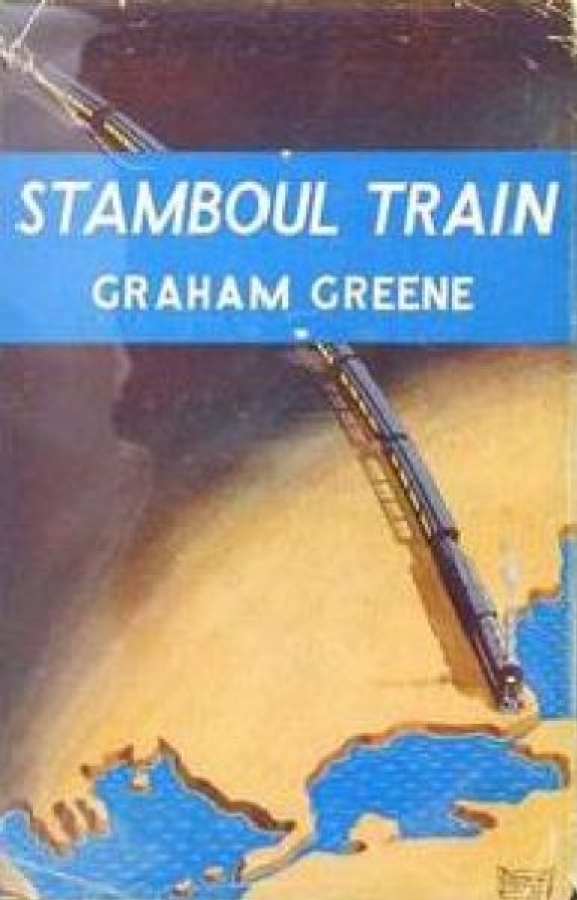
Stamboul Train
The novel recounts the journey from Ostend to Istanbul of a group of travellers: a female journalist with her lover, a young Jewish merchant on a business trip, a thief turned murderer despite himself (on the run), a famous political fugitive, and a young woman named Coral. During the journey, adventures and love stories intertwine, in particular the romance between the young merchant and Coral, between whom a genuine and lasting relationship seems to blossom. At the Hungarian border, the police arrest the political fugitive (tipped off by the journalist), along with the thief and Coral. The three manage to escape, but during the flight the political fugitive is mortally wounded and Coral stops to tend to him. The young merchant, who was waiting with a car, leaves nonetheless for Constantinople, where he enters into a marriage of convenience. All the characters are driven by selfish interests (money, fame, business, etc. ) with the exception of Coral, who gives up the young merchant in order to care for the political fugitive. The girl is thus the only figure who reflects genuine feelings, unmediated by economic and ideological superstructures, but oriented toward the deeper dimensions of human life, such as solidarity toward a person in distress. This novel, too, belongs to Greene’s “entertainment” vein, yet frankly from this perspective it is undoubtedly disappointing: the pacing is slow by the standards of modern detective fiction to which we are accustomed, and in any case insufficient to generate suspense and drive interest in the plot. The most compelling section is the detention at the Hungarian border, as the contradictions of the various characters finally emerge and Coral’s figure comes to the fore. Unlike *Our Man in Havana*, the novel is marked by a pervasive, profound bitterness: selfishness and vacuity invariably prevail over altruism and sincerity. Interpersonal relationships are dominated by false feelings and by the pursuit of self-interest and narcissistic gratification.
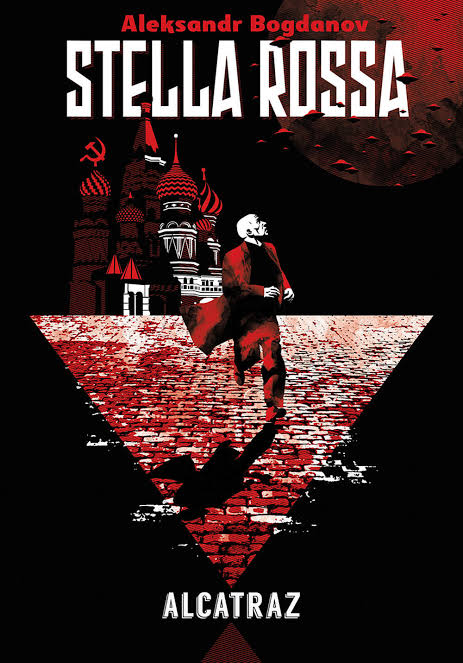
Red Star: A Utopian Novel
In an unspecified year (though let us assume it is 1908), a Martian presents himself to the revolutionary and scientist Aleksandr Bogdanov, inviting him to come to Mars to study its society and disseminate superior Martian values on Earth. The Red Planet possesses a flawless organization that makes it possible, for instance, to assign to each individual the work most useful to the community while simultaneously most congenial to the person, realizing Marx's utopian dictum: "from each according to his ability, to each according to his needs." It is the ideal communist society—one that will not be easy for the revolutionary Bogdanov to accept, vexed as he is by the Martians' attentiveness toward him, which he presumes to be a form of surveillance, whereas instead > the solicitude they showed toward me was the very same—perhaps less frequent—that they displayed when helping one another. (...) I, who came from an individualistic world, involuntarily set myself apart from others and morbidly perceived their kindness and friendly assistance, which I, child of a materialistic world, could not afford to repay. And so, > one had to make haste, one had to summon all one's strength and energy, for the responsibility was colossal! What an immense benefit for our old and suffering humanity, what titanic progress and prosperity would the energetic, vigorous influence of that superior, powerful, and harmonious culture bring! But are we truly certain that Martians and Earthlings are so different? Are we convinced that socialist society dissolves individualistic impulses into a higher sphere where only rationality and solidarity prevail? And what if love were to burst into this exquisitely harmonious society? Netti, a slender and gentle Martian woman, falls in love with the fragile, bewildered Earthling. > I love you not merely as a wife; I love you as a mother accompanying her child into a new, alien existence, fraught with hardships and perils. This love is stronger and deeper than any other capable of binding two beings together. Thus Netti writes to Bogdanov when the latter discovers that she is also married to Stenni—a cold, heartless scientist capable of dissecting everything, yet incapable of understanding people's thoughts and feelings. And there is unquestionably jealousy and antipathy, sentiments so un-socialist, at the root of Bogdanov's murder of Stenni. And there is also homesickness for Earth: > a swarm of familiar faces and past events flickered in my mind (...) earthly landscapes, theatrical scenes, images from children's fairy tales were silently reflected in my soul; as in a mirror, they dissolved and interchanged without any sense of turmoil, but only with a mild curiosity accompanied by a faint sensation of pleasure. In an agitated and confused state, where jealousy and earthly allegiance overlap, Bogdanov cannot help but kill Stenni upon reading the minutes of a secret meeting in which the "cold scientist" urges the invasion of Earth, the extermination of its population, and the plundering of its resources, which Mars desperately needs. Is this a premonition of what was to come, when genocides of entire peoples would be perpetrated behind the veneer of class and racial utopias? What will become of Bogdanov and his beloved Netti? The author envisions Bogdanov being sent back to Earth: using him as a potential "bridge" between the two worlds has proved a failure. Netti journeys to Earth to join him, and then? All that remains > on the parlor table, before a huge, wide-open window, (...) a note. A few words were inscribed there in a trembling hand: "greetings to the comrades, Farewell". Wu Ming imagined a continuation of Bogdanov and Netti's story (see the review of *Proletkult* on this site); yet, as in their preface to *Red Star*, the Bologna-based collective offers a historical-ideological reading, informed naturally by hindsight. What is lost is that crucible of sentiments and relationships that forms the pivot of the plot and keeps the novel so captivating. Why read it? Though at times tedious, the story of Bogdanov and Netti is beautiful.
Stoner
The novel chronicles the obscure career of a professor of English literature. William is the only son of a modest farming family. At the cost of great sacrifices, his parents sent him to study agriculture, in the hope that he would one day return with what he had learned to improve the management of the land. At university, the young Stoner falls in love with literature, and with books. Above all, he chooses the shelter of the university’s secure walls. As a friend once told him: > in the world you would have always been on the brink of success, but you would have been destroyed by your failures. So you chose, you were chosen; providence.... snatched you from the clutches of the world and placed you safe here, among your brothers... Who are you?. A simple son of the soil, what do you expect of yourself? These words prove prophetic of what will be a mundane life: a gradual retreat into mediocrity, shrinking into a corner, accepting defeat before even fighting, demanding little from existence. He marries only to discover immediately that he is not loved, yet he does not rebel; he takes on an exorbitant debt for his modest salary, simply to buy the house his wife desires; and it is she, once again, who decides to get pregnant, giving him a daughter whom William, however, cannot love as he would like and who soon becomes a stranger to him. Our protagonist accepts everything for the sake of an easy life, for a sluggish peace of mind. He falls in love with a young teacher, who reciprocates his love. But when the dean of the faculty urges him to bring the affair to a resolution, what does our “courageous” William do? > He leaned back in his chair and looked up at the low, dark ceiling that had been the sky of their world. He said calmly: if I threw it all away, if I quit and went away, you’d come with me, wouldn’t you? Yes, but you know I won’t do it, don’t you? Yes, I know.... Because then, Stoner explained to himself,... we would both become something else, something other than ourselves. We would be nothing . And like all those who bury “their heads in the sand,” William is quite glad that his young lover left without telling him and that > she left him no farewell note to say things that could not be said . It is better to live within the walls of the University of Columbia, where William had entered as a student, had become a professor, and would retire, as late as possible. No matter if, in the meantime, epochal events unfold in real life, overwhelming the lives of millions of individuals: the First World War, the Great Depression of the 1930s, the Second World War, and the harsh postwar years. As happens with many intellectuals, it is enough to contemplate them, not to live them. It comes as no surprise, then, that he touches a book on his deathbed. Books gave him that security he sought all his life, and for which he renounced truly living. In his introduction, John McGahern states that Stoner is “a real hero” because > he bore witness to values that are important... The important thing in the novel for me is Stoner’s sense of a mission. Teaching for him is a mission.... his mission gave him a particular kind of identity and made him what he was . For teaching, Stoner renounced everything. But are we sure one can be a good teacher by refraining from fighting for the people one loves, from defending one's country, from staying close to the land of one's parents—in other words, educating others without living oneself? And did not William think so as well? At the end of his life, he indeed acknowledges that > he had wanted to be a teacher, and he had become one; yet he knew, he had always known, that for most of his life he had been an indifferent man... Dispassionately, rationally, he contemplated the failure that his life must appear to have been... What did you expect? he asked himself. The academic setting must not mislead us. The real story of the novel is the timeless tale of someone who prefers a mediocre life to an intense existence, habitual and quiet relationships to turbulent yet profound emotional bonds. In short, someone who chooses indifference and withdrawal into oneself (an escape into books?) rather than allowing themselves to be swept away by events and affections. The novel is deemed a masterpiece today, fifty years after its publication. Could the copyright have expired? For it is difficult to fathom what reasons there might be to consider it a masterpiece. To be sure, the writing is exceedingly elegant and grammatically flawless, worthy of a fine professor of English. Yet it is banal, just as the plot proves tedious. This petty academic world is particularly irritating. It is not a slice of the world. It is like reading about the serene life of a medieval monastery while the barbarians rage outside: a useless microcosm. Granted, we live in the era of anti-heroes, but for God’s sake—give us some real stories and characters rich in personality! Why read it? It reads well, but leaves little behind.
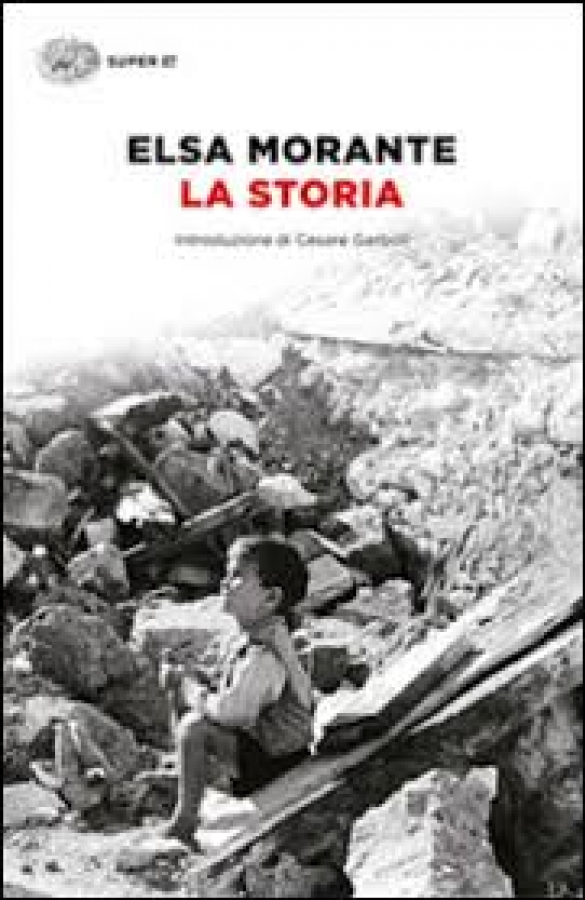
History
> There is no word, in any human language, capable of consoling the guinea pigs who do not know the reason for their death (a Hiroshima survivor). Elsa Morante places this quotation as an epigraph to the novel, indicating that her aim is to recount the victims during a dramatic and painful period of our recent history: the years between 1941 and 1947. It would nonetheless be mistaken to think oneself before a modern version of Riccardo Bacchelli's novel (*Il Mulino del Po*, reviewed on this site), with which the great Bolognese writer intended to narrate post-unification history from the perspective of the humble. And how could that be, when the author is the very same behind *Menzogna e Sortilegio* (see review on this site)? How could we imagine ourselves before a historical, combative, trenchant, ideological novel, when Elsa Morante's narrative universe is oneiric and introspective? Ida, widow Mancuso, lives in Rome: a schoolteacher by profession, thirty-seven years of age, with a restless, engaging son named Nino; she has an > undernourished body, and formless in its structure, with a withered chest and an awkwardly swollen lower half, the face of a worn, delicate little girl. (...) In her large, dark, almond-shaped eyes there was a passive sweetness, of a deep and incurable barbarism, resembling a precognition. (...) The strangeness of those eyes recalled the mysterious idiocy of animals, who know the past and future of their destiny not with the mind, but through a sense of their vulnerable bodies. We shall call that sense (...) the sense of the sacred (...) the universal power that can devour and annihilate them, for the guilt of having been born . While returning home, she is raped by a German soldier, who impregnates her; Giuseppe, known as Useppe, is born. Nino is always out roaming; alone with little Useppe, Ida endures the bombings and the destruction of her house, the evacuation to Pietralata into a vast communal room devoid of intimacy, the harsh German occupation, the deportation of the Jews, and, indirectly through Nino, the partisan resistance; then she somehow retreats into a small rented room, still alone with Useppe, sharing quarters with a family waiting in vain for their son missing in Russia. Finally, she achieves a respectable security that seems to set her on course for a peaceful life. All these tragic events pass through the lives of Ida and Useppe like a fairy tale, wherein the child resembles a cheerful yet wise gnome: > one would have said, indeed, from his laughter, from the constant brightening of his little face, that he did not see things confined within their usual appearances; but as multiple images of other things, infinitely varying . It is as if the song of two woodland birds, whose words were crystal clear to Useppe's ears, expressed in their repetitive refrain the indecipherable meaning of what was taking place: "it's a joke, a joke, all a joke!". Were it not for the fact that Anna Maria Ortese's novel *Il Cardillo addolorato* dates from 1993, and Elsa Morante could thus not have drawn inspiration from the mysterious little song ( > and fly, fly, fly, cardillo...., see the review on this site), there nonetheless emerges the same subterranean world, the magma seething beneath ordering rationality. Ida, Nino, and Useppe seem to survive just like their two dogs, Blitz and Bella, unwitting victims; dreams, on the contrary, reveal from the very beginning the anxieties stemming from the unconscious, submerged in fear and pain, to which one can neither assign meaning nor simply bear witness to such cruelty. Ida walks with her father, who shelters her beneath his coat; when suddenly the coat flies away as if on its own, without her father. And she finds herself a little girl alone along certain mountain paths, trickles of blood escaping her vagina. (...) Instead of running away, she has stopped on the path to play with a young goat.... But she does not notice that the goat is crying out, in labor, about to give birth! And meanwhile, right there, already waiting, is a quartermaster from the electric slaughterhouses....(...) In the dream, Useppe was not on the shore, but in the water of the river-lake. And this water, though enclosed in a circle by the hills, appeared infinitely vast. (...) Useppe swam in this water naturally, like a little fish; and around him throughout the warm lake emerged countless little heads of other swimmers, companions of his. (...) But the most extraordinary thing about this joyful lake was that the circle of hills, battered by the bleak tempest, was mirrored within it, instead, intact and blissful, in the serene fullness of an early summer > . How to attain peace, how to break free from pain? Nothing remains but death or madness. The reader departs from the book with a deeply evocative image. Useppe has fallen ill, suffered an epileptic seizure, Bella rushes toward home to summon Ida, and she awakens from a dream ( and then the kid and she, joyful, board the ship together"), is seized by an "incoherent panic" and rushes to save her son. "The three of them walked, huddled close together: Useppe perched on Bella as on a hobbyhorse, his head resting against Ida's side, who encircled him with her arm to support him > . What muted, melancholy tenderness! Clustered together, in the only solidarity they know, the three hope to save themselves! Elsa Morante stated in a 1959 interview, the novelist (...) presents, in his work, a complete system of the world and of human relations of his own. Only, instead of expounding his system in terms of reasoning, he is driven, by his nature, to configure it in a poetic fiction, by means of narrative symbols" (quoted by Cesare Garboli in the introduction). With the aim of speaking of the victims, the writer seeks to abide by this canon; she gives her novel a nineteenth-century imprint, with a meticulous description of stories, places, and details, in an effort to legitimize the imaginary and grant it coherence. She slips into a lengthy, redundant scene in the manner of Dostoevsky, almost a replica of the Grand Inquisitor chapter from *The Brothers Karamazov* (see review on this site). However, the oneiric world is irrepressible; the unconscious bursts forth and dismantles the novel's overarching order: what emerges is a *zibaldone*, a miscellany where History merges with individual stories in an exaggerated and prolix mixture; Useppe lends a chivalric momentum to the narrative that might have redeemed us, but it is not enough. Why read it? Certainly a great novel, but surely not on par with *Menzogna e Sortilegio*.
The Story of the Golden Yoke
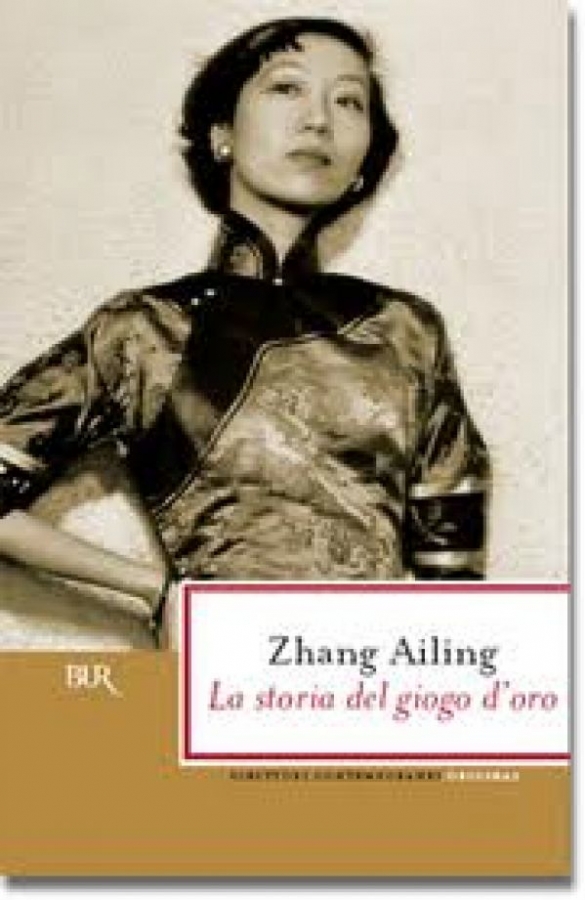
The novel is set in Shanghai between 1911, the fall of the Chinese empire, and the late 1930s, just prior to the Japanese occupation. Traditional China is unraveling; the centuries-old certainties underpinning the families at the apex of the social hierarchy—the imperial bureaucracy and the vast landed estates—are collapsing. It is a prolonged transitional period, in many respects akin to the one we are experiencing today. Against this backdrop, the author tackles a universal theme: the madness spawned by familial rules and relationships, the devastating effect of the "redundancy of artificial appearances." Cao Qiqiao comes from a family of shopkeepers and has married the "second elder brother" of a high-ranking, albeit declining, house. In doing so, she has made a social leap, becoming the "Second Sister-in-law," but she has entered a > great clan, where the older generations use their prestige to oppress others, and the younger ones are like wolves and tigers . Qiqiao is well aware of being despised for her inferior background; she must tend to a husband disabled since birth, with whom she has shared sporadic moments of intimacy; she hates her own brother, who traded her away in exchange for a handsome dowry and relentlessly pesters her for money. She is alone, feels like a captive, akin to > a butterfly specimen inside a glass case, dazzling and desolate . She harbors a profound resentment, which vents itself in malice and gossip meant to harm her sisters-in-law, "young ladies from honored and respectable families." She anxiously awaits the moment she can come into her inheritance and become wealthy. Yet she is shortchanged by the "Old Master," the head of the family, who favors male heirs over females and factors her humble social origins into the division of the estate. Qiqiao retreats into her home, guarding the assets she inherited and raising her children. Her self-hatred—born of a bitter fate and the failure to seize the few opportunities that came her way—translates into a burgeoning madness. > It seemed to her that before her eyes was a veil of frozen pearls, which a gust of hot wind pressed against her face; then the wind passed, sweeping the veil away with it, and before she could catch her breath, the wind blew once more, enveloping her entirely—head and face—one gust cold, one hot . Growing ever more vicious and violent, she seeks solace and oblivion in opium. Her lucid madness is destructive, both to herself and to those around her: her daughter, whose prospects of marriage she destroys and whom she turns into an opium addict; her son, weak and corrupted, subjugated to his mother's despotic will; her daughter-in-law, despised, abused, alienated from her husband, and forced to retrace Qiqiao's own wretched existence; even the son's concubine, though elevated to the status of wife, cannot endure the familial atmosphere and kills herself. > Qiqiao lies dozing on the opium couch. For more than thirty years she has worn this golden yoke around her neck; she has used its heavy corners to strike down several people, and those who did not die now live only half-lives. (...) Feeling the jade bracelet on her wrist, she pushes it up her bony arm, now thin as a matchstick, until it reaches her armpit, and then slides it back down again. She can hardly believe she had plump, rounded arms in her youth. (...) They are all ghosts—ghosts from decades ago, ghosts that were never born... What is truth? What is a lie? The theme of madness within enclosed domestic walls is a well-trodden subject in literature. Were it not for the Chinese context, the story would not be particularly innovative. The depiction of the rigid and ruthless hierarchy of the great Chinese clans evolves rapidly: the characters move with greater freedom and could make their own choices, as tradition has by now grown frail. And herein lies the drama. Qiqiao, her children, and the other minor figures could forge lives of their own, but they do not—out of indolence, resignation, and a self-destructive urge. It is as though the author were critiquing her own social milieu, the upper-middle class of Shanghai, offering a characteristically Western novel that allows no sheltering behind the constraints of custom. Yet Zhang Ailing is not so severe; she favors "nuanced contrast," achieving it through description: the use of color, the interplay of moonlight and shadow, and interiors cluttered with now-useless objects evoke an existential desolation, a sense of an irrevocable and therefore universal destiny. It is not merely Chinese society, but the human condition at large. > Bluish shadows on the floor, and bluish shadows on the canopy ceiling, and even her feet are steeped in that deadly shadow. (...) Outside the window hung that bizarre, hair-raising moon, a glittering little white sun set against a black lacquer sky. (...) Such an expansive room, crammed with chests and trunks, mattresses, bedding, among which she would surely find a sheet to hang herself from. (...) She was afraid of this moon, yet lacked the courage to turn on the light . Why read it? A brief tale, captivating in its narrative style.

The Stranger
Beatrice, known as Bea, is a young woman from Turin, raised in a typical middle-class family, a lover of mountains, climbing crags, and ascents of great peaks—of that view of mountaineering as a performance, a competition with oneself and with others. We know little about her, because the author does not probe Bea's history prior to her choice: going to work in a mountain refuge. We catch a glimpse of a solitary, restless soul seeking an authentic life, one she can no longer find in the city, nor on the high peaks. When she is already working at the refuge and has begun a tenuous romance with Elbio, “the handsome shepherd,” Bea recounts to the boy—awestruck and in love—her encounter with a Sherpa, whom she asked what it felt like to stand on Everest. The man simply replied that it is beautiful. > I was expecting a revelation about life, I don't know. I was disappointed, but he was probably more disappointed, because I was yet another person who understood nothing about the mountains. (...) In reality, there is nothing. Only ice, rock, and so much sky. The novel, instead, speaks of larch forests, refuges at the foot of peaks, high pastures and mountain dairies—places often visited, but for us merely incidental to sublime vistas. Aidala recounts life in these settings with meticulous care: there is the Barba, the refuge warden, gruff and stubborn as a man living in the high mountains must be; there are her co-workers, all male, who welcome Bea among them as though she were one of the boys, with just a hint of affectionate chivalry; there are the hikers, numerous on weekends, clamorous, demanding, and often ill-mannered, as tourists all too often are. And there are also the men and women of the high pastures, where livestock are driven to graze during the summer. Bea's eyes still light up at the sight of high summits, but she is already drawn to the prosaic, harsh reality of mountain life. > The refuge was situated at the threshold of a plateau that opened onto an amphitheatre of peaks, the highest in the entire valley. (...) The Becca (a 3,000-metre peak in the spurs of Monte Rosa) loomed before me with its severed pinnacles, upon which the white grip of the ice had loosened its talons. From the refuge terrace, they seemed to wrap me in an embrace that, on that day of dark clouds, had turned into a vice. (...) Through the fog, the approach of the cows could be sensed from the clanging of cowbells, the herders' calls, the barking of dogs. The very orchestra that had arrived up here in early June was now moving elsewhere: the cold was swooping down like a hawk, the pastures future horizons of barren earth. Suspended between so many worlds (nostalgia for the din of the city, the still-vivid allure of the peaks, the subtle pull of the mountain's nature and its true inhabitants), Bea seems to have found an equilibrium in the arduous work of the refuge, in friendship, in the stern, paternal figure of the Barba. So deep is her conviction that she has found her true element that Bea stays with the Barba even through the long winter, when the refuge sees few visitors or is entirely cut off by snow. Until an incident bursts in to shatter this certainty. Left alone at the refuge, she loses her composure the moment Alpine Rescue asks her to alert the Barba and hold the post regardless: two mountaineers are lost on the Becca. > That people die up there is something you have to accept, like an apple falling from a tree. (...) For me, those were days of confusion. The refuge felt distant; I drifted aimlessly. I had believed I had managed to carve out a space for myself amid elbows and shoves, sleepless nights, grueling shifts. (...) Everything was familiar to me, and yet nothing belonged to me anymore. For the first time, I felt truly «strangera»—an outsider, without a homeland, without a home to return to. Bea resolves to leave the refuge and seek a new life, in mountains far from the great peaks, from those summits: splendid and mysterious, cruel and murderous. If the central theme of the novel is the relationship with the mountain—one so dominant as to overshadow the analysis of Bea's personality and her tenuous loves—there is another subject running throughout the narrative: the relationship between the girl and the Barba. He initially appears as a hardened man, with his precise orders, with those sharp words that seemed to carry > a different gait, a suspicious cadence. (...) The Barba had (...) a stern face, uncouth movements, an angular tenderness. Had he been a tree, he would have sprouted as a walnut. Normally, the walnut tree does not grow at high altitude; it is not found deep in the woods, and stands always solitary. His exchanges with Bea—this clueless city girl!—are summed up in one scornful phrase: > You don't understand anything about this place. Little by little, beneath this crust of a gruff mountaineer, a patient and trusting old man emerges, granting the girl room: small changes to the refuge routine, two cats Bea wanted to keep the mice away, Elbio's presence with the lovers' displays of affection, Bea's requests that the boy be allowed to stay the night—requests all the more disconcerting to the Barba because the poor lad is invariably sent home. Besides, only Bea can decide whether to make love or not! Slowly, we come to learn the Barba's story, his solitude: a desire to live secluded that he shares with Bea, as though he were the girl's mirroring self. During the long winter at the refuge, Bea is no longer the city girl oblivious to mountain life; to the Barba, she has become a kind of daughter—the embodiment of everything he never had, or never wanted out of a scornful rejection of others. And so, when Bea reveals her decision to return to the city, perhaps for a few days, perhaps forever, the impostor Barba deceives her, asking her to wait a few days even though he knows snow is on the way, making it impossible to leave the refuge. It is the frailty of a lonely old man; for Bea, it is a betrayal that definitively severs her bond with the Barba. > Had the mountain been alive, she and I would have been kindred spirits at that moment. I felt stripped bare, like a slope from which an avalanche has just broken away. The few passages cited here give a sense of Aidala’s style; one might define it as a lyrical approach, charting the protagonist’s inner states through descriptions of landscapes, situations, and events. In an ambiguous, suspended play of elegant, fluid prose, Bea never truly reveals herself to the reader; she remains concealed behind the mountain's light and shadows. Everything seems ethereal and distant; this impression stems also from the tenuousness of the plot and the evanescence of the characters: faded figures that would have demanded a writer more willing to delve into their psychology, to inhabit the viewpoint of others as well, and not just her own. Why read it? It places at its center a mountain rarely chronicled.
Suite Française
Following the defeat of the French army in 1940, the Germans occupied France until 1944—directly in the North and via the collaborationist Vichy regime in the South. Despite dire circumstances (Némirovsky and her husband being Jewish), the author embarked upon a grand fresco of a defeated France, not so much to discern its causes or analyze its events, but to address a single question: did the war, the defeat, the flight, and the coexistence with the invader change the French people? The answer is that > nothing was changing, everything remained the same, that they were not witnessing an extraordinary cataclysm, the end of the world as they had believed, but rather a series of human relationships, bounded in time and space. The author was only able to complete the first two parts of *Suite Française* before being deported to an extermination camp. The first part, "Storm in June," recounts the frantic and terrified exodus of Parisians in June 1940, doing so through microcosms that mirror the social structure of the French bourgeoisie: the wealthy Péricand family, steadfast in their wealth and adherence to authority; Gabriel Corte, a renowned man of letters, self-assured yet disgusted by such fleeing rabble; the Michaud couple, loyal bank clerks betrayed by the cynical banker Corbin; and finally Charlie Langelet, a vain and miserly collector, willing to do anything to save his porcelain. They are clearly archetypes, treated with affectionate irony in their struggle for survival, to save themselves, their family, and their worldly goods. They are patriots, but sensible ones; charitable within reason; pragmatic in their moral principles, always ready to adapt them to circumstances. Whoever naively believes that war is an opportunity for redemption will meet the fate of Philippe Péricand, brutally murdered by the young orphans entrusted to his care. It is better not to lift the lid on the human soul, lest we discover that we are "between Satan and God, plunged in deep darkness." The second part of *Suite Française*, "Dolce," is set in a village in central France, a small town occupied by the Germans. The author recounts the relationships between the locals and the invader by taking small-scale incidents as her starting point. Shades of gray prevail over black and white. The troops are composed of young soldiers, disoriented and eager for acceptance; the population professes hostility yet seeks coexistence, at times pursuing personal gain, if not actively collaborating. Némirovsky abandons irony and sweeping strokes, immersing herself instead in detailed descriptions of the settings, in a realistic yet severe portrayal of an obtuse rural bourgeoisie. There is a faint undercurrent of disdain, softened only in the figure of Lucile. Married to a narrow-minded and unfaithful man, currently a prisoner of war, the young woman lives a bleak existence with her grim mother-in-law. She falls in love with a young German officer; in him, Lucile sees not merely a gentle, cultured, and refined man, so unlike her husband, but glimpses the possibility of change: > to be free, inwardly, to choose my own path, to follow it, not to follow the swarm. (...) I am a poor, useless woman, I know nothing, but I want to be free! . And romantically, the young officer, himself a prisoner of conventions, of Ideas, and of the State, dreamed for Lucile of a > white dress with wide muslin flounces, flared like a corolla, so that dancing with her (...) every now and then he would feel around his legs the frothing rustle of her lace . These are dreams, futile hopes. The killing of a German by a partisan, who is then hidden by Lucile herself, brings both back to harsh reality: > those quiet peasants with impenetrable faces, those women who only yesterday were smiling, (...) were nothing more than a mass of enemies! Lucile cries: > Never, no! No! Never! Never would she be his. (...) What made them enemies was neither reason nor the heart, but those dark impulses of the blood on which they had relied to unite them, and over which they had no power whatsoever . The novel was published posthumously in 2004 to great critical and commercial acclaim. The tragic human ordeal of the author perhaps fostered an overly flattering critical reception. The first part has a lively and engaging pace, but the narrative leads nowhere; it remains as if suspended, with even grotesque conclusions that recall the paradoxical, unsettling stories of Dino Buzzati (think of "Fear at the Scala" in Dino Buzzati's *The Sixty Stories*, reviewed on this site). The second part, undoubtedly more robust from a psychological standpoint, is reminiscent of Émile Zola's *The Earth* (*La Terre*), offering an all-too-predictable depiction of the narrow-mindedness and cowardice of the rural bourgeoisie. The figures of Lucile and the handsome officer are too steeped in romanticism—at times cloying—to be truly compelling. Why read it? Enjoyable: the prose is elegant and fluid.