Jakob Wegelius
Books by this author (2)
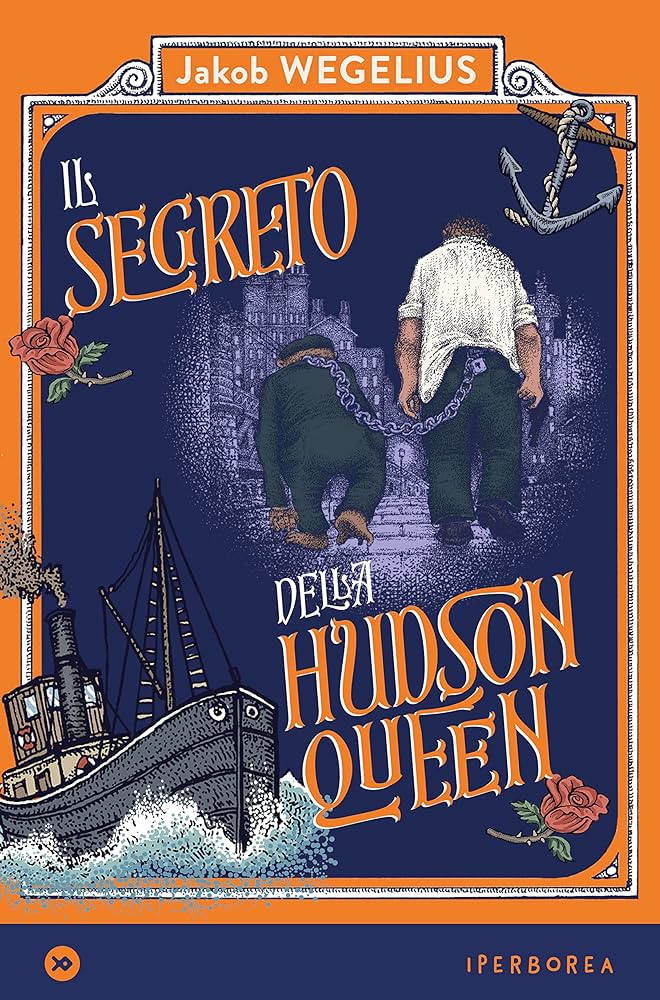
The Secret of the Hudson Queen
It is singular to review this novel immediately after reading Emilio Salgari's *La perla sanguinosa* (see the review on this site): a curious coincidence, almost as if pearls were inherently the bearers of adventure and misfortune. And indeed, when Sally Jones and the Chief find a pearl necklace hidden in a secret compartment within their ship’s steering wheel, Sally, with the wisdom of an intelligent ape, experiences > an unpleasant sensation in the pit of my stomach. (...) The pearls of the necklace (...) seemed to emanate a faint, mysterious light from within. Unlike Salgari’s fantastical setting, here the pearls lead us into the "underworld" of seafaring cities: violent and perilous slums for our ape, seemingly fragile and defenseless. The narrative resumes from the point where we left it in the previous novel (see the review of *The Murderer’s Ape* on this site); yet here the element of surprise is missing because we already know Sally, and we are deprived of both the charm of a seafaring, piratical Lisbon and the savor of noir intrigue. The story unfolds in Glasgow. Sally and the Chief set off in search of the pearls' presumed owner, the orphan Rose, abandoned as a child by her father, who wished to bequeath the jewel to her as a form of redemption. They find themselves plunged into the underworld of the English city: the Chief is forced to captain a ship smuggling alcohol to America, while Sally is held hostage by a criminal gang. Harassment, clashes between underworld syndicates, violent nightlife, and even boxing bouts follow in rapid succession, sweeping up the poor, frightened Sally, who becomes an object of curiosity, derision, and exploitation. Sally is guarded by Bernie the Butcher: a hulking, rather dim-witted young man notorious for his sudden, uncontrollable rages, himself the victim of mockery and abuse at the hands of the other criminals, and even his own sister. It is the friendship between Sally and Bernie that forms the crux of the story. Sally has numerous opportunities to escape, yet she stays to help poor Bernie, not wanting to leave him alone, determined to defend and save him. Faced with the blaze consuming the house in which his sister might perish, Bernie gathered momentum to throw himself into the fire as well, and then > I wrapped my long arms around him, (...) immediately took him by the arm and led him back onto the bridge, away from the burning building. The wise and gentle Sally discovers herself no longer fragile, but a mother figure to the hulking Bernie. How far removed we are from the mysterious and melancholic atmosphere of *The Murderer’s Ape*! All the enchantment of the previous novel has dissolved into a verbose plot, where the twists fail to lend rhythm to the narrative. One plods along, hoping to recover the characters, the drama, and the writing that had once held us so spellbound. It is a futile quest; only the friendship between Sally and Bernie rescues the work from utter disappointment, yet it is a relationship merely sketched, lacking in depth, that fails to truly engage. Why not read it? It is boring.
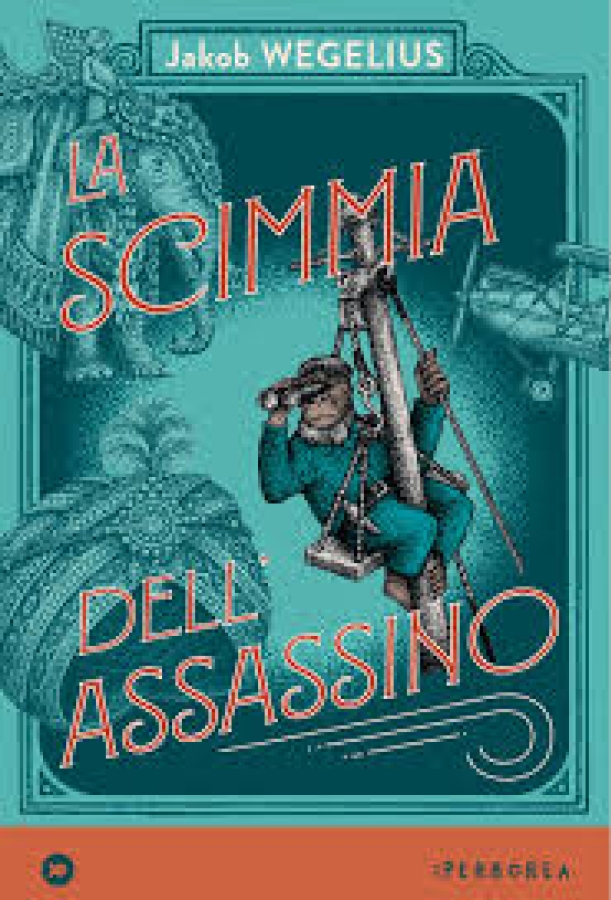
The Murderer's Ape
> For those who do not know me, it is best to state first of all that I am not a human being. I am an anthropoid ape. (...) How I ended up among humans I do not know, and in all likelihood I never will. Sally Jones, the simian narrator of this novel, is intelligent; she lacks only the gift of speech, but understands human language, knows how to write (which is how she communicates), and is exceptionally skilled at repairing mechanical objects, from ship engines to musical instruments and an old typewriter, with which she presumably penned "her memoirs." Her gifts (technical prowess, dedication to work, a deep sense of friendship) have made her the indispensable companion of a solitary seaman, owner of an old boat. Finding themselves in Lisbon, waiting for cargo to haul, Sally Jones and her Chief cross paths with Alphonse Morro, ( > he had a thin, deathly pale face and a tormented look), who charters the ship to pick up cargo—officially tiles, in reality crates filled with weapons. In a series of unpredictable events (the sinking of the boat, the unexpected encounter with Alphonse Morro ( > his eyes seemed to be bulging from their sockets in terror ) and the latter's disappearance at sea, the captain is accused of having murdered Morro, whose body is nowhere to be found. While the man is taken to prison, Sally Jones flees into a hostile, shadowy Lisbon. Trembling and hungry, she takes shelter in an attic, when there reaches her, as if in a dream, a song, > a sad and beautiful voice, (...) and suddenly, without understanding why, I felt a sense of warmth wash over me. (...) The woman was sitting before the open window of a dormer. As she sang, she worked on something in her lap. She wore a shawl, and her dark hair was gathered in an untidy bun. From this point on, the narrative unfolds into a series of adventures that lead Sally Jones from Lisbon on the run to distant India, only to return to the Portuguese city, ever determined to prove her captain's innocence. It would be tedious to retrace every episode, continually marked as they are by dramatic twists, new characters, and a suffused atmosphere of melancholic hope. Whence comes the gentle strength of Sally Jones, this strange ape? It springs from Love, expressed through the profound bond linking the ape to the people she encounters—those who help her and whom she helps in turn: the sorrowful Anna, a poor factory worker and wondrous Fado singer; Fidardo, the surly musical instrument repairer; the cemetery keeper where Sally Jones discovers the grave of Morro’s fiancée and her tragic love story; the eccentric maharajah, to whom Sally Jones is no courtier, but a true friend; and finally Alphonse Morro himself, in truth a suffering victim racked with remorse. There are villains too, manifestly stronger than the poor ape; how often does Sally Jones curl up on the bed, feeling tears well up, overwhelmed by fear and longing! Stubborn, seemingly fragile yet steadfast in her values, Sally Jones is a harbinger of hope at a time when we—adolescents and adults alike—stand in great need of it. The novel is divided into three parts: the first and third set in Lisbon, the second in India. One must wonder why the author devoted so many pages to Sally Jones's sojourn with the maharajah, dissipating Lisbon's enchanting atmosphere in trite descriptions. Reading the pages set in the Portuguese city, one feels imbued with that melancholic sense of existence so distinctive of Lisbon; and the author has proven exceedingly deft at lending contrasting palettes to the streets and the sky—somber in the first part, radiant in the last, when Sally Jones returns to her friends and familiar haunts. And what can be said of the song, the Fado, which threads through the entire narrative, managing to convey even to the maharajah the sweet sorrow of Portuguese music, capable of transforming a self-absorbed man into a generous and benevolent soul, at least once in his life. The plot alone would not have sufficed to give depth to the story. It is the prose that defines the entire narrative: fluid, deceptively simple, alternating between dialogue, the ape's inner reflections and states of mind, and deft atmospheric descriptions; the style captivates the reader, even in passages that are frankly prolix and redundant. Why read it? Sally Jones seems to personify Kant’s categorical imperatives: liberty, equality, and fraternity.