Finished reading on: December 06, 2021
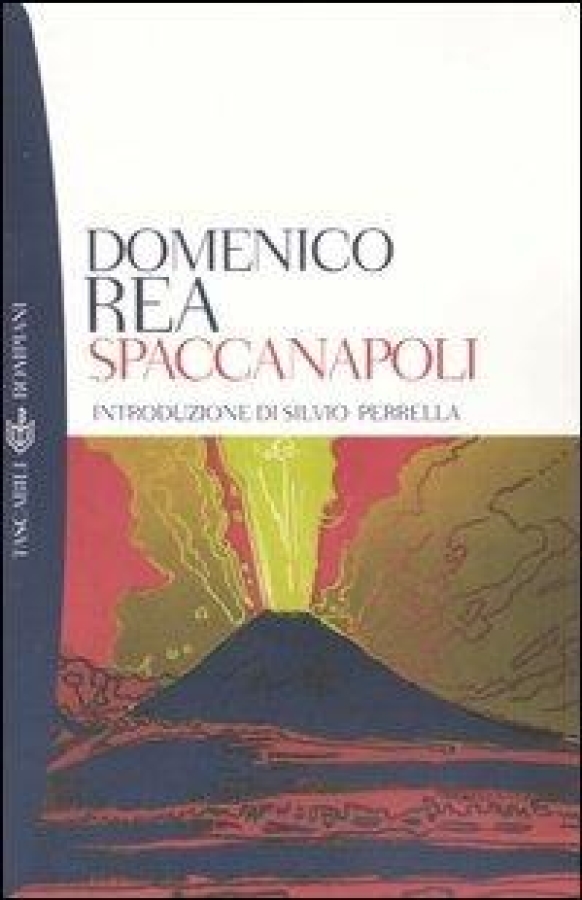
Spaccanapoli
AI Translation Notice: This review was translated from the original Italian using artificial intelligence. Book quotes and excerpts are translated interpretations and will not match the author's original English phrasing or official published translations.
The book is a collection of short stories written between 1943 and 1947, expressing the author’s effort to reckon with reality, with the lush, carnal, amoral, and shrewd humanity of that “Babel of history” that is Naples: hence, in all likelihood, the title Spaccanapoli, the thoroughfare around which the city’s life has always gravitated. Let it be said at once that this reckoning with reality was not entirely successful; indeed, the narrative is steeped in a dreamy, melancholic hope. In the first story (“La figlia di Casimiro Clarus”), set in a small town in northern Italy “where men are courteous and live on few words,” the now elderly narrator believes he catches a glimpse of the woman he loved in his youth and calls out to her: in his imagination he longs for her once more, but she is not there; he was mistaken. “She always wore a broad-brimmed yellow hat, with violets in the ribbon.” Immediately I would say, Katy, are you here? No, I am not, she replied. Then I would chase after that butterfly
. If one could still afford to write of lukewarm loves before the war, afterward Rea
felt the need to use a linguistic system closer to the new reality
. The subsequent stories are sketches of Neapolitan society, where a cynical instinct for survival prevails, allowing the characters to get by. Take
L'Americano
. A poor baker’s boy takes advantage of the attentions of his master’s wife, wins the infatuation of the young duchess, and finally, getting ahead of himself, brings a prostitute from Taranto with whom he stirs up both scandal and envy. Having killed the young duchess’s fiancé, he flees to America where he becomes a ganghesterro, impregnates a wretched prostitute, makes his fortune, and returns to Italy, abandoning the girl to her fate.
Having landed, I went to the Madonna of Pompeii. (...) May I become an old man who looks like a boy, for I have harmed no one, I tell you as a son. (...) I will buy you the diamond-studded slippers. (...) I am a good man. (...) 'Go,' the Madonna gestured with her finger
. It reads like a novella by Boccaccio. The influence of the great fourteenth-century writer is glimpsed in another story,
L'interregno”. The opening of the narrative bears the stamp of the plague described by Boccaccio. “In our mild country, the war had arrived by report.” The return of peace was feared, because “it was also that of commercial legality and taxes on war profits. (...) Many idlers owed the flourishing of their clandestine trades to the dark. (...) The middle class fretted over it. But they were few in number and likewise strictly bound to propriety and restraint, sacrificing proud appearances
. But then war bursts in, the poor rush into cellars for shelter, while the rich,
the quickest to notice in the mirror that their consciences were tarnished, promptly took them out through secret doorways to be aired in the countryside
. The life of the refugees is rendered with bold, incisive strokes, without neglecting the personal fortunes of the protagonist—a decent man with a shrewd knack for seizing whatever opportunities present themselves, be they of love or money.
The distinctive hallmark of the stories is the writing: at times linear, but more often poised between prose and poetry, with stylistic inflections typical of Boccaccio. Take as an example this passage from another story,
I capricci della febbre
. The protagonist has been hospitalized for smallpox, and there he encounters a nurse.
The muscles of my thighs quivered at a fresh draft of air. But she took it as a call of love: (...) and, with arms raised as if surrendering, she fell to her knees with a loud clatter before my shame, which she stared at in astonishment. (...) I am a poor girl. I'm afraid to go out in the middle of the street to sin. With you, I was doing it out of pure love. (...) I could no longer keep my memory still: another Nina, the one summoned in delirium, blurred into this living one: incredible before my eyes.” And it is precisely the analysis of this fleeting amorous encounter that pinpoints the difference between Rea and Boccaccio: in the former, the narrative unfolds in a state of yearned-for reality (the rediscovered woman, the cynical self-justification, the fantastical life under the bombs); in Boccaccio, the narrative possesses the same voluptuousness of language, but is developed from the perspective of an urchin who jests and refuses to become embroiled in the events and characters.
Why read it? Evocative, even if often difficult to decipher