Marta Aidala
Books by this author (1)
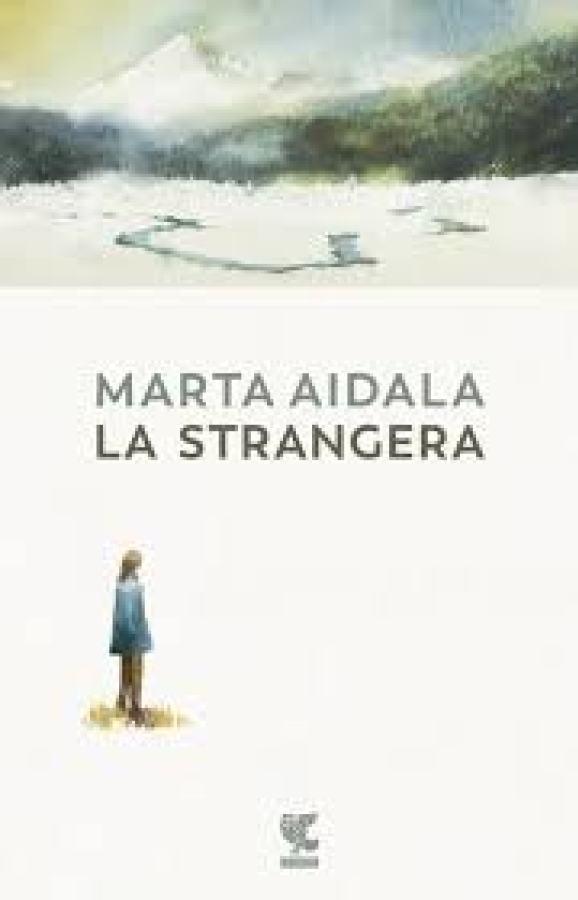
The Stranger
Beatrice, known as Bea, is a young woman from Turin, raised in a typical middle-class family, a lover of mountains, climbing crags, and ascents of great peaks—of that view of mountaineering as a performance, a competition with oneself and with others. We know little about her, because the author does not probe Bea's history prior to her choice: going to work in a mountain refuge. We catch a glimpse of a solitary, restless soul seeking an authentic life, one she can no longer find in the city, nor on the high peaks. When she is already working at the refuge and has begun a tenuous romance with Elbio, “the handsome shepherd,” Bea recounts to the boy—awestruck and in love—her encounter with a Sherpa, whom she asked what it felt like to stand on Everest. The man simply replied that it is beautiful. > I was expecting a revelation about life, I don't know. I was disappointed, but he was probably more disappointed, because I was yet another person who understood nothing about the mountains. (...) In reality, there is nothing. Only ice, rock, and so much sky. The novel, instead, speaks of larch forests, refuges at the foot of peaks, high pastures and mountain dairies—places often visited, but for us merely incidental to sublime vistas. Aidala recounts life in these settings with meticulous care: there is the Barba, the refuge warden, gruff and stubborn as a man living in the high mountains must be; there are her co-workers, all male, who welcome Bea among them as though she were one of the boys, with just a hint of affectionate chivalry; there are the hikers, numerous on weekends, clamorous, demanding, and often ill-mannered, as tourists all too often are. And there are also the men and women of the high pastures, where livestock are driven to graze during the summer. Bea's eyes still light up at the sight of high summits, but she is already drawn to the prosaic, harsh reality of mountain life. > The refuge was situated at the threshold of a plateau that opened onto an amphitheatre of peaks, the highest in the entire valley. (...) The Becca (a 3,000-metre peak in the spurs of Monte Rosa) loomed before me with its severed pinnacles, upon which the white grip of the ice had loosened its talons. From the refuge terrace, they seemed to wrap me in an embrace that, on that day of dark clouds, had turned into a vice. (...) Through the fog, the approach of the cows could be sensed from the clanging of cowbells, the herders' calls, the barking of dogs. The very orchestra that had arrived up here in early June was now moving elsewhere: the cold was swooping down like a hawk, the pastures future horizons of barren earth. Suspended between so many worlds (nostalgia for the din of the city, the still-vivid allure of the peaks, the subtle pull of the mountain's nature and its true inhabitants), Bea seems to have found an equilibrium in the arduous work of the refuge, in friendship, in the stern, paternal figure of the Barba. So deep is her conviction that she has found her true element that Bea stays with the Barba even through the long winter, when the refuge sees few visitors or is entirely cut off by snow. Until an incident bursts in to shatter this certainty. Left alone at the refuge, she loses her composure the moment Alpine Rescue asks her to alert the Barba and hold the post regardless: two mountaineers are lost on the Becca. > That people die up there is something you have to accept, like an apple falling from a tree. (...) For me, those were days of confusion. The refuge felt distant; I drifted aimlessly. I had believed I had managed to carve out a space for myself amid elbows and shoves, sleepless nights, grueling shifts. (...) Everything was familiar to me, and yet nothing belonged to me anymore. For the first time, I felt truly «strangera»—an outsider, without a homeland, without a home to return to. Bea resolves to leave the refuge and seek a new life, in mountains far from the great peaks, from those summits: splendid and mysterious, cruel and murderous. If the central theme of the novel is the relationship with the mountain—one so dominant as to overshadow the analysis of Bea's personality and her tenuous loves—there is another subject running throughout the narrative: the relationship between the girl and the Barba. He initially appears as a hardened man, with his precise orders, with those sharp words that seemed to carry > a different gait, a suspicious cadence. (...) The Barba had (...) a stern face, uncouth movements, an angular tenderness. Had he been a tree, he would have sprouted as a walnut. Normally, the walnut tree does not grow at high altitude; it is not found deep in the woods, and stands always solitary. His exchanges with Bea—this clueless city girl!—are summed up in one scornful phrase: > You don't understand anything about this place. Little by little, beneath this crust of a gruff mountaineer, a patient and trusting old man emerges, granting the girl room: small changes to the refuge routine, two cats Bea wanted to keep the mice away, Elbio's presence with the lovers' displays of affection, Bea's requests that the boy be allowed to stay the night—requests all the more disconcerting to the Barba because the poor lad is invariably sent home. Besides, only Bea can decide whether to make love or not! Slowly, we come to learn the Barba's story, his solitude: a desire to live secluded that he shares with Bea, as though he were the girl's mirroring self. During the long winter at the refuge, Bea is no longer the city girl oblivious to mountain life; to the Barba, she has become a kind of daughter—the embodiment of everything he never had, or never wanted out of a scornful rejection of others. And so, when Bea reveals her decision to return to the city, perhaps for a few days, perhaps forever, the impostor Barba deceives her, asking her to wait a few days even though he knows snow is on the way, making it impossible to leave the refuge. It is the frailty of a lonely old man; for Bea, it is a betrayal that definitively severs her bond with the Barba. > Had the mountain been alive, she and I would have been kindred spirits at that moment. I felt stripped bare, like a slope from which an avalanche has just broken away. The few passages cited here give a sense of Aidala’s style; one might define it as a lyrical approach, charting the protagonist’s inner states through descriptions of landscapes, situations, and events. In an ambiguous, suspended play of elegant, fluid prose, Bea never truly reveals herself to the reader; she remains concealed behind the mountain's light and shadows. Everything seems ethereal and distant; this impression stems also from the tenuousness of the plot and the evanescence of the characters: faded figures that would have demanded a writer more willing to delve into their psychology, to inhabit the viewpoint of others as well, and not just her own. Why read it? It places at its center a mountain rarely chronicled.