Lev Tolstoj
Books by this author (3)
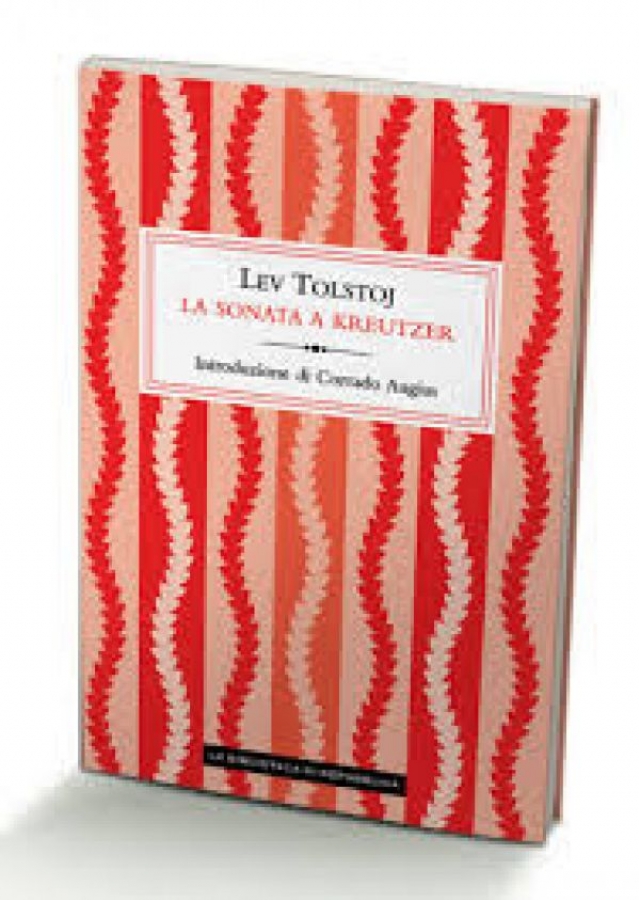
The Kreutzer Sonata
During a long train journey, the passengers begin a discussion on the institution of marriage. Can there be spiritual affinity in married life, or is it nothing more than > a horrifying hell, on account of which one ends up an alcoholic, shoots oneself, or commits murder ? The conversation is abruptly interrupted when a traveler declares that he is “the one who, fancy that, killed his wife.” And he begins to recount his story. Like most men, he had led a licentious life for many years, frequenting brothels and despising women, from whom he sought only sexual pleasure. Then, like everyone of his social standing, he married, because that was simply what one must do. Already during the honeymoon, > the infatuation had run dry with the satisfaction of the senses, and we found ourselves facing one another in the true reality of our relations: that of two egoists, utter strangers to one another, wishing for nothing more than to extract from the other as much pleasure as possible . For many pages, the narrative serves as an occasion to discuss marriage and, more broadly, the relations between men and women: reflections to which Tolstoy would return more explicitly in his postscript. We must live an authentic life, the great Russian writer asserts, in the service of a higher ideal: love of God and of one’s neighbor. Along this path, marriage—a mere compliance with external rules—is a disruptive impediment, because > one ends up dedicating the finest period of one’s existence—men, respectively, to eyeing, seeking out, and possessing the finest objects of love in the form of love affairs and marriage, and women and girls to luring and drawing men into an affair or into marriage . And to those who counter that marriage legitimizes sexual relations without which there would be no procreation, and thus the human species would become extinct, Tolstoy responds drastically: > a Christian would be conscious of not sinning or not falling, in marrying, only if the necessities of life were guaranteed for all the children in the world . Is the novella, then, a moral essay? In large measure, yes, and that is how his contemporaries interpreted it. At a certain point, however, comes an unexpected turning point. The protagonist, the murderous narrator, attends his wife’s concert, in which she plays, alongside her lover, a piece by Beethoven: the first presto of the *Kreutzer Sonata*. Many authors have written about music, more often than not associating listening with an elevation of the human soul. Tolstoy astounds us once again. > They say that music elevates the soul: nonsense, it isn’t true! (...) Music compels me to forget myself, my true state of mind; it transports me into a different, alien situation; under the spell of music, I seem to feel what I do not actually feel, to understand what I do not understand, to be capable of what I am incapable of. (...) Upon me, at least, this piece had a terrible effect; feelings were revealed to me that seemed completely new, new possibilities I had never known before. Not as I had previously thought and lived, but as though a new voice were speaking within my soul . And an irrepressible force rises within the protagonist’s consciousness, one the reader has already encountered in the final pages of *Anna Karenina*, immediately before the suicide: > some demon, entirely outside my will, devised and suggested the most bloodcurdling hypotheses . From this moment on, the narrative, previously slow and somewhat tedious, becomes relentless and overwhelming, driving toward a dramatic scene. Returning home unexpectedly, he catches his wife and her alleged lover in the drawing room; first he attacks the man, who flees—unpursued, at that (“it was ridiculous to run in stockinged feet”—even during a murder, bourgeois propriety prevails!); then he violently turns upon his wife, stabbing her to death. He even has the impudence to beg her forgiveness. “Forgive you? That is nonsense. If only I didn't have to die!” the woman replies. The novella hinges entirely on its final forty pages, both from a literary standpoint and in terms of thematic substance. The narration of the murder, as the final act of a lucid and frenzied hatred, possesses an astonishing expressive power: even while foreseeing the inevitable conclusion, the reader hopes until the very end that something might happen (a pang of conscience, someone’s intervention), before ultimately surrendering to a sentence terrible in its cold matter-of-factness. > I felt and remember the momentary resistance offered by the corset, and beneath it something else, then the knife sinking into the softness . Tolstoy’s condemnation of the man is clear and unequivocal: the victim is the woman, the culprit is the husband, who is fully conscious of what he is doing. The judges will decide otherwise, acquitting the murderer on the grounds of the alleged adultery. Conscience will not acquit him, and the novella closes with a desperate plea for forgiveness. Why read it? If one pushes past the first eighty pages, one discovers a story of femicide, recounted by a great writer.
Anna Karenina
The novel relates two parallel storylines originating in Kitty’s refusal to marry Levin, favoring the handsome and dashing officer Vronsky. From this act of vanity and levity, immediately undone by Vronsky falling in love with Anna Karenina, Levin’s trajectory begins: his love for the countryside, his rapprochement with Kitty culminating in marriage and the discovery of faith; while Anna’s sorrowful tale unfolds—her affair with Vronsky, the abandonment of her husband, their life together abroad, in the country, and in Moscow, down to her tragic suicide. We are faced with an «official» plot, which would perhaps seek to express Tolstoy’s own thought and message: only an adherence to religious values and Russia’s traditional customs can save man and the nation, whereas vanity and hypocrisy, typical traits of the aristocracy, can lead to nothing other than personal destruction and the moral and social unraveling of a people. The generous, profound Levin finds in the responsibilities of marriage, family, and estate management the answer to his social and existential inquiries. It is not new production techniques, economic theories, or philosophers that provide him this answer; rather, life itself has granted him revelation through the consciousness of good and evil. > I have not acquired knowledge, but it was given to me... because I, by my own strength alone, could not have attained it . The elegant and cultivated Anna, by contrast, having failed to honor ties with the traditional religious and social sentiments of Russia, is driven, in spite of herself, to despair: > how many things, (when I was a child) that seemed beautiful and unattainable to me in those days now seem wretched! And what I possessed then is now lost forever . Yet the contradiction between reason, which leads to death, and faith, which leads to life, persists up to the final moments of Anna’s life: > Yes, everything disturbs me, torments me. Reason is given to us to free ourselves from what torments us. Therefore, I must rid myself of it. Why not put out the light, if one no longer wishes to see anything, if looking at things arouses nothing but aversion?....suddenly the darkness that now enveloped everything for her was pierced and life appeared to her for an instant with all its bright past joys... Lord, forgive me everything! she uttered once more, feeling the impossibility of struggling. The muzhik, muttering something, worked on the foundations . As the novel unfolds, the character of Anna Karenina assumes an autonomous life, one that transcends the author's own aims and endows her with qualities starkly distinct from those demanded by the official plot. It is almost as though Tolstoy falls in love with his own creation, unable to confine her within the role originally conceived. At first, it is clear that Anna is a hollow and vain figure, fully conforming to the false standards of the Russian aristocracy; gradually, however, the complexity of this character deepens as she pursues absolute love and an authentic life, far beyond the hypocrisies of society. Anna is tormented by a profound sense of guilt over abandoning her husband and, above all, her son; yet she senses she is not guilty, for she wishes only to «live her life» in a sincere and genuine manner. From this perspective, she cannot simply be defined as a romantic figure, since the love affair is significant but ultimately serves as the catalyst for a deeper spiritual yearning: the resolve to live out her freedom without hypocrisy and false conventions. Anna Karenina is a tragic character who destroys herself and those around her, as though driven by a demon (the dream of the old muzhik) and by a destiny that surpasses her own will. Over the course of the novel, a kind of «reversal» takes place—a profound shift in perspective that leads to the elevation of Anna’s character, outwardly fragile and culpable, over the duller and flatter Levin and Karenin.
War and Peace
The book deals with the Napoleonic Wars, and in particular the French invasion of Russia, the sacking of Moscow, and the defeat of Napoleon. In the early parts of the novel, war is something distant, a matter for the powerful and their diplomatic games, whereas > life, the real life of men, with its fundamental necessities concerning health, illness, work, rest... , proceeded, as always, independently and outside political friendship and hostility toward Napoleon Bonaparte, and beyond all possible reforms . There exist, therefore, several narrative planes: the great political and military events, the battles and political rivalries, through the narration of which Tolstoy articulates from the outset one of the book’s fundamental themes. His philosophy of history is that everything is accomplished in accordance with an end that man is not granted to understand, being the work of Divine Providence. This philosophical conception contrasts, then, with the stark depiction of war as destruction, suffering, and death—a catastrophe that spares neither the vanquished nor the victors; the vacuous life of the court and the aristocrats, enclosed in their web of relations, their petty worldly pleasures, and their intrigues: behaviors that persist even during the sacking of Moscow itself, heedless of the danger looming over the country; the search for a meaning to existence, embodied by Pierre (Freemasonry and the ideals of French democracy), by the inner torments of Prince Andrei (who perceives the absurdity of war from the start and recoils in horror), and by Princess Marya’s steadfast religious faith; the domestic life of the Rostovs, woven of small, genuine occurrences, Natasha’s awakening to love, Sonya’s unrequited devotion to Nikolai, first infatuations, balls, and receptions. This structure of the novel shatters with the French invasion, when war intrudes into civil life. As Prince Andrei observes, > my father, too, was building at Lysye Gory and thought that was his place, his land, his air, his peasants; but Napoleon came and, without even knowing of his existence, struck him aside, casting him like a splinter out of the road, and Lysye Gory and his entire life collapsed . War reshuffles the novel’s distinct narrative planes and upends the lives of the protagonists, opening paths that once seemed impossible, yet are made viable by suffering, necessity, and the authenticity demanded by extraordinary events. Marya is rescued by Nikolai and falls in love with him; Pierre, in captivity, through close contact with privation, death, and simple souls, comes to understand the true roots of serenity and happiness; Natasha discovers love while nursing Andrei, grasping the genuine, deeper dimensions of romantic devotion, thereby preparing herself to embrace Pierre’s affection. Everything culminates in the discovery of fundamental values (family, marriage, the pleasures of country life and good stewardship, religion) in a “hosanna” to tradition and the good. The heavy religious and philosophical imprint comes at the expense of the depth and complexity of the characters and the events narrated. The protagonists are stereotypes of social and familial roles, devoid of genuine torment, substantive evolution, or change. The pace of the narrative is brisk, if one sets aside the philosophical digressions, but this is due to a sequence of episodes that, in certain instances, degenerate into impromptu snapshots, paradoxically mirroring the structure of a modern television drama. A few pages are redeemed: Nikolai’s visit to the military hospital with the vision of the sick in appalling hygienic conditions, the Battle of Borodino, the mingling of Russian soldiers and French prisoners reduced to a single shared destiny, Andrei’s death, and the grief of Marya and Natasha. From this standpoint, one cannot share the opinion expressed in the *Enciclopedia Treccani*, which casts in a positive light what is, in truth, the work’s most profound limitation. > What struck and continues to strike the reader most in this epic of recurring yet ever-new motifs is the total absence of any artistic arbitrariness, the seamless fusion of art with life. Sustained by a prose of pure substance, without a shadow of embellishment, the diverse threads of the narrative knot and unravel with absolute spontaneity. Life and death are celebrated within it with the same devotion, both humble and solemn. From the protagonists to the minor extras, all possess an unmistakable individuality, and all, in turn, are as if absorbed by a humanity that resides within them and above them. Only toward the end of the novel does one sense the presence of an author who has a thesis to defend and to preach. And this presence would indeed be grating, were it not to bring us back to the very essence of the work: man creates nothing, commands nothing; he merely follows the inevitable march of events unfolding before his eyes . The contemporary relevance of the novel lies in its agonizing portrayal of war, in its devastating repercussions on soldiers and civil society alike. In this sense, the dichotomous theme of war as a cluster of remote occurrences that do not touch individual conscience, versus war as a violent intrusion into daily existence, offers a line of reflection equally valid for today’s political landscape. Tolstoy does not condemn war in itself (his appreciation of partisan warfare and his romantic conception of war as an emancipator of authentic values are readily apparent); rather, he seems above all to condemn war as a diplomatic and political “game” that disregards the toll of suffering and grief inflicted upon the people.