
Of Love and Shadows
The novel is set in Chile, ten years after the coup d'état that brought Pinochet and the military junta to power, establishing a brutal dictatorship: Chile, > a spot on the map, immersed in a vast and prodigious continent where progress arrives centuries late, (...) a territory in whose eternal humus mythological animals drag themselves along and human beings live unchanged since the dawn of the world , where a gilded, powerful elite coexists with a marginalized, silent mass. Francisco belongs to a family that fled Spain following the rise of Francoism; he works as a photographer, commits himself to social causes, and covertly assists the flight into exile of the many persecuted by the military regime. And it is precisely while looking for work that he meets Irene: > with her strange mane of hair tousled over her shoulders, (...) she wore an overly long skirt of homespun fabric, an unbleached blouse, (...) with rings on every finger and a rattle of bronze and silver bracelets on her wrist, (...) with a coquettish smile, the final touch needed to conclude that this young woman could steal every thought of his, for he had seen her just as she was in his childhood readings and adolescent dreams. The young woman, however, belongs to that elite living sheltered behind "doors guarded until the curfew signal." Francisco senses that many things separate them, from social standing to family ties and culture; unwilling to jeopardize their friendship by confessing his feelings, he prefers that love "fill her gently, just as it had happened to him." An extraordinary event brings about a radical shift in their lives, especially Irene's. Word spreads that a girl possesses miraculous powers while in a trance, and crowds flock to seek miracles and help from her; the throng and curiosity provoke the military to intervene, but the young woman, endowed with prodigious strength in her state of ecstasy, hurls the officer—the arrogant and criminal Ramirez—into a pigsty, where he sinks into the filth before the stunned eyes of his soldiers, the onlookers, and a pig. It is an affront that cannot go unavenged; a few days later, the girl is taken away and vanishes into thin air. Irene refuses to accept the official accounts; she begins to investigate, thereby awakening to the reality in which she lives, and, at the same time, to her love for Francisco. Confronted with the bloated, unrecognizable corpses, in the horrifying discovery of a mine where the butchered bodies of the victims of military violence lie hidden, Irene does not resign herself; slowly yet inexorably, she reveals a character resolved to uncover and denounce the unspeakable horror of violence. Irene is no longer the eccentric, colorful scion of the haute bourgeoisie; the chrysalis has transformed into a pained, conscious fighter. The main narrative thread, the story of love and shadows between Francisco and Irene, is embedded within the choral tale of a people, an intricate weave of events, characters, situations, and contexts told in a fantastical, almost surreal atmosphere—both when capturing microcosms and when delving into violence, without coyness or subterfuge, but with stark clarity, compelling the reader to blanch just as Irene did. A muted sense of resignation pervades the work, as if Latin America could never be liberated from abuse and violence, leaving no alternative but flight, or losing oneself in the splendid landscapes, among the great peaks of the cordillera, or more simply in the explosion of clamor and color of the markets: > piles of seasonal fruit, peaches, melons, watermelons, (...) stalls of spurs, stirrups, saddles, and straw hats, rows of red and black crockery, cages of chickens and rabbits, amidst a hullabaloo of shouts and haggling . The prose flows smoothly, with that narrative rhythm rich in asides and digressions so characteristic of South American literature; at times one loses one's way, and it perhaps becomes somewhat trite in the second half, lingering too long, yet it remains consistently engaging and evocative. Why read it? It confronts violence through the lens of love.
From Life
The book is a collection of short stories published by a very young Matilde Serao at the age of twenty-two. In 1883, the twenty-six-year-old author, after "four years of militant artistic life," wished she could "change everything," finding these juvenile writings flawed in form, lacking "depth of impressions," and muddled by an "encumbrance of ideas." Reading them more than a century later, this judgment appears overly harsh: Serao approaches the world with surprising lucidity and a disruptive, mocking zest for life. In the story entitled *Per i bagni*, the author imagines a friend writing to Lulù, voicing a suspicion: > your bathing suit is too elegant. Of dark blue linen, embroidered with red thread, (...) the large straw hat with its cluster of poppies; the little straw-cloth shoes, tied with criss-cross ribbons—too much elegance to remain idle and ineffective. (...) Your bathing suit is too pretty for you not to want to show it to someone with your little figure inside it. Is it not so? (...) Do not smile, wretched creature, do not lose yourself in your dream: the cruelest disillusionment awaits you, the most horrible reality. (...) If you see a man in a bathing suit in the water, stripped of his unpleasant garments, he seems to you the most pitiable, the most lamentable thing on the face of the earth. (...) Oh Lulù, you who are neither an American, an emancipated woman, an old maid, a supervised wife nor a supervising one, but simply a fair, adorable creature, (...) Oh fair-haired, blue-eyed, gentle Lulù, oh my little woman, do not go swimming with those gentlemen and those ladies! Far removed from mere appearances, averse to the bourgeois destiny of woman, the young Matilde does not want a > fine, light, scented, subtle love, abandoned, resumed; (...) but nothing more than a shadow, a pale sort of love . Nor, however, does she intend to be swept away by passion, to become subservient to a man’s will; and she wonders, alongside the protagonist of her story *Fulvia*, whether she will be able and will know how to love. In truth, the writer wishes to experience social and cultural events intensely, rather than shutting herself away in a confined domestic sphere. Even when she sketches the "fleeting and sweet impressions" of the Campanian countryside and comfortable bourgeois settings, even before the sunset over Pompeii, the writer acknowledges that > we enter into life, pale and feverish pilgrims, with an ardent desire for great deeds, great passions, great horizons. (...) And tossed about, shaken, driven forward, jolted in the perennial struggle between idea and word, dismantling old ideals to forge new ones, (...) we are intimately happy . Where to stand? Serao asks herself in the story *Alla decima Musa*. > Above: a quiet, silent little room, with a softly warm atmosphere. A lamp sheds its steady, peaceful light over the pages of an engaging book; here and there a smile of friendship or love, the hours slipping by slow and placid, like beautiful, languishing figures. Below: the street, wet, muddy, slippery with mire, trampled by thousands of feet; (...) the coming, the going, the encounter, the jostling of a dense, continuous, ever-renewing crowd, speaking, laughing, shouting, clamoring, singing, yelling. (...) Then the reader is seized by a nostalgia for the street, for the fog, for the agitation; he feels a sharp desire to plunge into that tumult, to enjoy that spectacle, to contribute his share, to feel small, obliterated, absorbed: he fights no longer, he yields: and with a gigantic gust, the street vanquishes the little room . Perhaps, as Serao herself noted, there is too much of an "encumbrance of ideas," as is natural in an adolescent; yet the stories remain delightful because they exude, through the characters, the descriptions of settings, and the very words themselves, an irrepressible sensuality, a desire for fresh transgression. The narrative style is varied, shifting from tight dialogue to meticulous description, sustained throughout by a rich and elegant lexicon. The syntax is not always assured, the punctuation is at times rough, but the prose is effective, striking straight to the mark. Why read it? It is a wonderful discovery.
Her Side of the Story
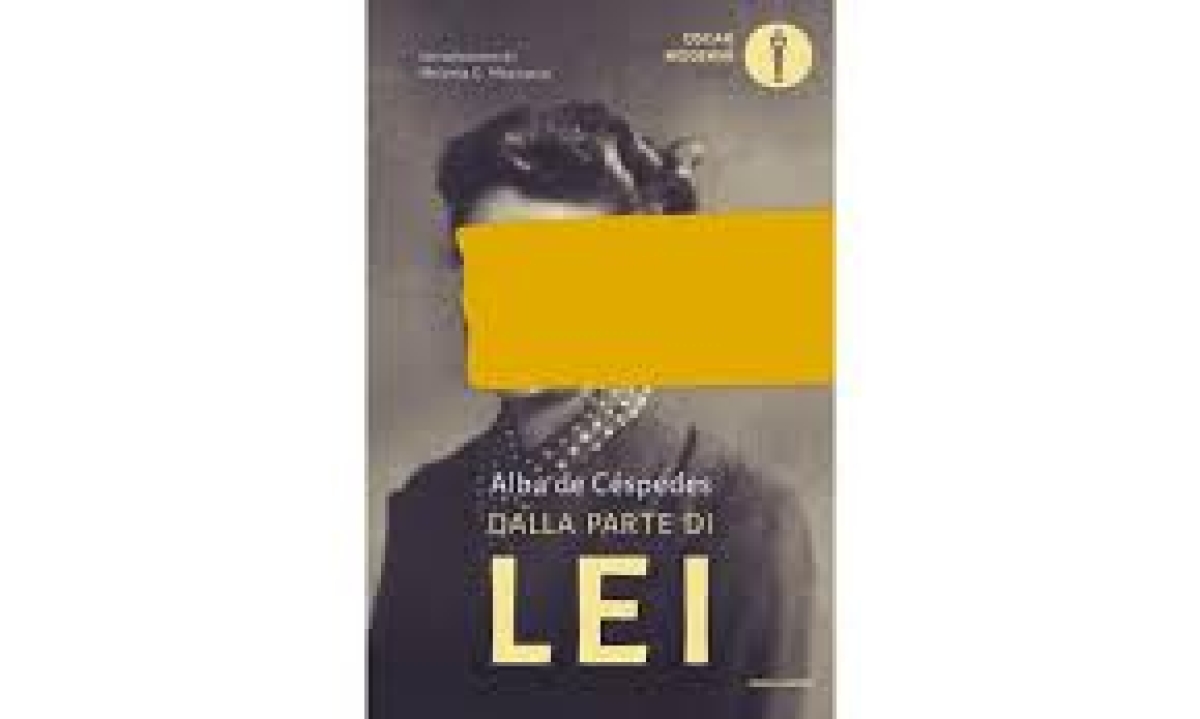
> Behind the wall supporting one another, huddling together, forming a clot of suffering and waiting. (...) I heard them moaning, pleading, unheard: because a woman's voice is merely poor breath; and the wall is stone, cement, bricks . This novel speaks of the separateness between man and woman, of two distinct worlds whose boundary is impossible to cross. This theme is "decked out in a rag of a plot," as Melania Mazzucco writes, and unfolds between two inevitable endings: suicide or the murder of the beloved man. The first chapter is set in Rome in the 1930s; in an impoverished and cramped family setting, young Alessandra watches her mother wear away, torn between the longing for love and a > petty-bourgeois husband, (...) even his physical appearance was devoid of any spirituality . Even then, Alessandra grasps the distance between the world of women and that of men. She perceives the "affectionate indulgence" that binds women, > all, resigned, accepted, with the dawn of a new day, the burden of new toils . On the other side, men > told nothing, disliked conversation, jokes, smiled little, (...) lumping her together with the children, the mother-in-law, the maid: lazy, wasteful, ungrateful people. (...) Gradually, beneath a semblance of resignation, there had arisen in the women a livid resentment for the deception into which they had been drawn . Alessandra experiences female friendship, welcoming and complicit; towards men she is shielded by her lean, angular body, even though she is the object of the possessive yet respectful attentions of Claudio, a decent young man whom she nevertheless does not love. After her mother's suicide, Alessandra is sent to her paternal relatives in Abruzzo, where the second chapter is set—undoubtedly the best of the entire novel. Here she comes into contact with the resigned steadfastness of the Grandmother (with a capital G): > why shouldn't a woman wish to die? Up there, there is a sweet scent of lilies, (...) down here, working, bringing children into the world. (...) And always being afraid of men because they are in a bad mood, because they have a mistress and spend money on the mistress. For the Grandmother there are only two alternatives: either yield to man, accepting his whims, his selfishness, and his betrayals, or else retreat imperiously into one's own world, "always saying yes, yes, and then doing the exact opposite." This could be Alessandra's future if she were to accept a decent local youth, but as the Grandmother observes, Alessandra too is enchanted by men—not driven by sex, but convinced that it is possible to speak the language of women to men, and be happy. When she returns to Rome to care for her now-blind father, she meets Francesco, a university professor. The third chapter is set in Rome during the war and the German occupation. Prior to marriage, her relationship with Francesco consists of long walks, close and intense conversations, love letters: Francesco is serious, devoted, cultured, and handsome; with him, perhaps, it is possible to live on feelings, small kindnesses, affectionate gestures. But the idea men have of marriage (the woman as the "angel in the house"), alongside political and intellectual commitments deemed too significant to be within a woman's grasp, estranges Francesco; not because he betrays her or lacks respect and affection, but because the bond has become a routine that shuts Alessandra out. > "Why don't you write me love letters anymore?" I would say to him. He remained pained, perplexed. "It is true," , he would reply, "perhaps because now I can speak to you whenever I want." "But you no longer speak of love to me." (...) "Many significant things are happening, and it is difficult for me to think of anything else. Perhaps you cannot understand because you are a woman" > . With a long narrative, which wears the reader out to the point of exhaustion, the author leads us to the only possible ending for a woman who asked to be loved as women would wish to be loved, affectionately listened to in every gesture. "Francesco," I burst out in despair, "help me, Francesco." He barely stirred; "sleep," he murmured, (...) In me the rabid dog leapt up, lunged forward. I hurled myself at Francesco and emptied the pistol into his back. The interpretive key proposed by the author herself in the 1994 preface, and which Melania Mazzucco seems to embrace in her introduction, is that of a novel straddling gender narrative and a metaphor for the disillusionment of an Italy starkly different from the one envisioned through the Resistance, in which Alba de Céspedes took part. There is said to be a break with her previous novel, which recounts the lives of boarders living in suspension, protected by the convent school walls, and able to say "it is lovely to sit and talk among ourselves, all women: if there were a man, we would not have dared speak" (see the review of *Nessuno torna indietro* > on this site). If we do not allow ourselves to be swayed by the noble gloss the author sought to bestow on it many years later, we realize there is a common thread running between the two novels: women's search for their own distinctive female happiness, regardless of men, and of sex. Yet while the schoolgirls pursue their own individual paths, not always fortunate, but nonetheless full of hope, here instead there is no horizon for the desire for love. One cannot deny the echoes of *Madame Bovary* and even *Anna Karenina*, especially in the words that conclude the preface: *Dalla parte di lei*, despite its tragic conclusion, sought to resist the notion that love was an illusion > (see the reviews of these two books on this site). I like to compare Alessandra to the figure of Murasaki, who understands that life is not like literature (the Grandmother too urges her granddaughter not to read books), Genji is not a figure, male and female combined, in whom one can place one's trust, and the great Japanese poet has the protagonist die. (see the review on this site of *The Tale of Murasaki* > ). Alba de Céspedes is an elegant author whose writing evokes Alberto Moravia. The novel’s seemingly nineteenth-century profile, suspended between fairy tale and chronicle, recalls *Menzogna e Sortilegio* by Elsa Morante (see the review on this site). The circular structure, constantly turning back upon itself without any real development, compromises the narrative's effectiveness, making it verbose, almost as if the author reached the end through sheer exhaustion, without an overarching design. Why read it? The theme remains relevant, but the narrative is too long.
The Decameron
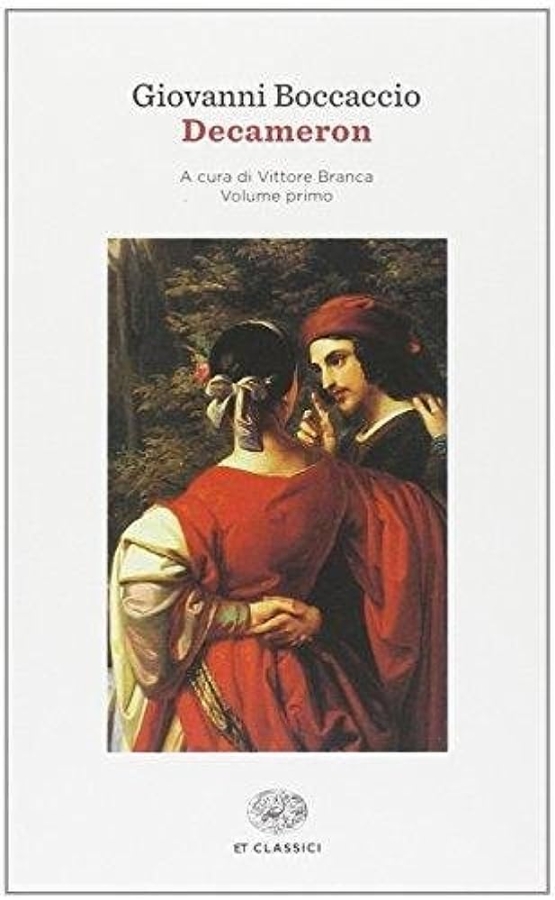
If we consult the Zingarelli dictionary, we find the following definition of the adjective "boccaccesco": "affected, salacious as in certain tales of Boccaccio." And the dictionary adds: "identifies situations, descriptions, writings of a sexual nature, to which a vein of lightness, amusement, and even mordancy is nonetheless not foreign > . This definition reflects common perception, which stems from many novellas of the *Decameron* (one need only think of the fourth novella of the first day, where a monk and his abbot take a young peasant girl to bed), and resonates with its language: vernacular, rich in double entendres, and often coarse. On the other hand, for Giosuè Carducci the *Decameron* is the reverse of Dante's divine comedy," and Boccaccio a "cynic, (...) in whom there is naught but paganism and decrepit corruption" (quotations from "Life and Works of Giovanni Boccaccio" > in Vittore Branca's introduction to the *Decameron*). Poor Boccaccio, who loved Dante so dearly! The critical debate is vast and complex; as a mere reader, I shall outline a few general traits before proposing possible groupings for the hundred novellas. In the proem, the author writes that women are restricted by the wills, the pleasures, the commands of fathers, mothers, brothers, and husbands, spending most of their time enclosed within the narrow circuit of their bedchambers... (...) Wherefore, so that through me fortune's fault may be in part amended > . Woman stands at the center of the novellas; she is neither Dante's Beatrice (the personification of Love for the Good) nor Petrarch's Laura, simultaneously object of desire and mother figure; we are speaking of real woman, made of flesh, (...) "full of concupiscible desire," who proudly considers herself equal to men, as Ghismunda says to her father Tancredi (Novella I of the Fourth Day): > look somewhat to the beginnings of things, and thou shalt see that we all have our flesh from one same mass of flesh, and that all souls were created by one same Creator with equal forces, with equal powers, with equal virtues . The writing of the novellas takes its cue from an extraordinary and tragic event: the plague of 1348. And it is precisely from the description of this terrible epidemic that we can glean two other essential traits of the work. With the brushstrokes of a great sociologist, Boccaccio analyzes the social mechanisms triggered by the pestilence, lucidly capturing how it devastated above all the most destitute classes of society, who were unable to protect themselves from contagion by fleeing the city. It is an acute, cold analysis, free of that compassionate and tiresome moralism found in Manzoni's description of the plague. The poor folk wished to bury their dead with dignity; and so > countless times it happened that, as two priests were walking with a cross for someone, three or four biers, borne by bearers, fell in behind it: and where the priests believed they had one dead body to bury, they had six or eight and sometimes more . Certainly, to an obtusely conventional mindset, such as that of Carducci and indeed Benedetto Croce, this hilarious scene might seem a biting act of cynicism by an urchin laughing at the world. And yet it reveals the empathetic and pessimistic attitude that pervades Boccaccio's entire work: a realism that shares in the suffering of the human being. A living woman, the portrayal of society as it is, sympathy toward the destiny of humanity—these are the hallmarks of the hundred novellas. It is precisely in light of these interpretive keys that they can be grouped into four fundamental strands, for each of which I indicate the most representative novella. The first strand is the fairy-tale one, for which Boccaccio draws upon Arab-Muslim and chivalric literature: I single out Novella VII of the Second Day. The second group of tales is the picturesque, and here one cannot fail to cite a masterpiece: the celebrated Novella V of the Second Day. Then there are the masks of the *Commedia dell'Arte*, drawn from popular, urban, and rustic culture: to laugh bitterly at our own gullibility, I recommend Novella X of the Sixth Day. Finally, for the moralizing strand—Boccaccio's weary and pessimistic reflection on life and its misfortunes—I invite you to read the final novella of the *Canzoniere*, which so pleased Petrarch and his contemporaries (Novella X of the Tenth Day). The *Decameron* is a magnificent masterpiece of prose-poetry, a masterly synthesis of the Dantean hendecasyllable and Padan and Mediterranean narrative. Critics have spoken of plurilingualism to denote Boccaccio's lexical richness, which draws upon so many tongues of our country to reflect the social and cultural differentiation of our land. As has been written (see Vittore Branca, "A Key to Reading the *Decameron*," in the introduction to the Einaudi edition), this linguistic expressionism is programmatic because > it aims to create, at the phonetic, lexical, and grammatical level, an ambient atmosphere of spirits rather than things, even through phonic, not to say musical, suggestions . In short, the *Decameron* is a testament to what the Italian language could have been and was not: the rejection of homogenization by a ruling class that was distant and frightened of the people. We had to wait until the second half of the twentieth century! Why read it? Entertaining, fascinating, splendid.
Demetrio Pianelli
The novel is set in Milan at the end of the nineteenth century: a city with its > broad straight avenues and luxury shops, (...) the movement of the trams and the bustle of busy people, intent on making money, working, producing, paying little heed to idle chatter, enjoying life without fuss or fancy ; in the background of human affairs a great clamor prevails, and yet not so far away lies the serene countryside, even the sight of Monte Rosa. What can a poor devil do in a city > more good than bad, which willingly feeds those who work, but where (...) he who knows not how to dissemble knows not how to rule ? Demetrio Pianelli is a petty clerk, with “a low forehead covered with hair,” who leads a life paced by ironclad habits and modest joys. Here is how De Marchi describes Pianelli’s arrival at his workplace. > He opened the drawer and checked the two rolls in their paper wrapper. He gave a quick inspection to his round hat, (...) and placed it inside its little dust cover on the hanger. Then he opened another drawer and drew out the two oversleeves of glazed cloth that he wore for writing. He slipped them on: gave his hands a nervous, brisk rub, closing his eyes, crumpling every wrinkle on his face . The three small rooms where he lives have a little terrace, from which Pianelli can admire the flowers, and even more “the grasses, the simple weeds, clad only in green”; and when he wishes to take a breath of fresh air, it suffices for him to go for a stroll, > a few miles outside Porta Romana, (...) the classic land of greenery, of water meadows, of emerald pastures, long, wide, stretching as far as the eye can see, nestled deep among the rows of gray willows and trembling poplars . This man’s life is overturned by the suicide of his younger brother, Cesarino, known as Lord Cosmetico: handsome and elegant, he enjoyed life, and his young wife (nicknamed “the Beautiful Bigot”), lived beyond his means, ran into heavy debt, and, unable to face dishonor and imprisonment, chose to take his own life, entrusting Demetrio with his wife and three children—two young boys and a girl. At first, Demetrio refuses to shoulder the burden of his brother’s family and settle his debts; later, under the pleading of his niece, he agrees to rush to their aid. > Demetrio (...) felt beneath the hardened rock, flowing like a river, a deep emotion seeking a way out. (...) Demetrio curled up in his sullenness like a dry leaf. The nerves of his face twitched beneath the hard bark. (...) Why should I not have the will to help you? Ah, well then, (...) I too have known poverty and know what it tastes like: but against poverty there is only one remedy: the will to work and thrift, thrift and the will to work . Poor Demetrio! He thinks it is that simple, that it is enough to be a hard worker and an earnest man to be appreciated and to win—why not?—even the affection of his beautiful sister-in-law, thus building the family he never had. It takes far more than that! A solid financial standing is required, like that of the landowner cousin—he, indeed, can aspire to the “Beautiful Bigot.” Is Demetrio, then, one of the defeated? When he learns that his head of office, the powerful Cavalier Balzalotti, has attempted to seduce his sister-in-law, Demetrio rebels against hierarchy, against the secure job, against his fate as a wretched petty clerk, and shouts his utter contempt at the scoundrel before his flabbergasted colleagues. > People who judge in broad strokes might believe that the others had won, that is, the powerful and the scoundrels , yet even against the author’s intentions, we believe that an honest gentleman has won. For most critics, the novel’s theme is resignation, reminiscent of Manzoni. In a petty-bourgeois, hypocritical context, watchful of pennies and property, steeped in a bigoted and superstitious religiosity, those at the bottom of the social ladder have no choice but to surrender, scraping by in their own quiet corner. Outside the “shell,” out in the world, there is room only for those who know the art of living, which > consists, it seems, in taking things as God sends them and letting them go as the Devil takes them (according to the wisdom of Cavalier Balzalotti). And so it is that the novel’s various characters move, to the point of appearing as stereotypes, even caricatures, varnished with subtle irony. Yet this is not the case for Demetrio: true, he is a curmudgeon, “an object out of use,” yet for that very reason he embodies a stubborn and indomitable courage, a detachment from the noisy, futile clamor; in this way, he conveys to us a message of “resistance,” despite it all. The distinctive feature of De Marchi’s narrative style is irony, nurtured by idioms and turns of phrase drawn from the Lombard tongue. In this way, the writer breaks radically with Manzoni; he contaminates standard Italian and brings us back down to earth, into the spoken language. It is, unfortunately, a folkloric use of dialect, one that foreshadows what would come much later, in the second half of the twentieth century; one need only think of Camilleri and De Cataldo. De Marchi, however, is timid; he lacks the courage to go all the way, and dialect remains an affected device, an end in itself. Why read it? A delightfully depicted petty-bourgeois Milan, a humble and unwitting hero.

Continental Drift
Questo romanzo è un vortice dʼacqua, che risucchia lʼintero racconto in un unico incomparabile episodio, tragico ed intenso, dopo il quale niente è come prima. Il problema è che questo mulinello è una «sabbia mobile», così lento e vischioso da sfinire il lettore. Ma andiamo con ordine. Bob è un giovane di trentʼanni, padre di due bambini, sposato con una donna che lo ama; ha un posto fisso e unʼamante. Non cʼè nulla di apparentemente sbagliato nella sua vita, eppure Bob la odia: in parte per il solito sogno americano (la vecchia metafora dellʼAmerica alla quale tutti sembrano crederci), ed in parte perché Bob > ha lasciato nel mondo reale un uomo irreale, inventato, che fa il suo dovere, prudente, responsabile, fedele ed equilibrato, mentre nel mondo invisibile (...) Bob è inconcludente, avventato, irresponsabile, infedele, irrazionale, (...) lʼuomo che è un bambino . Questo lato invisibile prende il sopravvento e lo spinge ad abbandonare una vita prosaica ma sicura, per cercare qualcosa che lui stesso non sa cosa sia. Lascia la casa di proprietà e il posto fisso, e trascina la famiglia in Florida a vivere in un caravan, a lavorare prima con il fratello (uno smargiasso truffatore) e poi con un amico (un altro mascalzone). È una deriva inesorabile: non solo è un fallimento economico, è pure una discesa psicologica e morale. Bob uccide un uomo, anche se per difendersi, si disinteressa della famiglia, è coinvolto nel suicidio del fratello, fa finta di non accorgersi dei loschi affari dellʼamico, finisce a fare traffico illegale di clandestini. Accanto al racconto di Bob si sviluppa la storia degli immigrati haitiani, in particolare di una donna con il suo bambino. È inutile soffermarsi su questo filone narrativo, che avrebbe potuto dare molto se non fosse stato infarcito di riti vudu, del fascino dellʼesoterico, di visioni stucchevoli del «buon selvaggio». Caro Banks le sofferenze dellʼimmigrazione sono troppo gravi e serie per essere lʼoccasione di artefatti e folcloristici racconti! I due filoni narrativi (le vicende di Bob e quelle degli haitiani) convergono in un evento drammatico ed ad un tempo emblematico di una condizione universale. Bob trasporta con la sua barca un gruppo di haitiani, determinati ad arrivare in tutti i modi in America. Lo fa per soldi, ma il suo atteggiamento è di empatia per questa povera gente: li porta dellʼacqua, offre delle sigarette, sembra volersi far coinvolgere. Quando però vengono avvistati dalla guardia costiera e dunque cʼè il rischio di essere arrestati, Bob non esita a buttare a mare gli haitiani (uomini, donne e bambini), condannandoli ad una morte certa per annegamento. > È caduto in un luogo oscuro e freddo, dove le pareti sono perpendicolari e scivolose e tutte le uscite sono state sigillate. È solo. (...) Ecco come un uomo perde la sua bontà. (...) Dalla bocca allʼinguine, Bob percepisce il proprio corpo come una fredda barra dʼacciaio, braccia e gambe si induriscono come ghisa, la testa, occhi bocca naso orecchie, sembra chiudersi al mondo a poco a poco . Il capitolo «Per mare» narra la terribile vicenda dellʼassassinio dei clandestini, lasciati annegare per un pugno di soldi: è di una potenza evocativa straordinaria, anche alla luce di ciò che avviene giornalmente nel nostro mediterraneo. Lʼautore mostra una grande abilità stilistica, nella costruzione della trama e nellʼuso delle parole. Sino allʼultimo il lettore spera che ci sia un diverso finale, nel quale Bob palesi la sua bontà, una effettiva compassione verso gli haitiani, «così fragili, delicati e sensibili». Ed invece, lui, «un tipo gentile e socievole», commette un delitto orrendo, una strage. E ci fanno ancora più ribrezzo le sue banali giustificazioni, come «nulla gratis nella terra della libertà», o la sua auto commiserazione: «e infatti eccomi qui. Peccato che non sono più io». È facile, tuttavia, scandalizzarci per il comportamento di Bob; in realtà le sue azioni e i suoi pensieri esprimono molto bene la distanza tra ciò che proclamiamo e ciò che facciamo, quellʼipocrita perbenismo, la nostra falsa coscienza. Ed allora perché rovinare tanta bravura stilistica in banali disgressioni di carattere filosofico e perché tante lungaggini sulla cultura haitiana? Non era forse meglio focalizzarsi sui personaggi, o lavorare sulle reali condizioni degli immigrati, in viaggio verso il sogno americano? È un libro rovinato dalla presunzione dellʼautore di essere in grado di trattare troppi temi, invece di concentrarsi su limitate ma efficaci chiavi di lettura. Perché leggerlo? Vale la pena leggerlo solo per il capitolo «Per mare».
Of Blood and Ice
Imagine a *Promessi Sposi* where Renzo and Lucia are two lunatics—or presumed to be such—the setting is a late-nineteenth-century Lecco teetering between superstition, charlatanry, and positivism, the center of the narrative is an insane asylum, and the author is not Manzoni, but a debut writer. Antonio Ghislanzoni, the only historical figure among them, tells his friend Baldo Bandini, a penniless theater man: > we are not Manzoni or Stoppani; we are weary old *scapigliati*, good only for playing pranks and taking the petty bourgeoisie for a ride. (...) We may well die before the twentieth century begins, and we shall endure even less in memory and history. Ranocchio, on the other hand—I believe Ranocchio will endure. Not him personally, of course, you understand. But his breed cannot be extinguished. It is the dynasty of the mad and the misfits, of those whose only home is the street and the leper hospital, the plague-ridden wretches who make you hear the bell of the *monatti* at the mere sight of them . Ranocchio, or rather Ranocchia, is the nickname of a boy—a stuttering, odd fellow abandoned by his parents, to whom Bandini acts as a father, because “fools go to the next world in pairs.” Found half-drowned and stark naked, brought home by a desperate Bandini, the boy went on for days producing > greenish drool, (...) singing (...) songs in a dialect he didn't even remember, clicks of suspended consonants, vague and indistinct howls hanging in mid-air . It is decided to commit him to the asylum. But what had happened? > Good Friend (Ghislanzoni wrote to Bandini), the solution is simple. As is often the case, our Ranocchio’s madness is of the worst kind. Its name is love, and the contagion comes from a woman . And it is one of the worst contagions, because the beloved woman is Bianca, the schoolmistress: frigid, as though she were always clad in armor, she had allowed him, poor and ignorant Ranocchio, “to breach her fortress.” > When he watched her walk from afar, during those long evening strolls with her handsome blond Kraut (Bianca’s lover is an Austrian officer), Ranocchia could have sworn he saw her in armor. The shield and helmet gleamed, the spear was leveled: not even in the company of that beardless macaque face could she rid herself of the burden she carried within. And yet she took his arm, her gaze veiled beneath half-closed lids . What blossomed could only be an infatuation so intense that it drove the boy to feign madness in order to be committed to the asylum, where the schoolmistress had been sent following a nervous breakdown after her lover’s departure, or perhaps to conceal a scandalous pregnancy. Up to this point the novel runs smoothly, intriguing in its eccentric characters and its depiction of a Lecco and a lake belonging, to be sure, to another century, yet both so vivid with color and light as to seem living portraits: the author's love of the setting guides his pen, working a minor miracle of writing. Then, the story gets tangled and descends into banality. The many pages devoted to the asylum are cold, predictable, false; the place resembles a Nazi camp more than “a great resonance chamber” where “delirium becomes an echo / anonymity a measure,” where one spends a > time lost in whirling thoughts / crowded behind the bars / like naked swallows (Alda Merini). The plot frays further when the author turns to Ranocchia’s escape, the desperate search for Bianca just to know whether she is still alive after fleeing the asylum, and ultimately the unraveling of Bianca’s mystery, aided along the way by a witch and a parish priest who bears a damned close resemblance to Don Abbondio. Without spoiling the ending, one can say that the schoolmistress is strange, introverted, and self-absorbed, but certainly not mad; on the contrary, she is sensible enough to stage her own disappearance to escape a bigoted, obtuse Lecco. And since nothing is spared us, the final section even serves up a touch of esoteric mystery—a matter of incomprehensible numbers whose code only a child, himself a bit simple, manages to crack. One must accept that > in reality the world is uncertain and vague, like the sky clouding over in August when you cannot tell whether it will rain or the wind will turn : a conclusion worthy of Manzoni, for whom the common folk must not raise their heads, but place their trust in Divine Providence. Why ruin a fine idea—the portrayal of the world of the *Scemerelli*—with so many useless words? Perhaps that is the real mystery of the book. Yet we need not despair: in this debut novel, the author displays clean, elegant prose. The sentences unfold linearly, punctuation is handled masterfully—certainly better than Manzoni’s—the use of adjectives is sparing yet effective, and unusual words and idioms embellish the narrative. Not to mention the descriptions of Lecco and the lake, evocative and naturalistically vivid. In short, the author needs to place greater faith in his writing and streamline his plots, rather than overcrowding them with situations and characters. Why read it? It is intriguing in its first part; on the whole, it is well written.
The Deserter
It is a great anti-war novel; it recalls two other books on the subject, both reviewed on this site: Karl Marlantes's *Matterhorn*, set in the Vietnam War, and Erich Remarque's *All Quiet on the Western Front*. While the former is an epic tale, a sort of modern *Iliad* demonstrating the futility of war as an occasion for social change (dispelling a great myth!), and the latter is a descent into the underworld where "living dead" survive in the trenches, *The Turncoat* tells the story of a German soldier who becomes conscious of the absurdity of nationalism, of the tragedy engulfing him, and believes he can find a solution by crossing over to the other side to fight among the partisans. The setting is World War II in Poland; a small German outpost must guard a railway line in territory now held by the enemy. Isolated, abandoned, and demoralized, > the wilderness gazed with innocent voluptuousness upon those soldiers who, viewed from a fair distance, hardly seemed seized by gasping, moaning, or nearing despair; from afar, they appeared more like figures one sometimes finds depicted at the market of old engravings, moving merrily, aimlessly, free from all gravity . Proska finds himself in this detachment by chance; he was traveling on a train toward the Eastern Front when a bomb wrecked the convoy; having miraculously survived, he falls into rank, naturally like a good soldier, in a small squad under the orders of a clumsy, authoritarian, and violent non-commissioned officer; the military command is far away. It is a motley assortment of humanity, ranging from a somewhat dim-witted beanpole to a former fire-eater whose companion is a hen, through to a young student, the butt of the commander's sadistic jokes. As in *Matterhorn* and *All Quiet on the Western Front*, it is brotherhood that cements the group, while patriotism is by now seen as a swindle. > They call it a sense of duty, Milkbun said contemptuously (a nickname for Wolfgang, the young student), they injected it into our blood. And with that, they unhinged us, stripped away our independence. (...) Nationalist resentment is contagious. A resentment that is the root of presumed German superiority and the wellspring of this goddamned sense of predestination . A few words, and above all the deadly consequences of a delusion of omnipotence, dismantle that universal mission of which Thomas Mann spoke, and which infected German society. It is for this reason, and because of the story it tells, that the novel had to wait a long time before being published. In war, a soldier's primary task is to save himself, and that cannot be done without dealing death. > Quick, the trigger is impatient; it has a great thirst for death. (...) Another burst. All twenty-eight. What else are you waiting for? And the rounds left the muzzle and shaved the reeds. (...) The river, brazen-faced, silently pushed its waters to the sea, sweeping past meadows and soaring woods, sweeping past the granite vaults of the bridges, past towns great and small, sweeping, sweeping past. A man dreamed of his wife. Water under the bridge. He dreamed of a son. (...) All water under the bridge: the fire leaping from lips, the longings welling in eyes; the tenderness, the steadfast loyalty, and the anguish in the chest. Only the conscience does not run dry, this proud, harsh landscape of justice, this fortress against remorse . Proska watches a young partisan walking as though taking "a sentimental stroll." He does not want to shoot him, yet "we are forced to obey war even if we hate it like the plague." There is no alternative to war, and it is this feeling, together with disillusionment and the opportunistic instinct for survival, that drives Proska to defect and fight with the partisans. On the other side of the barricade, life is "just as gray, not a bit better." Proska does his duty nonetheless, just as he had as a German soldier. And he shoots, dealing death without even knowing who faces him. With the great westward advance of the Red Army, Proska reaches his sister's house and, unintentionally, on instinct, kills his brother-in-law, who—failing to recognize him, and likewise driven by instinct—was leveling the barrel of a rifle at him. When Proska realizes what he has done, he hides the corpse: for years, his sister believes her husband to be missing in action. > Maria wants certainty. Only you can give it to her, Proska. You must give it to her. (...) Once you know where to sleep, once you have found where you can be alone with yourself and your long days, once you know that all roads wish to be traveled to the very end: then, Proska, you must write to her. You will do so. You must . A wretched man, a decent man yet too small to make the right choice, finds himself caught up in the war against his will. He reacts as best he can and becomes a deserter not out of choice, but out of necessity, because in war one must deal death regardless. This is the book's profound message: violence can only be answered with nonviolence if one wishes to save one's conscience. It is an illusion, a poignant yearning, to hope that one might sink "into the remote swamps of oblivion," or that evil can be remedied with more evil. Only a choice for peace can truly bring serenity. It is a virtually flawless novel: masterfully constructed with an exact balance of plot, characters, and landscape; traversed by an intense pacifist spirit, never declamatory, but voiced through the lives of ordinary people, soldiers despite themselves: > the clock that every war/clasps within its bloody claws/drips down along its hands/the minutes of its soldiers/and the pride of life/falls silent, without an echo,/and the wind sweeps away names/upon the swing of oblivion . Why read it? A masterpiece.

The Dismantling
The decommissioning with which the book deals is that of the Bagnoli steelworks in Naples. Through the literary device of a technician, Vincenzo Buonocore, recounting his story directly to the writer, the history of the factory’s closure and its impact on the social fabric of this town in Campania is interwoven with a personal tale. > If I am to be completely in this book, and Rosaria must be in it, Marcella must be in it, Martinez must be in it, the disappearing factory must be in it, Bagnoli changing its face; if you yourself must also be in it, with your pretension of telling all this using me, and my mediocre human story must be in it, with all its weaknesses, grudges, and regrets, what sense would there be in keeping silent about what happened that evening between my wife and me? The story is very simple. Buonocore is a technician who entered the factory at a very young age as a laborer; over time, however, his skill, dedication to work, and above all his passion for the plant—for the continuous casting machine—led him to devote himself to maintenance. When the decision is made to sell the plant to the Chinese, Buonocore is entrusted with managing relations with the Chinese technicians and overseeing the dismantling of the facility. Meanwhile, Buonocore finds himself involved in a relationship—one that remains purely platonic—with the daughter of a colleague, Marcella: an adrift young woman yearning to lean on a more mature figure. The two narrative threads, the relationship with Marcella and the shutdown of the plant, reach a grim conclusion with the girl's death and the definitive demolition, by dynamite, of the factory's remains, whose finest components, such as the casting plant, have been dismantled and sold off. Moreover, his wife Rosaria's discovery of her husband's relationship with Marcella compromises Buonocore's marriage as well. From the reading, an impression of contrivance emerges. The relationship between Buonocore and Marcella is a succession of episodes whose premises and emotional implications remain obscure; its repercussions for Rosaria are likewise investigated only superficially. At times, the depiction of the demolition takes on melodramatic overtones, traits of a social inquiry and political protest, yet fails to convince or truly convey the sense of what occurred. The most compelling aspect is, in truth, the relationship between Buonocore and the industrial plant. At the beginning of the novel, Buonocore enters the facility by night and climbs onto the casting floor to look down from above. > There it is, my plant, immense as a cathedral with a single grey-blue nave, its high ribbed vault and flanks arabesqued by geometric structural ironwork, traversed by bundles of pipes like venous networks, stairs, tracks, aerial walkways The improvements he managed to introduce to the plant convince him that > the machine does not yield to any bullying, it rewards solely and exclusively your intelligence . Yet once the plant is demolished, Buonocore realizes that a bond of friendship has been severed. > And now here we are, facing one another. There is only us: me, the crane, and this vast wreckage that I no longer recognize and that in turn no longer recognizes me; perhaps because it no longer possesses cognitive faculties, having lost its soul, its speech, its feeling . The most interesting aspect of the book is the grand theme of the relationship between man and machine, of a sort of infatuation that has characterized and continues to characterize technical culture, and which has steadily dissipated with the deindustrialization of the 1980s and 1990s. Why not read it? Whatever perspective one might adopt in approaching the book (a personal story, the depiction of a society in transition, political denunciation, an analysis of technical culture), the treatment remains superficial, the style unappealing, and in certain respects prosaic and tedious.

Prohibition of Residence
The book is an investigative narrative, presented through a series of interviews with immigrants. It spans from the Eastern European prostitute to individuals who have achieved success in the economic, social, and political spheres. What emerges is a highly variegated picture, revealing that, paradoxically, integrating and climbing the social ladder was easier for immigrants who arrived in 1970s Italy than for those who have come more recently. In truth, immigration mirrors the deterioration of Italian society: a growing inward turn, indifference toward novelty, and thus a tendency toward an "ostrich" policy—refusing to see that Italy is changing. There are two aspects of the book of considerable interest: the first is encapsulated in the quote cited in the book itself: "We wanted workers, but people arrived" (Max Frisch). As the author notes, it is the cultural and ideological framework underpinning Italian legislation that is flawed: > it is still the economic utility of the migrant's labor that validates their right to live in our country . Or, as a Somali domestic worker puts it in other words: I am treated > essentially well, even though when I told my story I sensed a general indifference. It is a business relationship: I provide a service and they pay me . In political terms, Jean-Léonard Touadi, a commissioner for the Municipality of Rome: > move beyond the logic of social assistance, stop approaching the category of immigrants, however fragile, through the lens of emergency welfare interventions. Instead, each of us needs equal opportunities, access to culture, access to housing, easier access to credit . Yet aren't these the problems of Italians as well? The second aspect concerns how Italians are viewed by immigrants. It is an intriguing perspective, revealing a somber world in which, for example, the elderly have lost much of their authority while spoiling children has become the norm, a division of roles persists between men and women, emotional life is bleak, and indifference prevails. "There is great individual care and little, or rather none, for the collective space." > I happened to share what we eat in my country, and most of the time they looked at me with disgust . The art of getting by prevails, as workers are selected based on referrals from relatives and friends, and consequently > the worker is not chosen based on qualifications and professional training, but as a member of a category of peers sharing the same origin . The book is engaging, yet it relies too heavily on interviews with successful figures and official representatives of the immigrant community, neglecting the essential labor of digging on the ground—that is, among ordinary people. Beneath a clean prose style and a well-constructed narrative, a journalistic weakness and an investigative fragility emerge, lending an impression of artificiality to what is recounted.

Divorce Islamic Style on Viale Marconi
Issa is actually an Italian young man named Christian. He has a perfect command of Arabic. Consequently, the secret services decide to recruit him and dispatch him to Viale Marconi in Rome under the guise of a Tunisian immigrant. His mission is to gather intelligence on a suspected terrorist cell, allegedly operating out of a call center. Sofia—or rather Safia—is an Egyptian woman who married a compatriot through an arranged marriage. Her husband works as a pizza maker in Rome, is deeply religious, and forces Sofia to wear the veil. Issa and Sofia’s stories unfold in parallel. Each tells their own story: a literary device that fails to lend vibrancy and appeal to the narrative, ultimately rendering it superficial due to the limited scope afforded to the protagonists. For Issa, being a Tunisian immigrant entails discovering the realities of immigration: precariousness, fear, overcrowded apartments, domineering landlords and employers, clashes of nationalities, and, above all, the divide between practicing and non-practicing believers. For Sofia, life in Rome represents an opportunity to carve out spaces of freedom and pursue her dream of becoming a hairdresser. Sofia is religious yet independent in her judgments, and she chafes under the prejudices and authoritarianism of a husband she does not love. Issa and Sofia meet only by chance and for fleeting moments, but it is clear from their exchanged glances and mutual attentiveness that something has sparked between them. Their relationship could shift from a state of suspension, typical of secret lovers, to something more concrete and intimate. Issa receives a request from Sofia’s husband to marry his wife, whom he has repudiated in a fit of rage. Under Islamic law, Sofia and her husband can only remarry after the ex-wife has wed another man, consummated the marriage, and subsequently divorced. Sofia welcomes the idea, not out of any desire to return to her husband, but because she is in love with Issa. Yet the young man cannot bring himself to decide, as he is reluctant to deceive Sofia: he is, in fact, neither Tunisian nor Muslim. The ending holds a surprise that cannot be revealed. Still, the question remains: will Issa and Sofia end up together? Lakhous is a splendid writer: short sentences, concise character sketches, and a subtle irony are the primary strengths of his writing. In this novel, however, the urge to dwell on social and cultural reflections (concerning the Muslim world, immigrants, and Italians) comes at the expense of narrative pacing. The story is at times tedious and predictable, feeling somewhat contrived. Only in flashes do the authenticity and brio that characterized the author’s previous book return. Why read it? It is enjoyable, interesting, and in many respects instructive. One grows fond of the two characters, so much so that one longs to know how their love story concludes, just like in a telenovela.
Tomorrow in the battle think on me
The novel recounts the peculiar story of Victor, a ghostwriter who is invited over one evening by a married woman, Marta; however, on the verge of making love, Marta dies, and Victor, frightened and uncertain, leaves the house without alerting anyone. Seized by remorse and curiosity, he manages to make contact with Marta’s family: her father, a Madrilenian gentleman; her sister, with whom he hopes to begin an affair; and her husband, a businessman who was in London at the time Victor was invited by Marta. In the end, Victor confesses that he was the man in Marta’s house, and the husband, in turn, confesses that he was in London with his mistress, who had told him she was expecting a child and wished to have an abortion in the English city. In reality, this was untrue, and the man, in a moment of madness, attempted to kill her; the woman fled and was fatally struck by a taxi. Alongside this main storyline, two parallel plots unfold. Someone has told Victor that Celia, his ex-wife, works as a prostitute. One evening, Victor believes he recognizes his wife in a prostitute named Victoria, whom he picks up in his car in order to determine whether she is indeed his wife or simply another person who resembles her. The difficulty of distinguishing between truth and falsehood, between fiction and reality, recurs in his encounter with a powerful man, the Only One, who has summoned him to ghostwrite a speech. In fact, Victor introduces himself under a friend’s name (another fiction that turns into reality); furthermore, during their conversation, the Only One reveals his despair at being unable to voice the doubts and uncertainties that lie at the foundation of his actions. In his commentary on the book, the author identifies its fundamental theme as deception—not deliberate deception (the outcome of a rational plot or societal hypocrisy), but that which arises from time and memory. > The most complete of biographies is made of nothing but irregular fragments and faded scraps, even one’s own biography. We believe we can recount our lives in a more or less reasoned and precise manner, and when we begin, we realize that they are crowded with shadowy zones, with unexplained and perhaps inexplicable episodes... Deception and its discovery show us that the past, too, is unstable and precarious, that not even what seems fixed and established within it is so once and for all... . Is deception truly the book's leitmotif? I do not believe it exhausts the substance of this novel, in which the characters move through a kind of enchantment, an unreal dimension born of two fundamental forces: time and memory. > What weighs on us, says Marta’s husband, the terrible thing is that the time during which we believe what was not becomes something strange, fluctuating and fictitious, a kind of enchantment or dream that must be suppressed by our memory; suddenly, it is as if we had not lived through that period at all . And again > the dead woman who haunts and spies on and visits him is another, his own dead woman who dwells in his thoughts as mine resides in mine, like an incessant throb in waking or in sleep, his wretched wife and his wretched mistress mingled and lodged together in our heads for lack of more comfortable lodgings, struggling against dissolution and seeking to become incarnate in the only thing left to them to retain their vigor and presence, the infinite repetition and reverberation of what they once did or what took place one day: infinite, yet each time more tired and faint . The protagonists of this novel are swept away by events that appear paradoxical and unpredictable, governed by a rhythm that dissolves the distinction between past, present, and future. Yet an event, the moment it has passed, in turn disperses, and one desperately longs to turn back, wishing that things had never happened or had taken another course. Yet do we truly live, are we truly ourselves, or do we inhabit a continuous fiction, since reality cannot encompass our imagination? In this context, only death seems to be a real fact, yet death is the beginning of a gradual loss of memory. It is an important book, propelled by an irresistible narrative pace, "a literary rap," which demands that one immerse oneself fully in the reading to keep up with its stride.

Don Quixote
The novel is set in the early seventeenth century and narrates the exploits of a country gentleman who, inflamed by chivalric tales, imagines himself to be a knight-errant. He thus embarks on a journey through La Mancha with his squire, Sancho Panza, and two faithful beasts: the horse Rocinante and the donkey. The novel is structured in two parts. In the first part, the most incredible episodes unfold, born of Don Quixote’s imagination: an inn becomes a castle to be stormed, a party of wayfarers enemy knights to be engaged in battle, a gang of convicts unfortunate souls to be freed—who will in turn rob Don Quixote. All these episodes generally come to an unhappy end: Don Quixote and Sancho emerge beaten, mocked, and with their bones half-broken; yet Don Quixote remains forever convinced that he was defeated by an “enchantment,” an artifice concocted by some malevolent sorcerer. The first part closes with Don Quixote’s return home, carted away inside a cage. The tale of the knight-errant is interspersed with a series of episodes—genuine autonomous stories—whose sole unifying thread appears to be the depiction of a hypocritical reality where brute force and overbearing arrogance hold sway. This first part pivots on the contrast between the heroic dream, that of Don Quixote, and the plebeian dream, that of Sancho. Don Quixote dwells in a perfect world and collides with history and reality; Sancho lives within history and accepts it as it is: a human realm of petty miseries and mediocre joys, devoid of disillusionment because it harbors no grand illusions. In the second part, the author imagines that Don Quixote’s exploits have already been narrated; consequently, the people the knight-errant encounters on his new adventure take pleasure in playing along with him, contriving paradoxical and often cruel situations. The novel concludes with Don Quixote’s return and his deathbed acknowledgment that knight-errantry is a falsehood and that the only true faith is that of the Catholic religion. This part of the book was written many years later, and one can certainly assert that Don Quixote “dies while living,” in that > the story now precedes him and makes him the ridiculous laughingstock of peasants and servants, of dukes and bandits . The novel is an exaltation of the imagination. In a dull, hypocritical, and unjust world, Don Quixote devises his own rules—those of chivalry errant—and even when these rules clash with reality, the phenomenon of enchantment allows Don Quixote to go on living according to his worldview. Yet is he mad, or does he act deliberately so as to survive and find amusement nonetheless? To Sancho’s admonition that he should not have set the prisoners free, Don Quixote retorts that > knights-errant must aid the oppressed as people in need, looking to their distress and not to their crimes. I came upon a troop of miserable and unfortunate souls, and I did for them what my rule commands, and for the rest, come what may . Yet what is this rule? > The ultimate aim is to administer distributive justice upon earth, rendering to each his own, interpreting and upholding good laws... (arms) have for their object peace, which is the greatest good that men can desire in this life . Don Quixote is thus mad, yet at the same time wise; his figure, still central in the first part of the book, increasingly takes on the role of a counterpart to the other great protagonist: Sancho Panza. A witty yet credulous peasant, he embodies peasant wisdom, resolving problems with common sense. The bond between Don Quixote and Sancho is one of profound affection and deep esteem: the squire is the only one who believes in the knight, and he does so even while recognizing that he is mad, because he loves him. When it is pointed out to Sancho Panza that he too must be mad if he believes in a madman, the squire replies that loyalty to Don Quixote prevails in him, and with it the desire to stand by him and aid him. Moreover, conversation with Don Quixote has been for Sancho Panza > the manure fallen upon the barren soil of my dry wit, and the time spent serving and frequenting your worship has been its cultivation... Don Quixote laughed at Sancho’s speeches, so full of affectation . Along with Don Quixote and Sancho, the other two protagonists are Rocinante and the donkey: > the friendship between the two beasts was so close, so unique of its kind... that whenever the two beasts could come together, they took care to scratch each other... and Rocinante would rest his long neck across that of the donkey . Freedom of the imagination and friendship are thus the two fundamental themes of the book, to which must be added the taste for adventure—expressed not in distant realms, but in La Mancha itself, just a few kilometers from home. The book’s modernity lies precisely in these themes and in the hall of mirrors (fiction within fiction) that unfolds in the second part—which is, however, the less accomplished, and in many passages verbose and redundant.
The Gifts of Life
The delicate elegance of the writing welcomes the reader from the novel’s very first pages: the prosaic, tranquil life of a provincial town, daily routines, rigid social roles, thwarted romances, predictable and mundane existence are described with such affectionate and ironic detail that one wishes the story would continue along this path, as if it were a modern, condensed edition of Marcel Proust’s masterpiece (*In Search of Lost Time*), where truly nothing happens. Non è così, because war bursts in! The story begins with a scandal: against the will of his grandfather, a powerful and wealthy industrialist, Pierre marries Agnes, a girl without a dowry or useful social connections, with whom he is nonetheless deeply in love. Pierre’s mother > thought confusedly: to have loved him so much, protected him, shielded him from every evil, only for him to be snatched away from me in an instant! He will not be able to stay in Saint-Elme. His grandfather will not allow it. I have lost him . The First World War breaks out, and Pierre is called up to arms. There is far more to worry about. People cling to the illusion that > a world war must unfold almost without bloodshed. (...) no State will want to answer before posterity for such a crime! (...) It is impossible for such a thing to happen, she told herself, and millions of people that evening repeated the very same words. (...) But out there, my God, there is Pierre; come now, there is Pierre, my baby boy! It is not possible. It is a nightmare . (...) And yet, not a single tear escaped her. Her grief was too strange and too intense to allow her to weep > . If these were the mother’s conflicting feelings, the newlyweds had bid each other farewell with calm resignation. Alone, in the silence of their room, in the warmth of their bed, the night before they had exchanged their parting kiss, a mute and deep kiss, without lamentations, without futile recriminations. Now their lips were weary and lifeless > . When returning home on leave, the soldiers do not recount what truly happens at the front; they want to keep the war separate from the lives of their loved ones. It is enough that we suffer > , they think. Yet that is impossible. Saint-Elme, too, is overwhelmed by bombings, by columns of refugees and fleeing soldiers, by the German occupation. The population stubbornly resists. On the other hand, the war will pass, we will pass, but there will always be these simple, innocent pleasures: the coolness of the air, the sun, a red apple, a fire burning in winter, a woman, children, everyday life... the roar, the din of wars will eventually fade away > . It is a vain hope: once the first great slaughter is over, another follows, even more terrible. War was awaited as a man awaits death. He knows he cannot escape it; he merely pleads for a reprieve > . It is the Second World War. This time it is Guy, the son of Pierre and Agnes, who is called up to the front. During a leave, Rose, Guy's wife, announces to him that she is expecting a child: this war is horrible... No, don’t laugh. I’m a woman, I’m childish. But what do you expect? I see things as a woman. (...) Do you remember the book you had me read, (...) a military commander is ironic because the man he sent to his death has a wife waiting for him at home, with the lamp lit on the table and flowers on the tablecloth, and clean sheets on the bed? But she is the one who is right, and I, I....(...) I am very happy, he repeated without looking at her, with a strange shyness, very, very happy. (...) It was a feeling of triumph. Ah, you mock me, but I mock you too. (...) You want to destroy me, and I live! You want to rob me of all hope? Look, I marry, I love, I rejoice, I have a child! And the more you vent your fury upon me, the more stubborn I will be on my part! > By many, the novel is viewed as the story of a provincial bourgeois family during the two world wars. It is a reductive approach to a book that speaks of how feelings—real ones—withstand every tempest and allow human beings to overcome any disaster. Pierre and Agnes continually seek each other out, drift apart, and reunite; there is perhaps not the passion one might expect, but rather a profound tenderness. In the novel’s conclusion, Agnes finds her husband again after a long and arduous journey through the war. He is alive; he is safe. She stopped at the doorway, seized by such a trembling that she could go no further. He seemed to sense her presence. He walked toward her: Is it you? My God, at last it's you!, he said. Everyone was watching them. They kissed fleetingly, awkwardly. No kiss, no embrace could express the joy of their hearts". Is it a bourgeois story? Perhaps, but it expresses the strength that enables survival and rebuilding after the most appalling disasters. It shows how a woman, with her sensitivity and gentleness, views one of man’s most absurd follies: war. One can speak of death without being captivated by it: a lesson for our own time, traversed by so much violence, both real and narrated. Why read it? It is a masterpiece, for its splendid writing.
A Woman
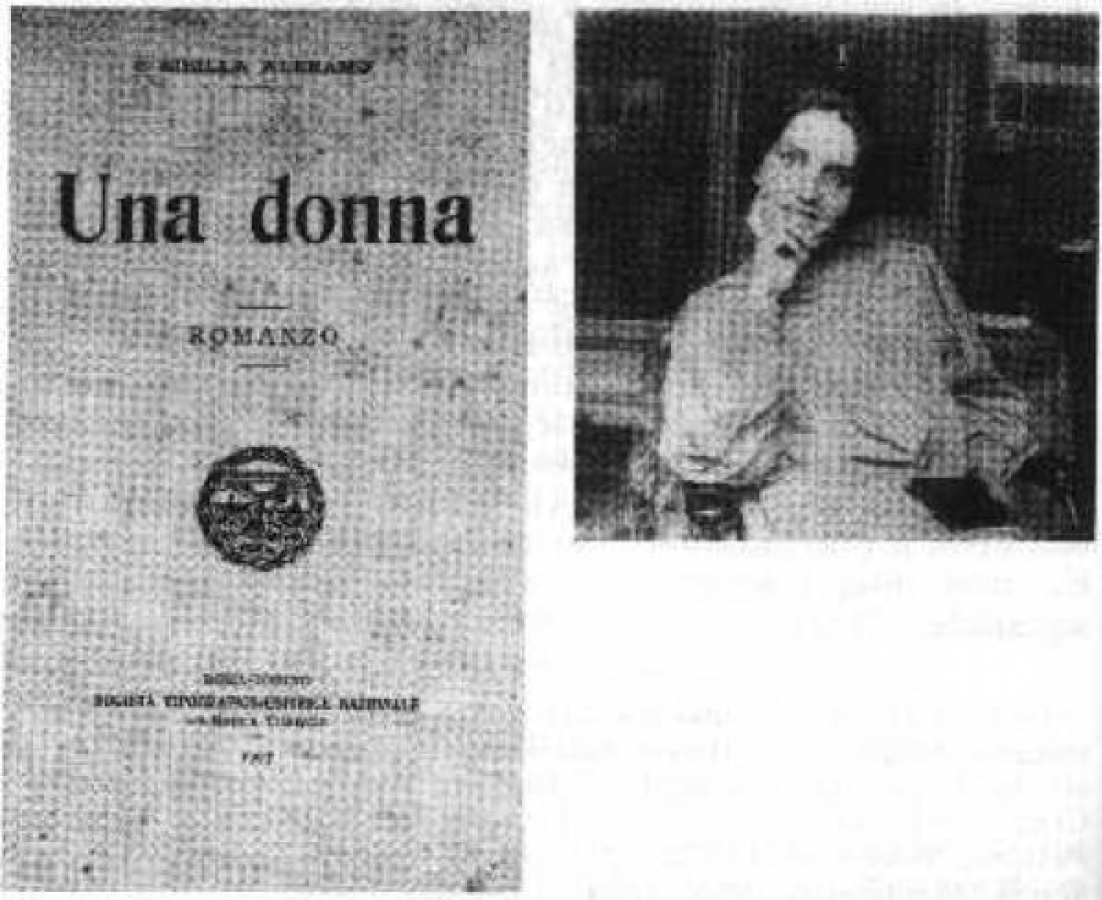
The book is autobiographical in nature and historically set in the early twentieth century. The protagonist, still a girl, is raped by a young man whom she later marries and with whom she has a child. She lives with her husband in a small provincial town, where she strives to abide by social conventions that dictate a woman be confined to the home, in total dependence on man. When her husband loses his job, the couple relocates to Rome, where the protagonist begins writing for a literary journal, makes herself known in cultural circles and within the feminist movement, and cultivates a broad network of friendships—among them a singular intellectual with whom she becomes fascinated. The husband himself is attracted to one of his wife's colleagues, and thus traditional social values begin, in a sense, to shatter. The husband, however, finds the opportunity to return to work in the small provincial town, and the protagonist once again finds herself locked within domestic walls, despite having awakened to the ideals of the feminist movement, to her own literary abilities, and, above all, to the fact that she no longer loves—and can no longer endure—her husband. The crisis erupts, turning into a tragedy for the woman, as she knows that should she decide to leave her husband, she will lose her son. Yet she resolves to move to Milan, enduring an agonizing separation from her child. With great discernment, the author titled the book *Una donna*, because, beyond its autobiographical dimensions, it chronicles woman's emancipation and, above all, the spiritual conflicts that engulf her on a path that runs counter to the maternal role. "It struck me as strange," writes the author, recounting a parliamentary debate, > inconceivable that educated people attached so little importance to the social problem of love. Not that men were unconcerned with woman; on the contrary, this seemed to be their principal concern, or nearly so. Poets and novelists continued to rehearse the eternal duet and trio, with sentimental complications and sensual perversions. No one had been able to create a great figure of a woman . And this is the premise of the book: to narrate the realm of male-female relations as seen by woman. In this sense, the novel deals not so much with the social emancipation of woman as with her role within the couple's relationship. Its contemporary relevance lies precisely here: the great social revolution that shattered the nineteenth-century social fabric is woman's autonomy from husband and children, even if this autonomy is subsequently circumscribed by woman's acceptance of male benchmarks in the workplace and, more broadly, in politics. There are four fundamental themes in the novel: the rupture of the dependent relationship with man in order to construct a different relationship with the other. > How can she become a woman, if her relatives surrender her—unaware, weak, incomplete—to a man who does not receive her as his equal; who uses her as a piece of property; who gives her children with whom he leaves her alone, while he fulfills his social duties, so that she may continue to play with trifles as in childhood? and further > between the two phases of female life, between the virgin and the mother, stands a monstrous, unnatural being, created by a bestial male egoism: and she avenges herself, unwittingly. Here is the crisis of the struggle of the sexes. The naive, dreaming virgin finds in her bridegroom a sorrowful heart and withered senses: made a woman and experienced, she understands how her love was forestalled by a brutal initiation. Between the two, the intruder often returns, and the mere memory degrades their kiss ;eroticism, namely the pursuit of pleasure, including physical pleasure, in the relationship with man. > He would enter the dark room, tired or irritated, light the lamp, move about without looking to see if I was asleep. Then, my eyes were shut, and I would feel a heavy mass stretch out beside me; in the silence a few words, meant to express passion, ecstasy; and I was in his power.... This is my life. To be used as a thing of pleasure, to feel my innermost substance bound. And to see days follow nights, one after the other, without end ;the crisis of motherhood as both a bond and a prison for woman’s autonomy, but above all the depiction of the harrowing conflict ignited by two opposing imperatives: love for one’s children and the pursuit of a full and complete life. > Why in motherhood do we worship sacrifice? Whence has this inhuman idea of maternal immolation descended upon us?... It is a monstrous chain... What if, once and for all, the fatal chain were broken, and a mother did not suppress the woman within herself, and a child learned from her life an example of dignity? . the pursuit of truth, which transcends the hypocrisy, ambiguity, and deceit of a society capable of accepting anything so long as it is not spoken or done openly, in the light of day; and all this even at the expense of the relationship with her son, opening a lacerating conflict. > To leave, to leave forever. Never again to relapse into lies. For my son even more than for myself! To suffer everything—his absence, his oblivion—to die, but never to feel disgust at myself, never to lie to the child... This was the dreadful dilemma. If I left, he would be an orphan. If I stayed? A debasing example; he, too, would grow up between crime and madness . I do not know for what reason, after an initial great success, this book was cast aside in Italian literature, accused of aestheticism and sentimentality. Criticisms were even leveled against its excessive fidelity to reality, to the author's actual lived experiences. Pirandello himself believed that the novel should have concluded with the protagonist departing with her son: talk about a happy ending! The novel exhibits lapses in style, at times overly lyrical and emphatic, and in narrative pacing, especially in the section dealing with life in Rome. It is nevertheless a profoundly relevant book, precisely because it brings to light the figure of woman as an individual, in her expectations and her contradictions, demonstrating how the quest for an autonomous female role generates harrowing conflicts of great depth and complexity: in particular, the relationship with motherhood and children. It would do well for this book to be read—indeed, learned by heart—by people like Buttiglione, who presume to accuse women of superficiality and hedonism merely because they seek to claim a fully realized role as individuals.
Women Informed of the Facts
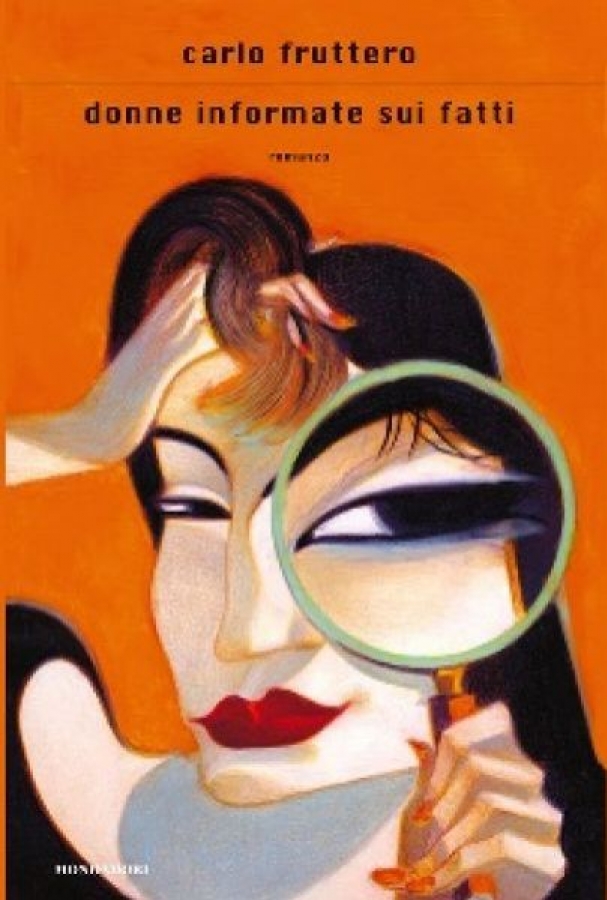
In upper-bourgeois Turin, a crime is committed: a former Romanian prostitute, married to a wealthy banker, is found strangled. It is later revealed that she was killed by two thugs, hired by the banker's "dear" friend, jealous and bent on revenge after being rejected. The narrative unfolds through the accounts of women involved in one way or another in the crime: the caretaker who discovered the body, a barmaid who was present at the scene of the crime, a volunteer, a female carabiniere, a journalist, the daughter, and the banker’s dear friend. A series of female portraits takes shape, complete with their family histories, their loves, and their ideas. The book is thoroughly enjoyable, the pacing is consistently brisk, and the prose is at once elegant and simple. One senses formidable craftsmanship, yet it lacks vigor. The characters remain in the background, the plot develops slowly, devoid of plot twists, only to draw to a predictable close.
Dream Story
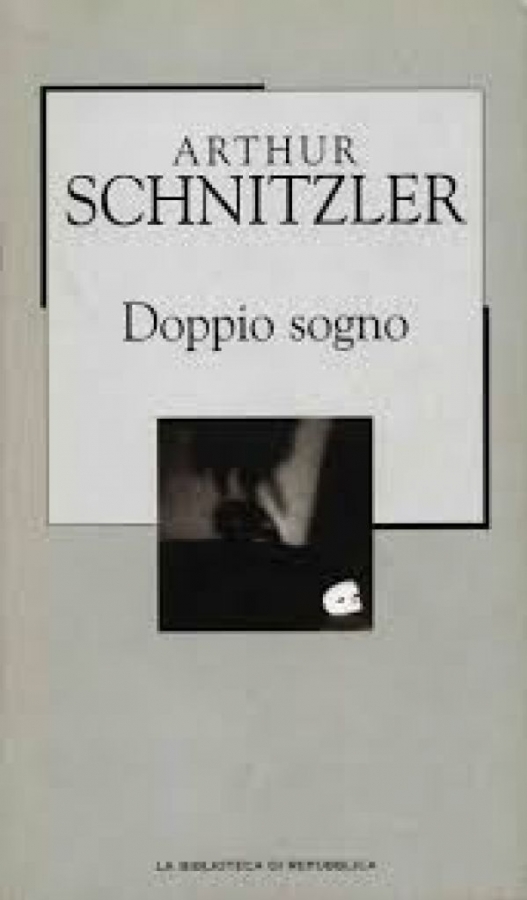
Fridolin and Albertine are a couple belonging to the solid, respectable bourgeoisie. Their union is founded on "a perfect interpenetration of feelings and ideas." Yet, a masked ball is all it takes—where both had been courted, he "with insinuating kindness," she > at first fascinated and then suddenly offended... with an insolent swearword , for them to be brushed by, > and not for the first time, a shadow of adventure, of freedom and of danger . From this insignificant prelude arise the hint, the desire, the possibility of a second life, made of transgressions, voluptuous secrets, daring acts, and even cruelty. Fridolin, a physician by profession, must visit a patient in the evening. During the night, seized by a restlessness unpredictable in so measured a man, he is gratified by a daughter’s declaration of love at her father’s bedside, is on the verge of brawling like a schoolboy with a gang of drunken students, finds himself in a disreputable neighborhood and accepts the invitations of a young prostitute, and finally attends an extraordinary gathering. Men, dressed in "festive costumes as white, blue, and red cavaliers," dance with women, > their head, forehead, and neck draped in dark veils, small black lace masks over their faces, but otherwise entirely naked . At first the scene is austere. Then the men rush > all toward the women, who received them with furious, almost wicked laughter . > The ineffable pleasure of the sight transformed within him into an almost unbearable torment of desire , but Fridolin is soon discovered. He is an intruder; he would be punished were it not for a lady stepping forward, naked but veiled, who declares she will "redeem" him, assuming the consequences of her act. He is safe and returns home. Albertine is fast asleep, but, upon his arrival, awakens with a shrill, sinister laugh. It is the conclusion of a dream in which Albertine imagines being amid "an infinite sea of nakedness" and witnessing the torture of Fridolin, "without feeling pity or horror, with absolute detachment": right up to the murder of her husband, during which > I was tempted (said Albertine) to mock you. to laugh in your face , to wish "that you could at least hear my laughter while they crucified you." Fridolin is shaken and, after entertaining the fleeting notion of "beginning a new life under another guise," resolves to take revenge on his wife by somehow seeing the night's adventures through to the end. But retracing his steps proves disappointing and concludes at the morgue with the sight of the lady's corpse—the one who saved him, and who was likely poisoned as punishment. > A stranger, an unknown woman never met before... represented nothing to him, nor could represent anything other than the pale corpse of the previous night, irrevocably destined for decomposition . "No dream is entirely a dream," just as, > the reality of a night, and indeed not even that of an entire human life, does not signify, at the same time, its deepest truth . A part of ourselves is, therefore, dark, pierced only with difficulty in reality, yet more readily knowable through fantasy, in dreams. This concept, the central thread of the novel, can bear two meanings. The first is comforting, albeit limiting, and reflects what Lorenzo the Magnificent states so well in a sonnet: > O Love, too envious of my bliss, let me at least be happy in sleep . The second meaning is more unsettling and leads back to the fact that each of us assumes that > the dwelling place of one's own mind is not, cannot be, entirely opaque to him (Teju Cole, *Open City*). We do not rationally accept what we truly are because we would have to acknowledge that we are not heroes. It is no coincidence that in the novel Fridolin does not go all the way, even though he would like to: he does not have sexual intercourse, for example, with the young prostitute, just as he would like, as a nobleman, to refuse the lady's sacrifice. Albertine, on the other hand, whose second life unfolds only in dreams, is free to give unbridled rein to her lasciviousness and her longing for transgression (she, married young and still a virgin), and to display coarsely the contempt and rancor toward her husband, rationally repressed. The novel's flaw lies in the sluggishness of the plot, which could be encompassed in a few pages, but which the writer instead drags on with pedantry. In fewer than a hundred pages, he manages to make the story tedious and prolix. Why not read it? It is pointless.
Where are you tonight
> He wears old boots, one gaping open at the toe, like a toothless grin. (...) But ultimately nobody sees him, because in Milan, even with the Universal Exposition and its status as the center of the world, a homeless man pushing a cart filled with his life is merely part of the landscape, and thus invisible . With this image of commonplace social indifference, the novel held out the promise of a Noir with a strong social imprint; especially when paired with another hallmark of Milan as "capital of the world": the world of television and major annual trade fairs, such as the Salone del Mobile. The protagonist, Carlo Monterossi, is a famous producer of a television show that even he despises; he lives in a splendid apartment with an efficient, protective housekeeper: it is a fake, superficial life that could go on forever, comfortable amid parties, fleeting affairs, and self-pity. Until everything is upended. At the end of a party, he finds a Japanese man in his home, dazed and terrified. Who is he? What is he doing in his house? And why is he murdered, and Monterossi's fine residence ransacked? It is from this premise that a Noir sets off, bogged down by an entangled and redundant plot featuring everything except the essential ingredient: suspense. Like a grand mélange of Simenon and De Cataldo (see the citation of *Romanzo Criminale* on this site), we have police intrigue, the secret services, an alienated yet sharp inspector, the cynical, wheeling-and-dealing backdrop of the "Milano da bere," marginalization, illegal immigration, and finally—why not?—even love. In short, it is a miscellany, fortunately seasoned with frequent Bob Dylan quotations steeped in a melancholy romanticism, as in these lines: > In the early morning rain with a dollar in hand / An aching in the heart and pockets full of sand / I am far away from home and I miss my only love so much . The narrative style is dynamic, alternating effective descriptions with tight, rapid-fire dialogue; yet narrative fluency is undermined by the constant entrance and exit of various characters—tiresome and confusing in its repetition—and by the recurrent psychological introspection devoted to Carlo, who slowly evolves from a frivolous dandy into a "real" man. It is, perhaps, an attempt to introduce an inner transformation in the character: a shift that remains unresolved because it is never fully explored, reducing it to a mere literary device. The writing is elegantly simple; it deserved a sturdier, better-constructed story. Why not read it? It is prolix—the worst possible flaw for a Noir.
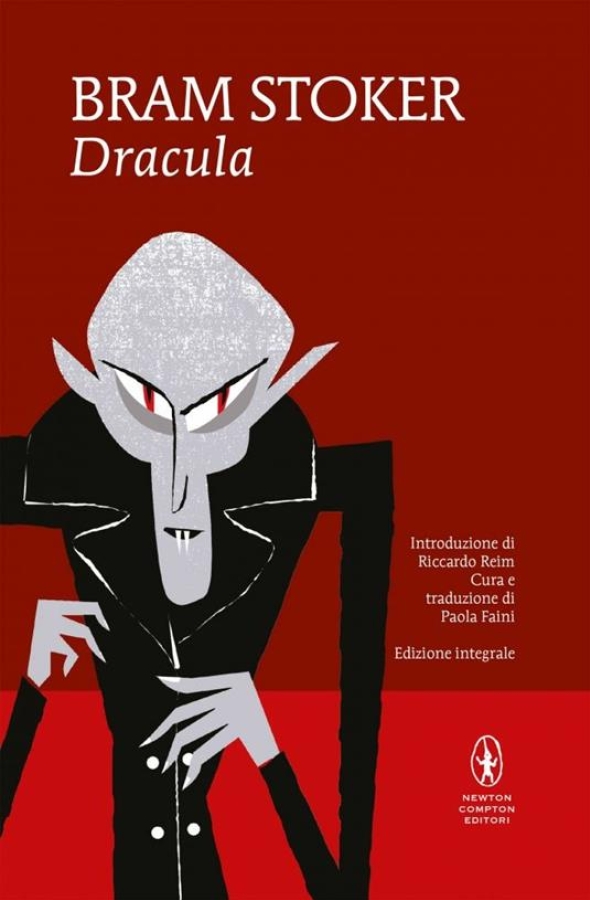
Dracula
The figure of Dracula has spawned a literary and cinematographic output that has exalted its horrific aspects, thereby distorting the complexity of Stoker's novel. The opening of the narrative reflects the preconceived notion we have of Dracula’s story. Jonathan Harker, a young real estate solicitor, travels to the Carpathians to conclude the sale of a property to Count Dracula, who intends to move to London. Much like in Conrad’s *Heart of Darkness*, the journey through these largely uncharted mountains is an immersion into the unknown of the human consciousness—one that the young Jonathan struggles to accept. One need only consider the physiognomic description, so dear to nineteenth-century anthropologists, of Dracula’s face: > had a very marked, very marked, aquiline face, with a thin and prominently protruding nose and particularly arched nostrils. (...) The eyebrows were exceptionally massive, almost meeting over the nose.(...) The mouth, so far as I could see it under the heavy moustache, was fixed and rather cruel-looking, with peculiarly sharp white teeth . With mounting dread, young Jonathan realizes he is caught in a nightmare, trapped inside a castle where he is a prisoner and could fall prey to the bloodlust of Dracula and four female vampires. Jonathan miraculously manages to escape (it is not clear how, and narrative gaps of this sort are frequent throughout the novel). The narrative then shifts to England with an opening reminiscent of Jane Austen. Mina, Jonathan’s bride-to-be, meets Lucy, who "looked sweeter and lovelier than ever": what follows is an idyllic description of the English countryside. The reader is initially taken aback, but then Stoker deftly prepares us for Dracula’s arrival aboard a phantom schooner and the transformation of the charming Lucy. It is difficult to fathom what is taking place; it is something inexplicable to a mindset steeped in scientism and rationalism. The mystery will be unraveled by a Dutch scientist summoned to the rescue by one of his disciples, a psychiatrist and friend of Lucy’s. Slowly yet stubbornly, the professor realizes that Count Dracula requires blood to secure his immortality and has come to London to create new vampires, thereby conquering the world. The professor also discerns the weaknesses of Dracula and vampires in general: their power exists only by night, by day they lie in a coffin, and they recoil before the Cross and the Host. To rid oneself of vampires, one must drive a stake through their heart and decapitate them. The group attempts to save Lucy. In a dramatic scene that alone justifies reading the book, Lucy—clutching at night a child whose blood she has drained—seeks refuge in her tomb, not before attempting to seduce her fiancé in order to turn him into a vampire as well. It will fall to the professor to stop her, and to the fiancé—at first incredulous, then devastated—to pierce her heart, thereby saving the girl's soul. The message is unmistakable: true love demands an extreme act, and what ultimately matters is the spirit, the Good that must be shielded from Evil. From this moment on, it becomes an all-out battle between the cohesive band of friends, led by the professor, and Count Dracula. The protagonist of this clash is Mina, Jonathan’s wife, who also falls prey to Dracula and runs the risk of becoming a vampire like her friend. It will be Mina’s determination, coupled with her resolute rational vision, that guides the group to their foregone victory—for now. The novel is read in a single breath; the episodes follow one another at a pace that is not always relentless, interspersed as they are by lengthy disquisitions from the professor—a pivotal figure in the plot, yet far too predictable in his erudition. The reader remains captivated by the gloomy atmosphere and by the secondary characters who are, in truth, central to the narrative, Mina in particular. As the story unfolds, Dracula recedes ever further into the background: a terrifying monster, yet "childish" in his reasoning and thus easily predictable in his conduct (notwithstanding everything, we Europeans remain superior from an ethical and rational standpoint). One can identify three narrative strands: the Gothic imprint typical of the nineteenth-century English novel, with its penchant for the exotic, the mysterious, and the gory; the reflection on a science that must stand ready to accept the incomprehensible and reckon with religion; and finally, friendship and love, seen not merely through a romantic lens, but as forces capable of driving human beings to fight and sacrifice themselves. Mention must be made of the narrative structure. It is built upon the accounts of the various protagonists through diaries and letters. The narrative 'I' shifts continuously, thus affording insight into different perspectives: the psychiatrist friend who can scarcely believe what is occurring and, for much of the novel, accepts events out of deference to the professor; Jonathan, who manages to leave a record of his journey into the Carpathians and subsequently expresses his love for Mina by keeping her vampiric impulses in check, preparing himself for the ultimate sacrifice—namely, driving a stake through her heart; and finally Mina, who fights desperately to avoid turning into a vampire, aiding the group by accepting a subordinate female role (she types up her husband's journals to make them available to the circle), ever anxious not to become an unwitting conduit of information for Dracula. Mina’s reasoning is subtle (astounding for a woman, remarks the professor!): she weighs the various alternative routes Dracula might take to return to his castle to find sanctuary; in doing so, she anticipates the monster’s moves—a splendid display of strategic thinking! As so often happens, multi-authored narration bogs down the narrative momentum, rendering it at times repetitive and redundant. Why read it? Compelling and evocative.
The Duke
> For ten years now I had been living up here in Vallorgàna alone, in the villa of my ancestors. (...) I was certain that I found myself in the best fortune I could desire. Nothing of importance occurred in my days. Nothing complex entangled my gaze. No disruption in daily life. No decision to hinder my stride . Such is the opening of the tale of the man we will come to know only as the Duke. Heir to an ancient noble family, the Cimamonte counts, the Duke belongs to the culture of the few, > that of those who, by means and tradition, live in a world of thoughts from which the majority are excluded . The Duke lives, or would like to live, on an island, formed by his villa and Vallorgàna. Two events intervene to shatter this "terrifying" isolation. Mario Fastrèda, the acknowledged head of the small community, has the trees cut down in a woodland owned by the Duke; it is a petty transgression, one that could be let pass, were it not that the Duke discovers an ancient codex recounting the history of the Cimamontes. Reading the deeds of his ancestors, the chronicle of Cimamonte abuse and violence, he realizes that the feuds were "fatuous and pretentious," yet for a nobleman they were instead "duties of respect," worthy of the utmost attention. And it is as if a dragon, dormant for centuries, > were rising up from the earth, from roots stretching taut, from rubble crumbling, from crusts breaking apart . A war begins between the Duke and Fastrèda; it is dictated by "a profound past, (...) the fruit of the ancient order of above and below." For page after page, the author retraces the events of this senseless feud, incomprehensible from a rational point of view, yet rooted in ancestral hatred. It is the setting that lends fascination to the story: the Mountain towering over the village like a sacred monolith, the woods, looming and menacing, advancing at the expense of the meadows, the small community, growing ever older and desperately anchored to traditions, grudges, and legends, and finally mysterious, ancient omens, such as the flight of a white-winged crow. We are not before Dino Buzzati's magical forest (see *Il segreto del bosco vecchio* reviewed on this site); Melchiorre is a historian of trees and of their land, and he knows full well that it is not true that "woods and mountains are a mirror of virtue," as naive naturalistic mythology would have it. Fortunately, the narrative of the feud is interrupted by Maria; against hatred, love supervenes. "It was an enchantment of an extraordinarily physical nature, entirely directed toward the body:" sweeping and utterly distinct, untamed, mercurial, irreverent, and with something, moreover, inexplicably wild." But Maria is the niece of Fastrèda, the enemy. The autumn wind, "dancing and whispering, showed me in its mirror shreds of myself and fragments of other things, and finally, embracing a beech stump, delivered a lash and began to whisper more insistently. It asked me whether I wanted to lose Maria or keep her. (...) Whether I was intoxicated by her body alone or whether in her I had grasped the inexpressible > . It is a dilemma that the Duke would probably not have been able to resolve on his own. First, a violent storm drives him from Vallorgàna, instilling in him a disillusionment with the past, the looming history of his ancestors; he no longer wishes to return to the village, he wishes to abandon the villa to ruin. He returns to take inventory of the things to be sold, encounters Maria, and through her brown eyes discovers this rare and yet raw and yet enclosed place, which can open only by braving steep slopes and ascents, skirting cliffs of woods.... > He realizes he belongs to Vallorgàna not by the will of his ancestors, but because this is his place, whose history towers over and transcends that of individuals. When he tells Maria, the alluring Maria replies: perhaps > . But why so much agonizing? Was it not enough to tell her that he was staying because he loved her? Estrangement, fury, love, disenchantment, and enchantment are the cadences of a great novel, unfolding within a confined setting over which looms the history of men and nature—a history that from remote past "continually risks becoming" present past." In the end, it will be the present that triumphs, but this long-awaited conclusion is reached only after many pages, numerous philosophical reflections, and frequent digressions. The plot loses momentum; at times it resembles a *zibaldone* in which the author sought to say too much about his own world at the expense of the narrative and the characters. What makes reading it a pleasure is the prose, rich in adjectives that never hinder the fluid cadence of the words, offering instead an enjoyable sense of the baroque. Why read it? Enjoyable, captivating, even if long.
The Two Tigers
The setting is India and the cruel Thugs, who have abducted Tremal-Naik’s daughter to make her the “virgin of the pagoda” in service to the ruthless deity, Kali. Sandokan and Yanez set out to rescue the young girl, embarking on an expedition that leads them into the Ganges Delta—a swampy expanse infested with ferocious beasts and plagued by cholera—down into the subterranean lairs inhabited by the Thugs, and all the way to Delhi at the height of the clash between Indians and the British during the 1857 uprising. All the quintessential ingredients of Salgari’s major novels are present: the hostile environment, treachery, Sandokan’s valor and strength, and the enduring themes of friendship and honor. Yet a theme emerges with striking force—one often latent in Salgari’s fiction, though never fully articulated: that of colonialism and the conqueror’s brutality toward the Indian people. From this standpoint, Sandokan assumes an ambiguous posture: he naturally does not side with the British, even though he owes his survival to a British army safe-conduct and his friendship with a French officer; yet neither does he champion the insurgents, remaining indifferent to the wholesale slaughter of women and children. > Terrifying screams rose from every street, accompanied by tremendous volleys... Let us flee as well, said Sandokan . The Tiger of Mompracem is not the *Black Corsair*: he remains a figure confined to his own pirate sphere, bound to ties of personal friendship that never mature into a genuine political consciousness. He lingers, as it were, suspended between hostility toward the oppressor and the conviction that his individual struggle can be resolved on his own, alongside his companions. It is paradoxical that the Tiger of India, the cruel Suyodhama—leader of the Thugs, ultimately slain by Sandokan—feels the cause of the Indian subcontinent’s independence far more acutely than the pirate of Mompracem, valiant and honorable though the latter may be. Salgari’s own perspective seems quite different, as he concludes the novel with a note of admiration for the leader of the rebels: > by now the insurrection was subdued, and only the brave Tantia Topi, with the beautiful and proud Rani of Jhansie, and a handful of valiant men, still held high the banner of freedom, amid the thick jungles and numerous forests of Bundelkund . Why did he never write a novel about this extraordinary figure?