Amara Lakhous
Books by this author (2)
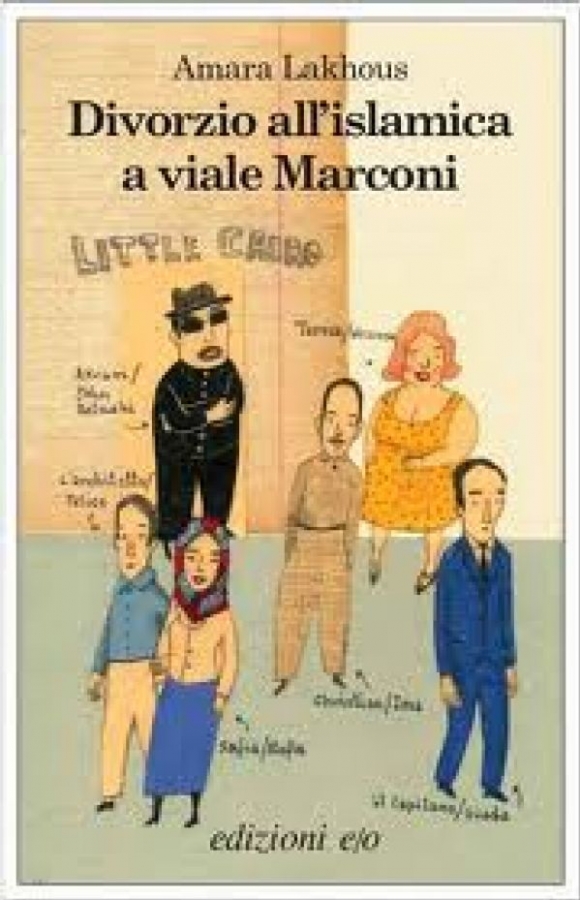
Divorce Islamic Style on Viale Marconi
Issa is actually an Italian young man named Christian. He has a perfect command of Arabic. Consequently, the secret services decide to recruit him and dispatch him to Viale Marconi in Rome under the guise of a Tunisian immigrant. His mission is to gather intelligence on a suspected terrorist cell, allegedly operating out of a call center. Sofia—or rather Safia—is an Egyptian woman who married a compatriot through an arranged marriage. Her husband works as a pizza maker in Rome, is deeply religious, and forces Sofia to wear the veil. Issa and Sofia’s stories unfold in parallel. Each tells their own story: a literary device that fails to lend vibrancy and appeal to the narrative, ultimately rendering it superficial due to the limited scope afforded to the protagonists. For Issa, being a Tunisian immigrant entails discovering the realities of immigration: precariousness, fear, overcrowded apartments, domineering landlords and employers, clashes of nationalities, and, above all, the divide between practicing and non-practicing believers. For Sofia, life in Rome represents an opportunity to carve out spaces of freedom and pursue her dream of becoming a hairdresser. Sofia is religious yet independent in her judgments, and she chafes under the prejudices and authoritarianism of a husband she does not love. Issa and Sofia meet only by chance and for fleeting moments, but it is clear from their exchanged glances and mutual attentiveness that something has sparked between them. Their relationship could shift from a state of suspension, typical of secret lovers, to something more concrete and intimate. Issa receives a request from Sofia’s husband to marry his wife, whom he has repudiated in a fit of rage. Under Islamic law, Sofia and her husband can only remarry after the ex-wife has wed another man, consummated the marriage, and subsequently divorced. Sofia welcomes the idea, not out of any desire to return to her husband, but because she is in love with Issa. Yet the young man cannot bring himself to decide, as he is reluctant to deceive Sofia: he is, in fact, neither Tunisian nor Muslim. The ending holds a surprise that cannot be revealed. Still, the question remains: will Issa and Sofia end up together? Lakhous is a splendid writer: short sentences, concise character sketches, and a subtle irony are the primary strengths of his writing. In this novel, however, the urge to dwell on social and cultural reflections (concerning the Muslim world, immigrants, and Italians) comes at the expense of narrative pacing. The story is at times tedious and predictable, feeling somewhat contrived. Only in flashes do the authenticity and brio that characterized the author’s previous book return. Why read it? It is enjoyable, interesting, and in many respects instructive. One grows fond of the two characters, so much so that one longs to know how their love story concludes, just like in a telenovela.
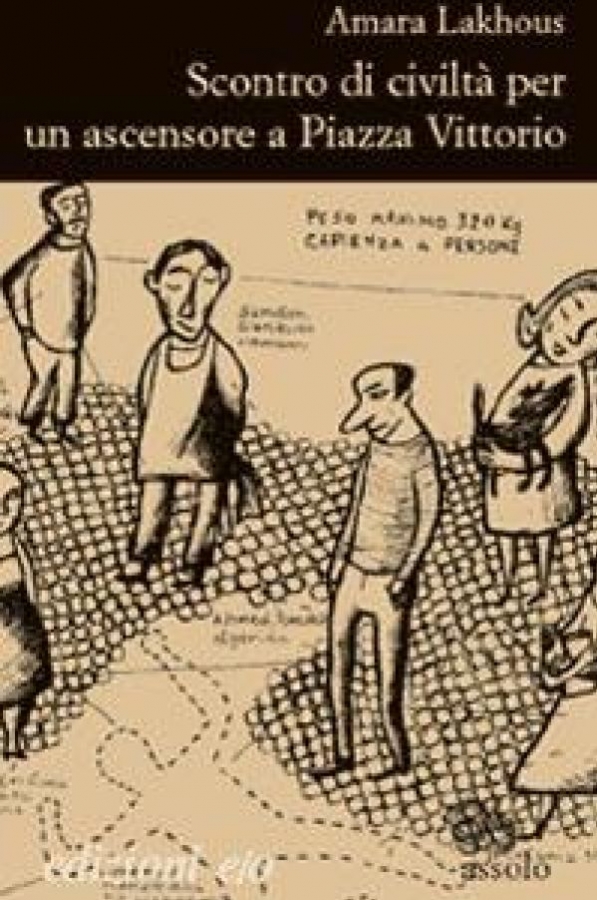
Clash of Civilizations Over an Elevator in Piazza Vittorio
The Italian edition is a revision, also undertaken by the author, of the original Arabic publication of 2003, which bore another title: “how to be suckled by the she-wolf without her biting you.” The two titles, in Italian and in Arabic, constitute two possible interpretive keys to the book. The setting is Piazza Vittorio in Rome, the multicultural venue par excellence, and specifically an apartment building inhabited by a diverse cast of characters: from the Neapolitan concierge to a melancholy university professor from Milan, to a young Dutchman passionate about Italian Neorealism. Revolving around the building is a multiform humanity that, despite mutual misunderstandings and cultural and linguistic differences, shares a single conviction: their esteem and trust in Amedeo. He appears, and strikes us, as the Italian we would all wish to be in a multicultural society: cultured, kind, polite, tolerant, and ready to help regardless of skin color, religion, or country of origin. These are the reasons why everyone rejects the idea that Amedeo could have committed a murder—and what is more, in the building’s elevator, which he avoided using out of respect for the concierge. > He looked at me with a smile and said: I’ve changed my mind, I’ll take the stairs. I couldn’t believe my ears and asked myself: are there still men who respect women in this country? . Yet what is even more incredible is that everyone, Italians and foreigners alike, is astounded that Amedeo is not Italian. After all, foreigners are all ill-mannered and ignorant. But who is Amedeo? And this is the second interpretive key. Amedeo, with his flawless Italian and his vast knowledge of Rome, is in reality Ahmed, an Algerian who fled his homeland after his fiancée was brutally murdered. His is a flight from the horrors of the past, from a world he wishes to leave behind, in mind as well as in body. In Rome he found Stefania—naive, idealistic, and curious—and fell in love with Piazza Vittorio, with its clash of civilizations. > Rome has Termini Station. Termini means the journey is over. There is something strange about this city. It is very difficult to leave. Perhaps the water from its fountains has been mixed with some peculiar substance of sorcerous origin . Yet Rome can also wound you, with its bureaucratic red tape, with the coldness and violence of a society in decline, bereft of human solidarity. Ahmed, deep down, wants to be neither Italian nor Algerian: he would like to simply be Ahmed. Moreover, the memory of the past belongs to him alone, its wounds to be tended in solitude. > Oh my open wound that will never heal! I have no solace except in howling . The book’s fundamental merit lies in its writing. To begin with, an inspired choice is the alternation between the unfolding of events as related by the various characters—thereby foregrounding their differing points of view—and the autobiographical, diary-like notes of Amedeo/Ahmed. These are introspective, reading almost as the narrative of a personal journey of liberation from the past and discovery of the future. Furthermore, the affectionately ironic style does much to prevent the narrative from lapsing into moralizing or pseudo-sociological analysis when depicting the latent racism among Italians (structured along the classic hierarchy: North – Southern Italy – Global South), the despair and nostalgia of the foreigners, and the coldness and harshness of Italian life. The characters are sketched with such close attention to the individuality of each, whether Italian or foreign, that a multitude of lights and shadows emerges, rather than that binarism (Italian – foreigner, good – evil) that so much of the media seeks to impose upon an Italian society that, though resistant, is subjected to it. Why read it? Light, entertaining, yet profound.