Finished reading on: June 22, 2007
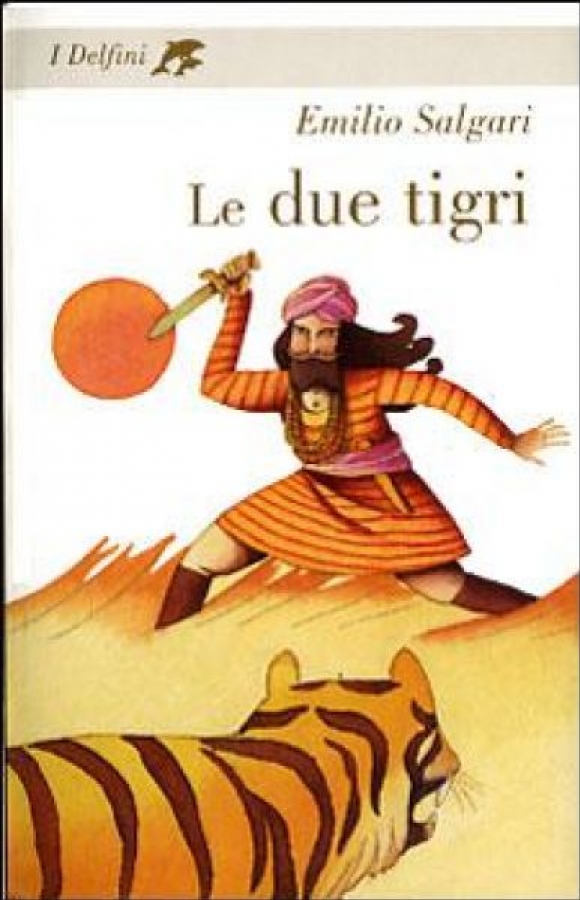
The Two Tigers
Title of the original version reviewed: «Le due Tigri»
AI Translation Notice: This review was translated from the original Italian using artificial intelligence. Book quotes and excerpts are translated interpretations and will not match the author's original English phrasing or official published translations.
The setting is India and the cruel Thugs, who have abducted Tremal-Naik’s daughter to make her the “virgin of the pagoda” in service to the ruthless deity, Kali.
Sandokan and Yanez set out to rescue the young girl, embarking on an expedition that leads them into the Ganges Delta—a swampy expanse infested with ferocious beasts and plagued by cholera—down into the subterranean lairs inhabited by the Thugs, and all the way to Delhi at the height of the clash between Indians and the British during the 1857 uprising.
All the quintessential ingredients of Salgari’s major novels are present: the hostile environment, treachery, Sandokan’s valor and strength, and the enduring themes of friendship and honor.
Yet a theme emerges with striking force—one often latent in Salgari’s fiction, though never fully articulated: that of colonialism and the conqueror’s brutality toward the Indian people.
From this standpoint, Sandokan assumes an ambiguous posture: he naturally does not side with the British, even though he owes his survival to a British army safe-conduct and his friendship with a French officer; yet neither does he champion the insurgents, remaining indifferent to the wholesale slaughter of women and children.
Terrifying screams rose from every street, accompanied by tremendous volleys...
Let us flee as well, said Sandokan
.
The Tiger of Mompracem is not the Black Corsair: he remains a figure confined to his own pirate sphere, bound to ties of personal friendship that never mature into a genuine political consciousness.
He lingers, as it were, suspended between hostility toward the oppressor and the conviction that his individual struggle can be resolved on his own, alongside his companions.
It is paradoxical that the Tiger of India, the cruel Suyodhama—leader of the Thugs, ultimately slain by Sandokan—feels the cause of the Indian subcontinent’s independence far more acutely than the pirate of Mompracem, valiant and honorable though the latter may be.
Salgari’s own perspective seems quite different, as he concludes the novel with a note of admiration for the leader of the rebels:
by now the insurrection was subdued, and only the brave Tantia Topi, with the beautiful and proud Rani of Jhansie, and a handful of valiant men, still held high the banner of freedom, amid the thick jungles and numerous forests of Bundelkund
.
Why did he never write a novel about this extraordinary figure?