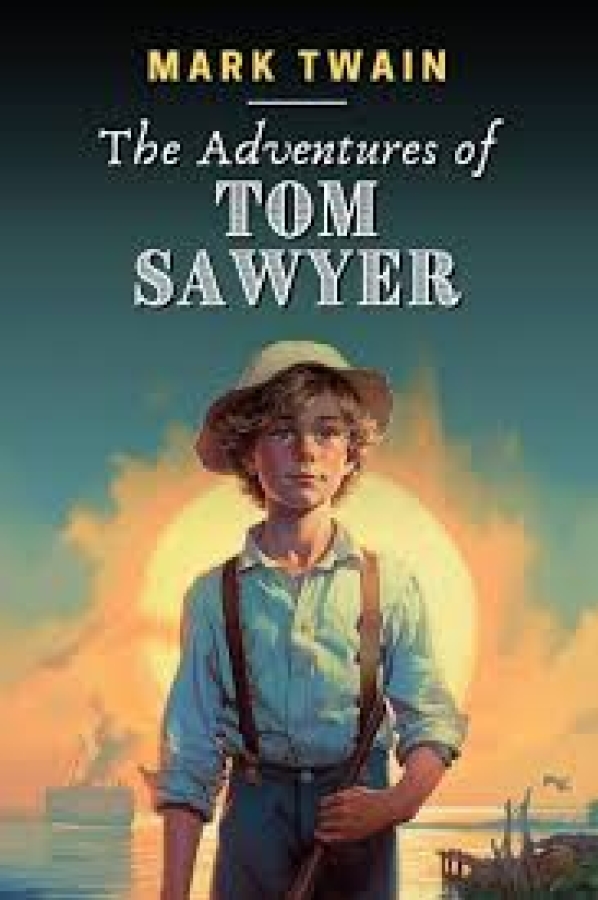
The Adventures of Tom Sawyer
Tom Sawyer is a young boy who lives with his aunt in a small rural town on the banks of the Mississippi. Mark Twain introduces him in this way: > he got back home barely in season to help Jim, the small colored boy, saw next-day's wood and split the kindlings before supper—at least he was there in time to tell his adventures to Jim while Jim did three-fourths of the work. (...) If he had been a great and wise philosopher, like the writer of this book, he would now have comprehended that Work consists of whatever a body is obliged to do, and that Play consists of whatever a body is not obliged to do. Tom is not clear on this distinction and takes a carefree, unencumbered life as serious business, swinging from melancholia—which prompts him to wish he could die temporarily, just to make himself missed—to a fantasy world in which he dreams of being a pirate or an outlaw. And so, with his faithful friends, especially the vagrant Huckleberry Finn, known as Huck, he embarks on a series of exploits, from the pirate life on an island in the middle of the river to wandering through the graveyard at night, witnessing a murder, all the way to setting off in search of treasures surely hidden by bands of robbers. This dizzying flurry of activity does not prevent Tom from courting Becky, a girl from a respectable family, who also finds herself drawn into Tom's reckless escapades. There is no point in recounting the plot, at times convoluted and commonplace yet never dull: it is far more interesting to dwell on two peculiarities of the novel. The first is the rural setting; with gentle and affectionate irony, Mark Twain depicts the school, dominated by the schoolmaster's authoritarianism; the church gatherings with the preacher's tedious and moralizing sermons; and the hilarious ritual of Examination Day, when the best pupils present an essay of their own before the entire community. One can smile, as Mark Twain does, at the ornate English, laden with words that most people likely do not understand, at the puritanical and sanctimonious values, at education imposed by sheer force; nevertheless, a strong communal spirit emerges, seeming to transcend even class divisions. It is a white society, placid in its values, with a single, clear boundary: discrimination against Black people, who remain in the background even as they sustain the small town's agricultural economy; one can sympathize with the vagrant Huck, but not with the servant Jim. The other compelling aspect lies in Tom's powers of fabulation. Unlike the protagonists of other coming-of-age novels, Gian Burrasca or Jim from *Treasure Island* (see the reviews of *Il giornalino di Gian Burrasca* and *Treasure Island* on this site), what surprises is Tom's dialectic: how he manages his aunt, capitalizing on her naive affection; how he cajoles his friends, talking them into adventures and overcoming their reluctance; how he persuades Becky to follow him into dangerous and intimate situations, paradoxical for such a prudish society. And when Mark Twain remarks that he can stop at writing the story of a Boy, because > the story could not go much further without becoming the history of a Man. (...) When one writes of juveniles, he must stop where he best can , he perhaps means that Tom's innocent cunning would turn into a guilty capacity for deceit, as so often happens among adults. In Twain's imaginative world, it is better to keep playing with the petty subterfuges of adolescence. Beyond the character and the plot, the literary merit of *Tom Sawyer* resides in its writing—attentive to detail, magically realist, subtly ironic. Take as an example this passage, which describes Tom's awakening on the island of the imaginary pirates: > when Tom awoke at dawn, he wondered where he was. (...) Now, far off in the trees a bird called; another answered; now the distant strokes of a woodchopper were heard. (...) A little green worm came crawling over a soft leaf, lifting two-thirds of its body into the air from time to time and “sniffing around,” (...) then proceeding again, (...) and when the worm approached him, of its own accord, he sat still as a stone, (...) then (...) when it began a journey across him, his heart was all glad. (...) Now a procession of ants appeared from who knows where. (...) A brown-spotted ladybug climbed the dizzying height of a blade of grass (...) and Tom bent down close and said, > Ladybug, ladybug, fly away home, your house is on fire, your children are alone. These are wonders of a world inhabited at night by spirits, and Nature still seems endowed with a soul. And what of the description of the school, punctuated by that repetitive “showing off” (in Italian, *ostentare* or *vantarsi*)? All the teachers “put on airs”
Benediction
Dad Lewis and his wife return from Denver > away from the mountains, back out onto the high plains: in the pastures an expanse of buffalo grass, sagebrush, weeds, and blue grama, in the cultivated fields wheat and cotton. On either side of the highway there were dirt country roads running in all directions under a pure blue sky. Holt is a small Colorado town like so many others, a place hardly worth identifying because it is the same everywhere, it is where normal life is lived, > the precious ordinary life: mundane stories, with nothing exceptional about them, stories that could belong to anyone, yet which hold within them love, familial affection, unhappiness, guilt, memories, and the expectation of Death. Dad has just learned he has only a few months left to live, due to lung cancer. We witness the man’s slow, inexorable physical decline. Through frequent flashbacks, the author offers glimpses of what now torments Dad. In the past, as the owner of a supermarket, he fired an employee who had stolen from him; Dad was unrelenting, cast from a single mold, offering no second chances—not even to the man’s wife, who had gone so far as to offer her own body to pay back what had been taken. The man killed himself, leaving his family in destitution. This unyielding attitude led to a rupture with his son. When he caught him, still an adolescent, wearing his older sister’s clothes, he beat him, terrified of scandal and rejecting his homosexuality; the boy ran away from home, leaving no trace behind. With his elder daughter as well, who has returned home to care for him, he was emotionally detached, stern, and distant. Now, he realizes he has never caressed his daughter. > I was too busy. I didn't pay attention. No, she said, You weren't. She put her hand on his cheek, now. Forgive me, he whispered. I missed out on so much. I could have done better. I have always loved you. He wants to see his son again, he waits for him, he longs to reach out to the woman to apologize, he wishes he could turn back time, but now the people of his life, those he has lost, are merely part of a terminal patient’s nightmares. While Dad’s inexorable journey toward Death is the central narrative, other lives revolve around it, all marked by suffering. > Every life passes through some kind of unhappiness, (...) but there is good as well. (...) There are only brief moments. And as in Kader Abdolah's *The Parrot Flew Over the IJssel* (see review on this site), the cycle of the seasons rolls across the Great Plains. > In autumn the days turned cold and the leaves fell from the trees and in winter the wind came down from the mountains and out on the high plains of Holt County there were night storms and three-day blizzards. The novel demonstrates how our lives slip by without us seizing the opportunities to show humanity toward others, to comprehend the suffering of those around us. To be sure, Dad displayed great moral integrity in refusing the advances of an attractive woman; but wouldn't it have been better had he accepted them, had he been more forgiving of himself? Even in our prosaic lives, so far removed from those of great men, we are constantly faced with choices, and these decisions concern our relationships with others. At the end of life, nothing remains but remembrance, yet Death dissolves even that. > If one does not die, one lives, so writes Salvatore Satta in *The Day of Judgment* (see review on this site). > And this truth, seemingly obvious, is instead heavy with consequences, for life transforms everything; nothing can withstand its implacable truth. (...) To know oneself, one must live out one's life to the very end, to the moment one is lowered into the grave. The fundamental strength of the book lies in its prose: crisp, spare, and mesmerizing all at once. Short sentences, taut dialogue, and sparse digressions on the setting follow in succession; the characters are not merely described, but reveal themselves, always wrapped in that aura of mystery, of the incomprehensible, that shadows us throughout our lives. If Dad reveals himself in Death, who are the others? It is a pity that the narrative rhythm, elsewhere so intense, is compromised by an ending of a melodramatic and frankly verbose register. Why read it? Splendid prose.

The Broken Window
Anyone who has read or seen *The Bone Collector* in the cinema is already familiar with the book's main characters. Lincoln Rhyme is a renowned criminologist who bases his investigative techniques on the rigorous and meticulous use of "physical" evidence, even the most insignificant. Despite having been left paralyzed following a shootout. Rhyme continues to collaborate with the police, assisted by a team of detectives and by Amelia Sachs, a close and capable collaborator as well as his life partner. Rhyme's cousin is accused of rape and murder. All the evidence points to his guilt. Rhyme is quickly convinced that the clues have been fabricated by a serial killer who "knows everything." In the course of the investigation, Rhyme and his team discover the existence of a massive private organization that collects, stores, and processes information on virtually everything, selling it to corporations (for market research, for instance) as well as to public and state institutions. It is a "Digital Big Brother," whose data is seemingly inaccessible, yet which the criminal has managed to exploit and even manipulate. The thriller is skillfully constructed, boasting a plot rich in twists and an unpredictable conclusion. The best part of the book is its depiction of the world of big data processing corporations. Rhyme’s team proves remarkably inexpert (perhaps excessively so, given they do not even know Excel) and ventures into this realm step by step, left stunned, fascinated, and alarmed. Rhyme himself is disconcerted: can access to such vast amounts of information truly supplant the method and intuition that must govern criminology? And the reader, too, begins to wonder. On the surface, possessing powerful databases and sophisticated data collection tools would appear to be a monumental achievement. But is it worth it if a criminal can exploit them to commit rape and murder with impunity? Is the availability of so much information—which even enables the prediction of events—truly helpful in tracking down killers, or do traditional, obsolete investigative methods remain more effective? The premise is intriguing, the prose concise and effective, the plot well-engineered, and the characters—especially Amelia Sachs—compelling; it is a pity that, as so often happens with thrillers, the novel's sheer length renders it wordy and meandering. Are these authors paid by word count, as Salgari once was? Why read it? It is a solid thriller, and the theme is compelling.
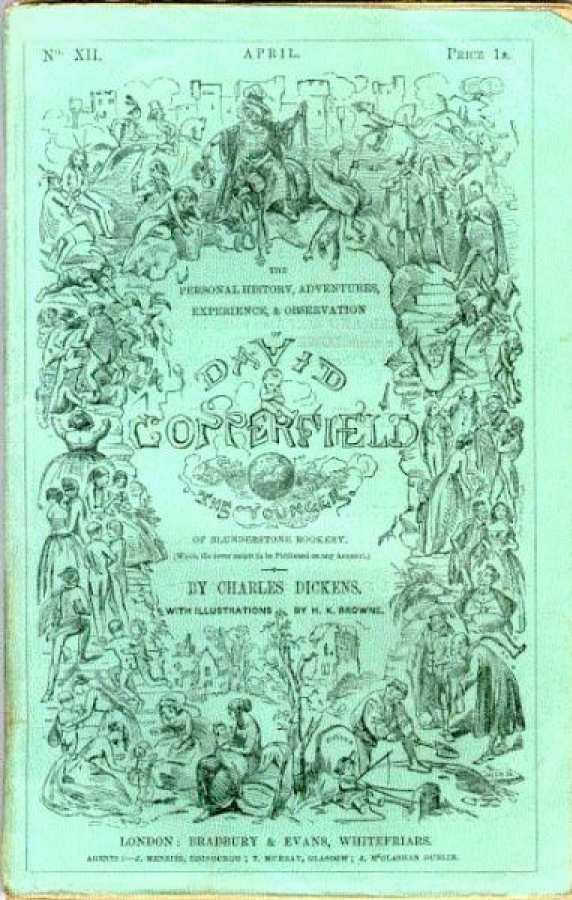
David Copperfield
The novel recounts the life of David Copperfield, who, after a happy childhood with his mother and a nurse, is persecuted by his stepfather. He is sent to a harsh, authoritarian school and, upon the death of his mother, is forced to work in a factory while still a child. He is subsequently taken in by an aunt, who provides him with comfort, an education, and the means for an apprenticeship at a law office. Over time, the young David grows into manhood, working hard, marrying, and gradually establishing himself as a writer. Upon his wife’s death, he embarks on a long journey, which allows him to realize his love for a childhood friend (Agnes), whom he marries upon his return to England. The novel is rich in characters and situations (grotesque, melodramatic, emblematic of contemporary society and widespread social injustice, representative of a harsh and hypocritical morality), such that David’s fortunes intertwine with other subplots, all culminating in happy endings, yet often encumbering the narrative and rendering it prolix, rambling, and fragmentary. Individual episodes stand out more vividly than the overarching plot, while the heightened exaggeration of the characters, for good or ill, comes at the expense of substance and depth in the portrayal of the figures' emotions and distinct idiosyncrasies. In truth, everything revolves around David and his representation of reality; the throng of other characters and the settings themselves constitute «background noise» or a frame within which the imagination of both author and protagonist unfolds. *David Copperfield* has been defined as an autobiographical novel, but this is only partially true. In fact, it is a novel of nostalgia for childhood and of return to a paradise, constituted precisely by the serene maternal sphere and by the figure of Agnes, ever cherished and sought after for her very tranquility and steadfastness. What prevails is a reality interpreted through a melancholic imagination: all events are seen through the eyes of a child, who narrates an unreal England, embellished (even amid its suffering and injustice) by the trusting, idealized vision typical of childhood. From this perspective, it is emblematic, and particularly evocative, how the author conceptualizes the ideal place of refuge: it is a boat, inside which one feels safe even as the waves swell and the wind rises outside, in that it ensures an emotional equilibrium and a peace that are ultimately destroyed by the arrival of adult betrayal and passion, and, metaphorically, by a storm that claims both the betrayer and the betrayed. The style features an exceptionally rich vocabulary and is characterized by a sentence structure that is often difficult to follow. The frequent use of dialectal forms further increases the difficulty of the reading experience.

Dreams in a time of war
Thiongʼo is a Kenyan writer, and in this book he recounts his youth in 1950s Kenya, torn apart by ruthless British repression. It is not a political or historical text, although references to figures and events in the history of the African nation are numerous. > Despite my dashed hopes, the events, even the arrival of British battalions, were largely abstract, happening in a misty land as far away as a story in a distant setting alternating between dreams and nightmares . And indeed, amid dramatic events and social upheavals, the young Thiongʼo pursues a stubborn desire for schooling and education, leading him from the seemingly sealed fate of a peasant to that of a writer. This is the profound core of the book: it is possible to keep dreams alive even in times of war. Thiongʼo was born into a typical Kikuyu family. His father is a small landowner with four wives and many children. The portrayal of this community, with its multitude of brothers and sisters, is the finest part of the book. The author offers a vivid, affectionate representation, rich in memory and steeped in nostalgia. It is a happy childhood anchored by a cornerstone, his mother, who wishes for her son to “always seek the best, whatever the difficulties and obstacles.” And it is by listening to peasant tales and songs that the child “begins to hear the music in words,” the magic of choice, arrangement, cadence—everything that makes a story so beautiful and endures so long in memory. Thiongʼo falls in love with words, both written and spoken, and from that moment on, his destiny is sealed. Family upheavals and national events leave a deep mark on the boy’s adolescence: his mother is repudiated by his father, the extended family disintegrates, and British repression brings death, injustice, and devastation. The educational path itself is fraught with obstacles, as schools must often shut down or conform to British dictates, which oppose the cultural advancement of the local population. In spite of everything, the boy masters English, even having to learn it from an absurd textbook describing two Oxford boys discovering London. He knows everything about the British capital and little to nothing about his own country! He devours the great classics of English and world literature, memorizes *Treasure Island*, and it is precisely thanks to this passion for Stevenson’s great novel that he brilliantly passes the entrance exam for secondary school. He is admitted to one of the finest educational institutions in Kenya. The entire community shares in the boy’s triumph, contributing collectively to pay his tuition and provide the young Thiongʼo with the necessary school kit. Indeed, everyone knows full well that > in our times, education and schooling are the path to bettering men and women . The narrative unfolds unevenly. The portrayal of childhood, of the large paternal family, as well as several observations on the school environment, are lively and engaging. The author holds them vividly in his memory and relishes returning to them. When he shifts to recounting the events of the nation—the independence struggle, the British repression—even when narrating dramatic episodes in which he was personally involved, the prose turns cold, resembling a historian’s report, a bystander’s chronicle. The narrative grows ponderous, loses its vitality, and leaves the reader bewildered by events and figures far removed from their familiarity. Nor, on the other hand, does a clear picture emerge of the events leading to independence, for everything remains fragmented, ill-defined, as though the author himself were incapable of reconstructing his country’s history. The English is textbook-like, elegant and precise, yet—at least on the surface—concedes nothing, in either vocabulary or syntactic construction, to the author’s native tongue. And this, too, contributes to an overarching impression of sterility and abstraction. Why read it? The first part of the book offers a highly interesting and intriguing glimpse into Kikuyu society.
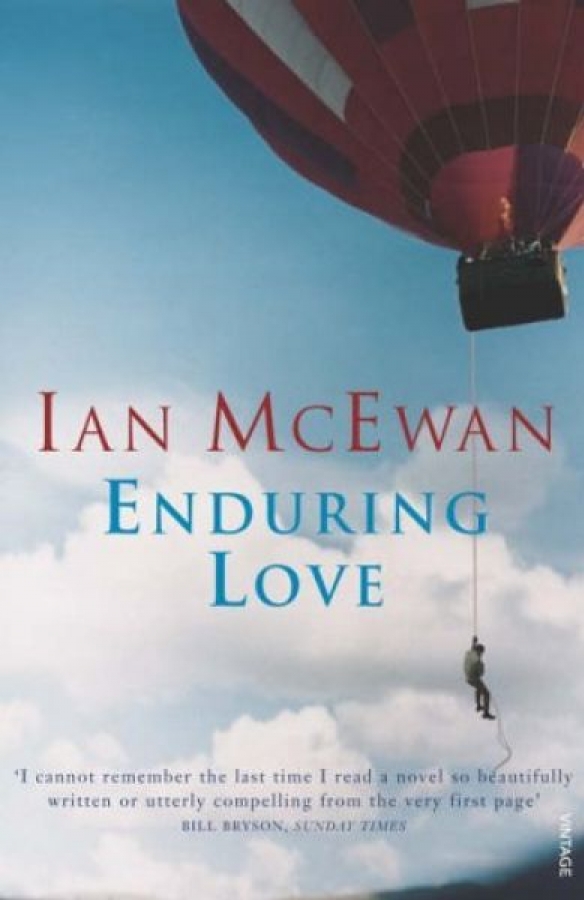
Enduring Love
Like much of McEwan’s fiction, we are confronted at the outset with an extraordinary event (in this case, the death of a person falling from a hot-air balloon) that brings profound upheaval to a life that seemed quiet and settled: the couple’s relationship enters a crisis, an undercurrent of paranoia and instability emerges within the protagonist, and his professional choices are called into question. And up to a point, the novel follows this trajectory, with some truly fine and effective pages on the breakdown of the marital bond; it almost seems as though everything the protagonist endures (in particular, his harassment at the hands of a religious fanatic) were a figment of his imagination, the result of an increasingly pronounced depressive and paranoid spiral. The protagonist discovers himself to be different from who he thought he was. Then, just as the story seems to have reached an impasse, a happy ending emerges—almost worthy of a detective story—but along with it comes the reader’s disappointment. McEwan writes very well, in an English that is simple, fluid, and yet richly expressive: individual pages are remarkable, the whole somewhat less so.

From the Land of Green Ghosts (The Boy Who Spoke to the Wind)
I have always wondered why Italian editions do not retain the original title. It often conveys the sense of the book far better, as in the case of *From the Land of Green Ghosts*, which became, who knows why, *Il ragazzo che parlava col vento*. The title "from the land of green ghosts" neatly encapsulates the autobiography of one who, to save himself, had to forfeit his own identity through detachment from the spirits of an ancestral world made of lush fruits, rice paddies, forests, water, birds, and animals. Then again, misunderstanding must be this novel's destiny, if in his preface John Casey himself—Pascal's savior, mentor, and friend—offers this definition: > this is less a book of politics and history than a spiritual autobiography, in which, uniquely, (Pascal) writes from the perspective of a member of a Bronze Age tribal society, recently opened to the outside world, and at the same time of someone who ultimately managed to receive a Western education at a famous English university . Truly an arrogant and reductive assessment for someone who endured terrible atrocities, witnessing the material and social destruction of Burma! The novel is divided into three parts. The first part, "Tribal Idyll," depicts a tribal, agrarian world on the fringes of the great forests. > We were Padaung, we were Catholic, and we seemed to live in a world of our own, with our ceremonies and traditions. We had no sense that anything different could break in. The feeling of being safe showed me that we were living in paradise . The author describes for us, as meticulously as an anthropologist, the customs, way of life, and natural environment of the Padaung, even detailing, with a wealth of particulars curious to us, the food and the manner of cooking it. We discover ancestor worship, the formidable authority of the elders, and the spiritualistic and magical elements that characterize every moment of life. Even though Catholic—and the same holds true for Buddhists—the tribe jealously continues to preserve its traditions, all while observing the precepts of the new religion. His paternal grandmother's tales permeate Pascal's childhood: they are grim stories, like all folklore of peasant societies, yet in them animals, particularly birds, seal the fate of men. One day, the young Pascal catches an owl and wishes to cook it, but his grandmother tells him to speak to it and release it, so that one day he might call upon it for help. > Years later, when I was in the greatest danger, that memory became fraught with meaning for me . Through his involvement with the parish, Pascal receives an initial education and develops a passion for learning. He leaves the village to attend first a seminary, then university. He becomes a student, which places him in the most dynamic and politicized segment of Burmese society. Toward the regime—authoritarian, cruel, mendacious, and corrupt—Pascal has yet to take a stand. There is no political consciousness, and even the grief over the imprisonment and death of his girlfriend does not seem to translate into a deliberate taking of sides. Yet he is a student, and therefore an enemy of the regime. He must flee and hide in the jungle. The second part, "Revolution and Struggle," recounts Pascal’s experiences among the rebels, who have entrenched themselves in the border areas between Burma and Thailand. Through Pascal’s pen, we witness countless atrocities; suffice it to say that Burmese soldiers advance through minefields—laid, moreover, by themselves—by herding beaten, terrorized, and starving civilians ahead of them, clearing a path through bodies torn apart by explosions. Such is the cruelty that even > the animals and birds, which regularly drank from the river, fled, leaving only the human beings trapped in a fit of madness . The third part, "Rescue," recounts how Pascal managed to escape to Thailand and reach England, where he would become a professor of English literature. The story has a happy ending, yet there is a disturbing revelation. In Cambridge, at a dinner party at the home of English friends, he learns that he was singled out for rescue because years earlier his hosts had attended a circus performance of "giraffe women"—Padaung women with elongated necks adorned with metal rings; in short, Western man delights in preserving specimens of rare and endangered species. Yet is Pascal aware of this? No, because as the closing lines tell us, by now his dreams are > images all jumbled together, the elements overlapping. Snow might fall on the jungles, or palm trees grow on the Alps. The visions are often blurred by mist . It is a long novel, dominated by a flat narrative style incapable of conveying sensations and emotions. It is as if he were a reporter investigating, describing, filing an account. While the facts undeniably speak for themselves, it is not the writing that grips us; it is the history of Burma itself. It is no coincidence that the narrative engages the reader in the second part, as the tempo accelerates and the episodes of war and violence cannot fail to shatter us. Yet even here, the narrating "I" and protagonist, Pascal, appears almost as a bystander, a social scientist. Could it be that the author is forced to write in a language not his own? Or is this apparent detachment a psychological shield to survive, to defend against memory, against a destructive existential grief? Why skip it? The book is worth reading only if one harbors a deep interest in the landscape and history of Burma.
The given day
We are in Boston in 1919, at the close of the First World War. The novel's protagonists are Danny, a police officer from a traditional white family whose patriarch is a high-ranking official in the police department, and Luther, a Black man who could have been a formidable baseball player, but, because he is Black, must resign himself to menial jobs. This is, therefore, a deeply stratified American society, one in which the relations between social classes and different ethnic groups are clearly demarcated. Both protagonists feel ill at ease within this rigid social framework. Danny lives in the Italian neighborhood and is drawn to the social and ideological upheavals that characterize the years immediately following the end of the Second World War. At first, it is mere curiosity, but he soon finds himself increasingly involved. He is sent to infiltrate anarchist and Bolshevik groups as an informant, only to discover that they are simply demanding a more just society.. Meanwhile, he attends meetings of police officers demanding fairer wages and less grueling working conditions. He soon becomes their leader. Luther, in turn, is forced to flee his hometown—leaving behind a wife and child—after killing some criminals. He arrives in Boston and finds work with Danny’s father’s family: he is blackmailed by a corrupt cop who attempts to implicate him in fabricating evidence to frame the Black community for subversive activities. As this brief synopsis shows, the plot is remarkably intricate and packed with twists and turns, in the vein of the best American thrillers. It culminates dramatically with the Boston Police Strike of 1919, which leaves the city at the mercy of criminals, petty thugs, and subversives for two days. Danny emerges defeated: as the leader of the striking officers, he is accused of inciting his colleagues to abandon their posts (in reality, it was political machinations that left the city abandoned). At the beginning of the novel, Danny believes that this world belongs to men like his father (hierarchical, authoritarian, convinced that everyone must know their place), but he comes to realize that this is neither a genuine nor a just world. > - I'll tell you, Luther, it’s been a terrible year-. Luther thought back on his own year and it made him laugh, really laugh.- What-, Danny said, Luther gave him his hand:- you and me together- What do you think you do, Danny replied, when everything you have done in your life turns out to be a damn lie? Build a new life. I guess Luther replied. The most compelling aspect of the book is that a social issue—such as the great Boston Police Strike of 1919 and the birth of the American labor movement—is framed within the conventions of a thriller, making the narrative gripping and fast-paced. Like all American thrillers, it ultimately proves verbose, redundant, and even muddled. Many of its narrative threads get lost in the sheer mountain of pages, and the colloquial, distinctly American style fails to sustain the momentum, being far better suited to delivering plot twists than to exploring character and circumstance in depth. Everything is left far too unresolved. Why read it? The historical context is intriguing for us Europeans, who are unfamiliar with American history.
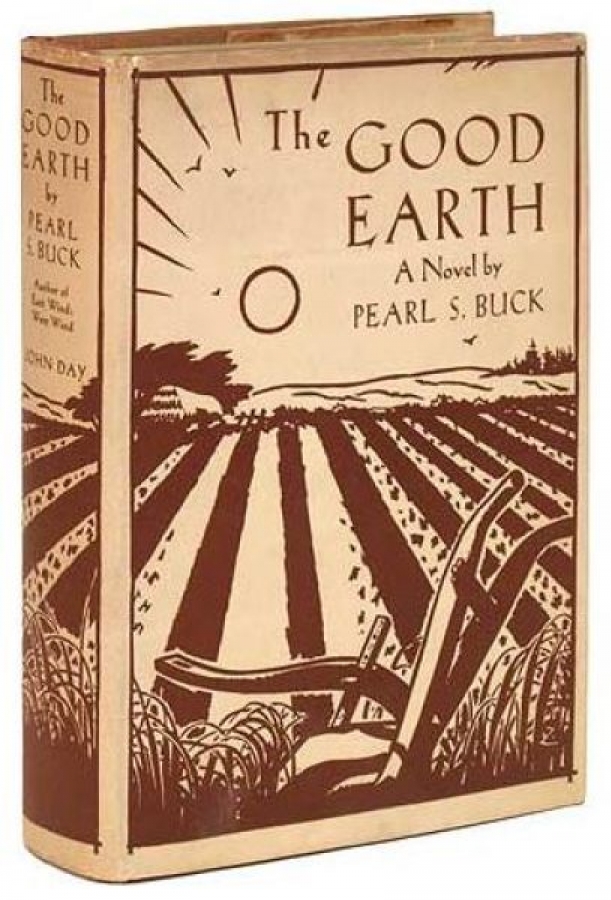
The Good Earth
The book is the saga of a Chinese peasant family who, from a state of abject poverty, becomes exceedingly wealthy following the discovery of a hoard of jewels, all of which are invested in the purchase of land. The protagonist is Wang Lung, an impoverished peasant who marries the maidservant of a great and powerful family. The bride, O-lan, is a plain, taciturn woman, yet tenacious and a tireless worker. She proves to be the peasant's true fortune, as much for her capacity for labor as for her wisdom and common sense. Forced to abandon their land following a severe famine, the couple moves to the city, where they lead a life of bitter hardship. During an uprising, O-lan, drawing on her experience as a servant, uncovers a hidden cache of jewels and gives them to her husband, keeping only two pearls for herself. Thus begins the fortune of Wang Lung, who betrays his wife by taking a new bride and relegating the woman to a subordinate status. O-lan’s illness and subsequent death bring home to her husband her profound importance, leaving him to feel her absence deeply. The book closes somberly with the sons’ decision to sell the land, bringing to an end a family cycle that had made the earth its steadfast anchor. The true subject of the book is the land, and consequently the quintessential peasant yearning to possess as much of it as possible. Another central figure is O-lan, who embodies the traditional role of women, along with their familial and social function. And it is precisely the examination of this character—who never mounts any genuine rebellion against her husband—that exposes the author’s conservative outlook, revealing her inability to offer a realistic, unvarnished reading of the female condition in Chinese society, or to chart a path toward emancipation that could nonetheless have been identified, even if at the cost of some strain on historical reality. Likewise, the other characters, both male and female, operate entirely within established social conventions, with the sole exception of one son who chooses the path of revolution over the quiet life of a landowner. There is no aspiration toward change, and everything is reduced to a complacently sentimental fatalism. The most compelling pages of the book are the opening ones (Wang Lung going to claim his bride-to-be from the powerful household) and the depiction of urban life, with the contrast between city and countryside, the impact of early social revolutions, and the presence of foreigners. Thereafter, the narrative turns maudlin, submerged in an often cloying pietism. While the opening seems driven by an ambition to provide a portrait—however raw and realistic—of rural Chinese life (with faint echoes of Zola’s *Earth*), this subsequently dissolves into an apologetic approach that relegates the Chinese setting to mere backdrop. The pacing of the book remains consistently effective, making for a swift and effortless read; the language is rich at the outset, drawing on the lexicon proper to peasant existence, only to thin out into an increasingly impersonal and detached English. The prose thus accentuates the drift toward a narrative that grows steadily less incisive and alive.
Harry Potter & the Philosopher's Stone
Harry Potter lives with his aunt and uncle, a prosaic bourgeois family who hate, above all, that > anyone speak of anything that shouldn't be, no matter if it is in a dream or even a cartoon, (...) it might be a dangerous idea . As in the fairy tale of Cinderella, Harry is treated dreadfully by his aunt and uncle, the butt of his cousin's stupid and brutal pranks; in short, he is a victim, orphaned by parents considered eccentric and better left unmentioned. Strange letters begin to arrive: they invite Harry to a boarding school for witches and wizards. His uncle destroys the mail, but it keeps on coming; he then flees with the family to unreachable places; all in vain, as mysteriously the mail arrives everywhere. He must accept that his nephew has been admitted to a school where they teach "what shouldn't be"; he must even accompany him to platform "nine and three-quarters," the track that isn't there. The first part of the book is built entirely on paradox, between what is real and what could be, what we often wish were so and experience through fantasy. It is the best part of the novel. From that point on, we follow Harry to his peculiar school, where the magical arts and the secrets of witches are taught, but where the mechanisms of any boarding school are at work: rivalries, friendships, discipline and how to break it, strict teachers, indulgent ones, the likable and the unlikable. The boarding school, a dark castle, conceals a mystery: a three-headed dog guards a Philosopher's Stone, the possession of which grants immortality and bestows powers capable of conquering the world. Harry suspects that a teacher wants to seize it to hand it over to Voldemort, the Lord of Evil, whose name no one dares utter, so great is the fear. Adventures, perils, and acts of courage test Harry and his circle of friends; in the end, there is a twist, with a direct confrontation between Harry and Voldemort. How did the boy manage to resist the force of evil? > If there is one thing Voldemort cannot understand, it is love. He did not understand that love as powerful as your mother's for you would leave its own mark , giving Harry protection forever. And again, > only one who wanted to find the Stone, find it, but not use it, would be able to get it . The author skillfully blends magical and adventurous elements with an environment familiar to adolescents, namely school. The narrative pace is not as intense and surprising as one would expect, not least because one remains aware that the danger is merely apparent and will always resolve for the best. The salvific role of the super-wizard Dumbledore flattens Harry's autonomy, excessively aided by forces and figures far above him. The book fails to fully become a *Bildungsroman*, in that the young protagonist never fully matures into adulthood. If one compares *Harry Potter* with *Treasure Island*, the difference between Jim and Harry is striking: the setting is always exceptional, but the former emerges a man, while the latter remains an adolescent, subordinate to the adults. Is this perhaps why youngsters read *Harry Potter* and not Stevenson's great book? Because they can cling to the illusion that someone or something will always help them in life? The chief virtue of Rowling's novel is the writing: elegant, clear, effective, grammatically flawless. The book could easily be used to teach the most demanding forms of the English language. Why read it? Beautiful English
How to Get Filthy Rich in Rising Asia
The novel presents itself in the form of a manual. The author envisions teaching how to become rich in Asia, a continent in profound transformation. > Why persist in reading the much-lauded, yet so tedious, foreign novels... if not out of a desire to understand those distant countries that, because of globalization, increasingly affect your life? What is this desire of yours, in its essence, if not a quest for self-learning? . The chapter titles and their sequence mirror the crucial stages of an ascent up the social ladder. For each of which the author offers the proper instructions: leave the countryside and move to the city, get an education even at the expense of family members, avoid falling in love and pursuing ideals, learn the ropes of business from a master and then discard him without scruple, be prepared for violence, make deals with criminality, bribe bureaucrats and the military, resort to debt without fear. > Going into debt is a way for the small to become big, for the big to become enormous, a glorious abstraction, the promise of tomorrow today, yes, a liberation from time..... going into debt is to be immortal . A splendid definition of rampant capitalism! In short, it takes a great deal of work, but one must also be ruthless, open to fraud. It is equally true that at each of these stages there are alternatives. Life is a constant fork in the road between what one has become and what one might have been. For instance, one could have helped one’s parents and siblings more by giving up an education; one could have followed the girl one went on to love, vainly, for an entire lifetime; or one could have stayed closer to one’s wife and son so as not to lose them, not to let them become strangers. A gently ironic and seemingly light style guides the reader along the protagonist’s peregrinations as he marches toward wealth with resolve yet with an inward sorrow, as if compelled by destiny, by an irresistible force. This is Asia—tumultuous, violent, and ripe with opportunity: either play the game, or succumb. > Through the windows of your office you see your city altering around you, any urban zoning and planning constraints slipping away, deep foundations and skeletons of buildings occupying the land that just a few years ago an aerial photograph would have shown frothing with opulent baroque villas . As often happens, success is followed by a fall from grace—in this case, illness and bankruptcy. The advice is to “focus on the fundamentals”: cut expenses, keep as low a profile as possible, accept defeat. And so our protagonist does, and we expect a decline unto death, in utter solitude. This does not happen, however, because our author provides an exit strategy—unhoped-for, if implausible. Our protagonist meets the girl he loved in his youth, who in turn has attained success only to find herself sorrowfully alone. The long-yearned-for love becomes reality in old age, and both realize that true happiness lies in giving oneself to the other, in wishing for the other “not to be alone.” Is the whole thing then reduced to a fairy tale? On the other hand, > all of us are in flight from our childhoods. And so we turn, among other things, to stories. To write a story, to read a story, is to escape from our status as fugitives... there was a time when everything was possible. And there will be a time when nothing is possible. But in between, we can create . The novel is a fresco of one of many possible lives. We could conceive of others, and thus it is fitting that the author offers us a happy and tender ending. Why should it not be possible to imagine one? Reading the book in English brings to light the distinctiveness of the writing—rich in uncommon vocabulary, though free of neologisms, and characterized by a complex syntactic structure, at times difficult to follow. Mohsin is undoubtedly a refined writer, possessing a stylistic imprint all his own. He ought, however, to return it to greater sobriety. He, too, stands before a fork in the road. Why read it? It is deeply enjoyable.
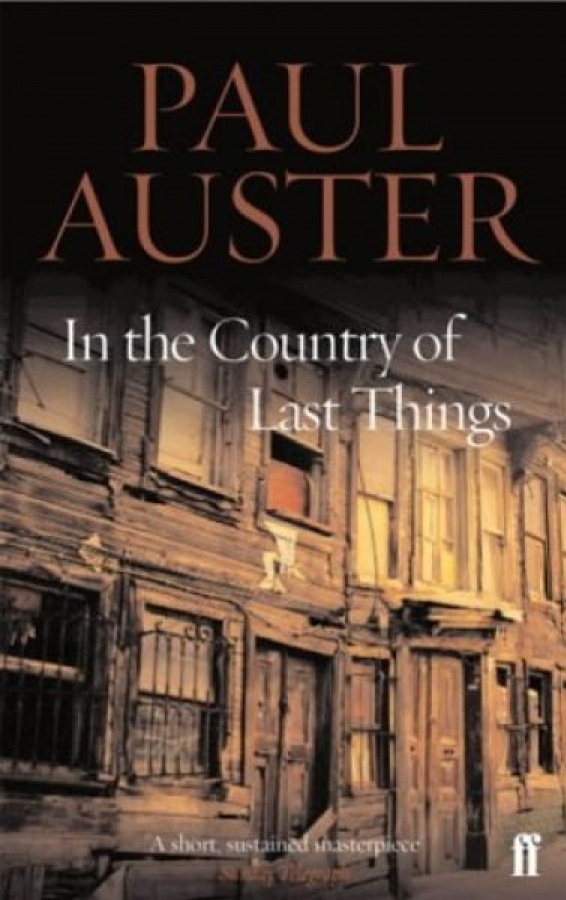
The invention of solitude
This is a book about memory, which is like > a place, a sequence of columns, cornices, porticoes. The body inside the mind, going from one place to another, and the sound of our footsteps as we walk, moving from one place to the next . The occasion to address memory arises from the death of the author’s father (the first part of the book): a man who had always lived a solitary life, not physically, but because he was somehow detached from everything taking place around him. The writer recounts his father’s life, evoking various episodes and tracing back as far as the murder of his grandfather by his father’s mother. What emerges is how memory constitutes an assemblage of fragments and images one strives to preserve: “the anecdote as a form of knowledge.” Can writing about a loved one bring them back to memory, enabling us to know them better and to know ourselves better? The book is also the search for a father never truly known to the depths of his being, the chronicle of a profound nostalgia, but also of a discovery. > The rampant, totally mystifying force of contradiction. I understand now that each fact is cancelled out by another fact, that each thought brings with it another and opposite thought. Impossible to say anything without reservation . Like all of Auster’s books, it is written in an elegant and lucid English, set within a paradoxical context that delves deep into emotions and states of mind, verging on philosophy.
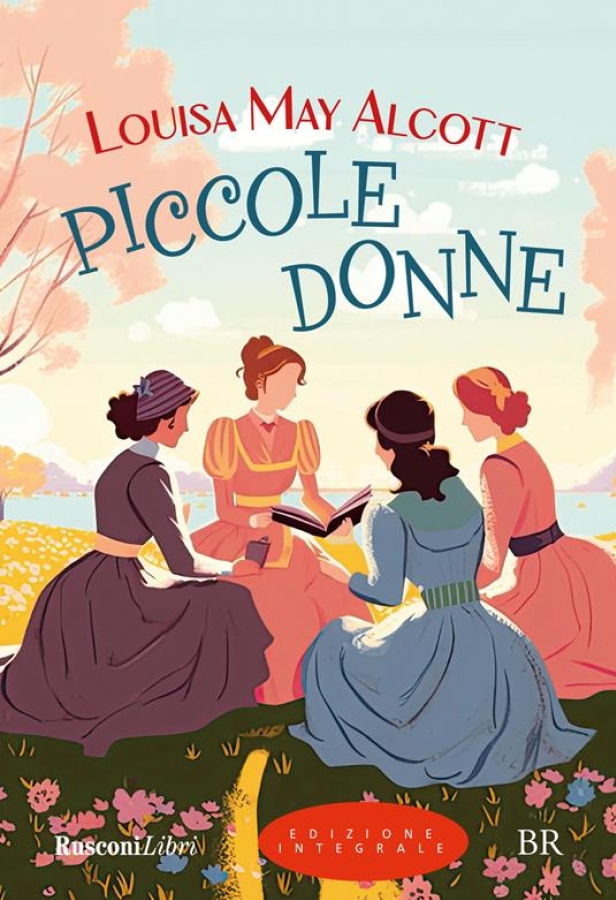
Little Women and Good Wives (Piccole donne and Piccole donne crescono)
> Four little chests all in a row / Veiled in dust, and worn by time, / Four women, who have learned from scars and sorrows, / To love and endure in the prime of life. These lines of Jo's epitomize the meaning of the entire novel, which recounts the passage from adolescence to adulthood, and also tells us how every woman has but one destiny: to become a "good wife." The "four little chests all in a row" are four sisters, whom we meet from the opening pages of *Little Women*: Meg is the eldest, > with fair skin and large eyes, with thick, soft brown hair, a sweet expression, and white hands, of which she was particularly proud, (...) Jo was tall, thin, brown-complexioned, and resembled a colt, for she seemed never to know what to do with her long limbs, (...) grey, observant eyes, which saw everything, and were by turns fierce, amused, or thoughtful; (...) Beth, a rosy girl of thirteen, (...) of shy manners, a timid voice, and a tranquil expression. (...) Amy, though the youngest, was the most important person, at least in her own opinion. (...) Blue eyes, blonde hair, (...) pale and slender, she always behaved like a well-mannered young lady. They live in a modest home, pervaded by > a pleasant atmosphere of peace , governed by a mother > not elegantly dressed, but a woman of noble bearing, and the girls thought that the grey coat and unfashionable bonnet covered the most splendid mother in the world. There is an air of Guido Gozzano's world of "small things," yet stripped of the poet's gentle irony; the whole is pervaded by a pedagogical moralism, rooted in steadfast values and upright customs. The father, a devout man dedicated to teaching, volunteered for the war (the novel is set during the American Civil War); the paternal presence manifests through letters to the family, a decalog of good intentions. The girls grow up sensible and industrious, mindful of the family's financial straits, convinced of what their mother says: that being poor is no fault, but can rather be a virtue. Contentment seems to be the guiding rule of life; on the other hand, sisterhood seems sufficient to enrich and enliven existence, all the more so when spurred on by Laurie, a restless lad, welcomed by the girls like a brother. Anyone raised in a large family recognizes themselves perfectly in the narrative, just as teenage girls in the 1950s, before the explosion of consumer culture, likely still saw themselves mirrored in *Little Women*. As Gozzano writes, > Carlotta sings. Speranza plays. Sweet and blooming, / life unfolds to the romance of a thousand promises (from *L'amica di Buona Speranza* selected from *Poesia italiana del Novecento* edited by Eduardo Sanguineti). In one of the finest episodes of *Little Women*, the four sisters have a picnic with Laurie: five adolescents building "castles in the air," to which they hold the keys, though they know not whether they will ever be able to open the door, as Jo says. Meg > would like a lovely house, (...) I must be mistress of it, and manage it as I like. Jo > wants to write books, and become rich and famous: that would please me, that is my dearest dream. Mine is to stay peacefully at home with Father and Mother, and take care of the family, said Beth happily. Amy > has so many wishes, but the chief one is to be an artist, and go to Rome, (...) and be the best artist in the world. At the end of *Good Wives*, the girls wonder which of these dreams came true. As in Alba De Céspedes's *Nessuno torna indietro* (see the review on this site), life turned out quite differently from their castle in the air. Meg has a small house, a devoted yet poor husband, two darling children; she has known the hardships and deprivations of a housewife. > My castle is very different from what I had planned , says Amy, who had to abandon her aspirations of becoming a great artist, but marriage to Laurie made her > sweeter, deeper, and more tender, while Laurie has grown more serious, strong, and resolute, and both have learned that beauty, youth, wealth, even love itself, cannot keep from the greater part of life its duties and griefs, bereavement and suffering. As Ungaretti says, life > flows ever on as living ever does, / Unexpected gift and grief / In the ceaseless whirlwind / Of vain mutations (from > *Ultimi cori per la Terra Promessa*). Jo is the one who suffered the severest disappointments, not from fate, but by virtue of her own choices: she refused Laurie's hand, simply because she did not love him and regarded him merely as a brother; she ceased writing sensational adventure potboilers, which earned her a living but were unworthy of her moral values and of good literature; she returned to her parents' home to attend Beth's deathbed, after which she inherited the role of angel in the house > , future spinster and mere aunt. Until one day, aided by the rain and an umbrella, she discovers love with a German professor, much older than she, yet wise and eccentric like her father. With him she will open a boys' school, a home for destitute children, where she can pursue innovative pedagogies. To her mother's praise for such a courageous endeavor in raising youth, Jo replies with a shout, > with those impetuous outbursts she could never control, (...) Not half so good as yours, Mother. Here we are, and we can never thank you enough for your patient sowing and for the harvest you have reaped. The book is an autobiographical novel. Jo is undoubtedly the author, just as the father's character mirrors Alcott's own father, who pursued unorthodox educational methods throughout his life, founding schools that were invariably doomed to fail. Ostensibly, the protagonists are the four sisters, whose stories form the plot of the two novels: a family saga that would continue with *Little Men* and *Jo's Boys*. The true protagonist, however, is the mother: grounded, affectionate, of steadfast moral principles, and ever ready to offer the right counsel—advice aimed at helping her daughters accept the realities of life, whether it be marital relations for Meg or Jo's headstrong exuberance. It is she who tells Jo that Laurie is not the right man, because, like Jo herself, he is restless and unpredictable. The irony is that this will become Jo's very argument to justify turning down his proposal! Unlike Jane Austen's independent and willful heroines (see the reviews of the English author's books on this site), the "Little Women" do not rebel; they wearily resign themselves to the destiny of "good wives." They are not who truly interests Alcott: it is American and European society. The former was drifting away from Puritan virtues, swept along by the capitalist transformations of the late nineteenth century; the latter, European society, was vain and evanescent, certainly no model for young American women. The stories of *Little Women*, so immediate to our sensibilities and above all to those of young girls, serve to reinforce and disseminate a Protestant moralism (one utterly detached from Catholicism): an ethic steeped in social idealism, frugal habits, and philanthropy, yet fundamentally conservative. Beyond the plot, which is intricately woven and deftly conducted, the fundamental merit of the two novels lies in the writing. We do not refer so much to the psychological analysis of sentiment (we are far removed from Jane Austen!); the feminine realm is stereotyped, predictable in its dynamics (perhaps the very reason for its success, as girls from every corner of the world can see themselves reflected in > *Little Women*). Alcott's allure stems from her lexical richness, deeply American in character, to the point that many words are difficult to find in a standard dictionary. If in Henry James—a contemporary of Alcott's in the second half of the nineteenth century—the style remains profoundly English, in both vocabulary and syntax (see on this site *Selected Short Stories*, a collection of tales highly representative of this author's literary output), Alcott's robust and proud American stamp leads her to revive idioms, syntactic turns, and vocabulary that are at times archaic (consider the use of *blest* instead of *blessed*), and at times drawn from the vernacular of the triumphant new Nation. We are confronted with a linguistic tour de force that could not fail to leave its imprint on the evolution of United States literature, propelled by the novels' immense popular acclaim. Why read it? The language is beautiful, certain passages are captivating, but it is long-winded and ultimately melodramatic.
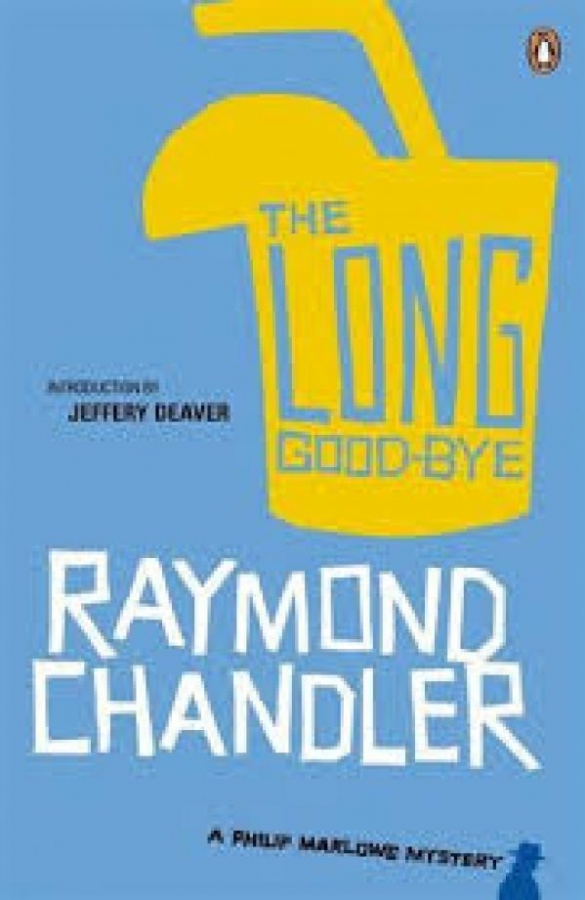
The Long Good-bye
The setting is typical of the “American crime novel”: characters (Terry and Sylvia Lennox, Roger and Eileen Wade) seemingly unrelated yet with intertwined stories, an unseen and overarching power, organized crime, corrupt police, alcohol in abundance; and, what is more, > a city no worse than others, a city rich and vigorous and full of pride, a city lost and beaten and empty . The plot unfolds along a conventional pattern. Terry Lennox is accused of his wife’s murder, flees to Mexico, where he kills himself after confessing to the crime. The case is closed. Philip Marlowe, a private detective, is accused of having aided Lennox’s escape. Released, he continues to investigate because he is convinced the man is innocent and did not commit suicide at all. Several figures urge him to drop the inquiry: crime bosses, Sylvia’s powerful father, and the police themselves. Marlowe takes on the assignment of protecting a well-known writer, Roger Wade, an alcoholic prone to violence. We learn that Eileen is the widow—or so she believes—of Terry Lennox, who fought under another name in England, where he was reportedly declared dead. The story unravels: Terry’s past is vastly different from what it appeared to be. In a succession of plot twists, Roger is murdered by Eileen, who then takes her own life. And Marlowe? He is present at the moment of Roger’s murder, but is distracted by the sound of a boat; he senses that Eileen might commit a rash act; yet he does not intervene. “It just kind of grew up around me,” a phrase that is literally untranslatable; it could be interpreted in the sense that everything happens around him without his wanting it to: a resigned vision of a fate against which it is futile to fight. Besides, it is that way for everyone: > twenty hours a day someone is running, someone else is trying to catch him. Out there in the night people are dying of a thousand crimes. (...) People are beaten, robbed, strangled, raped, and killed. People are hungry, sick, bored, desperate because they are alone or full of remorse and fear, angry, cruel, excited, and shaken by despair . The novel concludes with a surprise, which unfortunately must be revealed, for otherwise the meaning of the entire book would be lost. Before doing so, one must speak of Philip Marlowe; his character, in fact, turns the story into something far removed from a traditional “whodunit.” > I could even have been a rich man (Marlowe thinks), small-town rich, an eight-room house, two cars in the garage, chicken every Sunday, (...) and me with a brain like a sack of cement. It’s for you, pal, I’ll take the big, sordid, dirty, dishonest city . It is not to play the hero; Marlowe is deeply pessimistic, almost cynical. > That’s how human beings are. (...) What do you expect, golden butterflies fluttering over a rosebush? And yet this man, seemingly disillusioned, meets another man, Terry Lennox, and—who knows why?—helps him, stubbornly trying to prove his innocence. > I thought I was tough, but there was something about that man that won me over. I didn’t know what it was, unless it was the white hair and the scarred face and the clean voice and the gentleness . “How naive can a man get, Marlowe?” a cop asks him. And indeed, at the end of the novel, Marlowe discovers that he has been deceived. Terry Lennox is alive; he merely wanted to disappear. And so the cynical and generous detective admits that once Terry meant something to him, but today not even a goodbye. > I’m not judging you. I never did. It’s just that you’re not here any more. You’ve been gone a long time. You’ve got nice clothes and perfumes and you’re as elegant as a fifty-dollar whore . Heir to the great Dashiell Hammett, perhaps the greatest crime writer of all time, as Jeffery Deaver notes, Chandler pushed the crime novel toward new frontiers, opening it up to grand narrative literature: and this is credited to the figure of Marlowe, but also to a singular prose style—elegant and demanding, composed of neologisms, novel syntactic constructions, and above all geared toward creating an atmosphere of suspension, of estrangement from the narrative. The novel is too long, excessively convoluted, with tight and often redundant dialogue. It is therefore not perfect; it is strenuous, and one senses Chandler’s frustration at being unable to fully investigate > the real enemies: expectations, betrayal, the desire for power and wealth (Deaver). Why read it? It is a strenuous read, but well worth it if one wishes to delve deeper into the human soul.
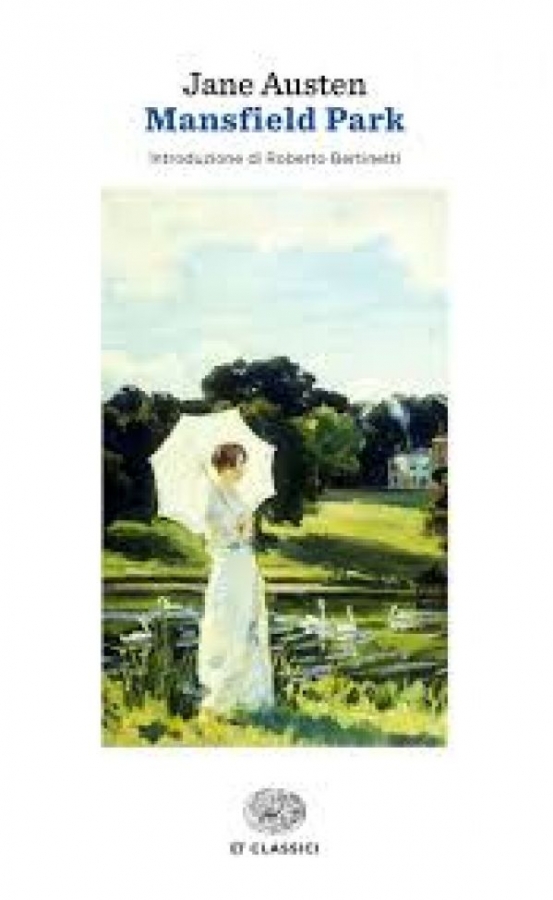
Mansfield Park
A ten-year-old girl, a poor relation, is taken in by her uncle, Sir Thomas Bertram, a wealthy landowner and an influential member of parliament and the community. From the very beginning, the rules must be made clear: > without depressing her spirits too far, to make her remember that she is not a Miss Bertram ; and Fanny Price lives up to expectations: small for her age, without any particular beauty, exceedingly timid, bashful, and retiring, > the consciousness of being a poor relation grew hand in hand with the conviction that for a creature as insignificant as herself it was only right not to be happy . In a conversation with her cousin Edmund, with whom she strikes a chord from early adolescence, Fanny states: > I can never be important to anyone; what should prevent it? (asks her perplexed cousin), everything, my situation, my lack of judgment, my plainness . Yet it is precisely this loneliness, this feeling of being an outsider, of always having to be mindful of decorum and social norms, that helps forge a strong, independent personality, steeped in steadfast ethical values. None of this causes her to lose her "bearings" when the entire family allows itself to be swept away by the allure of the theater; taking advantage of the absence of Sir Thomas, away for an extended period on business in the West Indies, they decide to stage a then-famous play, *Loverʼs Vows* (*Lovers' Vows*). It is a period of "general madness," as Edmund will later call it, in which everyone steps outside the rigid social roles to which they must adhere, to assume the guise of the various characters in a play considered licentious at the time for its plot and dramatis personae. The only one who obstinately refuses to take part is Fanny; this allows her to observe the behavior of the others, and in particular that of Edward Crawford, a brilliant young man who shamelessly courts Fanny’s elder cousin, despite her already being engaged. Upon Sir Thomas's return, everything appears to return to normal, with Fanny more highly regarded by her uncle for the virtuous demeanor she maintained throughout the "general madness." We arrive at a turning point. Up to this moment, Fanny appears as a somewhat prudish girl, still waters, even slightly opportunistic and subservient; her true personality will emerge fully when she must confront a grave danger for someone so independent: a man seeks to decide her fate. Edward intends to "conquer" Fanny; accustomed to being pursued by women, he has found one who keeps him at a distance, and all of this intrigues him. It may be a whim, yet the man appears to have serious intentions: he is generous, affable, and through his connections he has arranged for Fanny’s brother to be made a naval lieutenant; he is an eligible match who would provide wealth and security to the impoverished girl. Yet she, now eighteen, cannot accept him. > She was feeling, thinking, trembling, about everything; agitated, happy, miserable, infinitely grateful, enormously angry. (...) No, no, no, she cried, hiding her face, all this makes no sense, (...) I will not, I cannot bear it. I must not listen to such things. No, no, do not think of me. But you are not thinking of me. I know well that all this is nothing . If she manages to withstand Edward's assault with ease, it is far more difficult to defy her uncle. Sir Thomas, bolstered by his authority, attempts to persuade Fanny; astounded and indeed angered by her lack of gratitude and respect, he runs up against the girl's categorical refusal. > With eyes intently fixed on one of the windows, she listened to her uncle in the greatest perturbation and dismay . And to her uncle’s bewildered question regarding the reasons for her refusal, Fanny's answer is simple yet revolutionary for the era: > I cannot love him, Sir, well enough to marry him. (...) Have you any reason, child, to think ill of Crawford’s character? (asks the uncle kindly). No, sir, (...) and she would have liked to add, but I have of his principles, and her heart failed her to tell the father of Crawford’s misconduct toward her cousin. Fanny’s troubles are not over. First she must face Edmund, and he too attempts to convince her; then she is sent for several months to stay with her parents—a ploy by Sir Thomas to show her the wretched social conditions in which she might live in the future, should her uncle's support be withdrawn; it would be wise of her to accept Edward's offer, a marriage to a wealthy young man. The matter resolves itself: the play was not merely an interlude of "general madness"—it unleashed the forces lurking beneath the rigid surface of bourgeois life. Sir Thomas’s family falls apart; specifically, the cousin abandons her husband and elopes with Edward. For Fanny, the story has a happy ending: she returns triumphantly to Mansfield and marries her cousin Edmund. Approaching the novel from Fanny’s point of view is perhaps an obvious and reductive perspective, given the numerous characters, the underlying social issues, and in particular the role of the theater within the narrative, its demonic and liberating function: a theme that has drawn the attention of most critics, to the extent of claiming that it would be impossible to read the book without being familiar with *Loverʼs Vows*. Beyond the historical context, the question remains remarkably relevant today: how profoundly can an eighteen-year-old’s experience be shaken? Fanny’s tribulations undoubtedly strengthened her, bestowing upon her the character that allowed her to govern her own destiny; but is all this just? Ought the girl not to have been protected, granted the opportunity to grow up peacefully? These are the questions that keep the novel relevant today. The novel is very long and does not always sustain its narrative pace; the prose is typical of Jane Austen, intricate and complex. To be appreciated, the book must be read with care and patience, seeking its value in the details, in the unexpected and ever-incisive insights into character psychology, in the spirit of independence that animates the entire work, and in the sharp, unerring judgments on humanity and society. Why read it? It is somewhat long, but well worth reading, with patience and care.
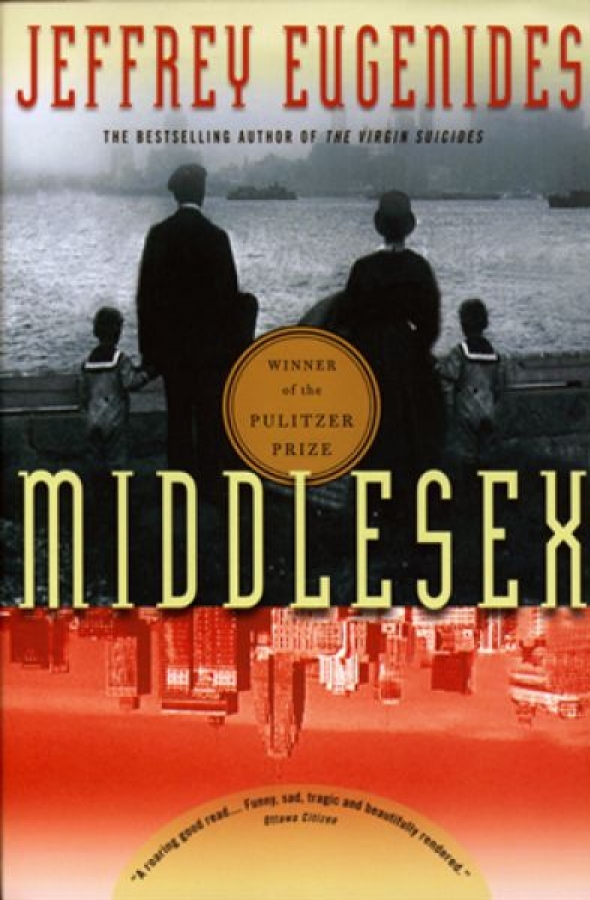
Middlesex
The book recounts the story of Callie Stephanides, born with female characteristics that evolve into distinctly masculine traits with the onset of adolescence. Sexual ambiguity, stemming from a genetic trait, determines the life of the protagonist, who is unable to accept himself—a male with underdeveloped sexual organs—until the very end of the novel, which chronicles several generations of his family. The novel can be divided into three parts: the saga of the grandparents, who fled to America from a Greece besieged by the Turks; the parents' story, followed by Callie’s childhood as a girl and young woman; and finally, the discovery of this sexual ambiguity—in truth, long suspected by the protagonist—leading to the decision to live as a male and the flight from the parental home. The best part of the novel is undoubtedly the first, as the narrative subsequently loses its evocative power and momentum, becoming increasingly tedious and predictable. The novel revolves around two fundamental themes: the ambiguity of individual identity, for we can embody multiple individuals and cultures all at once; and genetic inheritance, in the sense that we are what the evolution—biological included—of our family has somehow determined. Environment, life’s vicissitudes, and the people one encounters are all crucial factors, but what leaves the deepest mark is our history, for which we bear neither responsibility nor blame. In a historical period where every affliction is traced back to behavior, the book offers instead a return to a comprehensive view of the individual’s inherent traits. From this perspective, the novel proves superficial when called upon to describe the protagonist’s turning point, wherein he decides to reject the doctor’s attempt to force his nature toward the feminine and instead embrace a new life as a male. What impels him in this direction? How can he so effortlessly abandon a world of feelings and behaviors that had governed his childhood? Is cutting one’s hair enough? The novel fails to address any of this, and the family saga seems to prevail as the underlying narrative focus, overshadowing the protagonist’s experiences and inner life. Perhaps this is why the pursuit of a cultural identity (the Greek heritage blending with the American) appears far more pronounced than the sexual and individual one, which ultimately feels like little more than an expedient device to render the novel more alluring.
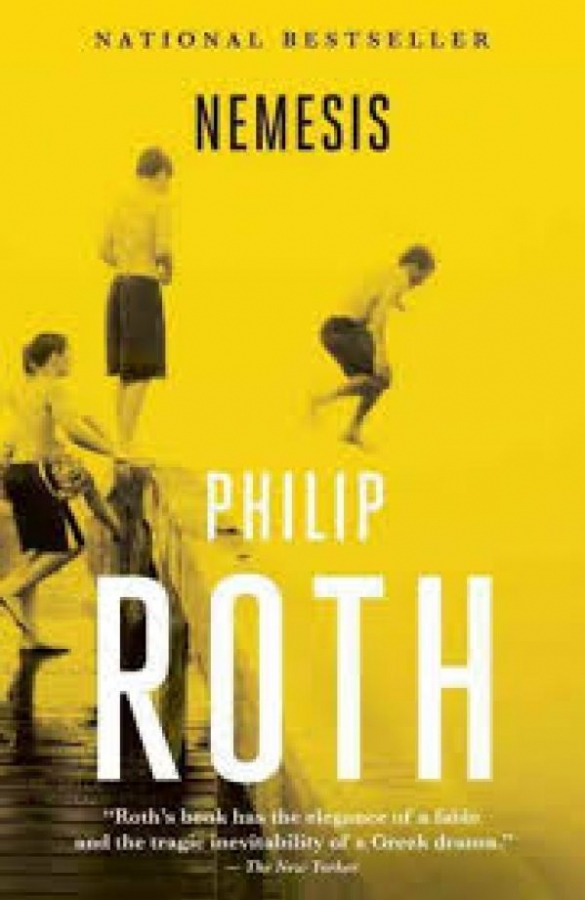
Nemesis
In Greek mythology, Nemesis is the goddess of just and fatal retribution for unpunished transgressions. How many times have we thought that illnesses, accidents, misfortunes were fateful events that had to originate in some guilt? We inevitably have to find someone to blame in a tragedy; we cannot accept that what happens is not a necessity, that it lacks a reason; we refuse to admit that God > is the echo of all our vain crying. (...) He who knows the before and the after and the reasons for everything, and yet unfortunately cannot tell them to us for this single, so futile reason!: that He does not exist (Sebastiano Vassalli *La Chimera*). Philip Roth addresses this, and he does so by recounting the polio epidemic that swept through an American city in 1944, at the height of the Second World War. > Because this was a real war, too, a war of slaughter, ruin, loss, and grief, war with the casualties of a war, war upon the children of Newark . Bucky Cantor is a very young athletic director, a javelin champion, a solid and strong young man; he was kept from going to war by a severe visual defect. Motherless, abandoned by his father, he was raised by his maternal grandfather with a devotion to hard work, moral values, and an outsized sense of responsibility. He is a summer supervisor. With the schools closed, his duty is to look after the boys and girls of Newark’s Jewish neighborhood, and he does so with great commitment, coaching them in sports, training them in team games, and teaching them loyalty and determination. His qualities are widely recognized by both the pupils and their families. An epidemic of polio, then incurable and without a vaccine, spreads across the neighborhoods and begins striking even the children entrusted to Bucky’s supervision. The polio cases, some severe and fatal, multiply, and the young man cannot comprehend the reasons behind the calamity: he is shattered, convinced that he is not doing enough, yet he strives to maintain his composure and convey it to the children. His girlfriend is spending the summer at a camp on the shores of a lake. She has secured him a post as a swimming instructor, a discipline in which Bucky excels. Why not leave a city tainted by polio and instead spend the summer in a safe, idyllic setting alongside the woman he loves? Bucky hesitates; already burdened by guilt for not having been drafted, he is loath to abandon his boys, but ultimately he accepts. Yet he cannot escape guilt (which guilt?). A few days after his arrival, the first cases of polio break out at the camp; is he, then, the contagion bearer? Does the responsibility lie with him for the children who died or were severely disabled under his watch in Newark? Did he bring the terrible pestilence to the camp? He must serve his just punishment; and he will do so with stubborn resolve, forgiving himself nothing: he too contracts polio, remains crippled for the rest of his life, rejects the devotion of his girlfriend—who loves him regardless—and condemns himself to a solitary existence. > He smiled (...) with a smile closely resembling a pained wince, indicating fatigue and not joy. There was no light in him. What was missing was the energy and the competence that had once been at the center of his character. And certainly his athletic component was completely gone. It was not merely that an arm and a leg were useless. His original personality, all that vital purposefulness that would have struck you the moment you met him, seemed torn away as well. It is a tale that is read in a single breath: the prose is fluid, the narrative tempo pressing despite the philosophical digressions. Roth skillfully succeeds in tracing the protagonist’s trajectory: everything is already written in his fate, in the sins of his father, and yet for the reader it comes as a surprise to realize how futile it is to struggle, and how virtue counts for nothing when an invisible hand, a cruel God, pulls the strings of our lives. Are we, then, not free? Roth attempts to salvage this in the final chapter, through the confrontation between Bucky and another young man also disabled by polio, who nevertheless managed to lead a normal, happy life. Unfortunately, it is a somewhat tacked-on, redundant, and prolix chapter: a misstep in the narration, an effort to offer, at all costs, a conclusion that is not entirely bleak. The novel closes with a mesmerizing description of Bucky throwing the javelin—an exaltation of the beauty of an athlete’s motion, but also the melancholic acknowledgment of a gesture no longer possible: a breathtaking stylistic gem. Why read it? It reads exceptionally well and prompts profound reflection on good and evil.
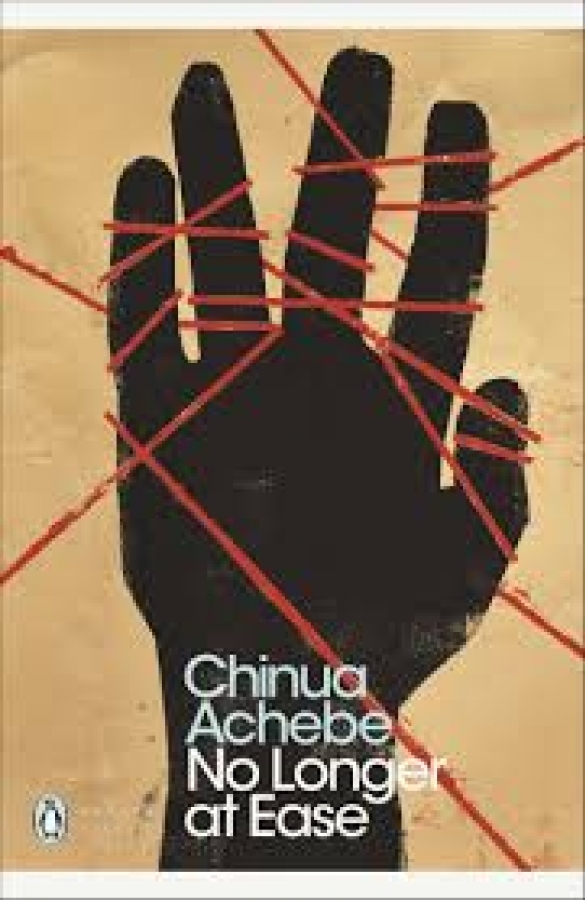
No longer at ease (no longer at peace)
The novel is part of a trilogy, a vast fresco of Nigeria’s recent history; the review of the first book, *Things Fall Apart*, can be read on this site. *No Longer at Ease* takes its title from a line in Eliot’s poem (“The Journey of the Magi”), which reads: > we returned to our places, these kingdoms/ but no longer at ease here, in the old dispensation/ with an alien people clutching their gods/ I should be glad of another death . Just as the three Magi, having returned to their palaces, are no longer as they once were and can no longer adapt to the old ways, so Obi, the grandson of Okonkwo, the protagonist of *Things Fall Apart*, can no longer understand Nigeria—seemingly Westernized, yet still anchored to ancient ancestral morality. At the expense of the Umuofia Progressive Union, an association bringing together the notables of the native village of Obi and his family, the young man was sent to study in England; he earned a degree in English literature, and upon his return he was hired in an office of the nascent Ministry of Education (we are in the 1950s, shortly before independence). He must repay the eight hundred pounds received from the association; Obi asks for an extension and an additional allowance, intoxicated by the intense life of Lagos, teeming with people, a melting pot of ethnicities and tongues, straining toward the future. The young man himself firmly believes in the new Nigeria destined to emerge from colonialism. He indignantly rejects every offer of money to favor a candidate in examinations and civil service competitions. The city is full of temptations; Obi also has a taste for luxury (he hires a car to drive around), and takes no account of taxes and the advances he has received. These are all venial sins that would be forgiven him, were it not that Obi falls in love with Clara, a young woman belonging to the "osu > , regarded by the Igbo as akin to lepers. With great naivety, the young man informs his father of his intention to marry Clara. His father laughed. And it was the kind of laughter that was sometimes heard from someone masked as an ancestral spirit. (...) We are Christians, but that is no reason to marry an "osu > . (...) Our fathers in their darkness and ignorance called an innocent man osu > , a thing given to the gods, and from then on he became an outcast, and his children, and his children's children forever . Obi is angry, but he is also convinced that he can persuade his father—at heart a good and submissive man, a sincere and devout Christian. In a second conversation, after a long silence, the father recounts to his son the story of Ikemefuna. > He began slowly and quietly, so quietly that it was difficult to hear the words. It seemed as if he were not really speaking to Obi. His face was turned sideways so that Obi saw him in dim profile . Ikemefuna was killed by Okonkwo to uphold ancestral rules; Obi's father abandoned his family and became a Christian; Okonkwo hanged himself out of shame. What did the father mean by recounting this tragedy to his son? Whoever abandons their "chi > , god, role, and destiny, brings terrible consequences upon themselves and their family. This message is not explicit, but that is how Obi interprets it. As often happens in Achebe's novels, the characters are granted freedom of choice and are therefore responsible for their own actions; indeed, the story could also have been an invitation to the son to forge his own path with courage, just as the father had done by becoming a Christian. Obi returns to Lagos, convinced that he cannot marry Clara; but the young woman is pregnant, and so the pregnancy must be terminated. Obi accompanies her to an obliging doctor and returns to the car. When he sees them come out to go to the clinic, where the abortion will be performed, he would like to get out of the car and shout: Stop! Come on, let's get married now, but he could not and did not do it. The doctor's car slid away. (...) Clara looked in Obi's direction and immediately looked away > . The boy is a coward: in anger he tears up the manifesto of the new Nigeria, but it is he who failed to fight to the very end for his country's future. And since, as Stevenson says, evil possesses its own fascination and begets further evil, Obi begins to take bribes shamelessly, captivated by the pile of cash. As the elders of Umuofia said, "you see this thing called blood. There is nothing like blood. That is why when you plant a yam it produces another yam, and if you plant an orange tree it produces oranges. (...) But I have not yet seen a banana tree produce a yam." A curse hangs over Obi: "it is a strange and surprising thing, but I can tell you that I have seen it before. His father did it." Charmed by the elegiac tone of *Things Fall Apart* > , by the power of its plot and its characters, one is left somewhat disappointed by this novel. Obi is a small man; he has none of the tragic stature of Okonkwo; the urban setting evokes no mysteries like the pre-colonial village of Umuofia. The style, based on tight, concise dialogue, plunges us into a bourgeois comedy", into an ostensibly flat and banal story. The characters are merely sketched, not fleshed out, in particular the figure of Clara: a subtle irony creeps in alongside an overriding sense of resignation. Everything seems already written: Obi’s story as well as the future of Nigeria. Were the elders of Umuofia right: can a banana tree not produce a yam? Why read it? I do not know why, but reading the novel brought Italy to mind.
Northanger Abbey
> A heroine returning, at the close of her story, to her native village, in all the triumph of a won reputation.... is an event on which the pen of a writer might well delight to linger.... But my story is very different; I bring my heroine back home in solitude and disgrace, and no sweet exhilaration of spirits can induce me to give a detailed account . Austen writes a book that skillfully plays on the boundary between reality and imagination to amiably mock the fashion for romantic novels that was beginning to spread among the young women of polite society. Catherine, a seventeen-year-old girl, leaves her family for the first time for a holiday in a renowned spa town. With naivety and trust, she forms friendships and makes acquaintances. She meets a brother and sister, Eleanor and Henry, whose father, a prominent general, invites her to extend her stay at their ancestral residence. An avid reader of medieval-themed novels, Catherine allows herself to be swayed by the rooms, the corridors, the seemingly secret doors, and the chests of drawers that appear to conceal mysteries and sinister tales. Catherine’s imagination runs wild. It is above all the figure of the general, whose deceitful and authoritarian nature she intuitively senses, that impels her to investigate suspicions of crimes and abuses. A clarifying conversation with Henry, who catches her wandering through the grand residence, brings her abruptly back to reality: “the novel is over”; perhaps violence and murder happen in other countries, > among the Alps and the Pyrenees, where one is either an angel or a demon. In England it is not so; among the English, she thought, in their hearts and their habits, there is a general, though unequal, mixture of good and bad . And Catherine stumbles upon this very truth: the general discovers that the girl does not come from a wealthy family, is not a good match, and rudely sends her back home. The novel really is over. The novel is an initiation. Catherine emerges from adolescence and enters the adult world, where young people are only momentarily permitted to forge relationships that disregard their families’ standing in society. The moment friendship turns into romance, social differences and money put everyone back in their place. If this is reality, it is above all hypocrisy and deceit that trample human dignity. With a skillful and pleasing syntactic construction, Austen delves into the young girl’s feelings, capturing the nuances of a character in the making. Why read it? At first, the novel seems distant in time, but as we read it, we grasp its contemporary relevance, and one comes to appreciate the depth of its psychological and social inquiry.
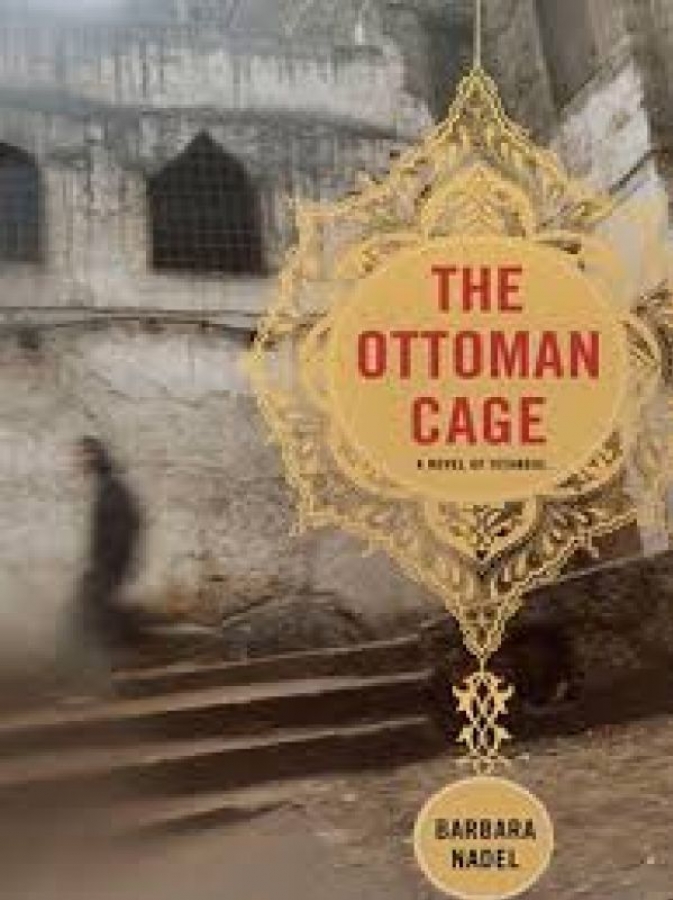
The Ottoman Cage: a novel of Istanbul
A body is found in an old, typically wooden building adjacent to the Topkapi Museum, in Istanbul. It is a young man, kept locked away for years, sedated by the constant use of drugs. He is uncircumcised, and the apartment’s tenant is described by the neighbors as a reserved Armenian gentleman. Everything points to a crime within the Armenian community, but > the inhabitants of Istanbul are not known for their predilection for simple things . A difficult investigation begins. Leading it is Inspector Ikmen: a typical modern Turk, secular, seemingly broad-minded, but in fact deeply attached to tradition. Devoted to his work and to frequenting bars at night, he neglects his large family and his sick wife. Despite her serious condition, he has left his father in her care, now ravaged by senile dementia. The coroner, and Ikmen’s best friend, is a well-to-do Armenian physician, while his primary colleague on the police force is Jewish. It is a mixture of communities that reflects the history of Istanbul, with the distinction that Armenians, owing to the 1915 genocide, are > somehow a special case, even compared to the other non-Turkish communities . This distinction is called distrust. Can an Armenian be trusted, even if he has been a friend and colleague for years? Or is it true, instead, that the bond among Armenians is stronger than friendship and the institutional role one holds? Alongside the investigation, which progresses through unexpected revelations, the novel deals with cooperation among people belonging to different cultures, histories, and religions. Only if institutional loyalty takes precedence over clan solidarity is there any guarantee that freedom can exist. As Ikmen says > we who have chosen to serve the law must put it first, ahead of our personal feelings , because as long as “there are men like us, the ‘others’ cannot really take control.” It is a well-crafted noir. The author unravels the clues with skill, albeit with a narrative pace devoid of suspense, at times tedious. Alongside the main plot, the personal affairs of the various protagonists unfold. In particular, the narrative lingers on the figure of Ikmen. His indifference toward his wife makes him genuinely unsympathetic, beyond the emblematic function the author seems to assign him: that of modern Turkey’s contradiction between East and West. The inclination to dwell on sexual perversions and the trite, predictable ending compromise the quality of a novel that is, in other respects, well written. Why read it? It is a good noir.
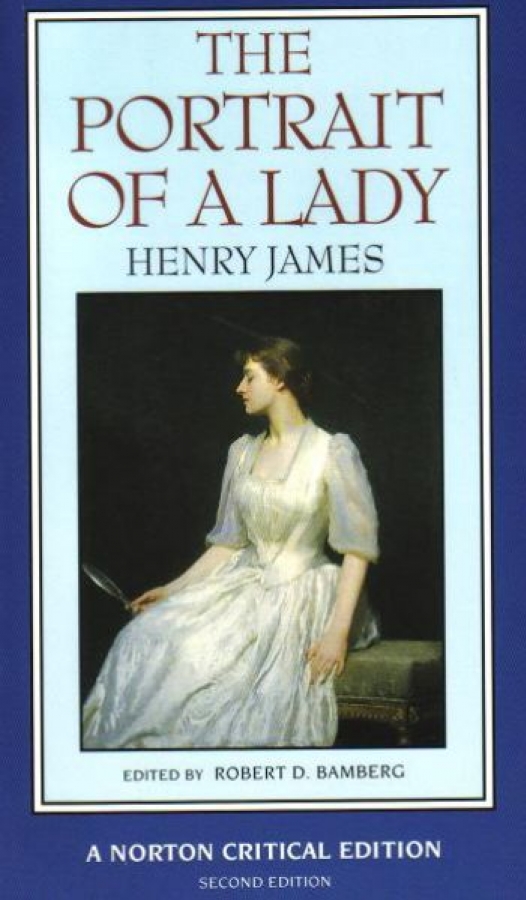
The Portrait of a Lady
The novel is set in England and Italy. Isabel is a young American woman who, having been left an orphan, moves to England to live with her aunt and the latter's husband, an exceedingly wealthy banker. She befriends her cousin, Ralph, who is, however, an invalid; she also receives two marriage proposals—one from a very wealthy lord and another from a young, promising American entrepreneur—both of which she rejects, surprising everyone, as she intends to remain independent and free in order to discover the world and herself. At Ralph's urging, the uncle leaves Isabel a substantial fortune, which makes her rich and allows her to travel and live with considerable financial autonomy. Upon her uncle's death, she follows her aunt to Italy, first to Sanremo and then to Florence, where she once again meets Madame Merle, a brilliant and well-connected woman who arranges for the young woman to meet and spend time with Gilbert Osmond, an American living in Florence, collecting and studying works of art. Isabel is captivated by Gilbert Osmond, by his culture and refinement, and after a long journey with Madame Merle, she decides to marry him, despite the opposition of Ralph, her aunt, and her best friend, a brilliant American journalist. The marriage proves to be a failure, as Osmond turns out to be a selfish, conventional, and duplicitous man who married Isabel solely for her money. Isabel feels crushed by this man, who seeks to bend her to his will and to his view of life—one founded on hypocrisy and formalism, in stark contrast to Isabel's independent, pragmatic spirit. The latter lives in profound conflict, torn between the commitment she undertook by marrying (conventions, societal rules, etc. ) and her pursuit of happiness and autonomy. Her cousin’s grave illness, bringing him to the point of death, prompts her to return to England, even in defiance of her husband's wishes. Meanwhile, she learns that Madame Merle is the mother of her husband's daughter and that, to secure the girl a prosperous future, she orchestrated Isabel's marriage to Osmond. Isabel realizes she has been betrayed and that her true friends are those from her youth—the American journalist and the young entrepreneur—as well as her cousin. Having returned to England, she attends to her cousin until his death, and then, following a dramatic confrontation with the American entrepreneur, who tries to persuade her to leave her husband, she returns to the latter in their Roman home. Isabel, the central figure, is a disconcerting character, poised between the desire for independence and social duty to such a degree that she sacrifices her own happiness for the sake of the latter: beneath an appearance of strength and autonomy, there emerges a weak character, incapable not only of making vigorous decisions and taking decisive action, but also of truly knowing herself, of being able to admit to herself and to others that she was wrong. Isabel is a defeated figure, moving among strong personalities who seek to control her and impose their will upon her, with the sole exception of her cousin, who, even when mistaken, wishes to help and listen to her until the very end. In truth, all the characters operate within this tension between modernity and tradition: the brilliant American journalist, who champions American society and female independence, ultimately marries an English nobleman; Osmond's daughter is obedient to her father's wishes, despite longing to live with the young man she loves; Madame Merle, who seemed so independent of men, is in fact revealed to be a pathetic woman who commits a series of ignoble acts for the love of a man, Osmond, who does not want her and holds her in contempt. The book's message ultimately appears conservative: a woman cannot find her path without a man and without accepting social rules. In this sense, though very different in setting and style, the novel shares many affinities with *Madame Bovary* and *Anna Karenina*. Another theme of the book is undoubtedly the contrast between American society—full of energy and attentive to essentials—and European society, decadent and frivolous. This contrast is expressed, admirably and with great insight, in the depiction of landscapes and settings, such as the novel’s opening pages (the description of the English estate’s garden), the introduction to the Florentine episodes, and above all, the Roman backdrop. Isabel's house in Rome, with its vast, cold rooms, its relics and antique furniture, and Isabel’s walk among the ruins of Roman antiquity are magnificent pages, clearly revealing the decadence and ruin of a society destined to succumb and destroy, rather than to create. Italy is a simulacrum for Isabel and for American vitality. It remains unclear whether the author intended to grant the relationship between Ralph and Isabel a broader and deeper significance than mere cousinly affection; one is left with the impression that the two failed to express their mutual love, thus introducing another theme of profound interest: the difficulty of communicating genuine feelings and expressing what one thinks and feels with sincerity. Only in the face of death do Ralph and Isabel fully express their love for one another. The author's style is circuitous and complex, demanding intense concentration to follow the trajectory of sentences and paragraphs: it is therefore not an easy read, although one must acknowledge that the narrative structure is profoundly effective and produces, at times, striking impressions and almost pictorial imagery. The character analysis never achieves psychological depth, remaining ever on the surface; yet, in truth, they are symptomatic of a social role rather than fully realized individuals. The themes of feminism, social change, and the clash between societies seem to take precedence over the autonomous life of the characters. The revelation of Madame Merle's motherhood and her affair with Osmond is a lapse in style, bringing the novel close to modern melodrama and providing Isabel’s behavior (the decision to go to England against her husband’s will) with an external motive that weakens her resolve.
Pride and Prejudice
In early nineteenth-century English society, what matters are the rules of polite society: courteous and amiable manners, marriageable young women of moderate education, and advantageous marriages that offer the prospect of stability and prosperity. Appearance, much like money, reigns supreme. Two characters stand as exceptions to these two golden rules: Elizabeth, the second of five sisters from a modest family, and Darcy, a wealthy young man of high lineage. Elizabeth is a proud and independent young woman who refuses to let her destiny be determined by others: “I am only resolved to act in that manner, which will, in my own opinion, constitute my happiness.” Darcy is a taciturn, blunt, and disagreeable man, concerned only with acting according to his own convictions without answering to anyone. Yet, a society built upon appearances can prove a trap for a proud young woman. The rumours circulating about Darcy are disparaging, driving Elizabeth to reject his marriage proposal with disdain: wealth cannot compensate for the poor opinion she has formed of him! Yet pride can lead to prejudice when substance is overlooked. It is the unfolding of events, the account of the young man’s childhood, and the visit to the estate where he grew up—in short, a deeper acquaintance—that lead Elizabeth to perceive Darcy’s true character and allow her love for him to mature slowly. Yet it will be Elizabeth’s strength of character that enables her to overcome the resistance and pressure of Darcy’s relatives, who refuse to accept an alliance deemed far too modest. Pride and prejudice are two sides of the same problem: wrapped up in oneself, confined within one's own world, one is incapable of understanding others. > She was ashamed of herself. She could not think of Darcy without feeling that she had been blind, partial, prejudiced, absurd. “How despicably have I acted!” she cried; “I, who have prided myself on my discernment! I, who have valued myself on my abilities! who have often disdained the generous candour of my sister, and gratified my vanity, in useless and blameable distrust. How humiliating is this discovery!” It is an exceedingly modern book, one that invites deeper understanding and open, unprejudiced judgment. Written in elegant English, it is nonetheless weighed down by the complexity of its syntactic structure, demanding a close and not always effortless reading. The narrative pace is slow and ultimately predictable. With the exception of Elizabeth, the characters are often stereotypical, flat, and devoid of vitality. Why read it? The book’s charm resides in the figure of Elizabeth: an already modern woman in pursuit of self-affirmation.

Smoke
It is a short story. The setting is the rural society of the American South. An authoritarian father has effectively driven his two sons from the property: the younger because he had demanded the partition of the land, the elder because he can no longer tolerate his father. While the younger lives as a hermit, the elder goes to live with a cousin. The father dies, seemingly killed by a horse, and the judge—the executor of the estate—is also murdered. The prosecutor manages, through his dialectical skill and careful use of words, to drive the real culprit, the cousin, to confess. The contrivance hinges precisely on smoke, which the prosecutor conceals in one of the judge's boxes and whose presence at the crime scene corners the culprit, who turns out to be a heavy smoker. The plot purports to be that of a detective story, but in truth the real subject of the tale lies in the barrenness and harshness of the rural world and of family relations, shaped beneath the desire to possess the land. In contrast with this brutality and a squalid everyday existence unfolds the elegant phrasing of the prosecutor: > he had graduated from Harvard... capable of spending whole afternoons in the company of men squatting against the walls of country stores, speaking to them in their own tongue. He called them his moments of leisure . The rural world is somehow manipulated by language, by the intellectual who speaks well and knows how to devise tricks and traps for naive country folk. The story's style, particularly its sentence structure, develops in a highly complex fashion, and is therefore difficult to read.

Solar
Michael Beard was awarded the Nobel Prize when he was barely in his twenties. He himself cannot fathom the reasons for such a prestigious accolade (perhaps the committee confused him with Sir Michael Bird?), but ever since, > like a castaway, he had clung to this solitary plank, seeing himself as a privileged being . The novel has little to do with science and solar energy; rather, it primarily recounts the tale of a wretched man—lying, selfish, opportunistic—who moves through the affections of those closest to him with sheer indifference. The narrative opens at the moment of Michael’s separation from his fifth wife, who is cheating on him in retaliation for her husband’s numerous infidelities. Michael heads a government research centre tasked with finding solutions to reduce carbon dioxide emissions and thereby combat climate change. In reality, our protagonist does not believe in the catastrophic effects of atmospheric pollution in the slightest; yet, with the very same flippancy that governs his love life, he endorses an absurd project to install small wind turbines on every British home. The brainchild of a young researcher, a renewable energy fanatic, who irritates the cynical Michael with his environmentalist idealism. Returning from an expedition to the Antarctic continent—where he was compelled to take part in an eccentric research party studying melting ice caps—Michael catches the young researcher in his home: he is one of his wife’s lovers. During the exchange that follows the discovery, the young researcher kills himself, tripping over a rug as he rushes toward Michael to beg not to be sacked. Our protagonist is entirely innocent, yet he realises he might be the prime suspect. And so he orchestrates the wrongful conviction of another of his wife’s lovers, a violent and absurdly jealous man. To this first deceit, another is soon added: Michael comes into possession of the young researcher’s papers, which demonstrate the feasibility of extracting hydrogen from water using solar energy. It is the breakthrough of the century, poised to resolve at a single stroke both carbon emissions and the depletion of energy reserves. The narrative then leaps forward many years. Michael—now an obese man, an insatiable gourmand and drinker—has persisted in his cynical, superficial existence. In his private life, alongside casual mistresses, he finds himself burdened with two ongoing relationships: one with an Englishwoman, who bore him a daughter despite his fierce resistance, and another with an American, whom he met in New Mexico where he is overseeing the prototype plant for extracting hydrogen from water, critical to proving the industrial viability of the concept. On the business front, he must contend with investors who are often sceptical of the venture, questioning above all whether it is worth sinking money into such unproven technology when an environmental catastrophe is not even guaranteed—meaning fossil fuels (such as coal, oil, and the like) might not actually need to be abandoned. Confronted by the anxieties of his partner, who has invested several million dollars and cites the opinions of numerous experts denying global warming, Beard, bolstered by his Nobel status, > placed a hand on his friend’s arm, a clear sign that he was overstepping his mark. Toby, listen, the catastrophe is coming . He, who had never believed in global warming! Yet, unlike the theory that earned him the Nobel Prize—which untangles the intricate interplay between energy and mass with mathematical precision—Michael remains ensnared in the tangle of falsehoods and contradictions that define his life. Just as he is on the verge of proving his sheer genius (though is this what truly drives him, or does only momentary gratification matter?), his "women" call him to account for his hollow promises, the wrongly convicted man returns seeking vengeance, and a lawsuit is brought against him for intellectual theft. He realises he has failed, while keenly feeling the cancer that is killing him. Finally conscious of his own wretchedness, he sees his daughter, who loves him unconditionally, running toward him, but > he doubted, as he held her, that anyone would ever believe him now that it was true love . The prose is brilliant, the plot unfolds engagingly in parts, and the characters are sharply drawn: all elements that ought to captivate the reader. Yet, much like the novel’s protagonist, there is a certain flippancy and an excess of irony that renders the narrative evanescent. Everything feels paradoxical; consequently, deceit and cynicism—the core themes of the tale and such emblematic traits of our age—remain addressed only superficially, failing to deliver the revelatory weight one would expect. McEwan is a major author squandering his craft. Why read it? It is exquisitely written, and the premise is compelling.
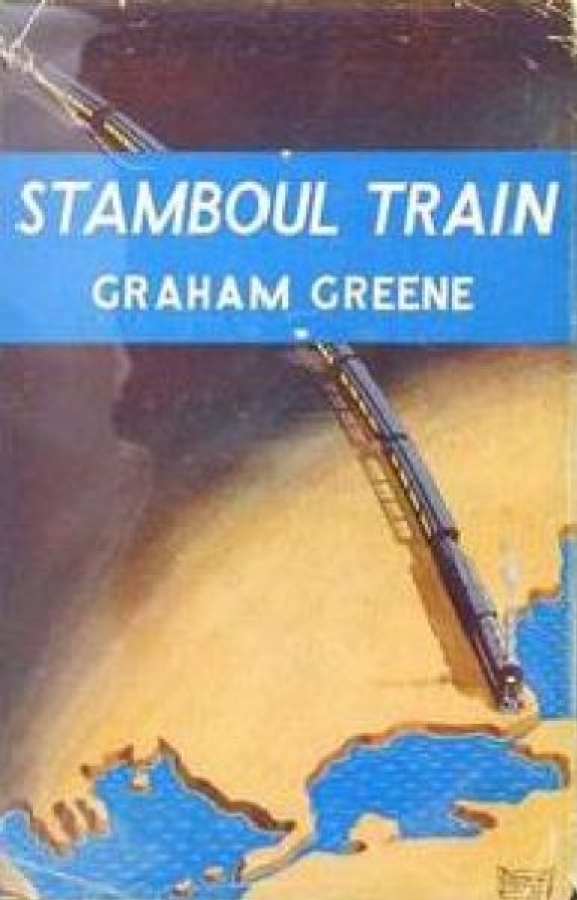
Stamboul Train
The novel recounts the journey from Ostend to Istanbul of a group of travellers: a female journalist with her lover, a young Jewish merchant on a business trip, a thief turned murderer despite himself (on the run), a famous political fugitive, and a young woman named Coral. During the journey, adventures and love stories intertwine, in particular the romance between the young merchant and Coral, between whom a genuine and lasting relationship seems to blossom. At the Hungarian border, the police arrest the political fugitive (tipped off by the journalist), along with the thief and Coral. The three manage to escape, but during the flight the political fugitive is mortally wounded and Coral stops to tend to him. The young merchant, who was waiting with a car, leaves nonetheless for Constantinople, where he enters into a marriage of convenience. All the characters are driven by selfish interests (money, fame, business, etc. ) with the exception of Coral, who gives up the young merchant in order to care for the political fugitive. The girl is thus the only figure who reflects genuine feelings, unmediated by economic and ideological superstructures, but oriented toward the deeper dimensions of human life, such as solidarity toward a person in distress. This novel, too, belongs to Greene’s “entertainment” vein, yet frankly from this perspective it is undoubtedly disappointing: the pacing is slow by the standards of modern detective fiction to which we are accustomed, and in any case insufficient to generate suspense and drive interest in the plot. The most compelling section is the detention at the Hungarian border, as the contradictions of the various characters finally emerge and Coral’s figure comes to the fore. Unlike *Our Man in Havana*, the novel is marked by a pervasive, profound bitterness: selfishness and vacuity invariably prevail over altruism and sincerity. Interpersonal relationships are dominated by false feelings and by the pursuit of self-interest and narcissistic gratification.
The thin man
*The Thin Man* (generally translated into Italian as *l’uomo ombra*) is a wealthy inventor who disappeared a few days ago, just as his secretary is murdered. These two events set in motion the classic detective story: a famous former detective (Nick, the first-person narrator) is in New York with his wife, Nora, and finds himself reluctantly drawn in by the inventor's family (his ex-wife and two children, a spoiled girl and an eccentric young man) and the missing man's lawyer. One cannot recount the plot of a mystery novel, nor its ending, of course. The story unfolds, light and shrewd, around Nick and Nora—the latter seemingly a minor character, but in reality an exceptional foil: willfully detached, ironic, and patient. Her view is that a detective should be able to find anything, even a piece of duck in an overcrowded plate of food. Then there are the inventor’s relatives: greedy, selfish, indifferent to the fate of the missing husband and father; “Aren’t they perhaps the first of a new breed of monsters?” Nora wonders. The detective story and its characters also serve as a pretext for a portrait of 1930s America, battered by the stock market crash that is not yet perceived as the profound societal upheaval it would eventually become: people continue to drink heavily, frequent nightclubs, and believe that the money can just keep circulating. The strength of Hammett’s novel is undoubtedly its narrative style. It is crafted from tight dialogue and concise sentences, all relying on a masterful use of verbs—often phrasal—characteristic of colloquial speech, though they never slide into slang. One gets the impression that Nick is in a rush, that the action moves too fast to afford lingering over descriptions and in-depth character exploration. Or is it boredom that pervades the protagonist, driving him to race through life? Why read it? It is a great classic of the detective genre, but it is also an incisive depiction of a society in crisis—one in which, however, people still manage not to be sloppy.
The Thing Around Your Neck
The book is a collection of short stories that center on the solitude of women. In the title story, the protagonist has left Nigeria to live in the United States with an uncle who attempts to molest her. The young woman flees her relatives’ home, and her American dream is shattered in an underpaid job as a waitress. She would like to write to her parents, but > there was nothing to write about... Nobody knew where you were, because you told no one. Sometimes you felt invisible..... At night, something wrapped around your neck, something that almost choked you before you fell asleep . A woman’s freedom is possible only in solitude, as only then is her destiny not determined by a man—be he husband, father, or brother. In *Tomorrow Is Too Far* (a story reminiscent of Morrison’s *Beloved*), the narrative skillfully unfolds through an alternation between present and past. The protagonist, now an adult, lives in the United States. She returns after many years to Nigeria, where, as a child, she had pushed her brother to climb a tree and then screamed that there was a venomous snake that might bite him. The boy, terrified, fell to his death. This episode will condemn the girl to remorse and exclusion, yet it was the only way, cruel and reckless, to rebel against the privileges tradition bestowed upon males: > you knew that something had to happen to Nonso (the brother) so that you could survive . Solitude also stems from fleeing a violent, yet beloved country: Nigeria. *The American Embassy* is the narrative, poised between journalistic chronicle and psychological suspension, of a long wait on “a palpitating pavement” before the American Embassy to secure an exit visa. The protagonist, with her grief “somewhere between the eyes,” seeks to leave Nigeria because the Nigerian police killed her son, still a young child. When she finds herself before the American official, the woman realizes that she cannot abandon her country, where her child is buried: she “wanted to return to their ancestral home,” to the flowers of her land, to dishes cooked with palm oil, and so “she turned slowly and walked toward the exit.” The uprooting between the bond to one’s native land and expatriation to the United States is present throughout all the stories; it does not, however, depend on a woman’s free choice, but on the will of husband and family. The primary virtue of the stories lies in their narrative structure and writing. The author makes masterly use of the second-person singular (the “you”) to keep the narration suspended between autobiography and the impersonal form. The result is a sense of inevitability, as though events could not possibly be otherwise, as though no alternative resolutions were possible, since the facts unfold beyond the will and agency of the protagonists. Life is what it is, and there are no alternatives. The prose is elegant, simple, and measured, never indulging in neologisms or national and local idioms. Indeed, with subtle malice, the writer often underscores the differing uses of vocabulary, contrasting the typically British terms the female protagonists would prefer to use (all belonging to the educated Nigerian elite) with American vernacular—as if estrangement, flight, and solitude were reflected even in the abandonment of customary forms of English. The limitation of the book lies precisely in the narrative structure of the stories, which the author fails to resolve, leaving them perpetually unfinished and suspended. What emerges is a fragmentation that makes it difficult to draw together the narrative thread and its meanings. Why read it? It is an enjoyable and interesting read.

Villages
Owen, the novel’s protagonist, grew up in a small town, where > sex and religion had distinct, antique smells; families were balanced like frail nests on knobby branches of preceding history . It is a world of vague certainties, which Owen leaves behind to study computer science at university. There he marries Phyllis, a brilliant mathematics student. Owen is captivated by his wife’s intellect and erudition, yet subconsciously senses a kind of detachment, as though she lived in a world of her own, populated by mathematicians and poets, while the real world were a “tedious and insignificant place of exile.” The couple moves to a small town, where Owen, together with a partner, launches a software company that proves to be a major success. Four children follow, Phyllis devotes herself to the family, and with the nineteen-sixties American customs shift, not least as a result of the sexual revolution; computer technology evolves rapidly, confronting Owen with a relentless technological challenge. The couple takes part in local high society, and in this gossipy, hypocritical milieu, Owen begins a succession of affairs—the first ones more emotionally involving, the later ones progressively confined to purely sexual encounters. Owen is an attractive, obliging man, yet scandal and gossip fail to destroy the marriage thanks to Phyllis’s determination to safeguard the family, and above all because she forgives her husband out of love. The marriage unravels when Owen, by now weary of these flings, meets Julia and asks for a divorce. In a confrontation—the only true argument of their marriage—Owen justifies this decision by claiming that Julia, a deeply religious woman, will save him from his own weaknesses. Phyllis rebels, but, disgusted by her husband’s hypocrisy, flees. Whether by accident or suicide, she dies in a car crash, and once again Owen is spared from having to make his life’s choices alone. One of the book’s central themes is undoubtedly the evolution of American society, observed from two distinct vantage points: the revolution in sexual mores (with Owen’s escapades becoming increasingly explicit) and the computer revolution, from mainframes to the personal computer. Another theme is the depiction of small-town American life, which in many respects recalls episodes of the television series *Desperate Housewives*. Then there is the figure of Owen himself—pliable, fragile, yet opportunistic—who merely drifts along with events while taking advantage of a protective cocoon (his mother, his two wives, and his business partner) that allows him to remain an adolescent all his life. It is no coincidence that the novel concludes with a description of Owen’s dreams, reminiscing nostalgically about his mother and the village of his childhood. Updike’s style is lush with adjectives and baroque constructions that lend musicality and expressive vitality to the narrative. Although the book is scarce in incident, it is the prose style that sustains the narrative rhythm, making for an enjoyable read. Yet such verbal redundancy does not favor economy, and the reader easily gets lost amid “so many fireworks.” Why read it? It is a thoroughly enjoyable read, especially in the original language.