Finished reading on: January 15, 2005
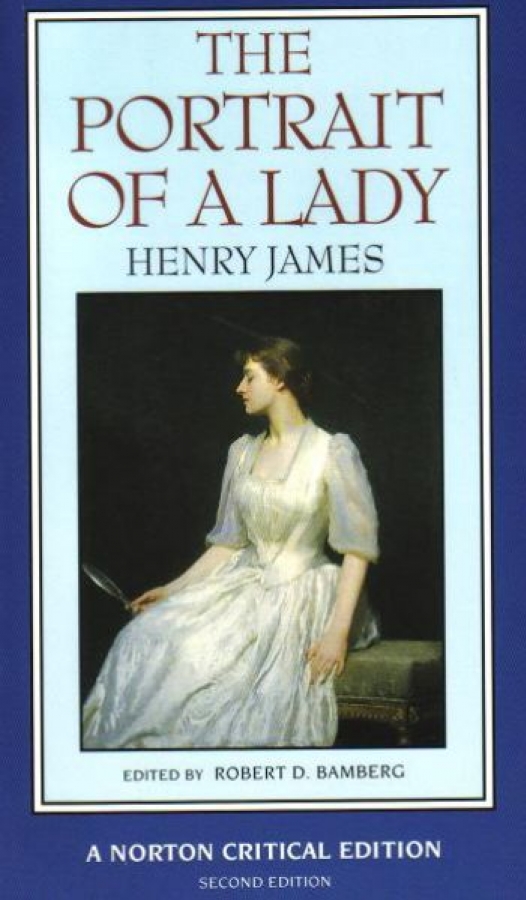
The Portrait of a Lady
AI Translation Notice: This review was translated from the original Italian using artificial intelligence. Book quotes and excerpts are translated interpretations and will not match the author's original English phrasing or official published translations.
The novel is set in England and Italy.
Isabel is a young American woman who, having been left an orphan, moves to England to live with her aunt and the latter's husband, an exceedingly wealthy banker.
She befriends her cousin, Ralph, who is, however, an invalid; she also receives two marriage proposals—one from a very wealthy lord and another from a young, promising American entrepreneur—both of which she rejects, surprising everyone, as she intends to remain independent and free in order to discover the world and herself.
At Ralph's urging, the uncle leaves Isabel a substantial fortune, which makes her rich and allows her to travel and live with considerable financial autonomy.
Upon her uncle's death, she follows her aunt to Italy, first to Sanremo and then to Florence, where she once again meets Madame Merle, a brilliant and well-connected woman who arranges for the young woman to meet and spend time with Gilbert Osmond, an American living in Florence, collecting and studying works of art.
Isabel is captivated by Gilbert Osmond, by his culture and refinement, and after a long journey with Madame Merle, she decides to marry him, despite the opposition of Ralph, her aunt, and her best friend, a brilliant American journalist.
The marriage proves to be a failure, as Osmond turns out to be a selfish, conventional, and duplicitous man who married Isabel solely for her money.
Isabel feels crushed by this man, who seeks to bend her to his will and to his view of life—one founded on hypocrisy and formalism, in stark contrast to Isabel's independent, pragmatic spirit.
The latter lives in profound conflict, torn between the commitment she undertook by marrying (conventions, societal rules, etc.
) and her pursuit of happiness and autonomy.
Her cousin’s grave illness, bringing him to the point of death, prompts her to return to England, even in defiance of her husband's wishes.
Meanwhile, she learns that Madame Merle is the mother of her husband's daughter and that, to secure the girl a prosperous future, she orchestrated Isabel's marriage to Osmond.
Isabel realizes she has been betrayed and that her true friends are those from her youth—the American journalist and the young entrepreneur—as well as her cousin.
Having returned to England, she attends to her cousin until his death, and then, following a dramatic confrontation with the American entrepreneur, who tries to persuade her to leave her husband, she returns to the latter in their Roman home.
Isabel, the central figure, is a disconcerting character, poised between the desire for independence and social duty to such a degree that she sacrifices her own happiness for the sake of the latter: beneath an appearance of strength and autonomy, there emerges a weak character, incapable not only of making vigorous decisions and taking decisive action, but also of truly knowing herself, of being able to admit to herself and to others that she was wrong.
Isabel is a defeated figure, moving among strong personalities who seek to control her and impose their will upon her, with the sole exception of her cousin, who, even when mistaken, wishes to help and listen to her until the very end.
In truth, all the characters operate within this tension between modernity and tradition: the brilliant American journalist, who champions American society and female independence, ultimately marries an English nobleman; Osmond's daughter is obedient to her father's wishes, despite longing to live with the young man she loves; Madame Merle, who seemed so independent of men, is in fact revealed to be a pathetic woman who commits a series of ignoble acts for the love of a man, Osmond, who does not want her and holds her in contempt.
The book's message ultimately appears conservative: a woman cannot find her path without a man and without accepting social rules.
In this sense, though very different in setting and style, the novel shares many affinities with Madame Bovary and Anna Karenina.
Another theme of the book is undoubtedly the contrast between American society—full of energy and attentive to essentials—and European society, decadent and frivolous.
This contrast is expressed, admirably and with great insight, in the depiction of landscapes and settings, such as the novel’s opening pages (the description of the English estate’s garden), the introduction to the Florentine episodes, and above all, the Roman backdrop.
Isabel's house in Rome, with its vast, cold rooms, its relics and antique furniture, and Isabel’s walk among the ruins of Roman antiquity are magnificent pages, clearly revealing the decadence and ruin of a society destined to succumb and destroy, rather than to create.
Italy is a simulacrum for Isabel and for American vitality.
It remains unclear whether the author intended to grant the relationship between Ralph and Isabel a broader and deeper significance than mere cousinly affection; one is left with the impression that the two failed to express their mutual love, thus introducing another theme of profound interest: the difficulty of communicating genuine feelings and expressing what one thinks and feels with sincerity.
Only in the face of death do Ralph and Isabel fully express their love for one another.
The author's style is circuitous and complex, demanding intense concentration to follow the trajectory of sentences and paragraphs: it is therefore not an easy read, although one must acknowledge that the narrative structure is profoundly effective and produces, at times, striking impressions and almost pictorial imagery.
The character analysis never achieves psychological depth, remaining ever on the surface; yet, in truth, they are symptomatic of a social role rather than fully realized individuals.
The themes of feminism, social change, and the clash between societies seem to take precedence over the autonomous life of the characters.
The revelation of Madame Merle's motherhood and her affair with Osmond is a lapse in style, bringing the novel close to modern melodrama and providing Isabel’s behavior (the decision to go to England against her husband’s will) with an external motive that weakens her resolve.