Finished reading on: November 28, 2016
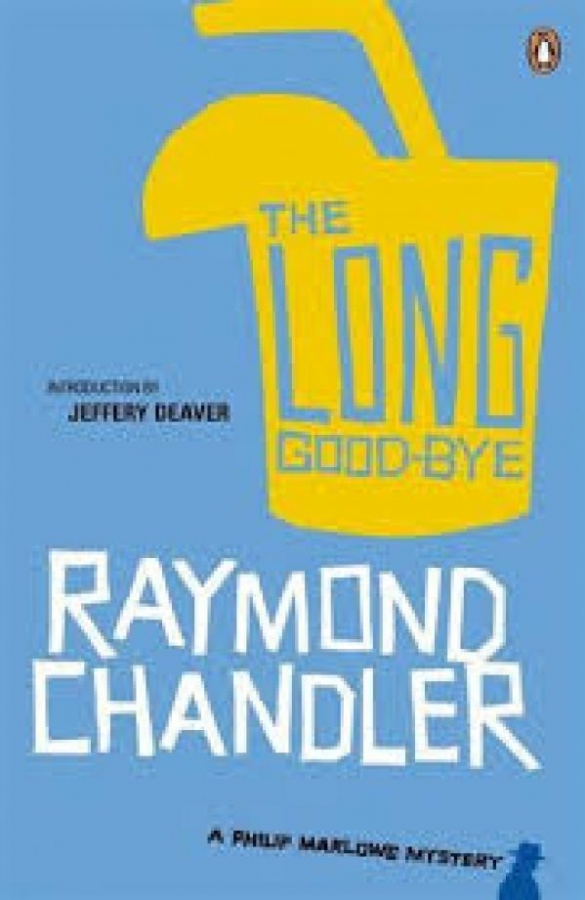
The Long Good-bye
AI Translation Notice: This review was translated from the original Italian using artificial intelligence. Book quotes and excerpts are translated interpretations and will not match the author's original English phrasing or official published translations.
The setting is typical of the “American crime novel”: characters (Terry and Sylvia Lennox, Roger and Eileen Wade) seemingly unrelated yet with intertwined stories, an unseen and overarching power, organized crime, corrupt police, alcohol in abundance; and, what is more,
a city no worse than others, a city rich and vigorous and full of pride, a city lost and beaten and empty
.
The plot unfolds along a conventional pattern.
Terry Lennox is accused of his wife’s murder, flees to Mexico, where he kills himself after confessing to the crime.
The case is closed.
Philip Marlowe, a private detective, is accused of having aided Lennox’s escape.
Released, he continues to investigate because he is convinced the man is innocent and did not commit suicide at all.
Several figures urge him to drop the inquiry: crime bosses, Sylvia’s powerful father, and the police themselves.
Marlowe takes on the assignment of protecting a well-known writer, Roger Wade, an alcoholic prone to violence.
We learn that Eileen is the widow—or so she believes—of Terry Lennox, who fought under another name in England, where he was reportedly declared dead.
The story unravels: Terry’s past is vastly different from what it appeared to be.
In a succession of plot twists, Roger is murdered by Eileen, who then takes her own life.
And Marlowe? He is present at the moment of Roger’s murder, but is distracted by the sound of a boat; he senses that Eileen might commit a rash act; yet he does not intervene.
“It just kind of grew up around me,” a phrase that is literally untranslatable; it could be interpreted in the sense that everything happens around him without his wanting it to: a resigned vision of a fate against which it is futile to fight.
Besides, it is that way for everyone:
twenty hours a day someone is running, someone else is trying to catch him.
Out there in the night people are dying of a thousand crimes.
(...) People are beaten, robbed, strangled, raped, and killed.
People are hungry, sick, bored, desperate because they are alone or full of remorse and fear, angry, cruel, excited, and shaken by despair
.
The novel concludes with a surprise, which unfortunately must be revealed, for otherwise the meaning of the entire book would be lost.
Before doing so, one must speak of Philip Marlowe; his character, in fact, turns the story into something far removed from a traditional “whodunit.”
I could even have been a rich man (Marlowe thinks), small-town rich, an eight-room house, two cars in the garage, chicken every Sunday, (...) and me with a brain like a sack of cement.
It’s for you, pal, I’ll take the big, sordid, dirty, dishonest city
.
It is not to play the hero; Marlowe is deeply pessimistic, almost cynical.
That’s how human beings are.
(...) What do you expect, golden butterflies fluttering over a rosebush?
And yet this man, seemingly disillusioned, meets another man, Terry Lennox, and—who knows why?—helps him, stubbornly trying to prove his innocence.
I thought I was tough, but there was something about that man that won me over.
I didn’t know what it was, unless it was the white hair and the scarred face and the clean voice and the gentleness
.
“How naive can a man get, Marlowe?” a cop asks him.
And indeed, at the end of the novel, Marlowe discovers that he has been deceived.
Terry Lennox is alive; he merely wanted to disappear.
And so the cynical and generous detective admits that once Terry meant something to him, but today not even a goodbye.
I’m not judging you.
I never did.
It’s just that you’re not here any more.
You’ve been gone a long time.
You’ve got nice clothes and perfumes and you’re as elegant as a fifty-dollar whore
.
Heir to the great Dashiell Hammett, perhaps the greatest crime writer of all time, as Jeffery Deaver notes, Chandler pushed the crime novel toward new frontiers, opening it up to grand narrative literature: and this is credited to the figure of Marlowe, but also to a singular prose style—elegant and demanding, composed of neologisms, novel syntactic constructions, and above all geared toward creating an atmosphere of suspension, of estrangement from the narrative.
The novel is too long, excessively convoluted, with tight and often redundant dialogue.
It is therefore not perfect; it is strenuous, and one senses Chandler’s frustration at being unable to fully investigate
the real enemies: expectations, betrayal, the desire for power and wealth
(Deaver).
Why read it? It is a strenuous read, but well worth it if one wishes to delve deeper into the human soul.