S. Pearl Buck
Books by this author (1)
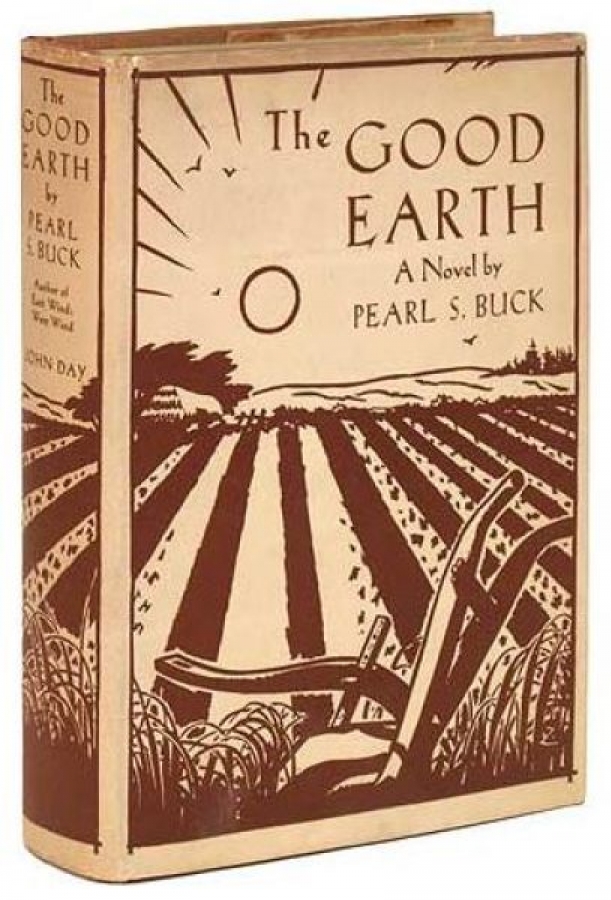
The Good Earth
The book is the saga of a Chinese peasant family who, from a state of abject poverty, becomes exceedingly wealthy following the discovery of a hoard of jewels, all of which are invested in the purchase of land. The protagonist is Wang Lung, an impoverished peasant who marries the maidservant of a great and powerful family. The bride, O-lan, is a plain, taciturn woman, yet tenacious and a tireless worker. She proves to be the peasant's true fortune, as much for her capacity for labor as for her wisdom and common sense. Forced to abandon their land following a severe famine, the couple moves to the city, where they lead a life of bitter hardship. During an uprising, O-lan, drawing on her experience as a servant, uncovers a hidden cache of jewels and gives them to her husband, keeping only two pearls for herself. Thus begins the fortune of Wang Lung, who betrays his wife by taking a new bride and relegating the woman to a subordinate status. O-lan’s illness and subsequent death bring home to her husband her profound importance, leaving him to feel her absence deeply. The book closes somberly with the sons’ decision to sell the land, bringing to an end a family cycle that had made the earth its steadfast anchor. The true subject of the book is the land, and consequently the quintessential peasant yearning to possess as much of it as possible. Another central figure is O-lan, who embodies the traditional role of women, along with their familial and social function. And it is precisely the examination of this character—who never mounts any genuine rebellion against her husband—that exposes the author’s conservative outlook, revealing her inability to offer a realistic, unvarnished reading of the female condition in Chinese society, or to chart a path toward emancipation that could nonetheless have been identified, even if at the cost of some strain on historical reality. Likewise, the other characters, both male and female, operate entirely within established social conventions, with the sole exception of one son who chooses the path of revolution over the quiet life of a landowner. There is no aspiration toward change, and everything is reduced to a complacently sentimental fatalism. The most compelling pages of the book are the opening ones (Wang Lung going to claim his bride-to-be from the powerful household) and the depiction of urban life, with the contrast between city and countryside, the impact of early social revolutions, and the presence of foreigners. Thereafter, the narrative turns maudlin, submerged in an often cloying pietism. While the opening seems driven by an ambition to provide a portrait—however raw and realistic—of rural Chinese life (with faint echoes of Zola’s *Earth*), this subsequently dissolves into an apologetic approach that relegates the Chinese setting to mere backdrop. The pacing of the book remains consistently effective, making for a swift and effortless read; the language is rich at the outset, drawing on the lexicon proper to peasant existence, only to thin out into an increasingly impersonal and detached English. The prose thus accentuates the drift toward a narrative that grows steadily less incisive and alive.