Finished reading on: September 05, 2016
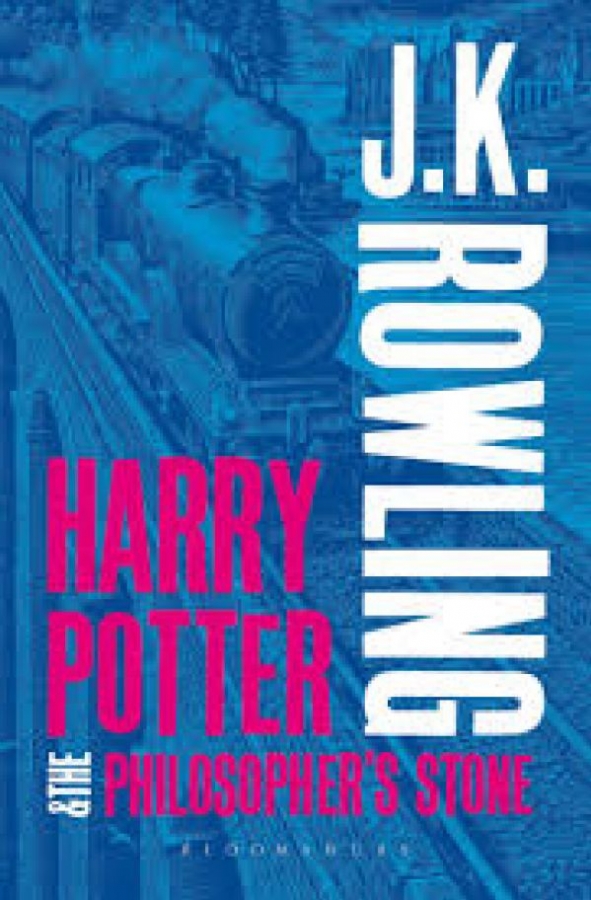
Harry Potter & the Philosopher's Stone
AI Translation Notice: This review was translated from the original Italian using artificial intelligence. Book quotes and excerpts are translated interpretations and will not match the author's original English phrasing or official published translations.
Harry Potter lives with his aunt and uncle, a prosaic bourgeois family who hate, above all, that
anyone speak of anything that shouldn't be, no matter if it is in a dream or even a cartoon, (...) it might be a dangerous idea
.
As in the fairy tale of Cinderella, Harry is treated dreadfully by his aunt and uncle, the butt of his cousin's stupid and brutal pranks; in short, he is a victim, orphaned by parents considered eccentric and better left unmentioned.
Strange letters begin to arrive: they invite Harry to a boarding school for witches and wizards.
His uncle destroys the mail, but it keeps on coming; he then flees with the family to unreachable places; all in vain, as mysteriously the mail arrives everywhere.
He must accept that his nephew has been admitted to a school where they teach "what shouldn't be"; he must even accompany him to platform "nine and three-quarters," the track that isn't there.
The first part of the book is built entirely on paradox, between what is real and what could be, what we often wish were so and experience through fantasy.
It is the best part of the novel.
From that point on, we follow Harry to his peculiar school, where the magical arts and the secrets of witches are taught, but where the mechanisms of any boarding school are at work: rivalries, friendships, discipline and how to break it, strict teachers, indulgent ones, the likable and the unlikable.
The boarding school, a dark castle, conceals a mystery: a three-headed dog guards a Philosopher's Stone, the possession of which grants immortality and bestows powers capable of conquering the world.
Harry suspects that a teacher wants to seize it to hand it over to Voldemort, the Lord of Evil, whose name no one dares utter, so great is the fear.
Adventures, perils, and acts of courage test Harry and his circle of friends; in the end, there is a twist, with a direct confrontation between Harry and Voldemort.
How did the boy manage to resist the force of evil?
If there is one thing Voldemort cannot understand, it is love.
He did not understand that love as powerful as your mother's for you would leave its own mark
, giving Harry protection forever.
And again,
only one who wanted to find the Stone, find it, but not use it, would be able to get it
.
The author skillfully blends magical and adventurous elements with an environment familiar to adolescents, namely school.
The narrative pace is not as intense and surprising as one would expect, not least because one remains aware that the danger is merely apparent and will always resolve for the best.
The salvific role of the super-wizard Dumbledore flattens Harry's autonomy, excessively aided by forces and figures far above him.
The book fails to fully become a Bildungsroman, in that the young protagonist never fully matures into adulthood.
If one compares Harry Potter with Treasure Island, the difference between Jim and Harry is striking: the setting is always exceptional, but the former emerges a man, while the latter remains an adolescent, subordinate to the adults.
Is this perhaps why youngsters read Harry Potter and not Stevenson's great book? Because they can cling to the illusion that someone or something will always help them in life?
The chief virtue of Rowling's novel is the writing: elegant, clear, effective, grammatically flawless.
The book could easily be used to teach the most demanding forms of the English language.
Why read it? Beautiful English